Cardiff Theosophical Society
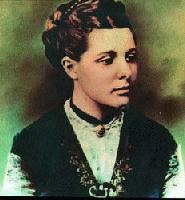
Annie
Besant
Mysticism
By
Annie Besant
Return to Anne Besant
Selection
In the early
centuries of Christianity, as we know from the writings of many of the Fathers,
and more surely by the Occult Records,there
existed in the bosom of the Christian Church the venerable institution of the
Mysteries, in which the purified met superhuman Instructors, and learned from
the lips of the Holy Ones the secrets of the 'Kingdom of Heaven'. After the
Christ had thrown off His physical body, He taught His disciples for many
years, coming to them in His glorified subtle body, until those who knew Him in
the flesh had passed away.
So long as the
Christian Mysteries endured, Jesus appeared at them from time to time, and HIs chief disciples were constantly present at them. So
long as this state of things continued,the
exoteric and the esoteric teachings of Christianity ran side by side in perfect
accord,and the mysteries supplied to the high places
in the Church men who were true teachers for the mass of believers, being
themselves deeply instructed in the "hidden things of God", and able
to speak with the authority which comes from direct knowledge They, like their
Master, "taught as having authority and not as the scribes".
But after the
disappearance of the Mysteries, the state of affairs slowly altered for the
worse, and a divergence between the exoteric and esoteric teachings showed
itself ever increasingly until a wide gulf yawned between them, and the mass of
the faithful, standing on the exoteric side, lost sight of the esoteric wisdom.
More and more did the letter take the place of the spirit, the form of the
life, and there began the strife between the Priest and the Mystic that has
ever since been waged in the Christian Church.
The Priest is
ever the guardian of the exoteric, the recipient of the faith once delivered to
the saints, the officiant of the sacraments, the
custodian of the outer order,the transmitter of the
traditions, becoming more authoritative from age to age. His to repeat
accurately the sacred formulæ ; his to watch over a
changeless orthodoxy; his to be the articulate voice of the Church; his to hand
on the unaltered record. Great and noble is his task, and invaluable his
services to the evolving masses of the populace. It is he who consecrates their
birth, sanctions their marriage,hallows
their death; he consoles them in their sorrows and purifies their joys; he
stands by the bedside of the sick and the dying, and gilds the clouds of
mortality with the sun of an immortal hope. He brings into sordid lives the one
gleam of poetry and of colour that they known; he enlarges their narrow horizon
with the vistas of a radiant future; he gladdens the mother with the vision of
the Immortal Babe; he saves the desperate youth with the tenderness of the
celestial Mother; he raises before the eyes of the sorrowful the crucifix that
tells of a sorrow that embraces and consoles their grief; he breathes into the
ear of the dying the pledge of the Easter resurrection, How could Humanity
tread the earlier stages of its journey without the Priesthood that directs,
rebukes, and comforts; the universality of the office tells of the universality
of the need.
Far other is
the Mystic, the lonely dweller on the mountain-side, climbing in advance of his
race, without help from the outer world, listening ever for the faint whisper
of the God within. Humblest of men as he faces the depths of Divinity around im and the unsounded abysses of the Divinity within, he
seems arrogant as he withstands the edits of external authority, and rebel as
he bows not his neck to the yoke of ecclesiastical order. With his visions and
his dreams and his ecstasies,with his gropings in the dark and his flashes from a light supernal
that dazzles more than it illuminates, with his sudden irrational exaltations
and his equally sudden and unreasoning depressions, what has he to oppose to
the clear-cut doctrines and the imperial authority of the exoteric creed? Only
an unalterable conviction which he can neither justify nor explain; a certainty
which leaves him stuttering when he seeks to expound it, but remains
unfaltering in face of all rebuke and al reprobation. What can the Priest do
with this rebel, who places his visions above all scriptures, and asserts an
inalienable liberty in the face of the demand for obedience? He has no use for
him, no place for him; he disturbs with his curb less fantasies the settled
order of the household of faith. Hence a continued struggle, in which the
Priest for a awhile seems to conquer, but form which
the Mystic emerges victor in the end.
The combat
seems an unequal one, since the Priest has behind him the strength of a
splendid tradition, of a centuried history, of a
changeless authority, and the Mystic stands alone, unfriended.
But it is not so unequal as it seems; for the Mystic
draws his strength from That which gives birth to all religions, and he bathes
in the waters that regenerate, in the flood of Eternity. So in the
ever-recurring conflict, the Priest conquers in the world material, and is
defeated in the world spiritual; and the Mystic, rebuked, persecuted, crushed,
while dwelling in the body;, becomes the Saint after the body has dropped from
him, and becomes a voice of the Church that silenced him, a stone in the walls
that imprisoned.
In the Roman
Catholic Church this combat has been waged century after century, with the same
result continually repeated. Teresa, rebuked and humbled by her confessor,
arises as S. Teresa for unborn generations. Many a man and many a women,
regarded askance, treated with scorn by their contemporaries, become the
cynosures of countless millions of eyes, eyes of the faithful, descendants of
the faithful who decried. And on the whole it is as well that it should be so,
until the stern training of old is re-established; else would every dreamer be
taken as a Mystic, and every hysteric as a Revealer.
Only the true
Mystic can walk unblenching through the fire of
rebuke, "even in hell can whisper, 'I have known'". Moreover,r the Roman Catholic
Church alone has preserved a systematic training within the 'religious life', a
real preparation for the occult life, ever recognised
in theory even if challenged and suspected in practice. Hence has she so many
Saints, and such grace and tenderness of spiritual beauty, that one is fain to
pardon her the cruelties of her Priesthood for the sake of the rich streams of
spiritual life poured by her Mystics over the arid deserts of the outer world.
And one can understand, while reprobating, the fierceness with which she
guarded the ground that made such growths of saintliness possible, and made her
deem the superstition and bigotry of the masses but a small price to pay for
the keeping sacred from profane touch the inner seeds which flowered out into
the world as the Saints.
In
Protestantism there has been no systematic training, and hence no soil in which
the rare flower might readily root itself and grow. Few and far between are the
Mystics in the Protestant community, though Jacob Boehme
rises, splendid, gigantic, as though to show that even the absence of all
training cannot stifle the Divinity of the Spirit which is Man.More
than any other phase of christianity does
Protestantism need the presence of Mystics in its midst, the touch of the
living Spirit to save it from the arid letter. But this is is
a subject that needs separate treatment, which elsewhere I hope to give.
Theosophy is
the reassertion of Mysticism within the bosom of very living religion, the
affirmation of the reality of the mystic state of consciousness and of the
value of its products. In the midst of a scholarly and critical generation, it reproclaims the superiority of the knowledge which is drawn
from the direct experience of the spiritual world, and, facing undaunted the splendour of the accumulated results of research,
historical and scientific, facing undaunted the new and menacing Priesthood of
Science and of Criticism, it affirms he greater splendour
of the open vision, and the royalty of the Kingdom into which may pass 'the
little child' alone. The primary experience of Mysticism is direct communion
with the unseen, the recognition of the Gods without by the God within, the
touching of invisible realities, the passing with opened eyes into the worlds
beyond the veil. It substitutes experience for authority, knowledge for faith,
and it finds its guarantee in the 'common-sense' of all Mystics, the identity
of the experiences of all who traverse the grounds untrodden
by the profane.
The results
of mystic experiences show themselves in a method of interpretation applied to
all doctrines and to all scriptures, a method which justifies itself by the
light it throws on obscurities rather than by reasoned arguments. It is, in all
ages, the method of the Illuminati.
An example
will show the method better than efforts at explanation. Let us take the
doctrine of the Atonement. The Mystic sees in this Christian doctrine one of
the ways in which is told the ancient but ever new story of the unfolding of
the human Spirit into self-conscious union with God. He sees the Atonement
wrought by the unfolding of the Christ in man as the reflection in the human
consciousness of the second Aspect in the Divine Consciousness, gradually
shining out into clearness and beauty. As the Christ in man matures so is the
atonement wrought, and it is completed when the Son, rising above separation,
knows himself as one with Humanity and one with God, and in that knowledge becomes
a veritable Saviour, a true Mediator between God and
Man, uniting both in His own person,and thus making
them one. The Mystic cares not to argue about the dead-letter meaning of any
dogma; he sees the heart of it by the light of his own experience, and to him
its true value lies in its inner content, not in its outer history.
So also with
Scripture. It may, or
may not, have an outer accuracy as history; its value lies in its exposition of
the facts of the spiritual world. Whether a physical
But the
spiritual
religion amid the changes brought about by modern
research.
The Higher
Criticism is undermining all his authorities; subtly, but in deadly fashion,
its burrowing's have taken the ground away beneath
their feet; and only a thin crust remains, which at any moment may give way,
and let the whole structure crash down into irretrievable ruin. The Church can
no longer be built on historical authority; it must build itself on the rock of
experience, if it would survive the tempest which roars around it. Mysticism
can give it the surest certainty in all the world, the
certainty of mystic experience continually renewed.
The Christ
within is the only guarantee of the Christ without - but no further guarantee
is needed. Because the Christ lives undeveloped in every human Spirit, the
Christ developed is a historical fact; and those in whom the mystic Christ is
developing can look across the gulf of centuries and recognise
the historical Christ; nay, can transcend the limitations of the physical, and
know Him in His living reality as surely, and more fully, than His disciples
knew Him when He walked by the lake of Gennesaret.
First
published 1925
Return to Anne Besant
Selection
Try these links for
more
info about Theosophy
Cardiff Theosophical Society meetings
are informal
and there’s always a cup of tea afterwards
The Cardiff Theosophical Society Website
The
National Wales Theosophy Website
Theosophy Cardiff’s Instant Guide to Theosophy
Theosophy Cardiff’s Gallery of Great Theosophists
Dave’s Streetwise Theosophy Boards
The Theosophy Website that welcomes
If you run a Theosophy Study Group,
please
feel free to use any
material on this Website
Independent Theosophy Blog
The Most Basic
Theosophy
Website in the Universe
A quick overview
of Theosophy
and the Theosophical Society
If you run a
Theosophy Study Group you
can use this as an introductory handout.
One liners and quick explanations
About aspects of Theosophy
The Voice of the Silence Website
An
Independent Theosophical Republic
Links
to Free Online Theosophy
Study
Resources; Courses, Writings,
The main criteria
for the inclusion of
links on this site is
that they have some
relationship (however
tenuous) to Theosophy
and are lightweight,
amusing or entertaining.
Topics include
Quantum Theory and Socks,
Dick Dastardly and Legendary Blues Singers.
An entertaining introduction to Theosophy
For everyone everywhere, not just in Wales
It’s all “water
under the bridge” but everything you do
makes an imprint on
the Space-Time Continuum.
A selection of
articles on Reincarnation
Provided in
response to the large number
of enquiries we
receive on this subject
No
Aardvarks were harmed in the
The Spiritual Home of Urban Theosophy
The Earth Base for Evolutionary Theosophy
The Birmingham Annie Besant Lodge
_________________________
The Theosophy
The Theosophy Cardiff Guide to
The Theosophy Cardiff Guide to
The Theosophy Cardiff Guide to
The Terraced Maze of Glastonbury Tor
Glastonbury and
Joseph of Arimathea
The Grave of King Arthur & Guinevere
Views of Glastonbury High Street
The Theosophy Cardiff Guide to
_____________________
Camberley Surrey England GU15 2LF
Tekels Park to be Sold to a Developer
Concerns are raised about the fate of the wildlife as
The Spiritual Retreat, Tekels Park in Camberley,
Surrey, England is to be sold to a developer
Future
of Tekels Park Badgers in Doubt
Magnificent
Tekels Park to be Sold to a Developer
____________________
A B C D EFG H IJ KL M N OP QR S T UV WXYZ
Complete Theosophical Glossary in Plain Text Format
1.22MB
___________________________
Classic Introductory
Theosophy Text
A Text Book of Theosophy By C
What Theosophy Is From the Absolute to Man
The Formation of a Solar System The Evolution of Life
The Constitution of Man After Death Reincarnation
The Purpose of Life The Planetary Chains
The Result of Theosophical Study
_____________________
Preface to the American Edition Introduction
Occultism and its Adepts The Theosophical Society
First Occult Experiences Teachings of Occult Philosophy
Later Occult Phenomena Appendix
Try these if you are looking
for a
local
Theosophy Group or Centre
UK Listing of Theosophical Groups

General pages
about Wales, Welsh History
and The History of
Theosophy in Wales
Wales is a
Principality within the United Kingdom
and has an eastern
border with England.
The land area is
just over 8,000 square miles.
Snowdon in North Wales is
the highest mountain at 3,650 feet.
The coastline is almost
750 miles long.
The population of Wales as at the 2001 census
is 2,946,200.