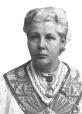
Annie
Besant
Reincarnation
(Brief Summary)
by
Annie Besant
Return to Annie Besant
Selection
THERE are but
three explanations of human inequalities, whether of faculties,of opportunities, of circumstances:
Special
Creation by God, implying that man is helpless, his destiny being controlled by
an arbitrary and incalculable will.
Heredity, as
suggested by science, implying an equal helplessness on man's part, he being
the result of a past over which he has no control.
Reincarnation,
implying that man can become master of his destiny, he being the result of his
own individual past, being what he has made himself.
Evolution is
taken for granted in everything except in the life of spiritual intelligence,
called man; he has no individual past, although he has an individual endless
future. The character he brings with him- on which more than on anything else
his destiny on earth depends- is, on this hypothesis, specially created for him
by God, and imposed on him without any choice of his own; out of the lucky bag
of creation he may draw a prize or a blank, the blank being a doom of misery;
such as it is he must take it.
Further,
science can offer no explanation of the facts of high intelligence and saintly
life. The child of a saint may be a profligate; the child of a genius may be a
dolt. Genius "comes out of the blue".
Reincarnation
restores justice to God and power to man. Every human spirit enters into life a
germ, without knowledge, without conscience, without discrimination. By
experience, pleasant and painful, man gathers materials, and builds them into
mental and moral faculties. Thus the character with which he is born is
self-made, and marks the stage he has reached in his long evolution.
The good
disposition, the fine capacities, the noble nature, are the spoils of many a
hard-fought field, the wages of heavy and arduous toil. The reverse marks an
early stage of growth, the small development of the spiritual germ.
MEMORY
No question
is more often heard, when reincarnation is mentioned, than: "If I have
been here before, why do I not remember it?" A little consideration of
facts will answer the question.
First of all,
let us note the fact that we forget more of our present lives than we remember.
Many people cannot remember learning to read; yet the fact that they can read
proves the learning. Incidents of childhood and youth have faded from our
memory, yet they have left traces on our character. A fall in babyhood is
forgotten, yet the victim is none the less a cripple. And
this although we are using the same body in which the forgotten events were
experienced.
If this be
true of experiences encountered in the present body, how much more must it be
true of experiences encountered in former bodies, which died and decayed many
centuries ago. Our present body and brain have had no
share in those far-off happenings; how should memory assert itself through them ? Our permanent body, which remains with us throughout
the cycle of reincarnation, is the spiritual body; the lower garments fall away
and return to their elements ere we can become reincarnated.
The new
mental, astral and physical matter in which we are re-clothed for a new life on
earth receives from the spiritual intelligence, garbed only in the spiritual
body, not the experiences of the past but the qualities, tendencies and
capacities which have been made out of those experiences. Our conscience, our
instinctive response to emotional and intellectual appeals, our recognition of
the force of a logical argument, our assent to fundamental principles of right
and wrong, these are the traces of past experiences. A man of low intellectual
type cannot "see" a logical or mathematical proof; a man of low moral
type cannot "feel" the compelling force of a high moral ideal.
GROWTH OF
CAPACITY
When a
philosophy or a science is quickly grasped and applied, when an art is mastered
without study, memory is there in power though past facts of learning are
forgotten; as Plato said, it is a reminiscence.
When we feel
intimate with a strange on first meeting, memory is there. Whenever we shrink
back with strong repulsion from another stranger, memory is there, the spirit's
recognition of an
ancient foe.
These
affinities, these warnings, come from the undying spiritual intelligence which
is yourself: we remember, though working in the body
we cannot impress it on our brain memory. The mind, body, the
brain, are new; the spirit furnishes the mind with the results of the
past, not with the memory of its events.
As a
merchant, closing the year's ledger and opening a new one does not enter in the
new one all the items of the old, but only its balances, so does the spirit
hand on to the new brain his judgements on the
experiences of a life that is closed, the conclusions to which he has come, the
decisions at which he has arrived. This is the stock handed on to the new life,
the mental furniture for its new dwelling - a real memory.
SPIRITUAL
GROWTH
Moreover,
memory of past lives can be gained. But the gaining is a matter of steady
effort, of prolonged meditation, whereby the restless mind, ever running outwards,
may be controlled and rendered quiescent, so that it may be sensitive and
responsive to the spirit and receive from him the memory of the past.
Only as we
can hear the still small voice of the spirit may the story of the past be
unrolled, for the spirit alone can remember, and cast down the rays of his
memory to enlighten the darkness of the fleeting lower nature to which he is
temporarily attached.
Pain follows
on mistakes and is ever remedial; strength is developed by struggle; we reap
after every sowing the inevitable result, happiness growing out of the right,
sorrow out of the wrong.
A high moral
standard, though placing a man at a disadvantage in the struggle for existence,
perhaps even leading to the sacrifice of his physical life, builds a noble
character for his future lives and shapes him to become a servant of the
nation.
In every case
the individual past explains the individual present, and when the laws of
growth are known and obeyed a man can build with a sure hand his future destiny,
shaping his growth in lives of ever increasing beauty until he reaches the
stature of the Perfect Man.
The South of Heaven Guide
to Theosophy and Devachan
Return to Annie Besant
Selection
Try these links for
more
info about Theosophy
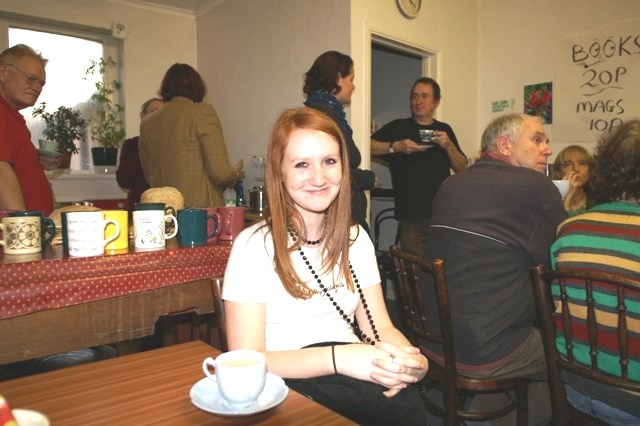
Cardiff Theosophical Society meetings
are informal
and there’s always a cup of tea afterwards
The Cardiff Theosophical Society Website
The
National Wales Theosophy Website
Theosophy Cardiff’s Instant Guide to Theosophy
Theosophy Wales
has a new structure as it separates into
independent groups that run
their own show
Theosophy Cardiff’s Instant Guide
High
Drama & Worldwide Confusion
as Theosophy
Cardiff Separates from the
Welsh
Regional Association (formed 1993)
Dave’s Streetwise Theosophy Boards
The Theosophy Website that welcomes
If you run a Theosophy Study Group,
please
feel free to use any
material on this Website
Independent Theosophy Blog
The Most Basic Theosophy
Website in the Universe
A quick overview of Theosophy
and the Theosophical Society
If you run a Theosophy Study Group you
can use this as an introductory handout.
One liners and quick explanations
About aspects of Theosophy
The Voice of the Silence Website
An
Independent Theosophical Republic
Links
to Free Online Theosophy
Study
Resources; Courses, Writings,
The main criteria
for the inclusion of
links on this site is
that they have some
relationship (however
tenuous) to Theosophy
and are lightweight,
amusing or entertaining.
Topics include
Quantum Theory and Socks,
Dick Dastardly and Legendary Blues Singers.
An entertaining introduction to Theosophy
For everyone everywhere, not just in Wales
It’s all “water
under the bridge” but everything you do
makes an imprint on
the Space-Time Continuum.
A selection of
articles on Reincarnation
Provided in
response to the large number
of enquiries we
receive on this subject
No
Aardvarks were harmed in the
The Spiritual Home of Urban Theosophy
The Earth Base for Evolutionary Theosophy
________________________
Camberley,
Surrey, England GU15 2LF
Tekels Park to be
Sold to a Developer
The Sale of
Tekels Park to a Developer
Future
of Tekels Park Badgers in Doubt
Magnificent
Tekels Park to be Sold to a Developer
____________________________________
A B C D EFG H IJ KL M N OP QR S T UV WXYZ
Complete Theosophical Glossary in Plain Text Format
1.22MB
___________________________
Classic Introductory
Theosophy Text
A Text Book of Theosophy By C
What Theosophy Is From the Absolute to Man
The Formation of a Solar System The Evolution of Life
The Constitution of Man After Death Reincarnation
The Purpose of Life The Planetary Chains
The Result of Theosophical Study
_____________________
Preface to the American Edition Introduction
Occultism and its Adepts The Theosophical Society
First Occult Experiences Teachings of Occult Philosophy
Later Occult Phenomena Appendix
Try these if you are looking
for a
local
Theosophy Group or Centre
UK Listing of Theosophical Groups


General pages
about Wales, Welsh History
and The History of
Theosophy in Wales
Wales is a
Principality within the United Kingdom
and has an eastern
border with England.
The land area is
just over 8,000 square miles.
Snowdon in North Wales is
the highest mountain at 3,650 feet.
The coastline is
almost 750 miles long.
The population of Wales as at the 2001 census is 2,946,200.