THEOSOPHY
Cardiff, Wales, UK, CF24 – 1DL.
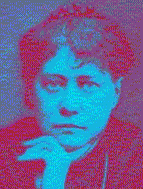
H
P Blavatsky
Glossaries
of Interest to Theosophists
Glossary
of
the
Ancient Greek World
Antiokhia: Ancient city founded near the banks of the
Apollon: God of beauty, virtue, fine arts, music and soothsaying (prophecy)
Akhaeos: General of the Seleucid king Seleucos III, who lived in the second half of the 3rd
century B.C.
Apameia: Ancient city founded in the Hellenistic period
near Dinar in Afyon.
Antonius: Famous lover of the Egyptian queen Cleopatra
who committed suicide by a snake bite in 30 B.C. and who ruled
(Augustus).
Arch: An
opening with a semi-round slope on top built for a gate or a passage.
Architrave:
The horizontal beam, plain or with fasciae, placed on top of the columns.
Byzantine
Period: The period between the years A.D. 395-1453.
century.
Caria: In antiquity the name
of the region in Western Asia Minor, which encompasses the Köyceðiz
and the Dalaman (
Classical
Period: The period which refers to the golden age of art in 480-330 B.C.
Cibyra Conventus: In the ancient period the regional judicial center also
called Cibyratica, which comprised some of the cities
of the
Common
Coinage: Coinage struck together by ancient cities that had commercial treaties
among each other and which was valid in these cities.
Cicero:
Famous Roman orator and statesman who was consul in A.D. 63
Commodus: Roman Emperor in A.D. 180-192.
Cavea: Rows of seats for spectators in theaters.
Caracalla: Roman Emperor in A.D. 211-217.
Constantinus: Roman Emperor in A.D. 306-337.
Domitian: Roman Emperor in A.D. 81-91.
Mycenaean
pottery, it is located in the borders of the administrative district (borough)
of Selçuk. The cities of Lycos in particular were
exporting their textile products to the ancient world through the
Geison: Hellenic name of Cornice.
Ganymedes: In mythology, the
chief god Zeus disguised as an eagleabducted the
handsome youth Ganymedes, who was considered the most
beautiful of the mortals. In Olympos
(the highest
Gladiator:
Warriors who had to fight with wild beasts or humans in the arenas in the Roman
Period.
Gymnasium:
Schools where athletic and
educational activities took place in the ancient period.
Hippodamian Plan: A grid-shaped city plan system, which laid
out roads and streets intersecting each other in opposite directions. It was
developed in the Hellenistic Period by architect Hippodamus.
Hoyuk: An artificial mound created by the accumulation
of building levels as a result of the settlement of people in the same place
for thousands of years.
Hellenistic
Period: Period beginning with the Macedonian King Alexander the Great in 330 B.C.
and continuing till the
Hadrian:
Roman Emperor in A.D. 117-138.
products of earth, the revival and the greening of
nature, fertility, abundance and fruitfulness, sea and the underworld and
sorcery.
Laodike: The queen who was the wife of Seleucid king
Antiochus II.
Labienus: The general who waged war against the Romans
with the Parthian Kingdom, and destroyed Mylasa, Laodikeia and Kolossai and was
later killed by the Romans in
Lydia: Famous
state and region in antiquity, which was founded within the borders of the Manisa and Usak provinces with
its capital
Miletos: One of the most important Ionic cities in the
ancient period founded in the Söke-Balat borders.
Minotauros: In mythology the bull that lived in the
labyrinth in
Narthex: The
name of court in Byzantine churches
Niche: Small
recess.
Nero: Roman
Emperor in A.D. 54-68.
Nymphaeum: Monumental fountain building.
Nysa: An ancient city founded in Sultanhisar
in the Hellenistic Period.
Odeon: A
school for musical performances.
Pergamon: One of the most important cities in
Phrygia
Region: In the ancient period the region, which
comprised of the Lycos (Çürüksu) Plain, and the
vicinity of Afyon and
antiquity was the westernmost border of the Phrygian
Region.
Ptolemaids: The kingdom founded in
Proconsul:
The governor appointed by the
Roman Period:
The era that comprises the years between 30 B.C.-A.D.395.
Saint Epaphra: The saint from Colossai
(Honaz) who read the letters of
them to convert to Christianity.
Salbakos: The name of Babadað
in the ancient period. This range of mountains is the border between
Sardes: The capital of the
Seleucids: The kingdom founded in the borders of Syria, Iraq,
Strabon: The famous traveler and author of 1st century
B.C.
Tumulus: A
monumental tomb built by heaping an artificial mound of stone or earth on top
of a tomb chamber.
Tripolis: An ancient city within the borders of today’s Yenicekent. It is in the ancient region of
Theseus: According to mythology the Athenian hero who is
a semi god.
Vault: A
covering system made by consecutive semi-round/circular arches.
Vespasian: Roman Emperor in A.D. 69-79.
Vitruvius: The 1st century B.C. author of an architecture
book.
Zeus: In mythology the god of gods, the head god, sky god.
Cardiff, Wales, UK, CF24 – 1DL.
Try these links for
more
info about Theosophy
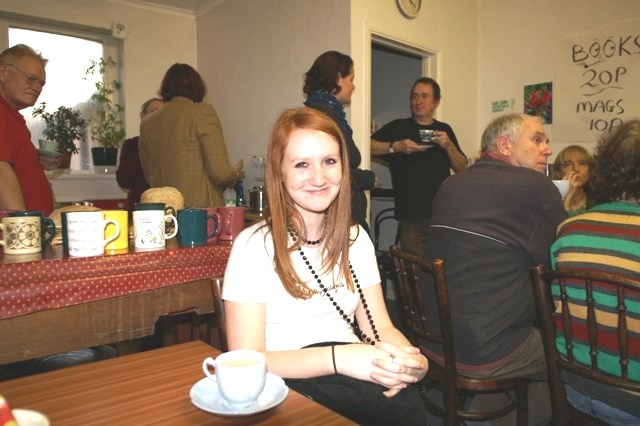
and there’s always a cup of tea afterwards
The Cardiff Theosophical Society Website
The
National Wales Theosophy Website
Theosophy Cardiff’s Instant Guide to Theosophy
Theosophy Cardiff’s Gallery of Great Theosophists
Dave’s Streetwise Theosophy Boards
The Theosophy Website that welcomes
If you run a Theosophy Study Group,
please
feel free to use any
material on this Website
This is for
everybody not just people in Wales
Theosophical
Movement in Wales
Independent Theosophy Blog
Cardiff Theosophical Order of Service
The Most Basic Theosophy
Website in the
Universe
A quick overview
of Theosophy
and the Theosophical
Society
If you run a
Theosophy Study Group you
can use this as an
introductory handout.
One liners and quick explanations
About aspects of Theosophy
The Voice of the Silence Website
An
Independent Theosophical Republic
Links
to Free Online Theosophy
Study
Resources; Courses, Writings,
The main criteria
for the inclusion of
links on this site is
that they have some
relationship (however
tenuous) to Theosophy
and are lightweight,
amusing or entertaining.
Topics include
Quantum Theory and Socks,
Dick Dastardly and Legendary Blues Singers.
An entertaining introduction to Theosophy
It’s all “water
under the bridge” but everything you do
makes an imprint on
the Space-Time Continuum.
A selection of
articles on Reincarnation
Provided in
response to the large number
of enquiries we
receive on this subject
Within the
British Isles, The Adyar Theosophical Society has
Groups in;
Bangor*Basingstoke*Billericay*Birmingham*Blackburn*Bolton*Bournemouth
Bradford*Bristol*Camberley*Cardiff*Chester*Conwy*Coventry*Dundee*Edinburgh
Folkstone*Glasgow*Grimsby*Inverness*Isle of
Man*Lancaster*Leeds*Leicester
Letchworth*London*Manchester*Merseyside*Middlesborough*Newcastle
upon Tyne
North Devon*Northampton*Northern
Ireland*Norwich*Nottingham
Perth*Republic of
Ireland*Sidmouth*Southport*Sussex*Swansea*Torbay
Tunbridge Wells*Wallasey*Warrington*Wembley*Winchester*Worthing
No
Aardvarks were harmed in the
The Spiritual Home of Urban Theosophy
The Earth Base for Evolutionary Theosophy
__________________________
Your Own Theosophy
Group Starts Here
A Guide to
starting your own
Theosophy Group
& of course
you don’t need to live in Wales
to take advantage
of this guide
________________________
The Theosophy
The Theosophy Cardiff Guide to
The Theosophy Cardiff Guide to
The Theosophy Cardiff Guide to
The Terraced Maze of Glastonbury Tor
Glastonbury and
Joseph of Arimathea
The Grave of King Arthur & Guinevere
Views of Glastonbury High Street
The Theosophy Cardiff Guide to
_____________________
Camberley, Surrey, England GU15 - 2LF
Concerns about the fate of the
wildlife as
Tekels Park is to be Sold to a
Developer
Concerns are raised about the fate of
the wildlife as
The Spiritual Retreat, Tekels Park in
Camberley,
Surrey, England is to be sold to a
developer.
Tekels Park is a 50 acre woodland
park, purchased
for the Adyar
Theosophical Society in England in 1929.
In addition to concern about the
park, many are
worried about the
future of the Tekels Park Deer
as they are not a
protected species.
Anyone planning a “Spiritual” stay at
the
Tekels Park Guest House should be
aware of the sale.
There is confusion as the Theoversity
moves out of
Tekels Park to Southampton, Glastonbury &
Chorley in Lancashire while the leadership claim
that the Theosophical
Society will carry on using
Tekels Park despite its sale to a developer
Future of Tekels Park Badgers in
Doubt
Tekels Park &
the Loch Ness Monster
A Satirical view of
the sale of Tekels Park
in Camberley, Surrey
to a developer
The Toff’s Guide to the Sale of Tekels Park
What the men in top
hats have to
say about the sale of
Tekels Park
____________________________________
A B C D EFG H IJ KL M N OP QR S T UV WXYZ
Complete Theosophical Glossary in Plain Text Format
1.22MB
___________________________
Theosophy Cardiff Nirvana Pages
Classic Introductory
Theosophy Text
A Text Book of Theosophy By C
What Theosophy Is From the Absolute to Man
The Formation of a Solar System The Evolution of Life
The Constitution of Man After Death Reincarnation
The Purpose of Life The Planetary Chains
The Result of Theosophical Study
_____________________
Preface to the American Edition Introduction
Occultism and its Adepts The Theosophical Society
First Occult Experiences Teachings of Occult Philosophy
Later Occult Phenomena Appendix
Preface
Theosophy and the Masters General Principles
The Earth Chain Body and Astral Body Kama – Desire
Manas Of
Reincarnation Reincarnation Continued
Karma Kama Loka
Devachan
Cycles
Arguments Supporting Reincarnation
Differentiation Of Species Missing Links
Psychic Laws, Forces, and Phenomena
Psychic Phenomena and Spiritualism
Try these if you are looking
for a
local
Theosophy Group or Centre
UK Listing of Theosophical Groups
General pages
about Wales, Welsh History
and The History of
Theosophy in Wales
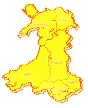
Wales is a
Principality within the United Kingdom
and has an eastern
border with England.
The land area is
just over 8,000 square miles.
Snowdon in North Wales is
the highest mountain at 3,650 feet.
The coastline is
almost 750 miles long.
The population of Wales as at the 2001 census is 2,946,200.