A One Minute
History of
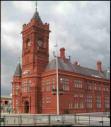
The
Customs House at
The Origins of The
Name
There are
two rival theories regarding the precise origins of the name
The name
There is
uncertainty concerning the origin of "Caerdydd"
— "Caer" means "fort" or
"castle," but although "Dydd"
means "Day" in modern Welsh, it is unclear what was meant in this
context. Some believe that "Dydd" or
"Diff" was a corruption of "Taff",
the river on which Cardiff castle stands, in which case "Cardiff"
would mean "the fort on the river Taff" (in
Welsh the T mutates to D).
A rival
theory favours a link with Aulus
Didius Gallus who was a Roman governor in the region
at the time the fort was established. The name may have originated as Caer Didius – The
Fort of Didius
Chronology of
AD75 The Romans establish a fort in Cardiff
445 First written
mention of
850 The first recorded
Viking attack is made on the Welsh coast. The Vikings used
1081 William the
Conqueror visits
1201 The oldest
surviving treaty between
1404 Owain Glyndwr summons his first Welsh Parliament at Machynlleth
1536 1st Act of
1542 Thomas Capper
is burnt at the stake in
1581
1648
1794 Canal link
between
1839 Marquis of
1845-50 First rail link is constructed between
1850 Population
of
1868 William Burges begins process of remodelling
1876
1885
1905 Edward VII
grants
1906-38 Civic
buildings of
1911
Establishment of the
Population of
Cardiff reaches 182,000
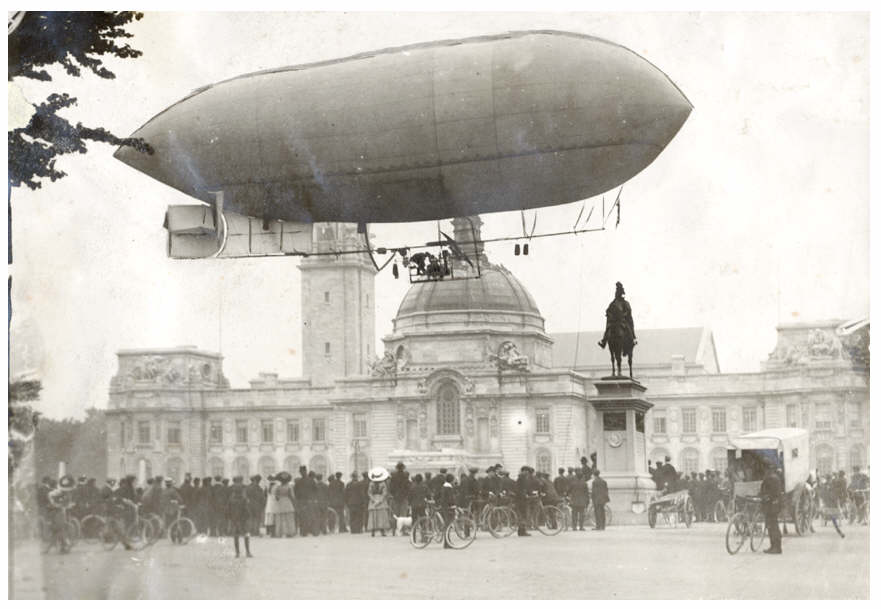
Pioneering
Airship Flight
leaves
1913 A record
10.5 million tons of coal is exported from
1927
1931 Population
of
1942 Welsh
language is made official
1955
1958
Oct 1999 Cardiff hosts
the Rugby World Cup
Pages About Wales
Chronology of Wales and the Celtic Tradition
A One Minute History of Cardiff
The Highest Mountain in Wales at 3,650 ft.
On exceptionally clear days, Ireland, Northern Ireland,
Scotland, England and Wales are all visible
from the Summit
of Snowdon, as well as 24 counties,
History of
Wrexham / Wrecsam
Try these links for
more
info about Theosophy
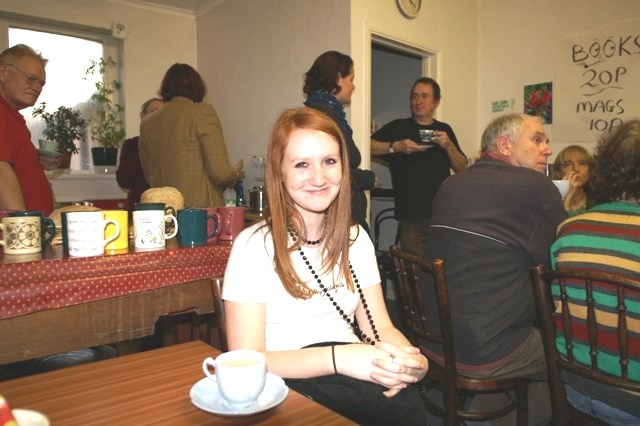
Cardiff Theosophical Society meetings
are informal
and there’s always a cup of tea afterwards
The Cardiff Theosophical Society Website
The
National Wales Theosophy Website
Theosophy Cardiff’s Instant Guide to Theosophy
Theosophy Cardiff’s Gallery of Great Theosophists
Dave’s Streetwise Theosophy Boards
The Theosophy Website that welcomes
If you run a Theosophy Study Group, please
feel free to use any
material on this Website
Independent Theosophy Blog
The Most Basic Theosophy
Website in the Universe
A quick overview of Theosophy
and the Theosophical Society
If you run a Theosophy Study Group you
can use this as an introductory handout.
One liners and quick explanations
About aspects of Theosophy
The Voice of the Silence Website
An
Independent Theosophical Republic
Links
to Free Online Theosophy
Study
Resources; Courses, Writings,
The main criteria
for the inclusion of
links on this site is
that they have some
relationship (however
tenuous) to Theosophy
and are lightweight,
amusing or entertaining.
Topics include
Quantum Theory and Socks,
Dick Dastardly and Legendary Blues Singers.
An entertaining introduction to Theosophy
For
everyone everywhere, not just in Wales
It’s all “water
under the bridge” but everything you do
makes an imprint on
the Space-Time Continuum.
A selection of
articles on Reincarnation
Provided in
response to the large number
of enquiries we
receive on this subject
No
Aardvarks were harmed in the
The Spiritual Home of Urban Theosophy
The Earth Base for Evolutionary Theosophy
____________________________________
A B C D EFG H IJ KL M N OP QR S T UV WXYZ
Complete Theosophical Glossary in Plain Text Format
1.22MB
___________________________
Classic Introductory
Theosophy Text
A Text Book of Theosophy By C
What Theosophy Is From the Absolute to Man
The Formation of a Solar System The Evolution of Life
The Constitution of Man After Death Reincarnation
The Purpose of Life The Planetary Chains
The Result of Theosophical Study
_____________________
Preface to the American Edition Introduction
Occultism and its Adepts The Theosophical Society
First Occult Experiences Teachings of Occult Philosophy
Later Occult Phenomena Appendix
Try these if you are looking
for a
local
Theosophy Group or Centre
UK Listing of Theosophical Groups
General pages
about Wales, Welsh History
and The History of
Theosophy in Wales
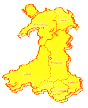
Wales is a
Principality within the United Kingdom
and has an eastern border
with England.
The land area is
just over 8,000 square miles.
Snowdon in North Wales is
the highest mountain at 3,650 feet.
The coastline is
almost 750 miles long.
The population of Wales as at the 2001 census is 2,946,200.