Is Theosophy a Religion?
By
Español ¿Es la Teosofía
una Religión?
"Religion is the best armour that man can have,but it is the worst cloak."
John Bunyan
IT is no exaggeration to say that there never
was--during the present century, at any rate--a movement, social or religious,
so terribly, nay, so absurdly misunderstood, or more blundered about than THEOSOPHY--whether
regarded theoretically as a code of ethics, or practically, in its objective
expression, i.e., the Society known by that name.Year
after year, and day after day had our officers and members to interrupt people
speaking of the theosophical movement by putting in more or less emphatic
protests against Theosophy
being referred to as a "religion," and the Theosophical Society as a
kind of church or religious body.
Still worse, it is as often spoken of as a
"new sect"! Is it a stubborn prejudice, an error, or both? The latter, most likely. The most narrow-minded and even
notoriously unfair people are still in need of a plausible pretext, of a peg on
which to hang their little uncharitable remarks and innocently-uttered
slanders. And what peg is more solid for that purpose, more convenient than an
"ism" or a "sect." The great majority would be very sorry
to be disabused and finally forced to accept the fact that Theosophy is neither. The
name suits them, and they pretend to be unaware of its falseness. But there are
others, also, many more or less friendly people, who labour sincerely under the
same delusion. To these, we say: Surely the world has been hitherto
sufficiently cursed with the intellectual extinguishers known as dogmatic
creeds, without having inflicted upon it a new form of faith!
Too many already wear their faith, truly, as
Shakespeare puts it, "but as the fashion of his hat," ever changing
"with the next block." Moreover, the very raison d'être of the
Theosophical Society was, from its beginning, to utter a loud protest and lead
an open warfare against dogma or any belief based upon blind faith.It may sound odd and paradoxical, but it is true to
say that, hitherto, the most apt workers in practical Theosophy, its most
devoted members were those recruited from the ranks of agnostics and even of
materialists. No genuine, no sincere searcher after truth can ever be found
among the blind believers in the "Divine Word," let the latter be
claimed to come from Allah, Brahma or Jehovah, or their respective Kuran, Purana and Bible. For:
Faith is not reason's labour, but repose.
He who believes his own religion on faith, will
regard that of every other man as a lie, and hate it on that same faith.
Moreover, unless it fetters reason and entirely blinds our perceptions of
anything outside our own particular faith, the latter is no faith at all, but a
temporary belief, the delusion we labour under, at some particular time of
life. Moreover, "faith without principles is but a
flattering phrase for willful positiveness or
fanatical bodily sensations," in Coleridge's clever definition.
What, then, is Theosophy,
and how may it be defined in its latest presentation in this closing portion of
the XIXth century?
Theosophy,
we say, is not a Religion. Yet there are, as everyone knows, certain beliefs,
philosophical, religious and scientific, which have become so closely
associated in recent years with the word "Theosophy" that they
have come to be taken by the general public for Theosophy itself.
Moreover, we shall be told these beliefs have been put forward, explained and
defended by those very Founders who have declared that Theosophy is not a
Religion. What is then the explanation of this apparent contradiction? How can
a certain body of beliefs and teachings, an elaborate doctrine, in fact, be labelled "Theosophy" and be
tacitly accepted as "Theosophical" by nine-tenths of the members of
the T.S., if Theosophy
is not a Religion?--we are asked. To explain this is the purpose of the present
protest.
It is perhaps necessary, first of all, to say,
that the assertion that "Theosophy
is not a Religion," by no means excludes the fact that "Theosophy is
Religion" itself. A Religion in the true and only correct sense, is a bond uniting men together--not a particular set
of dogmas and beliefs. Now Religion, per se, in its widest meaning is that
which binds not only all MEN, but also all BEINGS and all things in the entire
Universe into one grand whole. This is our theosophical definition of religion;
but the same definition changes again with every creed and country, and no two
Christians even regard it alike. We find this in more than one eminent author.
Thus Carlyle defined the Protestant Religion in his day, with a remarkable
prophetic eye to this ever-growing feeling in our present day, as: For the most
part a wise, prudential feeling, grounded on mere calculation; a matter, as all
others now are, of expediency and utility; whereby some smaller quantum of
earthly enjoyment may be exchanged for a far larger quantum of celestial
enjoyment.
Thus religion, too, is profit, a working for
wages; not reverence, but vulgar hope or fear. In her turn Mrs. Stowe, whether
consciously or otherwise, seemed to have had Roman Catholicism rather than
Protestantism in her mind, when saying of her heroine that: Religion she looked
upon in the light of a ticket (with the correct number of indulgences bought
and paid for), which, being once purchased and snugly laid away in a
pocket-book, is to be produced at the celestial gate, and thus secure admission
to heaven. . . .
But to Theosophists (the genuine Theosophists are
here meant) who accept no mediation by proxy, no salvation through innocent
bloodshed, nor would they think of "working for wages" in the One
Universal religion, the only definition they could subscribe to and accept in
full is one given by Miller. How truly and theosophically
he describes it, by showing that
. . . true Religion
Is always mild, propitious and humble;
Plays not the tyrant, plants no faith in
blood,
Nor bears destruction on her chariot wheels;
But stoops to polish, succour
and redress,
And builds her grandeur on the
public good.
The above is a correct definition of what true Theosophy is, or ought to
be. (Among the creeds Buddhism alone is such a true heart-binding and
men-binding philosophy, because it is not a dogmatic religion.
) In this respect, as it is the duty and task of every genuine
theosophist to accept and carry out these principles, Theosophy is RELIGION, and
the Society its one Universal Church; the temple of Solomon's wisdom,* in
building which "there was neither hammer, nor axe, nor any tool of iron
heard in the house while it was building" (I Kings,vi.);
for this "temple" is made by no human hand, nor built in any locality
on earth--but, verily, is raised only in the inner sanctuary of man's heart
wherein reigns alone the awakened soul.
Thus Theosophy is not a Religion,
we say, but RELIGION itself, the one bond of unity, which is so universal and
all-embracing that no man, as no speck--from gods and mortals down to animals,
the blade of grass and atom--can be outside of its light. Therefore, any
organization or body of that name must necessarily be a UNIVERSAL BROTHERHOOD.
Were it otherwise, Theosophy
would be but a word added to hundreds other such words as high sounding as they
are pretentious and empty. Viewed as a philosophy, Theosophy in its practical
work is the alembic of the Mediæval alchemist. It
transmutes the apparently base metal of every ritualistic and dogmatic creed
(Christianity included) into the gold of fact and truth, and thus truly
produces a universal panacea for the ills of mankind. This is why, when
applying for admission into the Theosophical Society, no one is asked what
religion he belongs to, nor what his deistic views may be.
These views are his own personal property and
have nought to do with the Society. Because Theosophy can be practiced
by Christian or Heathen, Jew or Gentile, by Agnostic or Materialist, or even an
Atheist, provided that none of these is a bigoted fanatic, who refuses to
recognize as his brother any man or woman outside his own special creed or
belief.
Count Leo N. Tolstoy does not believe in the
Bible, the Church, or the divinity of Christ; and yet no Christian surpasses
him in the practical bearing out of the principles alleged to have been
preached on the Mount. And these principles are those of Theosophy; not because
they were uttered by the Christian Christ, but because they are universal
ethics, and were preached by Buddha and Confucius, Krishna, and all the great
Sages, thousands of years before the Sermon on the Mount was written. Hence,
once that we live up to such Theosophy,
it becomes a universal panacea indeed, for it heals the wounds inflicted by the
gross asperities of the Church "isms" on the sensitive soul of every
naturally religious man.
How many of these, forcibly thrust out by the reactive
impulse of disappointment from the narrow area of blind belief into the ranks
of arid disbelief, have been brought back to hopeful aspiration by simply
joining our Brotherhood--yea, imperfect as it is. If, as an offset to this, we
are reminded that several prominent members have left the Society disappointed
in Theosophy as they had been
in other associations, this cannot dismay us in the least. For with a very,
very few exceptions, in the early stage of the T.S.'s
activities when some left because they did not find mysticism practiced in the
General Body as they understood it, or because "the leaders lacked
Spirituality," were "untheosophical, hence,
untrue to the rules," you see, the majority left because most of them were
either half-hearted or too self-opinionated--a church and infallible dogma in
themselves. Some broke away, again under very shallow pretexts indeed, such,
for instance, as "because Christianity (to say Churchianity,
or sham Christianity, would be more just) was too roughly handled in our
magazines"--just as if other fanatical religions were ever treated any
better or upheld! Thus, all those who left have done well to leave, and have
never been regretted. Furthermore, there is this also to be added: the number
of those who left can hardly be compared with the number of those who found
everything they had hoped for in Theosophy.
Its doctrines, if seriously studied, call forth,
by stimulating one's reasoning powers and awakening the inner in the animal
man, every hitherto dormant power for good in us, and also the perception of
the true and the real, as opposed to the false and the unreal. Tearing off with
no uncertain hand the thick veil of dead-letter with which every old religious
scriptures were cloaked, scientific Theosophy, learned in the
cunning symbolism of the ages, reveals to the scoffer at old wisdom the origin of
the world's faiths and sciences.
It opens new vistas beyond the old horizons of
crystallized, motionless and despotic faiths; and turning blind belief into a
reasoned knowledge founded on mathematical laws--the only exact science--it
demonstrates to him under profounder and more philosophical aspects the
existence of that which, repelled by the grossness of its dead-letter form, he
had long since abandoned as a nursery tale. It gives a clear and well-defined
object, an ideal to live for, to every sincere man or woman belonging to
whatever station in Society and of whatever culture and degree of intellect.
Practical Theosophy is not one Science,
but embraces every science in life, moral and physical. It may, in short, be
justly regarded as the universal "coach," a tutor of world-wide
knowledge and experience, and of an erudition which not only assists and guides
his pupils toward a successful examination for every scientific or moral
service in earthly life, but fits them for the lives to come, if those pupils
will only study the universe and its mysteries within themselves, instead of
studying them through the spectacles of orthodox science and religions. And let
no reader misunderstand these statements.
It is Theosophy per se, not any
individual member of the Society or even Theosophist, on whose behalf such a universal
omniscience is claimed. The two--Theosophy and the Theosophical Society--as a vessel and the
olla podrida it contains, must not be confounded. One is, as an ideal, divine
Wisdom, perfection itself; the other a poor, imperfect thing, trying to run
under, if not within, its shadow on Earth. No man is
perfect; why, then, should any member of the T.S. be expected to be a paragon
of every human virtue? And why should the whole organization be criticized and
blamed for the faults, whether real or imaginary, of some of its
"Fellows," or even its Leaders? Never was the Society, as a concrete
body, free from blame or sin--errare humanum est--nor
were any of its members. Hence, it is rather those members most of whom will
not be led by Theosophy,
that ought to be blamed.
Theosophy
is the soul of its Society; the latter the gross and imperfect body of the
former. Hence, those modern Solomons who will sit in
the Judgment Seat and talk of that they know nothing about, are invited before
they slander Theosophy
or any theosophists to first get acquainted with both, instead of ignorantly
calling one a "farrago of insane beliefs" and the other a "sect
of impostors and lunatics." Regardless of this, Theosophy is spoken of by
friends and foes as a religion when not a sect. Let us see how the special
beliefs which have become associated with the word have come to stand in that position, and how it is that they have so good a right to it
that none of the leaders of the Society have ever thought of disavowing their
doctrines.
We have said that we believed in the absolute
unity of nature. Unity implies the possibility for a unit on one plane, to come
into contact with another unit on or from another plane. We believe in it. The
just published "Secret Doctrine" will show what
were the ideas of all antiquity with regard to the primeval instructors of
primitive man and his three earlier races.
The genesis of that WISDOM-RELIGION in which all
theosophists believe, dates from that period. So-called "Occultism,"
or rather Esoteric Science, has to be traced in its origin to those Beings who,
led by Karma, have incarnated in our humanity, and thus struck the key-note of
that secret Science which countless generations of subsequent adepts have
expanded since then in every age, while they checked its doctrines by personal
observation and experience. The bulk of this knowledge--which no man is able to
possess in its fullness--constitutes that which we now call Theosophy or "divine
knowledge." Beings from other and higher worlds may have it entire; we can
have it only approximately.
Thus, unity of everything in the universe implies
and justifies our belief in the existence of a knowledge at once scientific,
philosophical and religious, showing the necessity and actuality of the
connection of man and all things in the universe with each other; which
knowledge, therefore, becomes essentially RELIGION, and must be called in its
integrity and universality by the distinctive name of WISDOM-RELIGION. It is
from this WISDOM-RELIGION that all the various individual "Religions"
(erroneously so called) have sprung, forming in their turn offshoots and
branches, and also all the minor creeds, based upon and always originated
through some personal experience in psychology. Every such religion, or
religious offshoot, be it considered orthodox or
heretical, wise or foolish, started originally as a clear and unadulterated
stream from the Mother-Source. The fact that each became in time polluted with
purely human speculations and even inventions, due to interested motives, does
not prevent any from having been pure in its early beginnings.
There are those creeds --we shall not call them
religions--which have now been overlaid with the human element out of all
recognition; others just showing signs of early decay; not one that escaped the
hand of time. But each and all are of divine, because natural and true origin;
aye-- Mazdeism, Brahmanism, Buddhism as much as
Christianity. It is the dogmas and human element in the latter which led
directly to modern Spiritualism. Of course, there will be an outcry from both
sides, if we say that modern Spiritualism per se, cleansed of the unhealthy speculations
which were based on the dicta of two little girls and their very unreliable
"Spirits"--is, nevertheless, far more true and philosophical than any
church dogma. Carnalised Spiritualism is now reaping
its Karma. Its primitive innovators, the said "two little girls" from
Rochester, the Mecca of modern Spiritualism, have grown up and turned into old
women since the first raps produced by them have opened wide ajar the gates
between this and the other world. It is on their "innocent" testimony
that the elaborate scheme of a sidereal Summer-land, with its active astral
population of "Spirits," ever on the wing between their "
They expose and denounce practical Spiritualism
as the humbug of the ages. Spiritualists--(save a handful of fair exceptions)--have
rejoiced and sided with our enemies and slanderers, when these, who had never
been Theosophists, played us false and showed the cloven foot denouncing the
Founders of the Theosophical Society as frauds and impostors. Shall the
Theosophists laugh in their turn now that the original "revealers" of
Spiritualism have become its "revilers"? Never! for the phenomena of
Spiritualism are facts, and the treachery of the "Fox girls" only
makes us feel new pity for all mediums, and confirms, before the whole world,
our constant declaration that no medium can be relied upon. No true theosophist
will ever laugh, or far less rejoice, at the
discomfiture even of an opponent. The reason for it is simple:--
Because we know that beings from other, higher worlds do confabulate with some
elect mortals now as ever; though now far more rarely than in the days of old,
as mankind becomes with every civilized generation worse in every respect.
Theosophy--owing,
in truth, to the levée in arms of all the
Spiritualists of Europeand America at the first words
uttered against the idea that every communicating intelligence is necessarily
the Spirit of some ex-mortal from this earth--has not said its last word about
Spiritualism and "Spirits." It may one day. Meanwhile, an humble
servant of Theosophy,
the Editor, declares once more her belief in Beings, grander, wiser, nobler
than any personal God, who are beyond any "Spirits of the dead,"
Saints, or winged Angels, who, nevertheless, do condescend in all and every age
to occasionally overshadow rare sensitives--often entirely unconnected with
Church, Spiritualism or even Theosophy.
And believing in high and holy Spiritual Beings, she must also believe in the
existence of their opposites--lower "spirits," good, bad and
indifferent. Therefore does she believe in spiritualism and its phenomena, some
of which are so repugnant to her. This, as a casual
remark and a digression, just to show that Theosophy includes
Spiritualism--as it should be, not as it is--among its sciences, based on
knowledge and the experience of countless ages. There is not a religion worthy
of the name which has been started otherwise than in consequence of such visits
from Beings on the higher planes.
Thus were born all prehistoric, as well as all
the historic religions, Mazdeism and Brahmanism, Buddhism
and Christianity, Judaism, Gnosticism and Mahomedanism;
in short every more or less successful "ism." All are true at the
bottom, and all are false on their surface. The Revealer, the artist who
impressed a portion of the Truth on the brain of the Seer, was in every
instance a true artist, who gave out genuine truths; but the instrument proved
also, in every instance, to be only a man. Invite Rubenstein and ask him to
play a sonata of Beethoven on a piano left to self-tuning, one-half of the keys
of which are in chronic paralysis, while the wires hang loose; then see
whether, the genius of the artist notwithstanding, you will be able to
recognize the sonata.
The moral of the fabula
is that a man--let him be the greatest of mediums or natural Seers--is but a
man; and man left to his own devices and speculations must be out of tune with
absolute truth, while even picking up some of its crumbs. For Man is but a
fallen Angel, a god within, but having an animal brain in his head, more
subject to cold and wine fumes while in company with other men on Earth, than
to the faultless reception of divine revelations. Hence the
multi-coloured dogmas of the churches. Hence
also the thousand and one "philosophies" so-called (some
contradictory, theosophical theories included); and the variegated
"Sciences" and schemes, Spiritual, Mental, Christian and Secular;
Sectarianism and bigotry, and especially the personal vanity and self-opinionatedness of almost every "Innovator" since
the mediæval ages. These have all darkened and hidden
the very existence of TRUTH--the common root of all.
Will our critics imagine that we exclude
theosophical teachings from this nomenclature? Not at all.
And though the esoteric doctrines which our Society has been and is expounding,
are not mental or spiritual impressions from some "unknown, from
above," but the fruit of teachings given to us by living men, still,
except that which was dictated and written out by those Masters of Wisdom
themselves, these doctrines may be in many cases as incomplete and faulty as
any of our foes would desire it. The "Secret Doctrine"--a work which
gives out all that can be given out during this century, is an attempt to lay
bare in part the common foundation and inheritance of all--great and small
religious and philosophical schemes. It was found indispensable to tear away
all this mass of concreted misconceptions and prejudice which now hides the
parent trunk of
(a) all the great
world-religions;
(b) of the smaller
sects;
(c) of Theosophy as it stands
now--however veiled the great Truth, by ourselves and our limited knowledge.
The crust of error is thick, laid on by whatever hand; and because we
personally have tried to remove some of it, the effort became the standing
reproach against all theosophical writers and even the Society.
Few among our friends and readers have failed to
characterize our attempt to expose error in the Theosophist and Lucifer as
"very uncharitable attacks on Christianity," "untheosophical assaults," etc., etc. Yet these are
necessary, nay, indispensable, if we wish to plough up at least approximate
truths. We have to lay things bare, and are ready to suffer for it--as usual.
It is vain to promise to give truth, and then leave it mingled with error out
of mere faint-heartedness.
That the result of such policy could only muddy
the stream of facts is shown plainly. After twelve years of incessant labour
and struggle with enemies from the four quarters of the globe, notwithstanding
our four Theosophical monthly journals--the Theosophist, Path, Lucifer, and the
French Lotus--our wish-washy, tame protests in them, our timid declarations,
our "masterly policy of inactivity," and playing at hide-and-seek in
the shadow of dreary metaphysics, have only led to Theosophy being seriously
regarded as a religious SECT. For the hundredth time we are told--"What
good is Theosophy
doing?" and "See what good the Churches are doing!"
Nevertheless, it is an averred fact that mankind is not a whit better in
morality, and in some respects ten times worse now, than it ever was in the days
of Paganism.
Moreover, for the last half century, from that
period when Freethought and Science got the best of
the Churches--Christianity is yearly losing far more adherents among the
cultured classes than it gains proselytes in the lower strata, the scum of
Heathendom. On the other hand, Theosophy
has brought back from Materialism and blank despair to belief (based on logic
and evidence) in man's divine Self, and the immortality of the latter, more
than one of those whom the Church has lost through dogma, exaction of faith and
tyranny. And, if it is proven that Theosophy saves one man
only in a thousand of those the Church has lost, is not the former a far higher
factor for good than all the missionaries put together?
Theosophy,
as repeatedly declared in print and viva voce by its members and officers,
proceeds on diametrically opposite lines to those which are trodden by the
Church; and Theosophy
rejects the methods of Science, since her inductive methods can only lead to
crass materialism. Yet, de facto, Theosophy claims to be
both "RELIGION" and "SCIENCE," for Theosophy is the essence
of both. It is for the sake and love of the two divine abstractions--i.e.,
theosophical religion and science, that its Society
has become the volunteer scavenger of both orthodox religion and modern
science; as also the relentless Nemesis of
those who have degraded the two noble truths to their
own ends and purposes, and then divorced each violently from the other, though
the two are and must be one.
To prove this is also one of our objects in the
present paper. The modern Materialist insists on an impassable chasm between
the two, pointing out that the "Conflict between Religion and
Science" has ended in the triumph of the latter and the defeat of the
first. The modern Theosophist refuses to see, on the contrary, any such chasm
at all. If it is claimed by both Church and Science that each of them pursues
the truth and nothing but the truth, then either one of them is mistaken, and
accepts falsehood for truth, or both. Any other impediment to their
reconciliation must be set down as purely fictitious. Truth is one, even if
sought for or pursued at two different ends. Therefore, Theosophy claims to
reconcile the two foes.
It premises by saying that the true spiritual and
primitive Christian religion is, as much as the other great and still older
philosophies that preceded it--the light of Truth--"the life and the light
of men." But so is the true light of Science. Therefore, darkened as the
former is now by dogmas examined through glasses smoked with the superstitions
artificially produced by the Churches, this light can hardly penetrate and meet
its sister ray in a science, equally as cobwebbed by paradoxes and the
materialistic sophistries of the age. The teachings of the two are
incompatible, and cannot agree so long as both Religious philosophy and the
Science of physical and external (in philosophy, false) nature, insist upon the
infallibility of their respective "will-o'-the wisps." The two
lights, having their beams of equal length in the matter of false deductions,
can but extinguish each other and produce still worse darkness.
Yet, they can be reconciled on the condition that
both shall clean their houses, one from the human dross of the ages, the other
from the hideous excrescence of modern materialism and atheism. And as both
decline, the most meritorious and best thing to do is precisely what Theosophy alone can and
will do: i.e., point out to the innocents caught by the glue of the two waylayers--verily two dragons of old, one devouring the
intellects, the other the souls of men--that their supposed chasm is but an
optical delusion; that, far from being one, it is but an immense garbage mound
respectively erected by the two foes, as a fortification against mutual
attacks.
Thus, if Theosophy does no more
than point out and seriously draw the attention of the world to the fact that
the supposed disagreement between religion and science is conditioned, on the
one hand by the intelligent materialists rightly kicking against absurd human
dogmas, and on the other by blind fanatics and interested churchmen who,
instead of defending the souls of mankind, fight simply tooth and nail for
their personal bread and butter and authority--why, even then, Theosophy will prove
itself the saviour of mankind.
And now we have shown, it is hoped, what real Theosophy is, and what are
its adherents. One is divine Science and a code of Ethics so sublime that no
theosophist is capable of doing it justice; the others weak but sincere men.
Why, then, should Theosophy
ever be judged by the personal shortcomings of any leader or member of our 150
branches? One may work for it to the best of his ability, yet never raise
himself to the height of his call and aspiration. This is his or her
misfortune, never the fault of Theosophy,
or even of the body at large. Its Founders claim no other merit than that of
having set the first theosophical wheel rolling. If judged at all they must be
judged by the work they have done, not by what friends may think or enemies say
of them.
There is no room for personalities in a work like
ours; and all must be ready, as the Founders are, if needs be, for the car of Jaggennath to crush them individually for the good of all.
It is only in the days of the dim Future, when death
will have laid his cold hand on the luckless Founders and stopped thereby their
activity, that their respective merits and demerits, their good and bad acts
and deeds, and their theosophical work will have to be weighed on the Balance
of Posterity. Then only, after the two scales with their contrasted loads have
been brought to an equipoise, and the character of the net result left over has
become evident to all in its full and intrinsic value, then only shall the
nature of the verdict passed be determined with anything like justice.
At present, except in
First Published November 1888
Español ¿Es la Teosofía
una Religión?
History of the Theosophical Society
History of the Theosophical Society in Wales
The Theosophical Society gets off the Ground
Try
these links for
more info about Theosophy
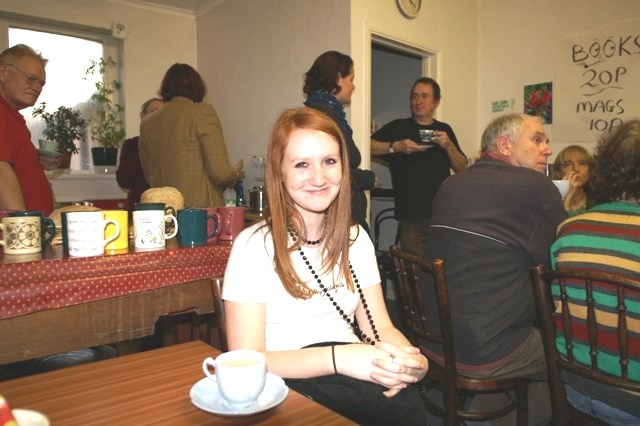
Cardiff Theosophical Society meetings
are informal
and there’s always a cup of tea afterwards
The Cardiff Theosophical Society Website
The
National Wales Theosophy Website
Theosophy Cardiff’s Instant Guide to Theosophy
This is for
everybody not just people in Wales
Cardiff
Theosophical Order of Service (TOS)
Within the British Isles, The Adyar Theosophical Society has Groups in;
Bangor*Basingstoke*Billericay*Birmingham*Blackburn*Bolton*Bournemouth
Bradford*Bristol*Camberley*Cardiff*Chester*Conwy*Coventry*Dundee*Edinburgh
Folkstone*Glasgow*Grimsby*Inverness*Isle
of Man*Lancaster*Leeds*Leicester
Letchworth*London*Manchester*Merseyside*Middlesborough*Newcastle upon Tyne
North
Devon*Northampton*Northern Ireland*Norwich*Nottingham
Perth*Republic of Ireland*Sidmouth*Southport*Sussex*Swansea*Torbay
Tunbridge Wells*Wallasey*Warrington*Wembley*Winchester*Worthing
Theosophy Cardiff’s Gallery of Great Theosophists
Dave’s Streetwise Theosophy Boards
The Theosophy Website that welcomes
If you run a Theosophy Study Group,
please
feel free to use any
material on this Website
Independent Theosophy Blog
The Most Basic Theosophy
Website in the Universe
A quick overview
of Theosophy
and the Theosophical Society
If you run a
Theosophy Study Group you
can use this as an introductory handout.
One liners and quick explanations
About aspects of Theosophy
The Voice of the Silence Website
An
Independent Theosophical Republic
Links
to Free Online Theosophy
Study
Resources; Courses, Writings,
The main criteria
for the inclusion of
links on this site is
that they have some
relationship (however
tenuous) to Theosophy
and are lightweight,
amusing or entertaining.
Topics include
Quantum Theory and Socks,
Dick Dastardly and Legendary Blues Singers.
An entertaining introduction to Theosophy
For everyone everywhere, not just in Wales
It’s all “water
under the bridge” but everything you do
makes an imprint on
the Space-Time Continuum.
A selection of
articles on Reincarnation
Provided in
response to the large number
of enquiries we
receive on this subject
No
Aardvarks were harmed in the
The Spiritual Home of Urban Theosophy
The Earth Base for Evolutionary Theosophy
____________________________________
A B C D EFG H IJ KL M N OP QR S T UV WXYZ
Complete Theosophical Glossary in Plain Text Format
1.22MB
___________________________
Classic
Introductory Theosophy Text
A Text Book of
Theosophy By C W Leadbeater
What Theosophy Is From the Absolute to Man
The Formation of a Solar System The Evolution of Life
The Constitution of Man After Death Reincarnation
The Purpose of Life The Planetary Chains
The Result of Theosophical Study
_____________________
Preface to the American Edition Introduction
Occultism and its Adepts The Theosophical Society
First Occult Experiences Teachings of Occult Philosophy
Later Occult Phenomena Appendix
Try
these if you are looking for a
local Theosophy Group or Centre
UK Listing of Theosophical Groups

General pages about
Wales, Welsh History
and The History of
Theosophy in Wales
Wales is a Principality
within the United Kingdom
and has an eastern
border with England.
The land area is
just over 8,000 square miles.
Snowdon in North Wales is
the highest mountain at 3,650 feet.
The coastline is
almost 750 miles long.
The population of Wales as at the 2001 census is 2,946,200.