Theosophy and the Number
Seven
A selection of articles
relating to the esoteric
significance
of the Number 7 in Theosophy
The Seven Principles of Man
By
Katherine Tingley
First published 1907
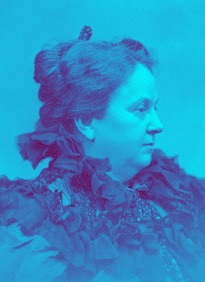
Katherine
Tingley
CONTENTS
Chapter 1.
The Septenate in Nature
Modern Views on Man
Evolution
Chapter 2.
The Septenary Division
Chapter 3.
The Lower Quaternary:
The Physical Body
The Astral Body
The Life-Principle
The Animal Soul
Chapter 4.
The Higher Triad:
Atma-Buddhi-Manas
Manas
Chapter 5.
Divine Magic
Chapter 1:
The Septenate in Nature
The teaching of the seven principles of man is a most sacred tenet
of the
ancient
wisdom-religion, and should be approached with the seriousness of mind with
which one enters upon a serious question. For this is no attempt to offer
interesting speculations for the edification of intellectual curiosity. It is a
reverent effort to
present an outline of teachings which have behind them the
sanction of the
accumulated wisdom of the ages. It must be borne in mind that a
teaching like this
cannot be presented in the complete and systematic form of a
scientific treatise.
Any attempt to reduce it to such a form would result in
depriving it of its
vital essence and converting it into a dogma. True knowledge
can come only in
proportion as we progress on the path of self-development.
Theosophical teachings cover such a vast domain that, for the most
part, all
that can be done
is to indicate a number of starting points from which the
intuition and further
study of the inquirer may set out; and far-reaching side
issues are
contacted at every turn, which would be impossible to follow up
within any
reasonable limits of time and space.
If asked, "Why seven?" the answer is that seven is one of
the key numbers by
which the mysteries
that underlie all nature are revealed and explained. The
wisdom-religion teaches that
number and numbers underlie all the processes of
creation. This
numerical key is at once most important and profound. There is
nothing arbitrary
about the use of the number seven as applied to the study of
man's nature. The septenate is universal throughout nature; it would be
possible
to illustrate
this fact by a large number of instances, but for the present we
must be content
to assume the fact, and to refer the inquirer elsewhere for
further information.
No school of modern thought has anything more definite and reasonable to offer
as a substitute. In some Eastern books one may meet with other divisions than
the septenary one -- fivefold, fourfold, or threefold,
for
instance, but these
are merely convenient abbreviations for special purposes.
WHAT DO
MODERN VIEWS TELL
US ABOUT
HUMAN NATURE?
The analysis of man's nature in our modern conceptions is
represented roughly by a threefold division -- body, mind, and soul or spirit;
but our notions about
these are
extremely hazy. Science has made an elaborate study of the structure
and functions of
the body, but is much handicapped in its understanding thereof
by a lack of
knowledge of the principles which come next in order to the body.
As to the mind, this word denotes roughly the personal thinking ego
and its
thoughts, emotions,
and volitions. There are various systems of psychology which deal with this,
but here again the want of knowledge concerning the other
principles has caused
great confusion. The soul or spirit is an even more vague
conception. It stands
for what in religion is regarded as the immortal part of
man. Very little
is known of its nature, and it is for the most part supposed to
function after the
death of the body. Dogmatic religion discouraged the
intellectual study of
such questions; and science, having been introduced in a
spirit of reaction
against dogmatic religion, has scrupulously avoided pushing
its investigations
any further than the material world. Consequently we have
been left without
any adequate conceptions of the nature of man; and the most
important parts of
human nature are investigated neither by religion nor by
science.
But in the past, before the wave of materialism swept over the
world, bringing
with it the
destruction of the ancient mystic teachings and their replacement by
religious dogmatism,
there was a sacred science which embraced all that we now
call science and
religion and much more besides. Our present religions,
philosophies, and
sciences are but detached fragments of that great knowledge,
or new growths
arising from its remains. This ancient system, which is referred
to in
theosophical works as the wisdom-religion, the secret doctrine, and the
esoteric philosophy,
was once known all over the world.
H. P. Blavatsky tells us, referring to the pages of history for her
proofs, that at the close of the Classical period most virulent and determined
efforts were made to stamp out all traces of this ancient wisdom and to place
in its stead dogmatic religion. But in spite of these efforts there have
remained enough proofs, in the numerous monumental and documentary records of
antiquity, to prove the truth of what is claimed about the wisdom-religion. In
addition to these archaeological proofs, there have always been in the world
initiates who have made it their care to preserve the sacred knowledge; and
although, in the dark cycle spoken of, these Adepts withdrew from their public
teaching, yet they have always preserved the knowledge in secret, ready to be
brought again out when humanity shall have passed through the dark valley of
materialism and be upon the ascending arc towards spirituality. One of the
ancient teachings thus outlined is that of the seven principles of man.
EVOLUTION
In order to make our explanations clearer, it will be necessary to
touch briefly
upon the question
of evolution as dealt with by theosophy. (A fuller account may be found
elsewhere in theosophical literature.) Evolution means the growth and gradual
perfecting of forms through the agency of the universal life-spirit
which is striving
to manifest itself through them. Everything in the universe,
from the smallest
mineral atom up to man, is thus evolving; for everything is,
in one degree
or another, a manifestation of the eternal spirit.
The modern evolutionists have glimpsed a small part of this truth,
but their theories are imperfect and misleading. In the first place they have
merely studied the effects of evolution, tracing throughout the kingdoms of
nature a sequence and progression of organisms; but they have neglected to tell
us anything about the cause of evolution -- that is, about the intelligence and
will that are working
in these forms
to bring about their growth. Those who deny that there is any
such indwelling
spirit are guilty of a logical absurdity which it is impossible
to account for
by any other hypothesis than that their thinking faculties have
been impaired. There
are others who see the absurdity of saying that an inert
substance can raise
itself to perfection without there being, inside or outside
of it, some
life or mind or spirit to work upon it; and who say that "God" is
the agency who
performs this function. They are much nearer the truth; but there
is no need thus
to leap at one bound from visible matter to the supreme deity.
God, in their explanation, stands for a vast host of powers and
beings and
worlds unknown to
science, which nevertheless have to be studied. Further, as is shown elsewhere,
the word "God" introduces all sorts of theological dogmas with which
theosophy has nothing to do.
Again, modern evolutionists have confined their studies to the
visible planes of
nature; but, as
will be shown, not only the bodies, but the minds and souls of
creatures are subject
to evolution.
In every physical atom there is a spark of the eternal life
imprisoned, and this
causes physical
matter to become gradually perfected through long ages until it
becomes sufficiently
plastic and efficient to fit it for the reception of higher
forms of life. In
the vegetable kingdom also there is the vegetable "monad"
striving to perfect
vegetable forms; and so in the mineral kingdom.
Man himself is the product of several different lines of evolution.
The matter
in his physical
body has been perfected through incalculable ages of evolution
in lower forms.
His physical body itself is the culminating point (so far) of a
long line of evolution in the animal kingdom. But it is a great error to
suppose that an animal can evolve into a man, or thinker, as some evolutionists
say. There comes a point in the evolution of the animal kingdom when progress
can go no further in that cycle without the entry of something else. The animal
soul is unable to develop the self-consciousness and power of choice that are
characteristic of man. This "something else" is the manasaputra. Manasaputra means
the "son of mind" or "mind-born son"; it is a name given to
our higher egos before they incarnated in mankind. They incarnated in what
theosophy refers to as the third root-race. All our egos are thinking and
rational entities who
had lived in the
precedent cosmic life cycle, and whose destiny it was to
incarnate in the
humanity of this life cycle. As H. P. Blavatsky says:
Try to imagine a "Spirit," a celestial Being . . . divine
in its essential
nature, yet not
pure enough to be one with the ALL, and consequently having to
purify its nature
so that it may finally reach that goal. . . . In its very
essence it is
THOUGHT, and is therefore called in its plurality Manasaputras,
or "Sons
of the (Universal) mind," This individualized "Thought" is what
we
Theosophists call the real human Ego, the thinking Entity
imprisoned in a case
of flesh and
bones. This is surely a Spiritual Entity, not Matter, and such
Entities are the incarnating Egos, informing the bundle of animal
matter
called mankind, and
whose names are manasa, or "Minds."
This is a most important point. It disposes of the doctrine of the
descent of
man from
anthropoid apes. Anthropoid apes were no more able to evolve unaided in the
past than they are now. They are degenerate descendants of one of the early
human races who sinned against nature, as explained elsewhere in theosophical
writings. It puts a gulf between the simple animal and man. It shows that, in
addition to the evolution of forms upwards, there was a descent of something
from above; and that we have a divine heredity as well as a terrestrial one. It
throws light on scriptural passages about the inbreathing of the divine spirit.
Chapter 2:
The Septenary Division
The septenary division may be given as
follows:
THE LOWER
QUATERNARY
1. Physical
Body, or Sthula-Sarira.
2. Astral
Body, or Linga-Sarira.
3. Vitality,
or Prana.
4. Animal Soul, or Kama-rupa.
THE HIGHER
TRIAD
5. Human
Soul, or Manas.
6. Spiritual
Soul, or Buddhi.
7. Spirit, or
Atma.
The names emphasized above are Sanskrit terms. In the impoverished state
of our language, so far as a vocabulary to express this class of ideas is
concerned,
theosophists may surely
claim the privilege accorded to other systems, of
adopting a special
terminology; but as little tax as possible will be laid on
the reader in
this respect.
To simplify now the comprehension of this scheme, it will be best
to consider
man first as a
trinity. It is impossible to consider human beings as being any
less than
threefold. There is a conscious chooser, oscillating between good and
evil. This
familiar fact is expressed in theosophy by saying that the soul is
threefold; the three
divisions are called:
Spiritual Soul;
Human Soul;
Animal
Soul.
This analysis sums up the views of the greatest philosophers and
teachers; it is
a cardinal
tenet of the wisdom-religion, as is shown by H. P. Blavatsky -- who
quotes the
teachings of Plato, of the Neoplatonists, and of the
Egyptians, on
this point. The
soul was, according to them, triple, and esoterically sevenfold.
One part was divine and immortal, another mortal, animal, and passional; and
between the two
stood another which hovered between good and evil, and possessed the power of
choice.
These are denominated respectively the spiritual soul, the animal
soul, and the human soul. The human soul is our personality, and represents the
pivotal point in our nature. It is destined to ally itself finally with its
divine counterpart, the spiritual soul, and thus to overcome the animal soul
and turn it into an obedient servant. But first it has to pass through a long
process of error and delusion, lasting through many incarnations, during which
it is enslaved by the passions and gradually learns and masters them. This
process is symbolized the world over by the allegories and myths that tell of
the hero passing through numerous adventures in quest of the truth, or seeking
his true bride and being deceived by enchantresses, rescuing princesses and
killing dragons, having tasks set him; and so on.
This threefold nature of the human character is matter of familiar
experience to everyone; does it not constitute the great drama of life, full of
the awful and the sublime? Whence our aspirations that
impel us to noble unselfish actions and yearning for the beautiful, the true,
and the right? Whence again our impulses to selfishness, anger, and
indifference? These two incentives must spring from some source within us, and
there must also be a chooser who chooses between the two. Any philosophy which
tries to explain things with any less than these three can lead only to
confusion. Paul in his epistle to the Corinthians (1 Cor.
Neither theology nor science reverences the immortal part of man.
For theology
confines its activity
solely to the afterlife and does not represent it as
having any
particular part to play during earth-life; and as to its nature and
attributes, we are left
entirely in the dark. Among scientists, there are those
who are content
merely to admit their complete ignorance on the subject, and
those who deny
their own immortality.
The seven principles may be divided into two parts:
The Higher Triad;
The Lower Quaternary.
It may be mentioned in passing that the number four prevails in the
material
world, and the
number three in the spiritual; a subject which is included in the
study of the
symbology of the ancient wisdom-religion. The higher triad is atma,
buddhi, and manas, and it alone is immortal; the lower quaternary,
consisting of
the remaining
principles, constitutes the mortal part of our nature.
Chapter 3:
The Lower
Quaternary
FOUR is the number which rules in the lower or terrestrial world,
as three is
the number of
spirit. The four elements are a well known conception of ancient
and medieval
science and philosophy. These elements were designated by the names fire, air,
water, and earth.
These words were not used in their present sense however. They
answer to some extent to our notions of solidity, liquidity, gaseity, and heat or luminosity;
but they have a more
extended range of meaning than that. The quadrangular
shape, the four
cardinal points of the compass, the four seasons, the cross, are
some of the
quaternaries. It would be too much of a digression to enter more
fully into this
branch here. Suffice it to say that the phenomena of nature
cannot be
rationally explained unless we postulate these four principles.
In man these are: physical body, astral double, life-principle and
animal soul.
The life-principle builds up the physical atoms according to the
pattern of the
astral body, guided
and impelled by the instinctual mind of the animal soul.
Science has studied the visible form and visible functions of
mineral, plant,
animal, and man;
but has suffered from a lack of knowledge of the other
principles. These will
now be treated of separately.
THE PHYSICAL
BODY
Since the theosophical teachings were first given out, science has
made
considerable progress in
the direction of regarding the physical body as
theosophy does. That is,
the idea of its being an inert mechanism, set in
motion
by some vital
force, or by mechanical and chemical forces, has given place to
the idea that
the body is composed of an immense number of individual "lives,"
each of which has
an independent existence in addition to its corporate
existence as part of
the body, and which are similar to the microorganisms found in water and other
places.
A minute study of the bodily structures reveals this fact; for
these structures are seen to be composed of minute units which science calls
"cells"; and each cell is endowed with a nucleus, protoplasm, and
other parts and functions which make it an independent living organism. In
disease some of the cells set up an activity which is hostile to the general
harmony of the whole body, and diseased tissue results. An extreme case of this
is death.
In theosophy less importance is given to the body. To begin with,
it is not
regarded as the
producer of life or thought, but as the result of them. Life is
a universal principle,
and the body is built up by its operation. It is
impossible to explain
much about the body without referring to the other
principles; for to do
so would be to deal with effects only, leaving the causes
unexplained. For
instance, the "cell" is not a permanent thing. Every atom in
the cell is
constantly on the move, some leaving it and other new ones coming
in; so that the
composition of the cell is never the same, and in the space of a
few years the
matter of the entire body has completely changed. Hence the form
of the body and
its component structures can not inhere in the atoms themselves, but must be
preserved elsewhere. (See under "ASTRAL BODY.")
It would be erroneous to say that the minute lives of which the
body is composed make up, in their totality, the greater life of the body as a
whole. For the body, if left to itself, begins to fall
to pieces. In sleep, when the greater
part of the
controlling influence is withdrawn, there is much more rapid
degeneration. The
elements of the body are kept in order by the life-principle
directed by the
intelligence. The body of itself is like an irresponsible
automaton. During
sleep it assumes attitudes and makes movements that we do not permit when
awake.
THE ASTRAL
BODY
OR
LINGA-SARIRA
The term "astral body" is somewhat vague in meaning for
two reasons. First, the
poverty of the
English language in terms adequate to convey such unfamiliar
ideas obliged
early writers on theosophy to use the term in more than one sense.
Secondly, pseudo-theosophists have dragged this, as also other
terms, in the mud by using it to express their own peculiar delusions. This
latter reason has
caused the term
"astral body" to have rather a quack sound. But it is one of the
objects of the
present writing to restore some of these misused words to their
original dignity.
While there is no word which can adequately express the nature of
this second
principle, perhaps the
one that expresses it best is "model-body." This compound word
answers to the Sanskrit term linga-sarira. Other
words are "double" and "design-body."
When we describe the nature and properties of the astral double, it
will be seen
that it fills a
gap in modern speculation, and supplies a missing link for the
lack of which science
has been much at fault.
The model-body must here be considered chiefly in connection with
man; but it is of universal application, and every organism in the universe,
whether animal,
vegetable, or mineral,
has its own.
It is material, yet the matter of which it is composed is not the
matter with
which we are
familiar in the physical world. It cannot be perceived by the gross
physical senses, and
has none of the attributes by which matter is defined as
such in physics.
But it can be perceived by finer senses, and is therefore
matter according to
an extended but similar definition. It is an older and more
evolved kind of
matter, having undergone a longer process of evolution and being therefore more
highly endowed with properties. For even matter is composed
of life-atoms which enshrine a spark of the universal spirit and mind.
Just as physical forms are made of physical matter so the astral forms are made
of this astral matter.
There is an astral world corresponding with the physical world and
interrelated
with it in a
peculiar manner; but to discuss that would lead us too far from the
present object. It
is however extremely interesting to note that, since the
Founders of the Theosophical Society wrote,
science has been compelled to admit the existence of finer grades of matter
answering exactly to what was described. For instance, in view of the recent
discoveries in electro-atomic physics, the statements of W. Q. Judge, made in
1893, are interesting. He says:
The astral body is made of matter of very fine texture as compared
with the
visible body, and
has a great tensile strength, . . . And not only has it this
immense strength,
but it at the same time possesses an elasticity permitting
its extension to
a considerable distance. It is flexible, plastic, extensible
and strong. The
matter of which it is composed is electrical and magnetic in
its essence.
The model-body forms the link between mind and body. Its most characteristic
properties are its
extreme adaptability, elasticity, and plasticity, which
causes it to take
any shape which is impressed upon it by thought. It is prior
to physical
matter, as mind is prior to it. Everything in the physical world
exists beforehand
in the astral world, in plan. This explains the phenomena of
growth,
reproduction, and all the organic processes by which organisms are
created with certain
forms and adapted to certain purposes. The acorn contains
the future oak
tree modeled entire in astral matter, and the life-atoms merely
build up the physical
tree on the already existing model. This it is that
determines whether a
seed shall yield an oak or a rose. For want of this
knowledge, science has
resorted to many strange hypotheses which will not stand the test of logic.
Without the astral model, we must attribute all its
properties to the
physical atoms themselves, thus seeking for causes among the
effects. But a
logical mind will see that an organism cannot grow according to a
plan unless the
plan previously exists somewhere.
In man the model-body exists closely blended with the physical
body, which it
sustains. It is this
that keeps the physical body in shape. The vitality has an
energic power, and
the astral body has a formative power. Both of these factors
are essential.
Without the model-body there would be nothing to keep the
life-forces in place or
to prevent them from producing monstrous and excessive
growths. It may be
compared to a piece of cloth having a design traced on it,
which is
afterwards worked in colored silks, or to an invisible photographic
impression afterwards
brought out by chemicals. The body grows from the embryo upwards according to
the design of the model.
The astral body explains the fact of birthmarks due to sudden shock
received by
the mother. Such
a shock affects powerfully the imagination of the mother, and
the astral
double of the future child is impressed with the picture in her
imagination. In the case
of amputations, the patient often feels sensations
apparently emanating
from the severed limb; for in this case the astral double
has not been
severed. In some animals the severed limb can grow again on the old model. The
astral body cannot, in the case of ordinary people, go more than a few feet
from the physical body, which it does during sleep or reverie.
But those who have passed through long and arduous processes of
development, involving a purification of the whole
nature, moral as well as physical, and far beyond the reach of the ordinary
man, can project the astral body to a distance and use it as a means of acting
consciously apart from the body. Needless to say this has nothing to do with
the ridiculous claims of the so-called occultists, who talk too glibly about
the astral body and their own pretended powers.
It is in the double that the real organs of the outer sense organs
are located.
It has also nerves, arteries, etc., corresponding to those in the
physical man.
The physical eye, ear, and nerve papillae contain only the outer
mechanism of
the senses, by which
the impressions are conveyed to the double. In it are
also
stored up the
subconscious perception and latent memory which afford such a
problem to
hypnotists.
On the death of the physical body, the astral double is released.
The immortal
man, the higher
triad, passes to the state known as devachan, and the
astral
double continues
for a time to survive the physical man and to exist as a
"shell." It is this shell that
is attracted to the medium at spiritualistic
seances. As it
contains all the memories connected with personal existence
which were stored up during life, it can repeat these like a parrot.
It remains near the deserted physical body nearly all the time
until that is
completely dissipated,
for it has to go through its own process of dying. It
may become
visible under certain conditions. It is the spook of the
spiritualistic seance-rooms, and is there made to masquerade as the real
spirit of this or
that individual. Attracted by the thoughts of the medium and
the sitters, it
vaguely flutters where they are, and then is galvanized into a
factitious life by a
whole host of elemental forces and by the active astral
body of the
medium who is holding the seance or of any other
medium in the
audience. From it (as
from a photograph) are then reflected into the medium's
brain all the
boasted evidences which spiritualists claim go to prove identity
of deceased
friend or relative. These evidences are accepted as proof that the
spirit of the
deceased is present, because neither mediums nor sitters are
acquainted with the
laws governing their own nature, nor with the
constitution, power and
function of astral matter and astral man.
This quotation is from W. Q. Judge, who then goes on to explain the
phenomena of materialization. This may be caused by the astral body of the
medium, which detaches itself during trance and assumes the form of the
thought-images impressed upon it by the sitters. This explains how it is that
sometimes, when the materialized form has been handled by unbelievers, the
physical body of the medium has been found similarly affected. Such an
occurrence does not prove fraud, as any injury or mark inflicted on the
medium's astral body would be reproduced afterwards on the physical body. Again
the materialization may be the actual shell of the departed, made visible and
tangible by an alteration of the conditions of the matter of which it is
composed. Again the spook may be due to the fact that an unseen mass of
electrical and magnetic matter is collected, and upon it is reflected out of
the astral light a picture of any required dead or living person.
Thus the phenomenal practices of Spiritualism are a most rash and
ignorant
dabbling in matters
not understood. The spook is entirely devoid of conscience,
since it is at
best but the shadow of the animal man, minus his intelligent and
moral part. It
obtains a prolongation of its ghoulish life at the expense of
medium and sitters,
whom it gradually but surely contaminates by its contact.
These seances are in fact a species of
necromancy (divination by corpses). That
such practices
were well known to past sages is proved by the fact that
Iamblichus and others
of his school warn their disciples most strongly against
these spooks.
Many phenomena will occur to the reader which can be readily
explained by the
astral body; but it
will not be profitable to go into these here, the present
object being to aid
people in understanding their own nature. The importance of
guarding our thoughts
is emphasized when we consider that every thought produces an instant impress
upon the plastic double, and that thoughts habitually
repeated will in time
mold the physical body. We also see that, through the
agency of the
double, the mind is enabled to act on the body purposively. But
here the caution
must be added, that as our ordinary intelligence is by no means
competent to judge
what is best for the body, any attempt to interfere with
natural processes,
along the lines of self-healing or self-culture (so-called)
is sure to
result harmfully.
The selfishness of the motive would blind our eyes to our true
interests and cause us to bungle the experiment, producing disease or some
physical infirmity in the end. We should let our body alone, except so far as
the ordinary rules of medicine and hygiene are concerned, and use our will for
purifying our minds from selfishness and passion. Then the astral body and the
physical body can be trusted to take care of themselves.
THE
LIFE-PRINCIPLE
Life has been spoken of as a force. But what is meant by a force?
We cannot know anything of forces except through their manifestation. We can
perceive living or moving matter, and we can say that force or life is present
there. But if we try to separate the force from all matter, or even to imagine
it as so separated, we must fail. The truth is that our mind, by its very
nature as a mind, can conceive of nothing so elementary as force without
matter, or matter without
force.
No philosophy has been able to resolve things into less than a trinity
of
fundamentals, called by
various names into which we need not enter. What,
therefore, life may be
in its ultimate essence we cannot say, further than to
predicate that it is a
ray of the eternal and universal existence. All the life
which we can know
or conceive must be embodied in some form or other, whether in physical matter
or one of the higher grades of matter. Thus the question whether life is a
force or matter really involves a distinction without a difference, since we
can discover nowhere any matter that is not alive, nor any force that is not
embodied. Similarly the question whether light is a body or not, is equally
vague.
We can reduce it to something which is neither force nor matter
in one sense,
and yet in another sense is both. If light is a vibration in a
medium, then what
is the vibration without the medium, or the medium without the vibration? The
most we can say of light, electricity, the vital force, and so
on, is that
they appear to our cognition as matter in motion. All the
universe
is pervaded
with this mysterious spirit-matter, which is the manifestation of
the one
Unknowable.
In considering the life principle in man, therefore, we are
considering only a
particular
manifestation of a universal principle.
The life principle is not produced by the body. It is prior to the
body; it
fashions the body.
Life is everywhere, and we live in an ocean of it. Our body
is but a
special organ for dealing with it.
Science in examining the bacilli, bacteria, and other minute
organisms in the
body, which have
been thought to be the causes of disease, is beginning to
realize that some of
these organisms are essential to the health of the body,
and further that
the whole body is actually made up of them. Some of these
microorganisms are
constructive, building up tissues, and others are
destructive, destroying
tissues. Theosophy adds that these microorganisms are in their turn composed of
still minuter lives. So it is also with the vegetable
kingdom, and even
with the mineral kingdom.
Every smallest rudiment of matter must be made up of living atoms;
for the "dead" atom is a figment of the scientific imagination, and
has been shown by not a few logical critics of current scientific philosophy to
be a logical absurdity. But what distinguishes the animal from the vegetable,
and the vegetable from the mineral, is the higher overshadowing life which
governs and regulates the smaller life-atoms that compose the body.
Without this overshadowing life, the body decays, for the separate
life-atoms then begin to fall apart and build themselves into lower orders of
existence, until finally they are absorbed into the air and the soil, or built
up into other living organisms. Thus, in addition to the life of the matter
composing his body, man has a life-principle peculiar to his own particular
order of being. It acts in conjunction with the linga-sarira
to keep the integrity of his human shape.
The real ultimate source of life is atma,
the universal spirit; and it streams
down through our
being, like sunlight, reflecting itself in various vehicles or
bodies. Thus, in
the higher mind it manifests itself as direct knowledge or
intuition, and as
enthusiasm for the noble and true; in the ordinary mind it
manifests itself as
reason or ratiocinative thought; lower still it is animal
energy. Everywhere
it gives force and activity. The Sanskrit term for this
universal life is jiva; in its lower manifestation as the life principle it
is
called prana.
THE ANIMAL
SOUL,
KAMA-RUPA
the Sanskrit
word and its English equivalent are usually identified only with
their lowest
aspect, yet abstract desire is really the great impelling force in
the universe. But
desire can be anything, from the most impersonal unselfish
aspiration for harmony
and the good of all, down to the basest animal lust. In
its higher
sense, it would be better rendered "aspiration" or
"devotion."
Desire, like life, manifests itself on all planes; and when it
manifests itself
in the lower
nature of man, it takes the form of selfish passion. This is what
is usually
meant in speaking of
desire-body or animal
soul -- the fourth principle in our list.
Hence the desires of the incarnated man are located, for the most
part, in his
animal nature and
tend to pull him down and promote the selfish and destructive
instincts. These
instincts he possesses in common with the other kingdoms of
nature. They are
clearly manifest in the beast, and even the plant and the stone
have them in
lesser degrees, where they appear as instinct, preference,
attraction, affinity, or
by whatever name we may choose to designate what is
essentially one and the
same force.
But in man there is the mind, which comes as the messenger of a
higher life,
linking him with the
immortal and spiritual part of his nature. This at once
intensifies and
(eventually) purifies desire. Insofar as the mind becomes the
slave of passion,
so does it become intensified; until what was, in the
unreflecting animal, a
harmless instinct, becomes a calculated selfishness. This
is why human
desires are so destructive; they contain the vivifying force of
mind, which
renders them insatiable. It has often been asked, "Why has man the
power to enjoy to
his own detriment?" The answer is that, misusing the divine
power of mind, he
exalts his passions into a god, thus worshipping his own
enemy.
It is the destiny of man to have his passions purified by their
association in
his mind with
the higher ideals and aspirations. The contrast produced between
the baseness,
narrowness, and destructiveness of his lower nature, and the
beauty and nobility
of the higher, causes him to feel revulsion and to purge out
the baser
elements.
The forces of passion, if manfully resisted, turn themselves into
stepping
stones by which we
mount to greater heights; but, if indulged, they drag us
still further
down. There is no worse delusion than that we can do any good by
indulging our
passions, or that we can tire out desire by satiating it. Desire,
like fire, grows
ever fiercer the more it is fed; and though there may be
periods of satiety
produced by temporary exhaustion, these are but the preludes
to a still
fiercer outbreak. Desire is overcome by turning our minds from it and
fixing our
interests on work which is unselfish and impersonal. The holiest
desire, if such it
can be called, is the aspiration to lose the sense of
separateness in the
common life of humanity; and this is destined ultimately to
survive all lesser
desires, since it alone is immortal.
In the mass of people, who are still drifting along in the middle
ways between
the higher and
the lower, unawakened, ignorant of their nature and
destiny, the
desires and the
better aspirations are both fostered and the life is a more or
less
unsatisfactory compromise. Perhaps they reach the gates of death without
ever meeting a
serious crisis or being called on to choose definitely between
two paths. But,
as birth succeeds birth, the desires grow stronger and stronger,
as do also the
aspirations towards good; until there comes a time when it is no
longer possible to
make a compromise. Many people have reached this stage; and they find
themselves unable to rest content with the ordinary life of the world, but must
either plunge into excess or make a final break with the selfish
nature. The eternal
life in them has waxed so strong that it can only be fed by
vivid experience.
Before them lie the way of desire, leading straight down to
destruction, and the way
of renunciation of desire, leading to eternal life.
After much affliction and self-questioning, they realize that the
path of
personal
gratification leads nowhere; that desires grow the more they are fed,
and can never be
satiated; and that to follow them means a degrading bondage in
a cage that
goes round and round like a squirrel's wheel. What is the permanent
center in life,
around which all these changing scenes revolve? It is not in the
personal self. It is
in the immortal self. Desire has to be replaced by love --
using this word in
the highest sense as meaning a dispassionate solicitude for
the welfare of
all. This is simply the gospel of Christ and of all other great
teachers and
philosophers; there is a higher life for those who overcome the
delusions of
selfishness. But the original teachings of Christ have been lost
sight of, and we
have little more than exhortations without the explanations.
Theosophy recalls the ancient knowledge about man's nature which
makes these
exhortations clear and
shows their rationale.
After death, the linga-sarira and the
principle of desire leave the physical
body in company
and coalesce. This makes a shape which survives the body for a greater or
lesser period, according to the strength of the desires; but finally
it also
disintegrates and dies. It is this which is attracted to seance-rooms,
where it is
mistaken for the "spirit" of the departed. But it is entirely devoid
of conscience,
as the higher triad has departed to devachan.
It receives vitality at the expense of the medium and sitters, and
so its existence is prolonged. Such spooks are shunned by all reasonable people
and very much
dreaded by many
races, who have rites and processes for driving them away.
They are known as devils, evil-spirits, bhuts,
etc. To have dealings with them is
sorcery -- a very
desperate expedient indeed on the part of those who desire
peculiar powers, as
such commerce must end disastrously for the sorcerer. Only
Western nations have, in their ignorance, encouraged these spooks
in good faith.
The immense importance of this subject in connection with funerary
customs
cannot be
exaggerated. We find that all ancient peoples and the degenerate
descendants of ancient
races have recognized and do recognize the necessity for
some sort of what
we might call "psychical sanitation" at the time of death.
Always there are rites for the "laying" of the spook.
Ancient science knew that
this kama-rupa would be liberated at the death of the body, and
that it should
be let alone
and allowed to die out. The process of dying is a very solemn and
sacred one. There
should be perfect stillness and harmony around the corpse
while the soul is
slowly liberating itself from the inmost recesses of the body;
and the body
needs protection against the attacks of any kama-rupic
entity that
might seek to
enter its open gates.
As W. Q. Judge says:
This Kama Rupa spook is also the enemy of
our civilization . . . our
civilization which
permits us to execute men for crimes committed, and thus
throw out into the
ether the mass of passion and desire free from the weight
of the body and
liable at any moment to be attracted to any sensitive person.
Being thus attracted the deplorable images of crimes committed, and
also the
picture of the
execution and all the accompanying curses and wishes for
revenge are
implanted in living persons, who, not seeing the evil, are unable
to throw it
off. Thus crimes and new ideas of crimes are willfully propagated
every day by those
countries where capital punishment prevails.
As the nervous system of people grows more sensitive, under the
influence of our civilization, the fact of such obsessions becomes more
apparent. We frequently hear of crimes done under sudden impulse by persons
whose usual character is the very opposite. There is a whole realm of sanitary
science here left untouched.
We have rules of hygiene and sanitation, but they do not touch this
burning
question of
contamination by the desire-forces that are floating about in the
atmosphere.
Anyone giving way to anger, lust, and other passions, habitually,
is opening a
doorway for the
entrance of he knows not what, and is liable to a loss of
control and balance.
Chapter 4:
The Higher
Triad,
Atma-Buddhi-Manas
These three principles together constitute the real, immortal man.
Atma is,
strictly speaking,
not a human principle.
It is no individual property of any man, but is the divine essence
which has
no body, no
form, which is imponderable, invisible, and indivisible. . . . It
only overshadows the
mortal; that which enters into him and pervades the whole
body being but
its omnipresent rays or light, radiated through Buddhi, its
vehicle and direct
emanation.
-- H. P. Blavatsky.
It is only in conjunction with buddhi
that it becomes the higher self of man;
otherwise it is
universal spirit.
Atma is neither your Spirit nor mine, but like sunlight shines on
all. It is
the universally
diffused Divine Principle, and is inseparable from its one and
absolute Meta-spirit,
as the sunbeam is inseparable from sunlight.
-- H. P. Blavatsky.
The spirit of
Spirit is universal, indivisible, and common to all. In other
words, there are
not many
spirits, one for each man, but solely one spirit which shines upon
all men alike,
finding as many souls -- roughly speaking -- as there are
beings in the
world. In man the spirit has a more complete instrument or
assemblage of tools
with which to work. This spiritual identity is the basis
of the
philosophy. -- W. Q. Judge
This universal spirit or atma is the
source of all life. What is its nature, as
a unit or one,
prior to the manifestation of the worlds, is a question that
transcends our utmost
powers of conception. But, when the worlds are manifested, the one spirit
becomes a duality -- spirit and matter -- and the interaction of these two causes life and creation and multiplication. In the higher
nature of man, the first vehicle of atma is buddhi or the spiritual soul, and these two together
constitute the embodied spiritual life of man. They are like the rays
of the sun, buddhi corresponding to the rays and atma
to the invisible essence
of light which
these rays manifest or carry. Hence, when buddhi is
spoken of, we must understand that it means buddhi
and atma together.
Atma-buddhi is the human spiritual
"monad" -- that which was linked to the
animal nature by
the incoming of the manasaputras or sons of mind, who
endowed mankind with manas, thus enabling the monad
to manifest itself in them, and rendering them omniscient, omnipotent, and
immortal. This same monad is also present in all the forms of nature, but
imprisoned and unable to manifest itself. In them it is merely a latent spark
-- the source of life, but with most of its potentialities still unrevealed. It
is through the possession of manas
that the monad
can manifest itself fully in man. This can only happen when he
reaches perfection;
but meanwhile the monad endows man with faculties higher
than those of the
other kingdoms. and more and more grand in proportion
as the
nature becomes
purer and more elevated.
MANAS
The most interesting of all the seven principles is manas, because it is the
critical or turning
point in our nature, and that which marks the superiority of
man over the
lower orders. The word manas is best translated as the "thinker."
It is the real man.
There is but one real man, enduring through the cycle of life and
immortal in
essence if not in
form, and this is Manas, the Mind-man or embodied
Consciousness. -- H. P.
Blavatsky
Manas is a differentiation from mahat,
the universal mind; mahat, the universal
principle, is the
source of manas, the human principle.
The most important fact about manas is
that its nature is dual.
As H. P. Blavatsky says, speaking of the incarnating egos:
Once imprisoned, or incarnate, their essence becomes dual; that is
to say, the rays of the eternal divine Mind, considered as individual entities,
assume a twofold attribute,
(a) their essential inherent
characteristic, heaven-aspiring mind or higher Manas,
(b) the human quality of thinking, or
animal cogitation, rationalized owing to the superiority of the human brain,
the kama-tending or lower Manas. One gravitates
toward Buddhi, the other tends downward, to the seat
of passions and animal desires.
We thus see that there are in man two selves, so to say: the lower
self, an
illusion produced by
the union of manas with
self, the real
self, formed from the union of manas with buddhi, the spiritual
soul. Yet even
the lower mind is superior to that of animals, because the human
brain has been
perfected by its contact with manas. But above this
mind there is
a still higher
mind -- the manas illuminated by buddhi.
In studying theosophy, one must dismiss from the mind any tinge of
that modern way of thinking by which it is sought to derive mind from matter
and make mental action a result of physiological processes. Apart from the fact
that the mind is capable of functions which could not be represented by any
mechanical formula, such a theory reduces mind to a mere abstraction. But mind
is an entity and it is prior to matter.
It is capable of existing independently of matter (at least of
anything we call matter). But it is equally incorrect to say that the mind is
immaterial, which would be reducing it to a mere abstraction. All we can say
about mind is that it is some very refined kind of conscious matter in motion,
and the moving is what we know as "thought." We are aware of the
presence of this entity about us, around the head, all over the body.
The body is a result of it; the body obeys and can be changed by
it. We can also feel that this mind may have various tinges or degrees of
refinement, from gross and animal up to refined and spiritual, according as we
direct it towards the low or the high. Manas is the
knower, thinker, perceiver.
The course of evolution had developed the lower principles and
produced at
last the form of
a man with a brain of better and deeper capacity than that of
any other
animal. But this man in form was not man in mind, and needed the
fifth principle,
the thinking perceiving one, to differentiate him from the
animal kingdom and
to confer the power of becoming self-conscious.
-- W. Q. Judge
Manas acts as the link
between the divine and the animal nature. Through it the
course of evolution
is enabled to proceed. "It was given to the mindless monads
by others who
had gone through all this process ages upon ages before."
Following are some quotations from H. P. Blavatsky on this subject.
What is it that reincarnates in your belief?
The spiritual thinking Ego, the permanent principle in man, or that
which is
the seat of Manas.
It is not Atma, or even Atma-Buddhi, regarded as the dual
monad, which is
the individual or divine man, but Manas; for Atman is the
Universal ALL, and becomes the Higher Self of man only in
conjunction with
Buddhi, its vehicle, which links IT
to the individuality or divine man.
MAHAT, or the "Universal Mind," is the source of Manas.
The latter is Mahat,
that is, mind, in
man. . . . It is, according to our philosophy, the
Manasa-putras, or "Sons of the Universal Mind," who created, or rather
produced, the
thinking man, "manu," by incarnating in the
third Race mankind
in our Round.
It is manas, therefore, which is the real incarnating
and
permanent Spiritual
Ego, the INDIVIDUALITY, and our various and numberless personalities only its
external masks.
Manas when inseparably united to the first two, is called the
SPIRITUAL EGO.
. . This is the real Individuality, or the divine man. It is this
Ego which --
having originally
incarnated in the senseless human form animated by, but
unconscious of, the
presence in itself of the dual monad, since it had no
consciousness -- made of
that humanlike form a real man. It is this Ego, this
"Causal Body," which overshadows every personality -- the
evanescent marks
which hide the
true individual through the long series of rebirths.
Thus manas not only endows the lower
mind, making it far superior to that of
even the highest
animals, but it connects it directly with the highest planes of
cosmic intelligence
and renders mankind's future possibilities infinitely
greater than its
present attainments.
Manas is the reincarnating being who carries the fruition of all
the different
lives lived. In manas is stored the memory of all this experience, together
with
the results and
values thereof. From this it follows that anyone who has the
manas fully
developed remembers all this; and also that, as most of us do not
remember it, we have
not the manas fully developed. Memory is a faculty
which
can exist in very
varying degrees of cultivation, as we all know. Most people do
not trouble to
cultivate the memory, particularly in these days of universal
reading and writing.
We allow things to pass from the mind and make few efforts to recall them. But
it should be borne in mind that the word "memory" includes two
functions -- that of storing up, and that of bringing
back or recollecting; and an inability to recollect does not necessarily imply
that the memory is not there.
It may be there, and we unable to bring it back; the muscles of the
mind
are too weak. It
would be possible to train the memory so as to preserve an
accessible record of
all the ordinary events of life. It is possible to go still
further and train
the memory until it shows us the events of past lives. But it
will be readily
understood that this latter feat involves a vast amount of other
kinds of training
also. Those more distant memories were recorded by a mind that did not function
through our present brain. Those memories are associated with the lives of
personalities entirely different from our present personality.
Those memories were imprinted in stretches of time from which we
are separated by the gulf of one or more physical deaths. Nevertheless the
memories are there. (We are not concerned here with discussing the
reasonableness or justice of this fact; that is dealt with in the manual on
reincarnation.) Thus the real
character of the
immortal man is recorded in the higher aspect of the manas.
The manas perceives the impressions presented to it by the senses. If
the
connection between the manas and the brain is broken, there is no such
perception, unless with
a person who can separate his astral body from the
physical. The senses
alone cannot cognize objects, and the mind can be made to
perceive objects
without the aid of the senses, as happens when a hypnotist
gives a suggestion
to his subject; what the subject perceives is only a thought
in the mind of
the operator. This illustrates, by the way, the idea that matter
is not in
itself solid or dense, but that these qualities are impressions
produced on the mind,
impressions which can also be produced by the hypnotist.
Chapter 5:
Divine Magic
Ancient divine magic is concerned with the knowledge of the right
use of human
faculties for the
purpose of attaining wisdom and emancipation from the
delusions caused by
his union with the flesh. The original gospel of the Christ,
which was replaced
by dogma in the early centuries, taught the most sacred
mysteries regarding the
true nature of man. There were and always have been
teachings for the
public, veiled in allegory, and teachings for those admitted
to the schools
of the Mysteries. The "Christos" is the buddhi-manas. Manas is
the "Son of
God," who sacrifices himself and descends on earth in order to raise up
the lower principles. He takes on the "sins" of the personalities
which are formed by the successive incarnations, and suffers for those sins.
Finally he is reunited to atma-buddhi -- his
"Father" -- and redeems the man.
The mystic union of manas with buddhi is the theme of many a misunderstood
allegory and such has
been the profanation to which such allegories have been
subjected that one can
scarcely speak of them at all.
In thought man possesses a power of unlimited scope. It is a divine
power and
its possession
makes man a god, capable of any height of attainment. Yet how he neglects and
abuses his power! For the most part he allows his mind to be the playground of
wandering ideas and fancies that drift in from he knows not where, and of
passions and emotions that rise up from his lower nature. Even worse is
happening in our day, for there have arisen attempts to use the powers of will
and thought for the purpose of "self-development" -- that is,
development of the personality.
With this kind of thing which
represents a revival of a feeble kind of black magic, the science of divine
magic so reverently spoken of by H. P.
Blavatsky can have nothing to do. For in divine magic the first
necessity is an
entire
subordination of self-interest and a determination to live only for the
truth and for the
welfare of humanity. The presence of a selfish desire, even of
the kind often
regarded as innocent, is enough to bring into play the lower
forces of our
nature and to exclude the spiritual forces. We cannot approach the
higher self except
by relegating the lower self to its place of subordination.
We may at best succeed in degrading a few of our powers, to our own
undoing, but we cannot drag down the god and harness it to our chariot of
selfishness. The powers of manas are great indeed --
for those pure enough to be able to avail themselves of them.
As it was in consequence of the growing selfishness and violence of
the world
that the sacred
Mysteries were withdrawn, so it can only be by the spread of a
new spirit or
brotherhood that they can be restored. Hence this is the first
object of the
Theosophical Society.
Theosophical Society, Cardiff Lodge,
Cardiff Lodge’s Instant Guide to Theosophy
Cardiff Lodge’s Gallery of Great Theosophists