Theosophy and the Number
Seven

A selection of articles
relating to the esoteric
significance
of the Number 7 in Theosophy
Brahmanism on the
Sevenfold Principle in Man
By
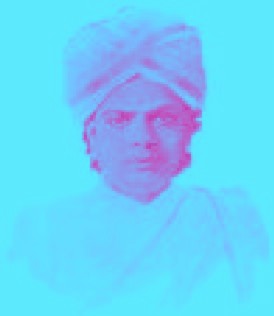
T Subba Row
With notes by H P
Blavatsky
It is now very difficult to say what was the real
ancient Aryan
doctrine. If an inquirer were to attempt to answer it
by an analysis
and comparison
of all the various systems of esotericism prevailing in
comparison between our
real Brahmanical and the Tibetan esoteric
doctrines will be
possible unless one ascertains the teachings of that
so-called "Aryan
doctrine," and fully comprehends the whole range of the
ancient Aryan
philosophy. Kapila's
"Sankhya," Patanjali's
"Yog
philosophy," the
different systems of "Saktaya" philosophy,
the various
Agamas and Tantras are but branches of
it. There is a doctrine, though,
which is their
real foundation, and which is sufficient to explain the
secrets of these
various systems of philosophy and harmonize their
teachings. It probably existed long before the Vedas
were compiled, and
it was studied
by our ancient Rishis in connection with the Hindu
scriptures. It is attributed to one mysterious personage
called
Maha.*.....
----------
* The very title of the present chief of the esoteric Himalayan
Brotherhood.--Editor, Theosophist
Magazine.
----------
The Upanishads and such portions of the Vedas as are not chiefly
devoted
to the public
ceremonials of the ancient Aryans are hardly intelligible
without some
knowledge of that doctrine. Even the real significance of
the grand
ceremonials referred to in the Vedas will not be perfectly
apprehended without its
light being throw upon them. The Vedas were
perhaps compiled
mainly for the use of the priests assisting at public
ceremonies, but the
grandest conclusions of our real secret doctrine are
therein
mentioned. I am informed by persons
competent to judge of the
matter, that the
Vedas have a distinct dual meaning--one expressed by
the literal
sense of the words, the other indicated by the metre
and the
swara
(intonation), which are, as it were the life of the Vedas.
Learned Pundits and philologists of course deny that swara has anything
to do with
philosophy or ancient esoteric doctrines;
but the mysterious
connection between swara and light is one of its most profound secrets.
Now, it is extremely difficult to show whether the Tibetans derived
their doctrine
from the ancient Rishis of India, or the ancient
Brahrnans learned
their occult science from the adepts of
again, whether the
adepts of both countries professed originally the
same doctrine and
derived it from a common source.* If you
were to go
to the Sramana Balagula, and question
some of the Jain Pundits there
about the
authorship of the Vedas and the origin of the Brahmanical
esoteric doctrine,
they would probably tell you that the Vedas were
composed by Rakshasas** or Daityas, and that
the Brahmans had derived
their secret
knowledge from them.***
---------
* See Appendix, Note I.
** A kind of demons-devil.
*** And so would the Christian padris. But they would never admit that
their "fallen
angels" were borrowed from the Rakshasas; that their
"devil" is the illegitimate son
of Dewel, the Sinhalese female demon;
or that the
"war in heaven" of the Apocalypse--the foundation of the
Christian dogma of the "Fallen Angels" was copied from
the Hindu story
about Siva hurling
the Tarakasura who rebelled against the gods into
Andhahkara, the abode of Darkness, according to Brahmanical
Shastras.
---------
Do these assertions mean that the Vedas and the Brahmanical
esoteric
teachings had their
origin in the lost Atlantis--the continent that once
occupied a
considerable portion of the expanse of the Southern and the
Pacific oceans? The assertion in "Isis Unveiled," that
Sanskrit was the
language of the
inhabitants of the said continent, may induce one to
suppose that the
Vedas had probably their origin there, wherever else
might be the
birthplace of the Aryan esotericism.*
But the real
esoteric doctrine, as
well as the mystic allegorical philosophy of the
Vedas, were derived from another source again, whatever that may
be--
perchance from the
divine inhabitants (gods) of the sacred island which
once existed in
the sea that covered in days of old the sandy tract now
called
powers of Nature
possessed by the inhabitants of the lost Atlantis was
learnt by the
ancient adepts of
esoteric doctrine
taught by the residents of the sacred island.**
The
Tibetan adepts, however, have not accepted this addition to their
esoteric
doctrine; and it is in this respect that
one should expect to
find a difference
between the two doctrines.***
----------
* Not necessarily. (See Appendix, Note II.)
It is generally held by
Occultists that Sanskrit has been spoken in Java and adjacent
islands
from remote
antiquity.--Editor, Theosophist Magazine.
** A locality which is spoken of to this day by the Tibetans, and
called
by them "Scham-bha-la," the
*** To comprehend this passage fully, the reader must turn to vol.
I.
pp. 589-594 of
"
--------
The Brahmanical occult doctrine probably
contains everything that was
taught about the
powers of Nature and their laws, either in the
mysterious island of
the North or in the equally mysterious continent of
the South. And if you mean to compare the Aryan and the
Tibetan
doctrines as regards
their teachings about the occult powers of Nature,
you must
beforehand examine all the classifications of these powers,
their laws and
manifestations, and the real connotations of the various
names assigned to
them in the Aryan doctrine. Here are
some of the
classifications contained in
the Brahmanical system:
II. As appertaining to man
and existing in the MICROCOSM.
III. For the purposes of d Taraka Yog or Pranava
Yog.
IV. For the purposes of Sankhya Yog (where they are, as
it were,
the
inherent attributes of Prakriti).
V. For the purposes of Hata Yog.
VI. For the purposes of Koula Agama.
VII. For the purposes of Sakta Agama.
VIII. For the purposes of Siva Aqama.
IX. For the purposes of Sreechakram (the Sreechakram
referred
to
in "Isis Unveiled" is not the real esoteric Sreechakram
of
the ancient adepts of Aryavarta).*
--------
* Very true. But who would be allowed to give out the
"real" esoteric
one?--Editor,
Theosophist Magazine.
--------
X. In Atharvena
Veda, &c.
In all these classifications subdivisions have been multiplied
indefinitely by
conceiving new combinations of the Primary Powers in
different
proportions. But I must now drop this
subject, and proceed to
consider the
"Fragments of Occult Truth" (since embodied in "Esoteric
Buddhism").
I have carefully examined it, and find that the results arrived at
(in
the Buddhist
doctrine) do not differ much from the conclusions of our
Aryan philosophy, though our mode of stating the arguments may
differ in
form. I shall now discuss the question from my own
standpoint, though,
following, for
facility of comparison and convenience of discussion, the
sequence of
classification of the sevenfold entities or principles
constituting man which is
adopted in the "Fragments."
The questions
raised for
discussion are (1) whether the disembodied spirits of human
beings (as they are
called by Spiritualists) appear in the seance-rooms
and
elsewhere; and (2) whether the
manifestations taking place are
produced wholly or
partly through their agency.
It is hardly possible to answer these two questions satisfactorily
unless the meaning
intended to be conveyed by the expression
"disembodied spirits of human
beings" be accurately defined. The words
spiritualism and spirit
are very misleading. Unless English
writers in
general, and
Spiritualists in particular, first ascertain clearly the
connotation they mean to
assign to the word spirit, there will be no end
of confusion,
and the real nature of these so-called spiritualistic
phenomena and their
modus occurrendi can never be clearly defined.
Christian writers generally speak of only two entities in man--the
body,
and the soul or
spirit (both seeming to mean the same thing to them).
European philosophers generally speak of body and mind, and argue
that
soul or spirit
cannot be anything else than mind. They are of opinion
that any belief
in lingasariram* is entirely unphilosophical. These
views are
certainly incorrect, and are based on unwarranted assumptions
as to the
possibilities of Nature, and on an imperfect understanding of
its laws. I shall now examine (from the standpoint of
the Brahmanical
esoteric doctrine)
the spiritual constitution of man, the various
entities or principles
existing in him, and ascertain whether either of
those entities
entering into his composition can appear on earth after
his death, and
if so, what it is that so appears.
--------
* The astral body, so called.
--------
Professor Tyndall in his excellent papers on what he calls the
"Germ
Theory," comes to the following conclusions as the result of a
series of
well-planned
experiments:--Even in a very small volume of space there
are myriads of
protoplasmic germs floating in ether.
If, for instance,
say water (clear
water) is exposed to them, and if they fall into it,
some form of life
or other will be evolved out of them.
Now, what are
the agencies for
the bringing of this life into existence?
Evidently--
I. The water, which is the field, so to say, for the growth
of life.
II. The protoplasmic germ, out of which life or a living organism
is to be
evolved or developed. And lastly--
III. The power, energy, force, or tendency which springs into
activity
at the touch or
combination of the protoplasmic germ and the water, and
which evolves or
develops life and its natural attributes.
Similarly, there are three primary causes which bring the human
being
into
existence. I shall call them, for the
purpose of discussion, by
the following
names
(1) Parabrahmam, the Universal Spirit.
(2) Sakti, the crown of the astral light,
combining in itself all the
powers of Nature.
(3) Prakriti, which in its original or
primary shape is represented by
Akasa. (Really every form of matter is finally
reducible to Akasa.)*
It is ordinarily stated that Prakriti or
Akasa is the Kshetram, or the
basis which
corresponds to water in the example we have taken Brahmam
the germ, and Sakti, the power or energy that comes into existence at
their union or
contact.**
--------
* The Tibetan esoteric Buddhist doctrine teaches that Prakriti is cosmic
matter, out of
which all visible forms are produced;
and Akasa, that
same cosmic
matter, but still more subjective--its spirit, as it were.
Prakriti being the
body or substance, and Akasa Sakti its soul or
energy.
** Or, in other words, "Prakriti, Swabhavat, or Akasa, is SPACE, as the
Tibetans have it;
Space filled with whatsoever substance or no
substance at all--i.e.,
with substance so imperceptible as to be only
metaphysically
conceivable. Brahman, then, would be the
germ thrown
into the soil of
that field, and Sakti, that mysterious energy or
force
which develops it,
and which is called by the Buddhist Arahat of Tibet,
FOHAT. That which we call form (rupa)
is not different from that which
we call space (sunyata).... Space
is not different from form. Form is
the same as
space; space is the same as form. And so with the other
skandhas, whether vedana, or sanjna, or sanskara, or vijnana, they are
each the same as
their opposite." .... (Book of Sin-king, or the "Heart
Sutra." Chinese
translation of the "Maha-Prajna-Paramita-Hridaya-Sutra,"
chapter on the
"Avalokiteshwara," or the manifested
Buddha.) So that
the Aryan and
Tibetan or Arhat doctrines agree perfectly in
substance,
differing but in names
given and the way of putting it.
---------
But this is not the view which the Upanishads take of the question.
According to them, Brahamam* is the Kshetram or basis, Akasa or
Prakriti, the germ or
seed, and Sakti, the power evolved by their union
or
contact. And this is the real
scientific, philosophical mode of
stating the case.
--------
* See Appendix, Note IV.
--------
Now, according to the adepts of ancient Aryavarta,
seven principles are
evolved out of these
three primary entities. Algebra teaches us that the
number of
combinations of n things, taken one at a time, two at a time,
three at a time,
and so forth = 2(n)-1.
Applying this formula to the present case, the number of entities
evolved from
different combinations of these three primary causes
amounts to 2(3)-1 =
8-1 = 7.
As a general rule, whenever seven entities are mentioned in the
ancient
occult science of
that those seven
entities came into existence from three primary
entities; and that these three entities, again, are
evolved out of a
single entity or
MONAD. To take a familiar example, the
seven coloured
rays in the solar
ray are evolved out of three primary coloured rays;
and the three
primary colours coexist with the four secondary colours in
the solar
rays. Similarly, the three primary
entities which brought man
into existence
co-exist in him with the four secondary entities which
arose from
different combinations of the three primary entities.
Now these seven entities, which in their totality constitute man,
are as
follows. I shall enumerate them in the order adopted
in the
"Fragments," as far as the two orders (the Brahmanical and the Tibetan)
coincide:--
Corresponding names in
Esoteric Buddhism.
I. Prakriti. Sthulasariram
(Physical Body).
II. The entity evolved
out of the
combination Sukshmasariram or Lingasariram
of Prakriti and Sakti. (Astral
Body).
III. Sakti. Kamarupa (the Perispirit).
IV. The entity evolved out
of the
combination of Jiva (Life-Soul).
Brahmam, Sakti and
Prakriti.
V. The entity evolved out
of the
combination of Physical
Intelligence (or
Brahmam and Prakriti. animal
soul).
VI. The entity evolved
out of the
combination of Spiritual
Intelligence (or Soul).
Brahmam and Sakti.
VII. Brahmam. The emanation from the
ABSOLUTE,
&c. (or pure spirit.)
Before proceeding to examine these nature
of these seven entities, a few
general explanations
are indispensably necessary.
I. The secondary principles arising out of the combination of
primary
principles are quite
different in their nature from the entities out of
whose combination
they came into existence. The
combinations in
question are not of the
nature of mere mechanical juxtapositions, as it
were. They do not even correspond to chemical
combinations.
Consequently no valid inferences as regards the nature of the
combinations in question
can be drawn by analogy from the nature
[variety?] of these
combinations.
II. The general proposition, that when once a cause is removed its
effect vanishes, is
not universally applicable. Take, for
instance, the
following example:--If
you once communicate a certain amount of momentum
to a ball,
velocity of a particular degree in a particular direction is
the result. Now, the cause of this motion ceases to exist
when the
instantaneous sudden
impact or blow which conveyed the momentum is
completed; but according to
continue to move on
for ever and ever, with undiminished velocity in the
same direction,
unless the said motion is altered, diminished,
neutralized, or
counteracted by extraneous causes. Thus,
if the ball
stop, it will not
be on account of the absence of the cause of its
motion, but in
consequence of the existence of extraneous causes which
produce the said
result.
Again, take the instance of subjective phenomena.
Now the presence of this ink-bottle before me is producing in me,
or in
my mind, a
mental representation of its form, volume, colour and so
forth.
The bottle in question may be removed, but still its mental picture
may
continue to
exist. Here, again, you see, the effect
survives the cause.
Moreover, the effect may at any subsequent time be called into
conscious
existence, whether the
original cause be present or not.
Now, in the ease of the filth principle above mentioned-the entity
that
came into
existence by the combination of Brahmam and Prakriti--if the
general proposition
(in the "Fragments of Occult Truth") is correct,
this principle,
which corresponds to the physical intelligence, must
cease to exist
whenever the Brahmam or the seventh Principle should
cease to exist for
the particular individual; but the fact
is certainly
otherwise. The general proposition under consideration
is adduced in
the
"Fragments" in support of the assertion that whenever the seventh
principle ceases to
exist for any particular individual, the sixth
principle also ceases
to exist for him. The assertion is
undoubtedly
true, though the
mode of stating it and the reasons assigned for it, are
to my mind
objectionable.
It is said that in cases where tendencies of a man's mind are
entirely
material, and all
spiritual aspirations and thoughts were altogether
absent from his
mind, the seventh principle leaves him either before or
at the time of
death, and the sixth principle disappears with it. Here,
the very
proposition that the tendencies of the particular individual's
mind are entirely
material, involves the assertion that there is no
spiritual intelligence
or spiritual Ego in him, it should then have been
said that,
whenever spiritual intelligence ceases to exist in any
particular individual,
the seventh principle ceases to exist for that
particular individual
for all purposes. Of course, it does not
fly off
anywhere. There can never be any thing like a change of
position in the
case of Brahmam.* The
assertion merely means that when there is no
recognition whatever of Brahmam, or spirit, or spiritual life, or
spiritual
consciousness, the seventh principle has ceased to exercise
any influence or
control over the individual's destinies.
--------
* True--from the standpoint of Aryan Exotericism and the Upanishads,
not
quite so in the
case of the Arahat or Tibetan esoteric doctrine; and it
is only on this
one solitary point that the two teachings disagree, as
far as we
know. The difference is very trifling,
though, resting as it
does solely upon
the two various methods of viewing the one and the same
thing from two
different aspects. (See
Appendix, Note IV.)
--------
I shall now state what is meant (in the Aryan doctrine) by the
seven
principles above
enumerated.
I. Prakriti. This is the basis of Sthulasariram,
and represents it in
the
above-mentioned classification.
II. Prakriti and Sakti. This is the Lingasariram,
or astral body.
III. Sukti. This principle corresponds to your Kamarupa.
This power or
force is placed by
ancient occultists in the Nabhichakram. This power
can gather akasa or prakriti, and mould it
into any desired shape. It
has very great
sympathy with the fifth principle, and can be made to act
by its
influence or control.
IV. Brahmam and Sakti,
and Prakriti. This
again corresponds to your
second principle, Jiva.
This power represents the universal life-principle which exists in
Nature. Its seat is the Anahatachakram
(heart). It is a force or power
which constitutes
what is called Jiva, or life. It is, as you say,
indestructible, and its
activity is merely transferred at the time of
death to another
set of atoms, to form another organism.
V. Brahma and Prakriti. This, in our Aryan philosophy, corresponds to
your fifth
principle, called the physical intelligence.
According to
our
philosophers, this is the entity in which what is called mind has
its seat or
basis. This is the most difficult
principle of all to
explain, and the
present discussion entirely turns upon the view we take
of it.
Now, what is mind? It is a
mysterious something, which is considered to
be the seat of
consciousness--of sensations, emotions, volitions, and
thoughts. Psychological analysis shows it to be
apparently a congeries
of mental
states, and possibilities of mental states, connected by what
is called
memory, and considered to have a distinct existence apart from
any of its
particular states or ideas. Now in what
entity has this
mysterious something
its potential or actual existence? Memory and
expectation, which form,
as it were, the real foundation of what is
called
individuality, or Ahankaram, must have their seat of
existence
somewhere. Modern psychologists of
material substance of
brain is the seat of mind; and that past
subjective experiences,
which can he recalled by memory, and which in
their totality
constitute what is called individuality, exist therein in
the shape of
certain unintelligible mysterious impressions and changes
in the nerves
and nerve-centres of the cerebral hemispheres.
Consequently, they say, the mind--the individual mind--is destroyed
when
the body is
destroyed; so there is no possible
existence after death.
But there are a few facts among those admitted by these
philosophers
which are
sufficient for us to demolish their theory.
In every portion
of the human
body a constant change goes on without intermission. Every
tissue, every
muscular fibre and nerve-tube, and every ganglionic centre
in the brain,
is undergoing an incessant change. In
the course of a
man's lifetime
there may be a series of complete tranformations of
the
substance of his
brain. Nevertheless, the memory of his
past mental
states remains
unaltered. There may be additions of new
subjective
experiences and some
mental states may be altogether forgotten, but no
individual mental state
is altered. The person's sense of
personal
identity remains the
same throughout these constant alterations in the
brain
substance.* It is able to survive all
these changes, and it can
survive also the
complete destruction of the material substance of the
brain.
--------
* This is also sound Buddhist philosophy, the transformation in
question being known
as the change of the skandhas.--Editor, Theosophist
Magazine.
--------
This individuality arising from mental consciousness has its seat
of
existence, according
to our philosophers, in an occult power or force,
which keeps a
registry, as it were, of all our mental impressions. The
power itself is
indestructible, though by the operation of certain
antagonistic causes its
impressions may in course of time be effaced, in
part or wholly.
I may mention in this connection that our philosophers have
associated seven occult
powers with the seven principles or entities
above-mentioned. These seven occult powers in the microcosm
correspond
with, or are the
counterparts of, the occult powers in the macrocosm.
The mental and spiritual consciousness of the individual becomes
the
general
consciousness of Brahmam, when the barrier of
individuality is
wholly removed, and
when the seven powers in the microcosm are placed
en rapport with
the seven powers in the macrocosm.
There is nothing very strange in a power, or force, or sakti, carrying
with it
impressions of sensations, ideas, thoughts, or other subjective
experiences. It is now a well-known fact, that an electric
or magnetic
current can convey
in some mysterious manner impressions of sound or
speech, with all
their individual peculiarities;
similarly, I can
convey my thoughts
to you by a transmission of energy or power.
Now, this fifth principle represents in our philosophy the mind,
or, to
speak more
correctly, the power or force above described, the
impressions of the
mental states therein, and the notion of
self-identity or Ahankaram generated by their collective operation.
This principle is called merely physical intelligence in the
"Fragments." I do not know what is really meant by this
expression. It
may be taken to
mean that intelligence which exists in a very low state
of development
in the lower animals. Mind may exist in different stages
of development,
from the very lowest forms of organic life, where the
signs of its
existence or operation can hardly be distinctly realized,
up to man, in
whom it reaches its highest state of development.
In fact, from the first appearance of life* up to Tureeya Avastha, or
the state of
Nirvana, the progress is, as it were, continuous.
--------
* In the Aryan doctrine, which blends Brahmam, Sakti, and Prakriti in
one, it is the
fourth principle then, in the Buddhist esotericisms the
second in
combination with the first.
--------
We ascend from that principle up to the seventh by almost
imperceptible
gradations. But four stages are recognized in the
progress where the
change is of a
peculiar kind, and is such as to arrest an observer's
attention. These four stages are as follows:--
(1) Where life (fourth principle) makes its appearance.
(2) Where the existence of mind becomes perceptible in conjunction
with
life.
(3) Where the highest state of mental
abstraction ends, and spiritual
consciousness commences.
(4) Where spiritual consciousness disappears, leaving the seventh
principle in a
complete state of Nirvana, or nakedness.
According to our philosophers, the fifth principle under
consideration
is intended to
represent the mind in every possible state of
development, from the
second stage up to the third stage.
IV. Brahmam and Sakti. This principle corresponds to your
"spiritual
intelligence." It is, in fact, Buddhi (I use the word Buddhi
not in the
ordinary sense, but
in the sense in which it is used by our ancient
philosophers); in other words, it is the seat of Bodha or Atmabodha.
One who has Atmabodha in its completeness
is a Buddha. Buddhists know
very well what
this term signifies. This principle is
described in the
"Fragments" as an entity coming into existence by the
combination of
Brahmam and Prakriti. I do not again know in what particular sense
the
word Prakriti is used in this connection. According to our philosophers
it is an entity
arising from the union of Brahmam and Sakti. I have
already explained
the connotation attached by our philosophers to the
words Prakriti and Sakti.
I stated that Prakriti in its primary
state is Akasa.*
If Akasa be considered to be Sakti or
power** then my statement as
regards the ultimate
state of Prakriti is likely to give rise to
confusion and
misapprehension unless I explain the distinction between
Akasa and Sakti. Akasa is not, properly speaking, the crown of
the
astral light, nor
does it by itself constitute any of the six primary
forces. But, generally speaking, whenever any
phenomenal result is
produced, Sakti acts in conjunction with Akasa. And, moreover, Akasa
serves as a basis
or Adhishthanum for the transmission of force
currents
and for the
formation or generation of force or power correlations.***
--------
* According to the Buddhists, in Akasa lies that eternal, potential
energy whose
function it is to evolve all visible things out of
itself.--Editor, Theosophist
Magazine.
** It was never so considered, as we have shown it. But as the
"Fragments" are written in English, a language lacking
such an abundance
of metaphysical
terms to express ever minute change of form, substance
and state as are
found in the Sanskrit, it was deemed useless to confuse
the Western
reader, untrained in the methods of Eastern expression, more
than is
necessary, with a too nice distinctions of proper technical
terms. As "Prakriti
in its primary state is Akasa," and Sakti
"is an
attribute AKASA,"
it becomes evident that for the uninitiated it is all
one. Indeed, to speak of the "union of Brahmam and Prakriti"
instead of
"Brahmam and Sakti"
is no worse than for a theist to write that "That
man has come
into existence by the combination of spirit and matter,"
whereas, his word,
framed in an orthodox shape, ought to read "man is a
living soul was
created by the power (or breath) of God over matter."
*** That is to say, the Aryan Akasa is another word for Buddhist
SPACE
(in its metaphysical meaning).--Editor,
Theosophist Magazine.
---------
In Mantrasastra the letter Ha represents
Akasa, and you will find that
this syllable
enters into most of the sacred formula intended to be used
in producing
phenomenal results. But by itself it
does not represent
any Sakti. You may, if
you please, call Sakti an attribute of Akasa.
I do not think that, as regards the nature of this principle, there can
in reality
exist any difference of opinion between the Buddhist and
Brahmanical philosophers.
Buddhist and Brahmanical initiates know
very well that mysterious
circular mirror
composed of two hemispheres which reflects as it were
the rays
emanating from the "burning bush" and the blazing star--the
spiritual sun Shining
in CHIDAKASAM.
The spiritual impressions constituting this principle have their
existence in an occult
power associated with the entity in question.
The successive incarnations of Buddha, in fact, mean the successive
transfers of this
mysterious power, or the impressions thereof.
The
transfer is only
possible when the Mahatma* who transfers it has
completely identified
himself with his seventh principle, has
annihilated his Ahankaram, and reduced it to ashes in CHIDAGNIKUNDUM,
and has
succeeded in making his thoughts correspond with the eternal
laws of Nature
and in becoming a co-worker with Nature.
Or, to put the
same thing in
other words, when he has attained the state of Nirvana,
the condition of
final negation, negation of individual, or separate
existence.**
---------
* The highest adept.
* In the words of Agatha in the "Maha-pari-Nirvana Sutra,"
"We reach a
condition of rest
Beyond the limit of any
human knowledge"
--Editor, Theosophist Magazine.
---------
VII. Atma.--The emanation from the absolute, corresponding to the
seventh
principle. As regards this entity there
exists positively no
real difference
of opinion between the Tibetan Buddhist adepts and our
ancient Rishis.
We must now consider which of these entities can appear after the
individual's death in seance-rooms and produce the so-called
spiritualistic phenomena.
Now, the assertion of the Spiritualists, that the "disembodied
spirits"
of particular
human beings appear in seance-rooms, necessarily
implies
that the entity
that so appears bears the stamp of some particular
personality.
So, we have to ascertain beforehand in what entity or entities
personality has its seat
of existence. Apparently it exists in
the
person's particular
formation of body, and in his subjective experiences
(called his mind in their totality). On the death of the individual his
body is
destroyed; his lingasariram
being decomposed, the power
associated with it
becomes mingled in the current of the corresponding
power in the
macrocosm. Similarly, the third and fourth principles are
mingled with their
corresponding powers. These entities may
again enter
into the
composition of other organisms. As these
entities bear no
impression of
personality, the Spiritualists have no right to say that
the disembodied
spirit of the human being has appeared in the
seance-room whenever any of these entities may appear there. In fact,
they have no
means of ascertaining that they belonged to any particular
individual.
Therefore, we must only consider whether any of the last three
entities
appear in seance-rooms to amuse or to instruct Spiritualists. Let us
take three
particular examples of individuals, and see what becomes of
these three
principles after death.
I. One in whom spiritual attachments have greater force than
terrestrial
attachments.
II. One in whom spiritual aspirations do exist, but are merely of
secondary importance
to him, his terrestrial interests occupying the
greater share of his
attention.
III. One in whom there exists no spiritual
aspirations whatsoever, one
whose spiritual
Ego is dead or non-existent to his apprehension.
We need not consider the case of a complete adept in this
connection.
In the first two cases, according to our supposition, spiritual and
mental experiences
exist together; when spiritual
consciousness exists,
the existence of
the seventh principle being recognized, it maintains
its connection
with the fifth and sixth principles. But
the existence
of terrestrial
attachments creates the necessity of Punarjanmam
(re-birth), the latter signifying the
evolution of a new set of
objective and
subjective experiences, constituting a new combination of
surrounding
circumstances, or, in other words, a new world.
The period
between death and
the next subsequent birth is occupied with the
preparation required for
the evolution of these new experiences.
During
the period of
incubation, as you call it, the spirit will never of its
own accord
appear in this world, nor can it so appear.
There is a great law in this universe which consists in the
reduction of
subjective experiences
to objective phenomena, and the evolution of the
former from the
latter. This is otherwise called
"cyclic necessity."
Man is subjected to this law if he do not check and counterbalance
the
usual destiny or
fate, and he can only escape its control by subduing
all his
terrestrial attachments completely. The
new combination of
circumstances under which
he will then be placed may be better or worse
than the
terrestrial conditions under which he lived;
but in his
progress to a new
world, you may be sure he will never turn around to
have a look at
his spiritualistic friends.
In the third of the above three cases there is, by our supposition,
no
recognition of spiritual
consciousness or of spirits; so they are
non-existing so far as he
is concerned. The case is similar to
that of
an organ or
faculty which remains unused for a long time.
It then
practically ceases to
exist.
These entities, as it were, remain his, or in his possession, when
they
are stamped with
the stamp of recognition. When such is
not the case,
the whole of his
individuality is centred in his fifth principle. And
after death this
fifth principle is the only representative of the
individual in question.
By itself it cannot evolve for itself a new set of objective
experiences, or, to say
the same thing in other words, it has no
punarjanmam. It is such an entity that can appear in seance-rooms; but
it is absurd to
call it a disembodied spirit.* It is merely a power or
force retaining
the impressions of the thoughts or ideas of the
individual into whose
composition it originally entered. It
sometimes
summons to its aid
the Kamarupa power, and creates for itself some
particular ethereal
form (not necessarily human).
--------
* It is especially on this point that the Aryan and Arahat doctrines
quite agree. The teaching and argument that follow are in
every respect
those of the
Buddhist Himalayan Brotherhood.--Editor, Theosophist Magazine.
--------
Its tendencies of action will be similar to those of the
individual's
mind when he was
living. This entity maintains its
existence so long as
the impressions
on the power associated with the fifth principle remain
intact. In course of time they are effaced, and the
power in question
is then mixed
up in the current of its corresponding power in the
MACROCOSM, as the river loses itself in the sea. Entities like these
may afford signs
of there having been considerable intellectual power in
the individuals
to which they belonged; because very
high intellectual
power may co-exist
with utter absence of spiritual consciousness.
But
from this
circumstance it cannot be argued that either the spirits or
the spiritual
Egos of deceased individuals appear in seance-rooms.
There are some people in
such entities
(called Pisacham).
I do not know much about them
experimentally, as I have
never meddled with this disgusting,
profitless, and
dangerous branch of investigation.
The Spiritualists do not know what they are really doing. Their
investigations are likely
to result in course of time either in wicked
sorcery or in the
utter spiritual ruin of thousands of men and women.*
--------
* We share entirely in this idea.--Editor, Theosophist Magazineophist.
--------
The views I have herein expressed have been often illustrated by
our
ancient writers by
comparing the course of a man's life or existence to
the orbital
motion of a planet round the sun. Centripetal force is
spiritual attraction,
and centrifugal terrestrial attraction.
As the
centripetal force
increases in magnitude in comparison with the
centrifugal force, the
planet approaches the sun--the individual reaches
a higher plane
of existence. If, on the other hand, the
centrifugal
force becomes
greater than the centripetal force, the planet is removed
to a greater
distance from the sun, and moves in a new orbit at that
distance--the
individual comes to a lower level of existence. These are
illustrated in the first
two instances I have noticed above.
We have only to consider the two extreme cases.
When the planet in its approach to the sun passes over the line
where
the centripetal
and centrifugal force completely neutralize each other,
and is only
acted on by the centripetal force, it rushes towards the sun
with a gradually
increasing velocity, and is finally mixed up with the
mass of the sun's
body. This is the case of a complete adept.
Again, when the planet in its retreat from the sun reaches a point
where
the centrifugal
force becomes all-powerful, it flies off in a tangential
direction from its
orbit, and goes into the depths of void space.
When
it ceases to be
under the control of the sun, it gradually gives up its
generative heat, and
the creative energy that it originally derived from
the sun, and remains
a cold mass of material particles wandering through
space until the
mass is completely decomposed into atoms.
This cold
mass is compared
to the fifth principle under the conditions above
noticed, and the
heat, light, and energy that left it are compared to
the sixth and
seventh principles.
Either after assuming a new orbit or in its course of deviation
from the
old orbit to the
new, the planet can never go back to any point in its
old orbit, as
the various orbits lying in different planes never
intersect each other.
This figurative representation correctly explains the ancient
Brahmanical theory on the subject.
It is merely a branch of what is
called the Great
Law of the Universe by the ancient mystics.
--T. Subba Row
Appendix
Note I.
In this connection it will be well to draw the reader's attention
to the
fact that the
country called "Si-dzang" by the Chinese,
and
Western geographers, is mentioned in the oldest books preserved in
the
great seat of
occult learning in the archaic ages.
According to these
records, it was
inhabited by the "Teachers of Light," the "Sons of
Wisdom" and the "Brothers
of the Sun." The Emperor Yu the
"Great" (2207
B.C.), a pious mystic, is credited with having obtained his occult
wisdom and the
system of theocracy established by him--for he was the
first one to unite
in
authority--from Si-dzang. That
system was the same as with the old
Egyptians and the Chaldees; that which we know
to have existed in the
Brahmanical period in
learning, power, the
temporal as well as the secret wisdom were
concentrated within the
hierarchy of the priests and limited to their
caste. Who were the aborigines of
ethnographer is able to
answer correctly at present. They
practice the
Bhon religion,
their sect is a pre-and anti-Buddhistic one, and they
are to be found
mostly in the
known of
them. But even that would justify the
supposition that they
are the greatly
degenerated descendants of mighty and wise forefathers.
Their ethnical type shows that they are not pure Turanians, and their
rites--now those
of sorcery, incantations, and Nature-worship--remind
one far more of
the popular rites of the Babylonians, as found in the
records preserved on
the excavated cylinders, than of the religious
practices of the
Chinese sect of Tao-sse (a religion based upon pure
reason and
spirituality), as alleged by some.
Generally, little or no
difference is made,
even by the Kyelang missionaries, who mix greatly
with these people
on the borders of British Lahoul and ought to know
better, between the
Bhons and the two rival Buddhist sects, the Yellow
Caps and the Red Caps. The
latter of these have opposed the reform of
Tzong-ka-pa from
the first, and have always adhered to old Buddhism, so
greatly mixed up now
with the practices of the Bhons. Were our
Orientalists to know more
of them, and compare the ancient Babylonian
Bel or Baal
worship with the rites of the Bhons, they would find
an
undeniable connection
between the two. To begin an argument
here,
proving the origin
of the aborigines of
the three great
races which superseded each other in
we call them
the Akkadians (a name invented by F. Lenormant), or the
primitive Turanians, Chaldees, and
Assyrians, is out of the question.
Be it as it may, there is reason to call the trans-Himalayan
esoteric
doctrine Chaldeo-Tibetan. And
when we remember that the Vedas came,
agreeably to all
traditions, from the
Brahmins themselves from the far North, we are justified in looking
on
the esoteric
doctrines of every people who once had or still has it, as
having proceeded
from one and the same source; and to
thus call it the
"Aryan-Chaldeo-Tibetan" doctrine, or Universal Wisdom-Religion. "Seek
for the Lost
Word among the hierophants of
was the advice
of Swedenborg the seer.
Note II.
Not necessarily, we say. The
Vedas, Brahmanism, and along with these,
Sanskrit, were importations into what we now regard as
never indigenous
to its soil. There was a time when the
ancient nations
of the West
included under the generic name of
countries of
a Lower, and a
of
Alexander; and
classics. The
countries now named
were considered
by them as forming part of
therefore, that
the
civilizations, arts, and sciences of all other nations (
and perhaps even
formed part of an
unbroken continent which began at the
ran down over
Note III.
To ascertain such disputed questions, one has to look into and
study
well the Chinese
sacred and historical records--a people whose era
begins nearly 4,600
years back (2697 B.C.). A people so
accurate, and
by whom some of
the most important inventions of modern
so much boasted
modern science were anticipated--such as the compass,
gunpowder, porcelain,
paper, printing, &c.--known and practiced
thousands of years
before these were rediscovered by the Europeans,
ought to receive
some trust for their records. And from
Lao-tze down to
Hiouen-Thsang their
literature is filled with allusions and references
to that island
and the wisdom of the Himalayan adepts.
In the "Catena
of Buddhist
Scriptures from the Chinese," by the Rev. Samuel Beal, there
is a chapter
"On the TIAN-TA'I School of Buddhism" (pp. 244-258) which
our opponents
ought to read. Translating the rules of
that most
celebrated and holy
school and sect in
called Che-chay (the Wise One), in the year 575 of our era, when
coming
to the sentence
which reads "That which relates to the one garment
(seamless) worn by the GREAT TEACHERS OF THE SNOWY MOUNTAINS, the schoolof the Haimavatas" (p.
256), the European translator places after thelast
sentence a sign of interrogation, as well he may. The statisticsof
the school of the "Haimavatas," or of our
Himalayan Brotherhood, arenot to be found in the
general census records of
Beal translates a rule relating to "the great professors of
the higher
order who live in
mountain depths remote from men," the Aranyakas,
or
hermits.
So, with respect to the traditions concerning this island, and
apart
from the (to
them) historical records of this preserved in the Chinese
and Tibetan
sacred books, the legend is alive to this day among the
people of
once bloomed
remains there still, and the spot is well known to some of
the "great
teachers of the
changed its
topography by the awful cataclysm. Every
seventh year these
teachers are believed
to assemble in SCHAM-BHA-LA, the "
According to the general belief it is situated in the north-west of
inaccessible even to the
fearless nomadic tribes; others hem it
in
between the range of
the
the
Khoondooz and
west and east,
which affords to the curious mind a pretty large latitude
to locate it
in. Others still place it between Namur Nur and the
speak of it as a
fertile fairy-like land once an island, now an oasis of
incomparable beauty, the
place of meeting of the inheritors of the
esoteric wisdom of
the god-like inhabitants of the legendary island.
In connection with the archaic legend of the
Continent, is it not profitable to note a fact known to all modern
geologists-that the
Himalayan slopes afford geological proof that the
substance of those
lofty peaks was once a part of an ocean floor?
Note IV.
We have already pointed out that, in our opinion, the whole
difference
between Buddhistic and Vedantic
philosophies was that the former was a
kind of
Rationalistic Vedantism, while the latter might be
regarded as
transcendental
Buddhism. If the Aryan esotericism
applies the term
jivatma to the
seventh principle--the pure and per se unconscious
spirit--it is
because the Vedanta, postulating three kinds of
existence--(1) the paramarthika (the true, the only real one), (2) the
vyavaharika (the
practical), and (3) the pratibhasika (the apparent or
illusory life)--makes
the first life or jiva, the only truly existent
one. Brahma, or the ONE'S SELF, is its only
representative in the
universe, as it is
the universal Life in toto, while the other two are
but its
"phenomenal appearances," imagined and created by ignorance, and
complete illusions
suggested to us by our blind senses. The
Buddhists,
on the other
hand, deny either subjective or objective reality even to
that one
Self-Existence. Buddha declares that
there is neither Creator
nor an Absolute
Being. Buddhist rationalism was ever too
alive to the
insuperable difficulty
of admitting one absolute consciousness, as in
the words of
and wherever
there is relation there is dualism."
The ONE LIFE is
either
"MUKTA" (absolute and unconditioned), and can have no relation to
anything nor to any
one; or it is "BADDHA" (bound
and conditioned), and
then it cannot be
called the absolute; the limitation,
moreover,
necessitating another
deity as powerful as the first to account for all
the evil in this
world. Hence, the Arahat
secret doctrine on cosmogony
admits but of one
absolute, indestructible, eternal, and uncreated
UNCONSCIOUSNESS (so to translate) of an element (the word being
used for
want of a better
term) absolutely independent of everything else in the
universe; a something ever present or ubiquitous, a
Presence which ever
was, is, and
will be, whether there is a God, gods, or none, whether
there is a
universe, or no universe, existing during the eternal cycles
of Maha Yugs, during the Pralayas as during the periods of Manvantara,
and this is
SPACE, the field for the operation of the eternal Forces and
natural Law, the
basis (as Mr. Subba Row rightly calls it) upon which
take place the
eternal intercorrelations of Akasa-Prakriti; guided by
the unconscious
regular pulsations of Sakti, the breath or power of a
conscious deity, the
theists would say; the eternal energy of
an
eternal, unconscious
Law, say the Buddhists. Space, then, or
"Fan,
Bar-nang" (Maha
Sunyata) or, as it is called by Lao-tze, the "Emptiness,"
is the nature
of the Buddhist Absolute. (See
Confucius' "Praise of the
Abyss.") The word jiva,
then, could never be applied by the Arahats to
the Seventh
Principle, since it is only through its correlation or
contact with matter
that Fo-hat (the Buddhist active energy) can
develop active
conscious life; and that to the question
"how can
unconsciousness generate
consciousness?" the answer would be:
"Was the
seed which
generated a Bacon or a
Note V.
To our European readers, deceived by the phonetic similarity, it
must
not be thought
that the name "Brahman" is identical in this connection
with Brahma or Iswara, the personal God.
The Upanishads--the Vedanta
Scriptures--mention no such God, and one would vainly seek in them
any
allusions to a
conscious deity. The Brahman, or Parabrahm, the
absolute
of the Vedantins, is neuter and unconscious, and has no connection
with
the masculine
Brahma of the Hindu Triad, or Trimurti. Some Orientalists
rightly believe the
name derived from the verb "Brih," to grow
or
increase, and to be
in this sense the universal expansive force of
Nature, the vivifying and spiritual principle or power spread
throughout
the universe,
and which, in its collectivity, is the one Absoluteness,
the one Life and
the only Reality.
--H.P. Blavatsky
Theosophical Society, Cardiff Lodge,
Cardiff Lodge’s Instant Guide to Theosophy
Cardiff Lodge’s Gallery of Great Theosophists