Theosophical Society,
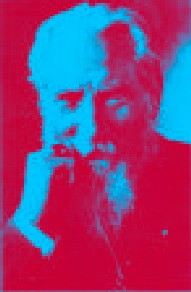
Charles
Webster Leadbeater
Glimpses of Masonic History
by
C.W. Leadbeater
First
Published 1926
CONTENTS
AUTHOR'S PREFACE
CHAPTER I
SCHOOLS OF MASONIC THOUGHT
The Origins of Masonry. The Authentic School. The Anthropological
School. The
CHAPTER II
THE EGYPTIAN MYSTERIES
The Message of the World Teacher. The Gods of
CHAPTER III
THE CRETAN MYSTERIES
The Unity of the Mysteries. Life in Ancient
Altar Objects. Various Symbols. The Statuettes.
CHAPTER IV
THE JEWISH MYSTERIES
The Jewish Line of Descent. The Jewish Migrations. The Prophets.
The Builders of K.S.T. The Recasting of the Rituals. The Mingling of
Traditions. The Transmission of the New Rites. The Essenes and the Christ.
Kabbalism. The Spiritualization of the
CHAPTER V
THE GREEK MYSTERIES
The Eleusinian Mysteries. The Origin of the Greek Mysteries. The Gods of
Three Degrees. Other Greek Mysteries.
CHAPTER VI
THE MITHRAIC MYSTERIES
Zarathustra and Mithraism. Mithraism among the Romans. The Mithraic
Rites. The Roman Collegia. The Work of King Numa. The Colleges and the Legions.
The Introduction of the Jewish Form. The Transition to the Operatives.
CHAPTER VII
CRAFT MASONRY IN MEDIAEVAL TIMES
Evolutionary Methods. The Withdrawal of the Mysteries. The
Christian Mysteries. The Repression of the Mysteries. The Crossing of
Traditions. The Two Lines of Descent. The Culdees. Celtic
Christianity in
CHAPTER VIII
OPERATIVE MASONRY IN THE MIDDLE AGES
The Temporary Custodians. Decline of the Collegia. The Comacini.
The Comacine Lodges. Other Survivals of the Collegia. The Compagnonnage. The Stonemasons of
CHAPTER IX
THE TRANSITION FROM OPERATIVE TO SPECULATIVE
The Reformation. The Reappearance of Speculative Masonry. The First
Minutes. Scottish Minutes. English Minutes. Irish Minutes. The
Grand Lodge of
CHAPTER X
OTHER LINES OF MASONIC TRADITION
The Stream of Secret Societies. The Knights Templars. The Suppression of the Templars. The Preservation
of the Templars' Tradition. The Royal Order of
CHAPTER XI
THE SCOTTISH RITE
Origin of the Rite. The Jacobite Movement. The Oration of Ramsay. The Chapter of Clermont. The Council
of Emperors. Stephen Morin.
CHAPTER XII
THE CO-MASONIC ORDER
The Restoration of an Ancient Landmark. The Succession of
Co-Masonry. The Co-Masonic Rituals. The Future of Masonry
APPENDIX I.
Degrees of the Rite of Perfection
II. Principal Masonic Events from 1717
Author's Preface
WHEN I wrote The Hidden Life in Freemasonry, it was at first my
intention to devote my second chapter to a brief outline of Masonic history. I
soon found that that plan was impractical. The most compressed account that
would be of any use would occupy far more space than I could spare, and would
entirely overweight the book with what is after all only one department of its
subject. The obvious alternative is to publish the historical sketch
separately; hence this book, which is really but a second volume of the other.
The keynote of both volumes, and indeed the only reason for their
publication, is to explain precisely what the title indicates - the hidden
life in Freemasonry - the mighty force in the background, always at work yet
always out of sight, which has guided the transmission of the Masonic tradition
through all the vicissitudes of its stormy history, and still inspires the
utmost enthusiasm and devotion among the Brn. of the Craft to-day.
The existence and the work of the Head of all true Freemasons is
the one and sufficient reason for the virility and power of this most wonderful
Organization. If we understand His relation to it and what He wishes to make of
it, we shall also understand that it embodies one of the finest schemes ever
invented for the helping of the world and for the outpouring of spiritual
force.
Many of our Brn. have been for many years unconsciously taking part
in this magnificent altruistic work; if they can be brought to comprehend what
it is that they are doing and why, they will continue the great work more
happily and more intelligently, throwing into it the whole strength of their
nature both bodily and spiritual, and enjoying the fruit of their labours far
more definitely than ever before.
--------------------------------------------------------------------------------
CHAPTER I
. Schools of Masonic Thought
A HISTORY of
Freemasonry would be a colossal undertaking, needing encyclopaedic knowledge and
many years of research. I have no pretension to the possession of the qualities
and the erudition required for the production of such a work; all I can hope to
do is to throw a little light upon some of the dark spots in that history, and
to bridge over to some extent some of the more obvious gaps between the
sections of it which are already well known.
THE ORIGINS OF MASONRY
The actual origins of
Freemasonry, as I have said in a previous book, are lost in the mists of
antiquity. Masonic writers of the eighteenth century speculated uncritically
upon its history, basing their views upon a literal belief in the history and
chronology of the Old Testament, and upon the curious legends of the Craft
handed down from operative times in the Old Charges. Thus it was put forward in
all seriousness by Dr. Anderson in his first Book of Constitutions that
"Adam, our first parent, created after the Image of God, the great
Architect of the Universe, must have had the Liberal Sciences, particularly
Geometry, written on his Heart," while others, less fanciful, have
attributed its origin to Abraham, Moses, or Solomon. Dr. Oliver, writing as
late as the first part of the nineteenth century, held that Masonry, as we
have it to-day, is the
only true relic of the faith of the patriarchs before the flood, while the
ancient Mysteries of Egypt and other countries, which so closely resembled it,
were but human corruptions of the one primitive and pure tradition.
As scientific and
historical knowledge progressed in other fields of research, and especially in
the criticism of the Scriptures, scientific methods were gradually applied to
the study of Masonry, so that today there exists a vast body of fairly
accurate and most interesting information upon the history of the Craft. In
consequence of this and other lines of investigation there are four main
schools or tendencies of Masonic thought, not in any way necessarily defined or
organized as schools, but grouped according to their relation to four important
departments of knowledge lying primarily outside the Masonic field. Each has
its own characteristic approach towards Freemasonry; each has its own canons of
interpretation of Masonic symbols and ceremonies, although it is clear that
many modern writers are influenced by more than one school.
THE AUTHENTIC SCHOOL
We may consider first
what is sometimes called the
This school, however,
has limitations which are the outcome of its very method of approach. In a
society as secret as Masonry there must be much that has never been written
down, but only transmitted orally in the Lodges, so that documents and records
are but of partial value. The written
records of speculative Masonry hardly antedate the revival in 1717, while the
earliest extant minutes of any operative Lodge belong to the year .* (*History of the Lodge of
Edinburgh, by D. Murray-Lyon, p. .) The tendency of this school, therefore, is
quite naturally to derive Masonry from the operative Lodges and Guilds of the
Middle Ages, and to suppose that speculative elements were later grafted upon
the operative stock - this hypothesis being in no way contradicted by existing
records. Bro. R. F. Gould affirms that if we can assume the symbolism (or
ceremonial) of Masonry to be older than 1717, there is practically no limit
whatever to the age that can be assigned to it* (*Concise History of
Freemasonry, by R. R Gould, p. .); but many other writers look for the origin
of our Mysteries no further back than the mediaeval builders.
Amongst this school
there is a tendency, also very natural when such a theory of origin is held, to
deny the validity of the higher degrees, and to declare, in accordance with the
Solemn Act of Union between the two Grand Lodges of the Freemasons of England,
in December, 1813, that "pure Antient Masonry consists of three degrees
and no more, viz., those of the Entered Apprentice, the Fellow Craft, and the
Master Mason, including the Supreme Order of the Holy Royal Arch."* (*Book
of Constitutions, 1884, p. .) All other degrees and rites are, among the more
rigid followers of this school, looked upon as Continental innovations and are
accordingly rejected as "spurious" Masonry.
10 As far as interpretation
goes, the authentics have ventured but little further than a moralization upon
the symbols and ceremonies of Masonry as an adjunct to Anglican Christianity.
THE ANTHROPOLOGICAL SCHOOL
A second school, still
only in process of development, is applying the discoveries of anthropology to
a study of Masonic history, with remarkable results. A vast amount of
information upon the religious and initiatory customs of many peoples, both
ancient and modern, has been gathered by anthropologists; and Masonic students
in this field have found many of our signs and symbols, both of the Craft and
higher degrees, in the wall-paintings, carvings, sculpture and buildings of the
principal races of the world. The
The Anthropologists do not
confine their studies to the past alone, but have investigated the initiatory
rites of many existing tribes, both in Africa and Australia, and have found
them to possess signs and gestures still in use among Masons. Striking
analogies to our Masonic rites have also been found among the inhabitants of
Among pioneers in this
field we should mention Bro. Albert Churchward, the author of several
interesting books on the Egyptian origin of Masonry, although it may be that he
is not always quite sufficiently critical; Bro. J. S. M. Ward, the author of
Freemasonry and the Ancient Gods, Who was Hiram Abiff? and a number of other
works, who looks to Syria as the source of Masonry, though he has compiled a
mass of valuable information from many other lands; and Mr. Bernard H.
Springett, author of Secret Sects of Syria and Lebanon, who has collected much
material bearing upon Masonic rites among the Arabs.
To the work of the
Another important work
which has been accomplished by its efforts is the justification of many of the
higher degrees to be considered "pure Antient Masonry"; for in spite
of the pronouncement of the Grand Lodge of England quoted above, there is just
as much evidence for the extreme antiquity of Rose-Croix as of Craft and Arch
signs and symbols, and the same may be said of the signs of many other degrees
as well. It is quite clear from the researches of anthropologists that,
whatever may be the precise links in the chain of descent, we in Masonry are
the inheritors of a very ancient tradition, which has for countless ages been
associated with the most sacred mysteries of religious worship.
THE
A third school of Masonic
thought, which we may call the Mystical, approaches the mysteries of the Craft
from another standpoint altogether, seeing in them a plan of man's spiritual
awakening and inner development. Thinkers of this school, on the record of
their own spiritual experiences, declare that the degrees of the Order are
symbolical of certain states of consciousness which must be awakened in the
individual initiate if he aspires to win the treasures of the spirit. They give
testimony of another and far higher nature upon the validity of our Masonic
rites - a testimony that belongs to religion rather than to science. The goal
of the mystic is conscious union with God, and to a Mason of this school the
Craft is intended to portray the path to that goal, to offer a map, as it were,
to guide the feet of the seeker after God.
Such students are often
more interested in interpretation than in historical research. They are not
primarily concerned in tracing an exact line of descent from the past, but
rather in so living the life indicated by the symbols of the Order that they
may attain to the spiritual reality of which those symbols are the shadows.
They hold, however, that Masonry is at least akin to the ancient Mysteries,
which were intended for precisely the same purpose - that of offering to man a
path by which he might find God; and they deplore the fact that the majority of
our modern Brn. have so far forgotten the glory of their Masonic heritage that
they have allowed the ancient rites to become little more than empty forms. One
well-known representative of this school is Bro. A. E. Waite, one of the finest
Masonic scholars of the day, and an authority upon the history of the higher
degrees. Another is Bro. W. L. Wilmshurst, who has given some beautiful and
deeply spiritual interpretations of Masonic symbolism. This school is doing
much to spiritualize masculine Masonry, and the deeper reverence for our
mysteries that is becoming more and more apparent is without doubt one of the
marks of its influence.
20 THE
The fourth school of
thought is represented by an evergrowing body of students in the Co-Masonic
Order, and is gradually attracting adherents in masculine Masonry also. Since
one of its chief and distinctive tenets is the sacramental efficacy of Masonic
ceremonial when duly and lawfully performed, we may perhaps not improperly term
it the sacramental or occult school. The term occultism has been much
misunderstood; it may be defined as the study and knowledge of the hidden side
of nature by means of powers which exist in all men, but are still unawakened
in the majority - powers which may be aroused and trained in the occult student
by means of long and careful discipline and meditation.
The goal of the occultist,
no less than that of the mystic, is conscious union with God; but the methods
of approach are different. The aim of the occultist is to attain that union by
means of knowledge and of will, to train the whole nature, physical, emotional
and mental, until it becomes a perfect expression of the divine spirit within,
and can be employed as an efficient instrument in the great plan which God has
made for the evolution of mankind, which is typified in Masonry by the building
of the holy temple. The mystic, on the other hand, rather aspires to ecstatic
union with that level of the divine consciousness which his stage of evolution
permits him to touch.
The way of the occultist
lies through a graded series of steps, a pathway of Initiations conferring
successive expansions of consciousness and degrees of sacramental power; that
of the mystic is often more individual in character, a "flight of the
alone to the Alone," as Plotinus so beautifully expressed it. To the
occultist the exact observance of a form is of great importance, and through
the use of ceremonial magic he creates a vehicle through which the divine light
may be drawn down and spread abroad for the helping of the world, calling to
his aid the assistance of Angels, nature-spirits and other inhabitants of the
invisible worlds. The method of the mystic, on the other hand, is through
prayer and orison; he cares nothing for forms and, though by his union
therewith he too is a channel of the divine Life, he seems to me to lose the
enormous advantage of the collective effort made by the occultist, which is so
greatly strengthened by the help of the higher Beings whose presence he
invokes. Both these paths lead to God; to some of us the first will appeal
irresistibly, to others the second; it is largely a matter of the Ray to which
we belong. The one is more outward-turned in service and sacrifice; the other
more inward-turned in contemplation and love.
THE KNOWLEDGE OF THE
OCCULTIST
The student of occultism,
therefore, learns to awaken and train for scientific use the powers latent
within him, and by their means he is able to see far more of the real meaning
of life than the man whose vision is limited by the physical senses. He learns
that each man is in essence divine, a veritable spark of God's fire, gradually
evolving towards a future of glory and splendour culminating in union with God;
that the method of his progress is by successive descents into earthly bodies
for the sake of experience, and withdrawals into worlds or planes which are
invisible to physical eyes. He finds that this progress is governed by a law of
eternal justice, which renders to each man the fruit of that which he sows, joy
for good and suffering for evil.
He learns, too, that the
world is ruled, under the will of T.M.H., by a Brotherhood of Adepts, who have
Themselves attained divine union, but remain on earth to guide humanity; that
all the great religions of the world were founded by Them, according to the
needs of the races for which they were intended, and that within these
religions there have been schools of the Mysteries to offer to those who are
ready a swifter path of unfoldment, with greater knowledge and opportunities
for service; that this Path is divided into steps and degrees: the probationary
Path, or the Lower Mysteries, wherein the candidates are prepared for
discipleship, and the Path proper, or the Greater Mysteries, in which are
conferred within the Great White Lodge itself five great Initiations, which
lead the disciple from the life of earth to the life of adeptship in God, to
become "a living flame," as it is said, "for the lighting of the
world." He is taught that God, both in the universe and in man, shows
Himself as a Trinity of Wisdom, Strength and Beauty, and that these Three
Aspects are represented in the Great White Lodge in the Persons of its three
chief Officers, through whom the mighty power of God descends to men.
THE OCCULT RECORDS
It will be seen that this
occult knowledge depends no more upon the study of books and records than do the
experiences of the mystics; both belong to a higher order of consciousness, the
existence of which cannot be satisfactorily demonstrated on the physical plane.
Nevertheless, the study of the physical-plane records of the past is of value
in confirming the historical researches of the trained occultist, who is able
to read what are sometimes called the akashic records, and so to acquire an
accurate knowledge of the past. This subject is so little understood that it
may perhaps be useful if at this point I quote somewhat at length from a book
entitled Clairvoyance which I wrote many years ago:
On the mental plane (the
records) have two widely different aspects. When the visitor to that plane is
not thinking specially of them in any way, these records simply form a
background to whatever is going on, just as the reflections in a pier-glass at
the end of a room might form a background to the life of the people in it. It
must always be borne in mind that under these conditions they are really
merely reflections from the ceaseless activity of a great Consciousness upon a
far higher plane. .
30 But if the trained
investigator turns his attention especially to any one scene, or wishes to call
it up before him, an extraordinary change at once takes place, for this is the
plane of thought, and to think of anything is to bring it instantaneously
before you. For example, if a man wills to see the record of the landing of
Julius Caesar in
In truth he observes not
only what he would have seen if he had been there at the time in the flesh, but
much more. He hears and understands all that the people say, and he is
conscious of all their thoughts and motives; and one of the most interesting of
the many possibilities which open up before one who has learnt to read the
records is the study of the thought of ages long past - the thought of the
cave-men and the lake-dwellers as well as that which ruled the mighty
civilizations of Atlantis, of Egypt or Chaldaea. What splendid possibilities
open up before the man who is in full possession of this power may easily be
imagined. He has before him a field of historical research of most entrancing
interest. Not only can he review at his leisure all history with which we are
acquainted, correcting as he examines it the many errors and misconceptions which
have crept into the accounts handed down to us; he can also range at will over
the whole story of the world from its very beginning, watching the slow
development of intellect in man, the descent of the Lords of the Flame, and the
growth of the mighty civilizations which They founded.
Nor is his study confined
to the progress of humanity alone; he has before him, as in a museum, all the
strange animal and vegetable forms which occupied the stage in days when the
world was young; he can follow all the wonderful geological changes which have
taken place, and watch the course of the great cataclysms which have altered
the whole face of the earth again and again.
In one especial case an
even closer sympathy with the past is possible to the reader of the records. If
in the course of his inquiries he has to look upon some scene in which he
himself has in a former birth taken part, he may deal with it in two ways; he
can either regard it in the usual manner as a spectator (though always, be it remembered,
as a spectator whose insight and sympathy are perfect), or he may once more
identify himself with that long-dead personality of his - may throw himself
back for the time into that life of long ago, and absolutely experience over
again the thoughts and the emotions, the pleasures and the pains of a
prehistoric past.
In the light of this
occult knowledge (which is within the reach of the inner sight) Masonry is seen
to be far greater and holier than its initiates appear generally to realize. As
tradition has always indicated, it is found to be a direct descendant of the
Mysteries of Egypt (once the heart of that splendid faith whose wisdom and
power were the glory of the ancient world - those Mysteries which were the
parent and prototype of the secret schools of other neighbouring lands), and
its purpose is still to serve as a gateway to the true Mysteries of the Great
White Lodge. It offers to its initiates far more than a mere moralization upon
building tools, and yet it is "founded upon the purest principles of
piety and virtue," for without the practice of morality and the living of
the ethical life no true spiritual progress is possible.
The ceremonies of Freemasonry
(those at least of its higher degrees) are dramatizations, as it were, of
sections of the invisible worlds, through which the candidate must pass after
death in the ordinary course of nature - which also he must enter in full
consciousness during the rites of initiation into those true Mysteries of
which Masonry is a reflection. Each degree relates to a different plane of
nature, or to an aspect of a plane, and possesses layer after layer of meaning
applicable to the consciousness of T.G.A.O.T.U., the constitution of the
universe, and the principles in man, according to the occult law formulated by
Hermes Trismegistus and adopted by Rosicrucians, alchemists and students of the
Kabbala in later ages: "As above, so below." The Masonic rites are thus
rites of the probationary Path, intended to be a preparation for true
Initiation, to be a school for training the Brn. for the far greater knowledge
of the Path proper.
THE SACRAMENTAL POWER
To the occult student
Masonry has also another aspect, of the greatest importance, concerning which I
have written in The Hidden Life in Freemasonry It is not only a wonderful and
intricate system of occult symbols enshrining the secrets of the invisible
worlds; it has also a sacramental aspect which is of the utmost beauty and
value not only to its initiates but to the world at large. The performance of
the ritual of each degree is intended to call down spiritual power, first to
assist the Bro. upon whom the degree is conferred to awaken within himself that
aspect of consciousness which corresponds to the symbolism of the degree, as
far as it can be awakened; secondly to aid in the evolution of the members
present; and thirdly and most important of all, to pour out a flood of
spiritual power intended to uplift, strengthen and encourage all members of the
Craft.
Some years ago I undertook
an investigation into the hidden side of the sacraments of the Catholic Church,
and published the results of that investigation in a book called The Science of
the Sacraments. Those who have read that book will remember that the shedding
abroad of spiritual power is one great object of the celebration of the Holy
Eucharist, and of other services of the Church, and that it is attained by the
invocation of an Angel to build a spiritual temple in the inner worlds with the
aid of the forces generated by the love and devotion of the people, and the
charging of that temple with the enormous power called down at the consecration
of the Sacred Elements. A somewhat similar result is achieved during the
ceremonies performed by the Masonic Lodge, although the plan is not exactly the
same, being indeed far older; and each of our rituals, when properly carried
out, likewise builds a temple in the inner worlds, through which the spiritual
power called down at the initiation of the candidate is stored and radiated.
Thus Masonry is seen, in the sacramental sense as well as the mystical, to be
"an art of building spiritualized," and every Masonic Lodge ought to
be a channel of no mean order for the shedding of spiritual blessing over the
district in which it labours.
Sometimes orders and rites
which were once channels of great force have admitted, as the years passed by,
Brn. less worthy than their predecessors - Brn. who thought more of their own
gain than of service to the world. In such cases the spiritual powers
associated with those grades were either entirely withdrawn by the H.O.A.T.F.,*
(*See The Hidden Life in Freemasonry, pp. 15, .) to be introduced later into
some other and more suitable group, or allowed to remain dormant until more
fitting candidates should be found to hold them worthily - the bare succession
passing down and transmitting, as it were, the seeds of the power, although
the power itself was largely in abeyance.
40 On the other hand, there
have been cases in which a rite or grade has been manufactured by a student who
wished to throw some great truth into ceremonial form, but knew little of all
this inner side of Masonry; if such a degree or rite were doing useful work and
attracting suitable candidates, sacramental powers fitted for that rite or
grade were sometimes introduced into it, either by some Bro. on the physical
plane who possessed one of the lines of succession mentioned above, which was
then adapted by the H.O.A.T.F. for the work, or by a direct and non-physical
interference from behind.
Furthermore, the inner
effect of a given degree, even in a rite that may be fully valid, may vary
greatly with the degree of advancement and general attitude of the Bro. upon
whom it is conferred; so that in one case, let us say, the 33 ° would confer
stupendous spiritual power, and in another, less worthy, the powers given would
be much smaller, because of the candidate's incapacity to respond fully to them.
In such cases a fuller degree of power will manifest itself as greater advancement
is made in the development of character. It also appears to be possible for
power to be temporarily withdrawn in cases of evil-doing by one of the Brn.,
and to be restored later when the evil-doing has ceased.
All this may seem a little
bewildering to the student of the form side of Masonry; and indeed it is a fact
that there is but little means on the physical plane of judging the inner
effect of a given degree without reference to those who may be working it. It
may however be generally stated that the chief lines of Masonic tradition -
those which are of the greatest inner or spiritual value - are the Craft
degrees, upon which all other grades are superimposed, the Mark and the Arch
degrees, and the chief degrees of the Ancient and Accepted Scottish Rite, the 18 °, 30 ° and 33 °. Other degrees
that are worked have their own peculiar powers, and these are often valuable;
but the grades which I have mentioned are those which are considered by the
H.O.A.T.F. to be of the greatest value to our present generation, and they are
therefore those which are worked at present in the Co-Masonic Order. Another
line of great interest, though very different from any other degrees existing
among us, is that of the rites of Memphis and Mizraim, which are relics in
their occult power, although not in their form, of perhaps the very oldest
Mysteries existing upon earth. These too have their part to play in the future,
as in the past, and they have therefore been preserved and transmitted to us in
the present day.
THE FORM AND THE LIFE
In all cases we must
realize that the form of the degrees of Masonry and their life are two very
different things, although of course in a perfect system, as in that of the
ancient Mysteries at the height of their glory, they would correspond
perfectly. Masonry is yet in a transitional stage, and is but emerging from
the ignorance of the Dark Ages. The rites of
The whole position will be
best understood if it can be realized that the plan of Masonry is in the hands
of the H.O.A.T.F., who rules His mighty Order with perfect justice and the most
marvellous skill, so that all that can be done is done for the greatest good of
all. The powers that stand behind Freemasonry are great and holy, and it is but
right that they should be conferred in their fullness only upon those who are
likely to use them as they should be used and to treat them with the reverence
they deserve. There is a great and glorious reality in the background all the
time, ever pressing towards realization, and employing whatever channels are
available for its manifestation. Whatever can be used is always used to the
very fullest extent, and none need fear that he is overlooked. It is obvious,
however, that where the Brn. think more of gratifying their own vanity than of
the Hidden Work, where they spend their time in banqueting and revelry and
curtail the sacred ritual in order that they may adjourn as quickly as possible
to the South, they are less worthy channels of the Divine Glory than those more
spiritual Brn. who are willing to study and to understand. All the time the
H.O.A.T.F. is watching; He sees the slightest endeavor of the Craftsmen to
serve, and He will pour forth His wondrous power just in so far as the Brn.
become worthy of it.
ORTHODOXY AND HERESY
Another point which arises
in connection with the transmission of Masonic degrees will be developed more
fully as we proceed. We must realize that in Masonic ritual it is not a case of
one orthodoxy, and a number of heresies and schisms; it is rather that there
are as many lines of tradition in form as there are types of succession in
inner power. The Mysteries worked in the different countries of the ancient
world varied considerably in the details of their form and legend, and vestiges
of these differences remain in the various workings now in use among us. Many
equally valid streams of tradition have crossed and recrossed one another
throughout the ages, and have influenced each other to a greater or less
degree. The seating of the principal officers in a Craft Lodge, for instance,
differs in English and Continental Masonry. English Masonry follows the old
Egyptian method of arranging them, while Continental Masonry follows the Chaldaean
plan and seats them in an isosceles triangle.
The powers of the
succession of I.M.s in these two systems are in essence the same, but since in
the Continental Lodges the ceremony of Installation is reduced to the merest
vestige, only the minimum of power necessary for the actual transmission of the
degrees is conferred, and very much less is done for the R.W.M. than under the
English plan. But this is a question of imperfection of form rather than of
absence of power. The spiritual powers behind Masonry work through the
different forms according to the value of the form and the will of the
H.O.A.T.F. behind, who is the only judge of the much-argued difference between
genuine and spurious Masonry. In the light of this view of the Masonic
succession, it will be seen that genuine rites are those which possess and
transmit spiritual power, whereas spurious
Masonry is the working of a form from which for one reason or another
the life has been withdrawn, or to which it has never been linked.
In the following chapters
I shall endeavour to trace the descent of the Masonic tradition from the
Egyptian Mysteries to the present day, not in any way attempting to delineate
each separate link in the chain of succession, for that would be the work of a
life-time and would not be of any fuller value to the student, but touching
rather upon important periods of Masonic history, as revealed by the inner
sight, and confirmed in the writings of Masonic scholars.
2 The Egyptian
Mysteries
THE MESSAGE OF THE
WORLD-TEACHER
In The Hidden Life in
Freemasonry I have described to some extent the form and meaning of Freemasonry
as I knew it in
The authentic history of
According to Manetho, the
Egyptian historian of the Ptolemaic period, whose works are now lost (except
for certain fragments preserved in quotations), the gods and demigods reigned for
12,843 years. After these came the Nekyes or Manes, who are said to have
reigned for 5,813 years; and some of these may perhaps be identified with the
Shemsu Heru, or Followers of Horus, who are frequently mentioned in Egyptian
texts.* (*Sir E. A. Wallis Budge. The
The Atlantean conquest of
Egypt took place over one hundred and fifty thousand years ago, and the first
great Egyptian empire lasted until the catastrophe of 75,025 B.C., when the two
great islands Ruta and Daitya were whelmed beneath the ocean, and only the
island of Poseidonis remained.* (*Op. cit., pp. 119 and 132, and The Story of
Atlantis, by Scott Elliott.) It was during the dominance of that empire that
the three pyramids were built in accordance with the astronomical and
mathematical lore of the Atlantean priests;* (*See The Hidden Life in
Freemasonry, p. .) and it is to this age also that we look for the origin of
those Mysteries which have been handed down to us in the ceremonies of
Freemasonry. Even then the ceremonies were ancient, and we must search a still
more remote past for their ultimate source. In the great catastrophe of 75,025
B.C. the whole land of Egypt was flooded, and nothing remained of all its glory
save the three pyramids rising above the waters.* (*Man: Whence, How and
Whither, pp. 242 and .) After this, when the swamps had become habitable, there
came a negroid domination; and then the land was again colonized by the
Atlanteans, who restored the splendour of the Egyptian temples and established
once more the hidden Mysteries which had been celebrated in the great pyramid.
This empire lasted up to the time of the Aryanization of Egypt in 13,500 B.C.;
it was ruled by a great dynasty of divine kings, among whom were many of the
heroes whom Greece later regarded as demigods, such as Herakles of the twelve
labours, whose tradition was handed on to
classical times.
It was to this people
about 40,000 B.C. that the World Teacher came forth from the White Lodge,
bearing the name of Tehuti or Thoth, called later by the Greeks Hermes; He
founded the outer cult of the Egyptian Gods and restored the Mysteries to the
splendour of byegone days.
He came to teach the great
doctrine of the 'Inner Light' to the priests of the Temples, to the powerful
sacerdotal hierarchy of Egypt, headed by its Pharaoh. In the inner court of the
chief Temple He taught them of 'the Light that lighteth every man that cometh
into the world' - phrase of His that was handed down through the ages, and was
echoed in the fourth Gospel in its early Egyptian-coloured words. He taught
them that the Light was universal, and that that Light, which was God, dwelt in
the heart of every man: "I am that Light," He bade them repeat,
"That Light am I". "That Light," He said, "is the true
man, although men may not recognize it, although they neglect it. Osiris is
Light; He came forth from the Light; He dwells in the Light; He is the Light.
The Light is hidden everywhere; it is in every rock and in every stone. When a
man becomes one with Osiris the Light, then he becomes one with the whole of
which he was part, and then he can see the Light in everyone, however thickly
veiled, pressed down, and shut away. All the rest is not; but the Light is. The
Light is the life of men. To every man - though there are glorious ceremonies,
though there are many duties for the priest to do, and many ways in which he
should help men - that Light is nearer than aught else, within his very heart.
For every man the Reality is nearer than any ceremony, for he has only to turn
inwards, and then will he see the Light. That is the object of every ceremony,
and ceremonies should not be done away with, for I come not to destroy but to
fulfil. When a man knows, he goes beyond the ceremony, he goes to Osiris, he
goes to the Light, the Light Amen-Ra, from which all came forth, to which all
shall return.
"Osiris is in the
heavens, but Osiris is also in the very heart of men. When Osiris in the heart
knows Osiris in the heavens, then man becomes God, and Osiris, once rent into
fragments, again becomes one. But see! Osiris the Divine Spirit, Isis, the
Eternal Mother, give life to Horus, who is Man, Man born of both, yet one with
Osiris. Horus is merged in Osiris, and Isis, who had been Matter, becomes
through him the Queen of Life and Wisdom. And Osiris, Isis, and Horus are all
born of the Light.
"Two are the births
of Horus. He is born of
So taught He, and the wise
among the priests were glad.
To Pharaoh, the Monarch, He gave the motto: "Look for the
Light"; He said that only as a King saw the Light in the heart of each
could he rule well. And to the people He gave as a motto: "Thou art the
Light. Let that Light shine." And He set that motto round the pylon in a
great
And the joyous
civilization of
THE GODS OF
It will be seen from the
above that the deities, or rather forms of
Deity, Osiris, Isis and Horus were already familiar to the people, and
the World Teacher made it part of His work to draw their attention to the true
meaning of the three Persons. At what time knowledge of these three Aspects of
God was introduced into the land we do not know, but at the date of our
experience they had their places in the symbology of the Mysteries.
ISIS AND OSIRIS
Isis, to whom the Lesser
Mysteries were ascribed, was not only the universal feminine principle
expressed in nature, but also a real and very lofty Being, just as the Christ
is the universal Life, the Second Logos, and also a high Official of the Occult
Hierarchy. She by virtue of her high development and office was able to
represent the Feminine Aspect of the Deity to man. Isis was the Mother of all
that lives, and wisdom and truth and power; upon her temple at Sais the
inscription was written: "I am that which is, which hath been, and which
shall be; and no man has ever lifted the veil that hides my Divinity from mortal
eyes."* (*Plutarch. Moralia; De Iside et Osiride.) The moon was her
symbol; and the influence which she outpoured upon her worshippers to the music
of the shaken sistrum was of brilliant blue light veined with delicate silver,
as of shimmering moonbeams, the very touch of which brought upliftment and
ecstasy.
Osiris was the embodiment
of God the Father in a mighty Planetary Spirit. His symbol was the sun, and the
influence which He outpoured was a dazzling glory of light shot through with
gold, like the rays of the sun caught upon the surface of a lake. The influence
of Horus, who represented the divine Child, was the glowing rose and gold of
the eternal love which is perfect wisdom.
ANIMAL DEITIES
The Egyptians also
followed the ancient practice of regarding certain animals as mirroring
various aspects of the divine, because of their outstanding qualities. Thus
they took the intelligence of the ape, the clear-sightedness of the hawk, the
strength of the bull, and so on, and attributed the quality to some particular
aspect of the Deity. They carefully bred certain animals as perfect
representatives of their species, and kept them apart as symbols of those
divine qualities. Such were the Apis bulls, and the cats of Bast or Pasht. These
animals were regarded not exactly as sacred, but as objectified examples of the
qualities. In the beginning the creature was a mere symbol, but in later days
the Egyptians had the idea that those which had been especially set apart came
to be linked with the godhead, and so were to some extent a manifestation of
the deity. They then embalmed the animals and laid up the mummies in their
temples, with the intention of preserving the divine influence.
THE PRACTICE OF EMBALMING
70 In the same way the
Pharaoh was embalmed with the idea that his power, his connection with the
deity (which was a very close one as Pharaoh), would be preserved and would
continue to radiate so long as the body remained. This resembled the later
custom of preserving the relics of a saint. The strong love of the Egyptians
for their country provided another reason for embalming their dead; they hoped
to preserve a definite link on the physical plane which would operate to draw
them back to rebirth among their own people. That it did so operate in many
cases seems to have been a fact, although the will of the re-incarnating ego
would doubtless have been sufficient to achieve the same result. The custom was
not altogether a good one, because if the body of a man of evil life is
embalmed, a good deal of additional power is thereby left to him after death;
he may more easily materialize and operate on the physical plane in undesirable
ways. It is on the whole fortunate that the practice has not persisted.
OTHER DEITIES
Many other deities were
reverenced in ancient Egypt, in much the same way as numerous gods are adored
to-day in India; and in every case the devotion addressed to the Supreme
obtained its response through the
particular channel chosen by the worshipper. Great Angels of different Orders
and Rays were appointed to represent these various qualities of the Deity, and
these were worshipped as gods in the older faiths. But so close is the union in
these cases that devotion rendered to one of these was at the same time given
to God Himself. Shri Krishna, speaking as the Supreme in the Bhagavad Gita
says: "Even those who worship other Gods with devotion, full of faith -
they also worship Me."* (*Op. cit., ix, .)
Wherever devotion is
offered through a particular form, we may be sure that there is an Intelligence
behind that form who acts as a mediator or channel between the suppliant and
the Deity behind. Hathor, for instance, was the goddess of love and beauty,
while as we have seen, Isis was the Queen of Truth and the Mother of all
things; yet both were representatives of the feminine aspect of the Deity, as
also was Nephthys. Ptah was the Master Architect of the Universe, the Holy
Spirit who is the Creative Fire of God; He was the celestial worker in metals,
and the chief smelter, caster and sculptor of the Gods, the skilful Craftsman
by whom the design for every part of the framework of the world was made.*
(*Sir E. A. Wallis Budge, The Papyrus of Ani, p. 170.)
THE BROTHERS OF HORUS
Among the other deities
who were especially connected with the Mysteries, who still play a most
important part in the inner working of our Masonic ceremonies to-day, are to be
found the four children or brothers of Horus, who are depicted in the well-known
judgment scene as standing on a lotus before the throne of Osiris. These represent
the Gods of the four quarters, or of the cardinal points, who support the
canopy of heaven at its four corners. The God of the north was Hapi, who bore
the head of an ape; the God of the east was Tuamutef, who bore the head of a
jackal; Amset or Kestha ruled the south, and had the head of a man; while the
west was governed by Qebsennuf, whose head was that of a hawk.* (*Sir E. A.
Wallis Budge, The Nile, p. 267, Egyptian Ideas of the Future Life, p. 10.)
The truth underlying these
strange deities is of the deepest interest when examined by the inner sight,
for these four are the same as the four Devarajas of India - the Kings of the
elements, earth, air, fire and water, who likewise preside over the cardinal
points. They correspond also with the cherubim described by Ezekiel, and with
the four beasts of the Revelation. S. John says of them:
And in the midst of the throne,
and round about the throne, were four beasts full of eyes before and behind.
And the first beast was like a lion, and the second beast like a calf, and the
third beast had a face as a man, and the fourth beast was like a flying eagle.
And the four beasts had each of them six wings about him; and they were full of
eyes within: and they rest not day and night, saying, Holy, Holy, Holy, Lord
God Almighty, which was and is, and is to come.* (*Rev., iv, 6-.)
Ezekiel describes them a
little differently:
Their wings were joined
one to another; they turned not when they went; they went every one straight
forward. As for the likeness of their faces, they four had the face of a man,
and the face of a lion on the right side: and they four had the face of an ox
on the left side; they four also had the face of an eagle. As for the likeness
of the living creatures, their appearance was like burning coals of fire, and
like the appearance of lamps: it went up and down among the living creatures;
and the fire was bright, and out of the fire went forth lightning. Now as I
beheld the living creatures, behold one wheel upon the earth by the living
creatures, with his four faces. The appearance of the wheels and their work was
like unto the colour of a beryl: and they four had one likeness: and their
appearance and their work was as it were a wheel in the middle of a wheel. When
they went, they went upon their four sides: and they turned not when they went.
As for their rings, they were so high that they were dreadful; and their rings
were full of eyes round about them four.* (*Ezekiel, I, 9, 10, 13, 15-.)
This symbolism is strange; but it has its meaning, and any investigator
who has ever had the privilege of seeing the mighty Four will at once recognize
that S. John and the prophet Ezekiel had seen them too, however inadequate are
their descriptions. The beast with the face of a man stands for the physical
body (earth); the ox or the bull (as in the case of the bull of Mithra and the
Apis bull) typifies the emotional or astral body (water); the lion symbolizes
the will or the mental aspect (air); and the soaring eagle is taken to indicate
the spiritual side of man's nature (fire). The Egyptian forms were a little
different; but the same four elements and their Rulers are depicted in that
ancient symbolism, which indeed we find in all religions. There is a four-faced
Brahma; there is the fourfold Jupiter, who is aerial, fulgurant, marine and
terrestrial. And that leads us back to the reality behind all these symbols,
the four great Angel-Rulers of the elements, the administrators of the great
law, who are the gods or leaders of the hierarchies of Angels of earth, water,
air and fire. Those are the mystical four; and they are full of eyes within,
because they are the scribes, the recorders, the agents of the Lipika: they
watch all that happens, all that is done, all that is written or spoken or
thought in all the worlds.
In The Light of
. the four Regents of the
Earth, come down
From
On brazen plates - the
Angel of the East,
Whose hosts are clad in
silver robes, and bear
Targets of pearl: the
Angel of the South,
Whose horsemen, the
Kumbhandas, ride blue steeds,
With sapphire shields: the
Angel of the West,
By Nagas followed, riding
steeds blood-red,
90 With coral shields: the
Angel of the North,
Environed by his Yakshas,
all in gold,
On yellow horses, bearing
shields of gold.
This is a poetical
Oriental description; yet it has a definite foundation. The form in which it
is cast is obviously merely traditional; but always there is a fact behind.
Those Great Ones are surrounded by, and in constant communication with, vast
hosts of Angels and assistants, but these do not take the form of a guard of
horsemen; yet the colours of the respective hosts are correctly given. These
four most strange and wondrous beings are not exactly Angels, in the ordinary
sense of the word, though they are often called so; under them are hierarchies
of Angels who carry out their will in accordance with the Law, for they direct
the whole tremendous machinery of divine justice and in their hands is the working
of the law of karma. They are sometimes spoken of as the overseers who guard
the gates and test the material for the building of the holy temple.
CONSECRATION
These beings are very
closely connected with the inner working of the Mysteries, and therefore of
Masonry which is derived therefrom. They represent the great building forces of
the universe, the constructive powers of nature; and since in our Lodges we
are engaged in building a universe in miniature, it is these who are invoked to
assist us in our work. This invocation is performed at the consecration of
every Lodge, however little the modern consecrating officer may know what he is
really doing when he pours forth the traditional offerings of corn, wine, oil
and salt, symbols which they themselves have chosen from time immemorial to
represent their especial powers. This ancient piece of ritual, when performed
by an I.M. duly commissioned to consecrate a Lodge, produces stupendous results
in the inner worlds; for it amounts to a call made to the planetary spirits at
the head of the four lines to recognize the new Lodge and to dedicate it to the
service of T.G.A.O.T.U.
The call is answered. As
the corn is scattered in the north, a great golden Angel of earth descends in
majesty, followed by his Angel-train, some of whom are left behind to be the
channels of the power of his hierarchy whenever the Lodge is opened in due and
ancient form. The pouring of wine in the south invokes a great blue Angel of
water, also attended by other Angels less great than he; similarly the offering
of oil in the west calls upon a mighty crimson Angel of fire, who pours down
into the Lodge the splendid rhythmic Power of that 'most terrible and lovely'
of the elements. As the salt is strewn in the east, an Angel of the air flashes
down from on high, he and his attendants being of a wonderful silver hue shot
through with mother-of-pearl. These four Great Ones, representing the four gods
of the elements, the four children or brothers of Horus, solemnly consecrate
the Lodge, binding the Brn. into a close unity in the inner worlds and linking
with them Angels of their orders, who will act as their representatives at each
Lodge meeting. The tradition of these four passed down to the mediaeval
operative Craftsmen and became mingled with that of the four Crowned Martyrs
who are the patron-saints of the Craft.
Let me warn my Brn. who
may be called upon to act as consecrating officers to see that it is corn which
is supplied to them for the ceremony - wheat, and not maize. Once, through an
oversight, maize (which in
THE PURPOSE OF THE
MYSTERIES
In The Hidden Life in
Freemasonry I have already written briefly of the purpose of the Mysteries.*
(*Op. cit., p. .) I said there:
The Mysteries were great public institutions, supported by the
State, centres of national and religious life to which people of the better
classes flocked in thousands; and they did their work exceedingly well, for one
who had passed through their degrees - a process of many years - thereby became
what we should now call a highly-educated and cultured man or woman, with, in addition
to his knowledge of this world, a vivid realization of the future after death, of man's place in the scheme of
things, and therefore of what was really worth doing and living for.
It should not be thought therefore that the Mysteries were secret
societies, with all their affairs deliberately concealed from the ordinary
public. It will be seen presently that thousands of people entered the ordinary
degrees of
Everyone in
Every great nation has had its Mysteries, through which the great
Teachers of mankind sought to instruct the people in matters of importance,
inspired by the Great White Lodge which stands behind all religions alike.
Among these the Egyptian Mysteries were preeminent among the western peoples of
the ancient world, not only because of their immemorial age, but because of the
fact that
The presence of this secret centre belonging to the White
Brotherhood had much to do with
The principal centre for the public work of these Mysteries was the
great pyramid, called in ancient Egypt Khut, "The Light". It was
built on the most exact astronomical and mathematical calculations, and
provided a veritable key in stone to the enigmas of the universe.* (*See The
Hidden Life in Freemasonry, pp. 228-30.)
The initiates of the Egyptian Mysteries were symbolically engaged
in the building of the pyramid, just as in our modern
Masonry we are engaged in erecting the
The ceremonies of the Mysteries were also intended to portray the
higher evolution of man, his return to the divine source whence he came,
through the development of the higher part of his nature, which is not merely
consequent upon practices of meditation and ceremonial, but even more upon the
living out of the ethical precepts which were taught. Many people of our day
imagine that we know ethical truths without being taught them, but that is not
so; they seem to us quite natural now, but long ago they were discoveries or
revelations somewhat analogous to the steps of advancement in material science
and invention.
Each degree of the Mysteries was designed to reflect one or other
of the great Initiations of the White Lodge, so that the initiates of this
lower level might prepare themselves ultimately to enter the Path of Holiness
and so strive after the fullness of union with Osiris, the Hidden Light. When
we come to consider these degrees we shall see how this teaching was graded,
and how those initiates who were properly prepared were enabled to reach the
true knowledge which they were seeking. The whole scheme of initiation provided
a complete chart of man's spiritual evolution, and it was for the individual
candidate to endeavour to put the teachings into practice and to make real in
his own consciousness that which was symbolized in the ritual.
THE DEGREES OF THE MYSTERIES
1The Mysteries of Egypt were, as ever, divided into two main sections,
the Lesser and the Greater. The Lesser Mysteries are typified to some extent by
what we now know as the First Degree of Craft Masonry, while the Greater
Mysteries were analogous to what we now call the Second and Third Degrees.
Beyond these there was a ceremony corresponding to the degree of I.M., in which
the succession of powers was guarded and transmitted from age to age; and still
further in reserve there were the yet greater spiritual powers that are
indicated, and even given to some extent, in the higher degrees of the Ancient
and Accepted Scottish Rite. Behind the whole system of Masonic initiation was
(and is) the White Lodge itself, conferring the five great Initiations which
lead to human perfection and full union with God.
THE MYSTERIES OF ISIS
In the Lesser Mysteries the initiate was taught what lies on the
other side of death, and the ceremony of initiation was a symbolical map of
that intermediate world which is sometimes called the astral plane. Probably
Apuleius refers to this degree when he describes the Mysteries of Isis as
celebrated in Greece during the second century A. D., although he wrote at a
time when they had fallen into considerable decay. After mentioning various
purifications through which he passed, he goes on to relate something of what
took place at his initiation:
Then, behold, the day approached when as the sacrifice of
dedication should be done; and when the sun declined and evening came, there
arrived on every coast a great multitude of priests, who according to their
ancient order offered me many presents and gifts. Then was all the laity and
profane people commanded to depart, and when they had put on my back a new
linen robe, the priest took my hand and brought me to the most secret and
sacred place of the temple. Thou wouldest peradventure demand, thou studious
reader, what was said and done there: verily I would tell thee if it were
lawful for me to tell, thou wouldst know if it were convenient for thee to
hear; but both thy ears and my tongue should incur the like pain of rash
curiosity. Howbeit I will not long torment thy mind, which peradventure is
somewhat religious and given to some devotion; listen therefore, and believe it
to be true. Thou shalt understand that I approached near unto hell, even to the
gates of Proserpine, and after that I was ravished throughout all the
elements, I returned to my proper place: about midnight I saw the sun brightly
shine, I saw likewise the gods celestial and the gods infernal, before whom I
presented myself and worshipped them. Behold now have I told thee, which
although thou hast heard, yet it is necessary that thou conceal it; wherefore
this only will I tell, which may be declared without offence for the
understanding of the profane.
When morning came and that the solemnities were finished, I came
forth sanctified with twelve stoles and in a religious habit, whereof I am not
forbidden to speak, considering that many persons saw me at that time. There I
was commanded to stand upon a pulpit of wood which stood in the middle of the
temple, before the figure and remembrance of the goddess; my vestment was of
fine linen, covered and embroidered with flowers; I had a precious cope upon my shoulders, hanging down behind me to
the ground, whereon were beasts wrought of divers colours, as Indian dragons,
and Hyperborean griffins, whom in form of birds the other part of the world
doth engender: the priests commonly call such a habit an Olympian stole. In my
right hand I carried a lighted torch, and a garland of flowers was upon my
head, with white palm-leaves sprouting out on every side like rays; thus I was
adorned like unto the sun, and made in fashion of an image, when the curtains
were drawn aside and all the people compassed about to behold me. Then they began
to solemnize the feast, the nativity of my holy order, with sumptuous banquets
and pleasant meats: the third day was likewise celebrate with like ceremonies,
with a religious dinner, and with all the consummation of the adept order.*
(*Apul. Met, xi, 23, . tr. William Adlington A.D. .)
It is also reported that during the ceremony Isis said:
I am Nature - the parent of all things, the sovereign of the
elements, the primary progeny of time.
THE PRELIMINARY TRIALS
The secrets communicated in the Mysteries have been well and
loyally kept, and no details about them are available, though we occasionally
find guarded hints which give us a slight idea of their character. There is a
picturesque account of the preparation for them given in Mackey's Lexicon of Freemasonry which,
although it does not appear to be substantiated by the records preserved in
Greek and Latin authors, nevertheless contains some fragments of truth. I take
the liberty to epitomize it as follows:
For some days before his initiation the candidate was expected to
preserve perfect chastity, to confine himself to a light diet from which all
animal food was excluded, and to purify himself by repeated ceremonial
ablutions. When the time came he was conducted at
120The conductor now left the aspirant, warning him that many
dangers surrounded and awaited him, and exhorting him to continue unshaken. Heavy
doors closed behind him, rendering his return impossible. Presently he entered
a spacious hall filled with flames through which he had to rush with the
greatest speed. Even when he had passed through this fiery furnace he came to
another hall the floor of which was covered with a huge network of red-hot iron
bars with very narrow interspaces between them. Having surmounted this
difficulty he reached a wide and rapid channel across which he had to swim. On
the other side he found a narrow landing place bounded by two high walls of
brass, in each of which was an immense wheel of the same metal, and beyond them
was an ivory door. He found no means of opening this door, but presently
discovered two large rings, which he seized; but the only result was to set the
brazen wheels revolving with a stunning noise and to cause the platform upon
which he stood to sink from beneath him, so that he remained suspended by the
rings over an apparently fathomless abyss, from which issued a cold wind which
blew out the tiny flame of his lamp and left him in profound darkness. He was
left hanging there for a short time, but soon the noise ceased, the platform
returned to its former position and the ivory door opened itself. Through it he
then entered a brilliantly lighted apartment in which he found a number of the
priests of Isis dressed in the mystic insignia of their offices, who welcomed
and congratulated him. On the walls he saw the various symbols of the Egyptian
Mysteries, the signification of which was by degrees explained to him.
One cannot guarantee all the details of such an account, but it is
true that severe tests more or less of the nature described were applied to
candidates for the inner Mysteries. None of these trials were imposed on the
man who wished to take merely the ordinary course of intensive culture; he
might pass through the Lesser and the Greater without encountering anything
more formidable than hard and long-continued study; and he would never even
know that there was another stage (or rather a number of stages) lying
altogether beyond those, in which he would have to face astral dangers of so
serious a nature that it was considered necessary first to submit the candidate
to severe trials of his courage and self-command.
In the early days of the Mysteries, living pictures were
materialized by the priests before the eyes of the candidate, so that he was
enabled to see for himself what lay on the other side of death. In later days,
when there was less knowledge among the hierophants, elaborate mechanical
devices were shown to him, representing the realities of the astral world as
far as such resources would allow. Still later, the characteristic points of
these pictures were reproduced in a system of symbolic ceremonies, the main
outline of which has come down to us
today in the initiation ceremony of Masonry, although in some Obediences only
a mere vestige of the original procedure remains.
THE MYSTERY LANGUAGE
Besides the teaching upon the life after death - which was elaborated
by countless stories of imaginary individuals, showing the results in the
astral plane after death of certain courses of action during life - a fine
course of education was also given to the initiates of the First degree,
embracing what Masons term the seven liberal arts and sciences - grammar,
logic, rhetoric, arithmetic, geometry, music and astronomy. By grammar the
Egyptians meant the sacred hieroglyphic writing of the priests, which was
taught to all the initiates of the Mysteries, but it also signified a kind of
secret language, a way of speaking peculiar to the priesthood. In the secret
language of the Mysteries it was not so much that different words were used, as
that the familiar words had a different meaning. Those who have studied the translations
of Egyptian texts will have noticed how widely these vary in the versions of
the different scholars; I have sometimes wondered whether this is in any way
due to that system of double meanings.
In ancient Egypt we were able to talk about the secrets of the
inner life before crowds of people without letting them know what we meant; and
we had quite a large vocabulary of such significant words, so that an entire
conversation could be conducted seemingly about ordinary every-day affairs, but
in reality upon the secrets of the Mysteries. Much instruction was given in
this way; a lecture or address might be delivered publicly by one of the
priests, bearing two entirely distinct meanings - the one ethical and intended
for the helping of people who were not initiated, and the other esoteric, for
the students of the Mysteries. The legend that Masonry possesses a universal
language known only to the Brn. may be an echo of tradition about this ancient
and secret tongue.
This secret tongue of the Initiates was also used in inscriptions,
and in the hieroglyphic wall-paintings and papyri. Many of the inscriptions,
telling of the victories of some great Pharaoh, could be read in a hidden
sense, and they then conveyed spiritual instruction to those who had learnt the
real meaning. This is certainly true of The Book of the Dead, which when
translated into English by modern scholars seems often unintelligible and even
grotesque. Yet in the interpretation of it taught in the Mysteries those same
texts were full of inner illumination and gave much information about the
realities of life and death.
It is perhaps necessary to repeat that in all this there was no
desire on the part of the priests to mislead the people; their idea was simply
to give instruction graded to suit the needs of the hearer and to guard
important secrets from those who were not prepared to receive them. It was for
the same reason that the interior arrangements of the great pyramid were
confused. Some of the passages were not used at all in the scheme of
initiation, the real passage having been obtainable in quite another way. This
policy was dictated by wisdom. Would it not be well if in these present days we
could devise some means by which new discoveries in science (which are now used
for injury and destruction) could be preserved solely for the use of people who
would be certain to employ them for the public good?
THE DUALITY OF EACH DEGREE
The ordinary Lesser Mysteries (which may be called the First
Degree) were open to practically all who sought admission, provided that they were of good life and reasonably
intelligent, that they were free, and
that the t . o . g . r . had been heard in their favour. In due course they would pass on to the
Greater Mysteries (the Second and Third Degrees). But in each of these degrees
there were also inner Mysteries, as I have mentioned in connection with the
preliminary trials.
130THE INNER MYSTERIES OF ISIS
Within and behind the outer Mysteries of Isis there were inner
circles of students carefully chosen by the priests, the very existence of
which was kept utterly secret, even from most of the initiates themselves. In
these circles the practical occult teaching was given that enabled the student
to awaken and train his inner faculties, so that he could study at first hand
the conditions of the astral plane, and thus know for himself what was but
theoretical for the majority of the Brn. It was in these circles only that the
severe tests which have been partially described were imposed upon the
candidate, and he was definitely prepared by individual and personal
instruction for the greater and holier Mysteries which lay behind the whole
scheme of Egyptian initiation.
The candidate for these inner tests was required, after a
preliminary bath (from which was derived the idea of Christian baptism), to
attire himself in a white robe, emblematic of the purity which was expected of
him, before being brought before a conclave of priest-initiates in a kind of
vault or cavern. He was first formally tested as to his development of the
clairvoyant faculty which he had been previously instructed how to awaken; for
this purpose he had to read an inscription upon a brazen shield, of which the
blank side was presented to his physical vision. Later he was left alone to
keep a kind of vigil; certain mantras, or words of power, had been taught to
him, which were supposed to be appropriate to control certain classes of
entities; and during his vigil various appearances were projected before him,
some of them of a terrifying and some of a seductive nature, so that it might
be seen whether his courage and coolness remained perfect. He drove away all
these appearances in turn, each by its own special sign and word; but at the
end, all these combined bore down upon him at once, and in this final effort he
was instructed to use the mightiest word of power, by which all possible evil
could be vanquished. A course of instruction along these lines was given to
those candidates whom the priests deemed suitable, so that at the end of their
training they were thoroughly versed in the knowledge of the astral world, and
able to wield its powers freely in waking consciousness.
THE MYSTERIES OF SERAPIS
The Second Degree of the Egyptian Mysteries corresponded somewhat closely
with our degree of F.C.; these were termed the Greater Mysteries or in later
days the Mysteries of Serapis. Apuleius gives us practically nothing in the way
of description beyond the bare fact that he had passed the degree. The
instruction in the Greater Mysteries was carried further and deeper as regards
science and philosophy; a more advanced course of intellectual training was set
before the students, which one might well call a research into "the more
hidden paths of Nature and Science". At the same time the study of the
life after death was extended to include the heaven-world, the m . c . into
which all must go to receive their wages for the good deeds done on earth; much
of this deeper knowledge of the mental plane was taught in the Greater Mysteries,
in the same manner as the facts of the astral life had been taught in the First
Degree - namely, by representation and drama. The purpose of the Mysteries of
Serapis in the life of the individual initiate was the control of the mind*
(*See The Hidden Life in Freemasonry, Ch. vii.) and the training of the mental
body; and the sacramental powers invoked by the ceremonial had as their object
the quickening of this mental development.
THE INNER DEGREE OF SERAPIS
Behind the outer mysteries in this degree there were also secret
circles, quite unknown to those who had not been through the inner work of the
First Degree; in these practical instruction was given on the development of
the mental body, and the method of awakening accurate sight on the mental
plane, so that the student was enabled to verify the teaching of the priests
for himself.
In connection with this degree it may be of interest to mention
that in the
THE MYSTERIES OF OSIRIS
The Third Degree was called in
140The story of Osiris is nowhere found in a connected form in
Egyptian literature, but in texts of all periods his life, sufferings, death
and resurrection are accepted as facts universally admitted.* (*Sir E. A.
Wallis Budge, The Papyrus of Ani, p. .) It would appear, however, that in
ancient times it was not lawful to speak of the tradition in any detail, at
least to strangers, for Herodotus says:
Also at Sais there is the burial place of Him whom I account it not
pious to name in connection with such a matter, which is in the temple of
Athene (Isis) behind the house of the goddess, stretching along the whole wall
of it; and in the sacred enclosure stand great obelisks of stone, and near them
is a lake adorned with an edging of stone, and fairly made in a circle, being
in size, as it seemed to me, equal to that which is called the "Round
Pool" in Delos. On this lake they perform by night the show of His
sufferings, and this the Egyptians call Mysteries. Of these things I know more
fully in detail how they take place, but I shall leave this unspoken.* (*Her.
Bk. ii, 170, .)
Diodorus writes to the same effect:
In olden days according to received tradition the priests kept the manner
of the death of Osiris as a secret; but in after times it came about through
the indiscretion of some that that which had been hidden in silence among the
few, was noised abroad among the many.* (*Diod, Sic. Hist. Bk. i, xxi.)
THE LEGEND OF OSIRIS
The best exoteric account of the legend is preserved for us by
Plutarch in his treatise De Iside et Osiride, written in Greek about the middle
of the first century of our era, a large portion of which is substantiated by
the Egyptian hieroglyphic texts which have been deciphered by scholars. It may
be briefly summarized as follows:
Osiris was a wise king in
All those present at the feast tried it, but since the box fitted
none of them, Osiris at the last laid himself down in it, whereupon the
conspirators at once fastened down the lid, securely sealing it with lead, and
cast it into the Nile. The murder of Osiris is said to have taken place on the
seventeenth day of the month Athyr (Hathor), when the sun was in Scorpio, Osiris
being in the twenty-eighth year either of his reign or his age. (It will be
noted that this date marks the beginning of winter, when the sun is mystically
slain by the forces of darkness; and it was on this date, corresponding to the
festival of All Souls in the Christian Church, that the land of Egypt mourned
the death of Osiris, as we mourn the death of the body of Jesus on Good
Friday.)
News was brought to
This story, like our own traditional history, has suffered from the
materializing tendencies of those who did not understand; for there is no clear
mention of a resurrection in the account given by Plutarch, but merely a vague
return from the dead. This represents, however, a very late version of the
tradition, one which is materialized and distorted almost beyond recognition;
and in the Mysteries of Osiris the legend was much more in accordance with the
real facts of the spiritual world. Even in the Egyptian inscriptions which have
been deciphered there are clear indications of a resurrection. The main outline
of the true legend was the death of Osiris at the hands of Set; the division of
His body into twice seven parts, representing the coming forth of the seven
rays, or types of manifestation, consequent upon the descent of the Logos into
matter; the search of Isis and the finding of the various portions of the body;
their reunion and the final raising of Osiris by the third of three successive
attempts to triumphant immortality and eternal resurrection.
150It was at this stage also that the function of Osiris as the
judge of the dead was studied; and the vignette in the papyrus of Ani of the
judgment of Osiris and the weighing of the heart of Ani against the feather of
truth represents the judgment of the soul by the Lords of Karma. If the soul
was utterly pure it was allowed to pass onwards into immortality; if it was not
"true of voice" it was delivered over to the monster Amemit,
"the devourer," and was swallowed up again in the cycle of
generation, to be reborn on earth in another body. Although these symbols and
legends were known in the outer world, their true inner meaning was explained
only to initiates of the Third Degree.
THE MEANING OF THE STORY
It is often thought that the story of Osiris, like that of Mithra
and the other sun-gods (among whom some writers include even Christ Himself),
is simply an apotheosis of the processes of nature familiar to an agricultural
people. Thus Plutarch says that Osiris was also regarded as Nilus, the river
Nile, and Isis as the land of Egypt, periodically fertilized by his overflow.*
(*Plutarch. Moralia; De Iside et Osiride.) Astronomically, Osiris was the sun,
Isis the moon, and Typhon darkness and winter, who in his triumph destroyed the
fertilizing powers of the sun, preventing him from giving his life to the
world. It is the universal story of the sun-god
who, after a struggle for existence and the development of his
power in the early part of the year, at last rises in triumph into the
midheaven of his glory, and bestows his life upon all creatures, ripening the
corn and the grape, only to yield once more to the advance of winter.
The sun in the heavens, as the great life of the world, pursues
this cycle of death and resurrection; and the smaller life in the seed follows
a similar process - it sprouts and comes to fruit, which is garnered and
sacrificed for the nourishment of man and other creatures; but just as Typhon did not utterly destroy Osiris,
but left the fragments of His body through which His life was afterwards
renewed, so does man not eat all the corn, but keeps some portion to be sown in
the ground so that the processes of life may recur. Man in his turn grows
through the same cycle of changes, through childhood, manhood and old age; and
for him also there is no escape from the sacrifice that characterizes all life,
but he is reborn again and again in his cycle of reincarnations.
The story of the seed is thus that of the ordinary man, but the
story of the sun is that of the man who is becoming divine. In the Egyptian
Mysteries they called him the Osirified, and the Christian mystics spoke of him
as becoming one with Christ, as when S. Paul spoke to his followers as:
"My little children, of whom I travail in birth again until Christ be
formed in you."* (*Gal., iv, .) It is the voluntary nature of the divine
sacrifice that distinguishes it from the earthly sacrifices. Therefore the
method of man's reaching divinity was always proclaimed to be unselfishness and
self-sacrifice for the sake of others; and the entire story of Christ and of
Osiris is but an epitome and example of how that sacrifice may be expressed on
earth in human life, as it is in the heavens.
The researches of the initiate in the Mysteries of Osiris were
still further extended to include man's true home, that higher section of the
mental or heaven-world in which the ego functions in his causal body; and at
the same time the great ceremony of raising was explained in many layers of
interpretation as the descent of the Logos into matter, His mystic death and
burial, and His rising again to a kingdom without end; and also as the personal
descent of the soul into bodies, his resurrection from the death-in-life of the
lower worlds of form, and his reincarnation upon earth once more.
The s . s of the Mysteries of Osiris were much the same as we have
to-day, though the s . of g . and d . was that used in Scottish and American
workings; but the words were different, being much more positive in character.
The f . p . o . f . were identical with those we use now, and the g . or t . is
likewise unchanged.
THE INNER MYSTERIES OF OSIRIS
Within this degree there was also an inner circle. The practical instruction
was therein carried into the higher part of the mental plane, so that the fully
trained initiate in the Mysteries of Osiris acquired full consciousness as an
ego beyond the limitations of the one personal life which is all that most
people know.
THE OFFICE OF MASTER
Beyond the Third Degree there opened out several lines of progress
in the Mysteries. There was the work of holding office in the Lodges; that
extended over many years, and gave splendid training to those who undertook it.
Each officer in a Lodge has his own special work to do, his own aspect of the Deity to
manifest, his own sacramental power to transmit to the Lodge of which he is a
part; the course of training through successive offices was and is therefore of
inestimable value in acquiring an all-round development of character. At the
apex of the ancient Craft system, the degree of I.M. existed, which gave a far
fuller power than had been conferred even in the Mysteries of Osiris, and
enabled the Master to become a hierophant of the Mysteries in his turn, able to
instruct and advance his Brn. in the secret wisdom of Egypt. In ordinary cases
this splendid position was gained only late in life, and by the time the Master
had ruled his Lodge he had had a most valuable training, that well might
advance the course of his evolution more than several ordinary lives.
The same succession has been transmitted to us in Masonry to-day,
and every I.M. is in possession of the power of the Egyptian priests of old;
though it is certainly true that if he possessed also the knowledge of the
Egyptian priests he could make far better use of the power.
THE HIGHER GRADES OF THE MYSTERIES
Beyond the teaching and training which were given in the Mysteries,
classified in the three degrees which we have considered, the hierophants also
made it their work to instruct and guide aspirants who had proved themselves
fit for still further progress. We cannot say that there were in
The higher degrees of the Ancient and Accepted Scottish Rite of our
modern days (which were established perhaps as late as the eighteenth century,
when the Rite of Perfection or of Heredom was formed) reflect to some extent
these more advanced lines of progress which
existed in Egypt. We may therefore in the following brief account of
them classify them as they are expressed in our Red, Black and White
Freemasonry.
RED MASONRY IN THE MYSTERIES
For such M.M.s as were thought promising by the priests in charge
(who were for the most part members of the three Grand Lodges), what we now call
Red Masonry existed, as well as the teaching which is now included in our Royal
Arch and kindred degrees, culminating in the splendid quest of the Knights of
the Rose-Croix for the lost word, man's true divinity.
In the symbolic teaching corresponding to our degree of the Holy
Royal Arch the aspirant was taught to clear away from the various levels of his
consciousness all the veils which yet obstructed his vision of reality, and
then in the power of that vision to recognize for himself the Hidden Light in
every form, however deeply it might be buried and concealed from the eyes of
the flesh. This was typified as a journey upwards, during which four veils were
passed, and then by a search downwards for a hidden vault, deeply buried in the
earth, in which the Name of God was concealed.
The central purpose of this stage was an actual realization in consciousness
that the many are One. It was known to some extent among the uninitiated of the
outer world that all the strange deities of
170There was a considerable interval between this stage and the
next, during which the candidate was receiving instruction from the priests,
and practising meditation upon what he had learnt. Gradually he came to realize
that, although he had indeed found the divine Name, and had contacted for
himself the Hidden Light of God, there was a further search still before him,
in which he would penetrate deeper into the consciousness and being of the
Deity. It was then that he began his second great quest, which led up through a
number of stages, during which different attributes of the Deity were studied
and to some extent realized, until it culminated in the magnificent
illumination given in what we now call the Eighteenth Degree, that of the
Sovereign Prince of the Rose-Croix of Heredom. The candidate then found the
divine Love reigning in his own heart and in those of his Brn. He also learnt
that God had descended and shared our lower nature with us in order that we
might ascend to share His true nature with Him.
That link is still made for the Brn. of the Rose-Croix, and each
should become a radiant centre of that love wherever he goes, forgetting
himself utterly in the service of others. The splendid crimson Angels of the
Rosy Cross, who now attend our Sovereign Chapters and pour out through them the
fullness of their love for the helping of the world, were also known in ancient
Egypt, and these were linked with the Sovereign Princes in their higher
principles, so that their seraphic love also was at hand to be outpoured in
blessing. To their guardianship the candidate was entrusted, and he had to
realize his unity with the Angels as well as with his Brn.
At this stage the intuition or buddhi in the candidate, that hidden
wisdom which is Horus or the Christ dwelling in man, was enormously quickened
and aroused, so that the candidate became to some extent a manifestation of
that eternal love who in later ages was called the Christ, and he was thereby
enabled to work upon the emotional nature, which is a partial reflection of it
in the matter of the astral world, so as to raise his power to love to greater
heights than he could reach before. He now became a veritable priest, able to call
down and pour forth the divine love for the helping of the world. A higher
degree of this same most wonderful power enabled the Bro. to confer this
expansion of consciousness and transmit these splendid links to others; and it
is this power which is reserved in our modern Sovereign Chapters to the M.WS.
and those who have passed the Chair in the Rose-Croix degree.
BLACK MASONRY IN THE MYSTERIES
Few indeed of our Egyptian Brn. appear to have passed beyond the
Rose-Croix, for only the few needed anything further than the splendid
revelation of the indwelling Love of God which they received in what we call
the Eighteenth Degree. But for those few who felt that there was yet more to
learn of the nature of God, and who eagerly wished to understand the meaning of
evil and suffering and its relation to the divine plan, the prototype of our
Black Masonry existed, the teaching and progress comprised in our degrees from
the nineteenth to the thirtieth. This
section of the Mysteries was especially concerned with the working out of karma
in its different aspects, studied as a law of retribution, from one point of
view dark and terrible. This is the inner kernel of truth lying behind the
vengeance-elements in the degree of Knight K.H. The darker aspects of karma are
largely connected with man's ignorance of the nature of God and confusion with
regard to the many forms in which He reveals Himself, and thus the s . s of the
30° contain the heart of its philosophy. That degree would not be fully and
validly conferred unless these s . s were duly communicated, since they express
its inner meaning and purpose.
In the ancient instruction corresponding to this group of degrees
it was taught that whatsoever a man sowed, that also must he reap, and that if
he sowed evil the result would be suffering to himself. The karma of nations
and races was also studied, and the inner working of the law upon the different
planes was investigated by the inner sight, and shown to the student. The whole
of what we now call Black Masonry led up to an explanation of karma as divine
justice, this having been preserved for us in shadow in what is now the 31°,
that of the Grand Inspector Inquisitor Commander, whose symbol is a pair of
scales. In
Thus the first stage of the higher instruction, that of the
Rose-Croix or Red Masonry, was devoted to the knowledge of good, while the
second stage, that of K.H. or Black Masonry, was devoted to the knowledge of
evil. Next, in the first steps of what we call White Masonry, the crown of the
whole glorious structure, the candidate learnt to see the underlying justice of
that eternal God, Amen-Ra, who stands behind good and evil alike. In older
days, before the kali yuga, in which evil predominates over good, the Knights K.H.
wore regalia of yellow instead of black.
Our 30° links the Knight K.H. to the ruling rather than the
teaching branch of the Great Hierarchy; he should become a radiant centre of
perennial energy, which is intended to give him strength to overcome evil and
to make him a real power on the side of good. The prevailing colour of the
influence is an electric blue (that of the First Ray, quite different from the
blue of the symbolic or Blue Lodges) edged with gold, including and yet not
drowning the rose of the 18°. Associated with the degree there are also great
blue Angels of the First Ray who lend their strength to the knight, somewhat as
the crimson Angels assist the Excellent and Perfect Brn. of the Rose-Croix. A
higher level of the same energy is transmitted in what to-day we should call
the Chair of the Sovereign Commander, who has the ability to pass on the
sacramental grace of the degree to others.
WHITE MASONRY IN THE MYSTERIES
The highest and last of the great sacramental powers of the Mysteries
which have been transmitted to us is that which is now conferred in the 33°,
that of the Sovereign Grand Inspector-General. In ancient
180The Brn. of this high Order may be said to have passed on from a
conception of the divine justice to the certainty of knowledge and the fullness
of the divine glory in the Hidden Light. The 33° links the Sovereign Grand
Inspector-General with the Spiritual King of the World Himself - that Mighty
Adept who stands at the head of the Great White Lodge, and in whose strong
hands lie the destinies of earth and awakens the powers of the triple spirit as
far as these can as yet be awakened. The actual conferring of the degree was
and is a very splendid experience when seen with the inner sight; for the
Hierophant of the Mysteries (who in these modern days is the H.O.A.T.F.),
stands above or beside the Initiator in that extension of His consciousness
which is called the Angel of the Presence. If the recipient of the degree
happens to be already an Initiate the Star (called in Egypt the Star of Horus)
which marks the approval of the One Initiator once more flames out above him in
all its glory; while in any case the two great white Angels of the rite flash
down in splendour from the heavenly places, showing themselves as low as the
etheric level that they may give their blessing to the candidate.
The Hierophant makes the actual links both with himself and with
the reservoir of power set apart for the work of the Masonic Brotherhood, and
through himself with that Mighty King whose representative He is, while the
great white Angels of the Order remain as the guardians of the Bro. throughout
life. He on the right hand has an aura of brilliant white light shot with gold,
and represents Osiris, the sun and life, the positive aspect of the Deity; she
on the left has an aura of similar light, veined with silver, and represents
When they think fit, they materialize themselves mentally and
astrally - as at the greater ceremonies in Lodge - and they are always ready to
give their blessing whenever it is invoked. They are inseparably one with the Sovereign
Grand Inspector-General, linked to his higher self, never to desert him unless
by unworthiness he first deserts them and casts them off. The symbols of the
sun and moon are seen to-day on the gauntlets of the Sovereign Grand
Inspector-General, and they are intended to refer to these great Angelic powers
in the inner worlds.
The powers associated with the 33° appear to have been slightly
modified since those ancient Egyptian times. The great white Angels seemed to
be sterner and more rhadamanthine in ancient
It confers upon those who open themselves to its influence power
similar to and only a little way below that of the first great Initiation, and
those who enter the 33° should assuredly qualify themselves for that step
before very long. Indeed, in the great days of the Mysteries this stage was
accessible only to Initiates, and one feels that it ought only to be given to
such now, just as it would seem appropriate that the marvellous gift of the
episcopate should be conferred only upon members of the Great White
Brotherhood. The power of the degree
when in operation shows itself in an aura of dazzling white and gold,
enfolding within it the rose and blue of Rose-Croix and K.H.; and in it also is
manifested that peculiar shade of electric blue which is the especial sign of
the presence of the King. The Sovereign Grand Inspector-General is the
"Bishop" of Masonry, and if the life of the degree is really lived he
should be an ever-radiating centre of power, a veritable sun of light and life
and glory wherever he goes.
Such was the highest and holiest of the sacramental powers
conferred in the Mysteries of ancient Egypt, such the highest degree known to
us in Masonry to-day, bestowed in its fullness upon but very few. The
opportunity to draw down its sublime glory is offered to all who receive the
degree; how far it is taken and what use is made of the power is in the hands
of the Bro. alone, for to use the power as it should be used needs high
spiritual development and a life of constant humility, watchfulness and
service. If he calls upon it for the service of others, it will flow through
him mightily and sweetly for the helping of the world. If he neglects the
power, it will remain dormant and the links unused - and Those behind will turn
Their glance away from him to others more worthy. The power of the 33° is a
veritable ocean of glory and strength and sweetness, for it is the power of the
King Himself, the Lord who reigns on earth as Vice-Regent of the Logos from
eternity unto eternity.
THE STAGES OF THE OCCULT PATH
Behind the whole splendid scheme of the Egyptian Mysteries the
Lodge of the Great White Brotherhood in that country ever stood in silence and
secrecy, guarding them and using them as a channel of the Hidden Light - its
very existence being unknown to all who remained outside the inner circles. The
Brotherhood selected for initiation into its ranks only those who had fulfilled
the ancient conditions imposed upon all candidates for that high degree, the
qualifications for which were laid down in Part I of the manual of occult
instruction now called Light on the Path, which represents the teaching of the
Egyptian Lodge. Candidates were therefore generally chosen from among the Brn.
who had received the higher instruction, and had prepared themselves by many
years of meditation, study and service. Still, it sometimes happened that one
might be chosen for Initiation who had not passed through the outer steps of
the Mysteries, but in previous lives had prepared himself for it - for it is
the ego who is initiated, not the mere personality of the lower planes.
There have always been five great Initiations, which in Christian
teaching have been illustrated by stages in the life of the Christ as related
in the Gospels, which contain elements derived from the teachings of the
Egyptian Mysteries. The disciple Jesus was an initiate of the Egyptian Lodge,
and therefore much of the Egyptian symbolism was adopted by His followers, and
was later woven into the Gospel story. In The Masters and the Path I have given
an account of certain of the ceremonies of Initiation used in the Great White
Brotherhood at the present day. The Egyptian rituals were in some respects
slightly different from these in form, although their essence was identically
the same; for the Egyptian Lodge possessed the tradition handed down from the
initiates of Atlantis, which was somewhat modified in later days, to suit the
needs of the slowly-evolving humanity of the Aryan race.
THE FIRST THREE INITIATIONS
190The first of the true inner Initiations was called the Birth of
Horus, and corresponded in that great religion to the birth of Christ in
If the candidate had not already passed through them, as most
students in the Mysteries would have done, he had at this stage to undergo the
trials by earth, water, air and fire, learning with absolute certainty that
none of these elements could in any way harm him in the astral body. All this
was preparatory to the taking up of service on the astral plane, for the
Initiate had to fit himself to become a trained and useful servant of humanity
both in this and in the other world.
The Second Great Initiation corresponds to that stage of the
Christ-life which is typified by the Baptism, in which an expansion of the
intellectual faculties takes place, just as a wonderful opening out of the
emotional nature is the result of the First Initiation. It is at this stage
that the inner trial typified by the temptation in the wilderness takes place
in the life of the candidate. Then comes the splendour of the Transfiguration,
when the Monad descends and transforms the ego into the likeness of His own
glory.
THE FOURTH INITIATION
The Fourth Great Initiation corresponds to the Passion and Resurrection
of the Christ; the candidate must pass through the valley of the shadow of
death, enduring the utmost suffering and loneliness that he may rise forever to
the fullness of immortality. This awful and wonderful experience is the reality
which is reflected at an almost infinite distance in the degree of M.M.;
through the portal of death he is raised to the everlasting glory of the
Resurrection.
Certain portions of the ritual of this Fourth Initiation according
to the Egyptian rite were curiously entangled with the Christian teachings, and
became utterly materialized and distorted in somewhat the same way as the
legend of Osiris became distorted in Egypt itself. The rubric of this part of
the Initiation was as follows:
Then shall the candidate be bound upon the wooden cross, he shall
die, he shall be buried, and shall descend into the underworld; after the third
day he shall be brought back from the dead, and shall be carried up into heaven
to be the right hand of Him from whom he came, having learnt to guide (or rule)
the living and the dead.* (*The Christian Creed, by the Rt. Rev. C. W.
Leadbeater, p. .)
During the ceremony the candidate laid himself down upon a wooden
cross, made hollow to receive and support his body. His arms were lightly bound
with cords, the ends of which were left loose to typify the voluntary nature of
the sacrifice. The candidate then passed into trance, left the physical body
and passed in full consciousness on to the astral plane. His body was carried
down into a vault below the temple and was placed in an immense sarcophagus,
where it lay for three days and three nights in the heart of the earth.
During the mystical death of the body the candidate passed through
many strange experiences in the astral world, and preached to 'the spirits in
prison', to those who had recently left the body in death and were still
fettered by their passions and desires.
On the morning of the fourth day of his burial, the body of the candidate
was raised from its sepulchre, and borne into the outer air at the eastern side
of the great pyramid, so that the first rays of the rising sun might awaken him
from his long sleep.
200It was at this Initiation that the candidate was carried up into
'heaven,' to receive an expansion of consciousness on the spiritual plane,
often called the atmic or nirvanic. That is the plane of absolute union, and
that consciousness knows all from within, is one with all and in all. The
Initiate thus was made "the right hand of Him from whom he came,"
being now pledged for ever to the service of God and man, and it was to be his
work henceforward to guide the living and the dead towards the Hidden Light in
which alone is peace. The great truth that all power which is gained is but
held in trust, to be used as a means of helping others, has rarely been more
clearly or more grandly set forth.
20In The Hidden Light in Freemasonry I have drawn certain correspondences
between the three degrees in Blue Masonry and the Great Initiations, showing
that the E.A. initiation reflects the great step of entry on the probationary
path, that the Passing may be compared to the First Great Initiation, and that
the Raising resembles the Fourth.* (*Op. cit., pp. 75 and .) We may now add the
Mysteries of Egypt, and make the following table of correspondences, always
remembering, of course, that there are vast differences of level between these
Orders and the stages on the Path:
MASONIC DEGREES
MYSTERIES
THE PATH
E.A.
F.C.
M.M.
Isis
Serapis
Osiris
Probationer
Initiate
Arhat
20THE FIFTH INITIATION AND BEYOND
20Only one more stage remains before human perfection is reached -
that which is typified by the Ascension into heaven. At this Fifth Initiation
the Adept ascends above all earthly life and becomes One with that aspect of
the Deity which in Christianity we call God the Holy Ghost.* (*See The Masters
and the Path.)
20And still there are higher stages, greater steps upon the Path,
though belonging no longer to human evolution but to the development of the
Superman. Even here our Masonic ceremonies reflect in symbol something of those
higher glories, giving the key to the whole vast plan. Far above the grade of
Adept, He who is the Christ stands as the Lord of Love, the Teacher of Angels
and men, and along this line of interpretation His high stage of evolution is
reflected in the 18°, which is
essentially a degree of Christhood. Equal with Him, but on the Ray of Rule,
stands the Manu, whose rank is mirrored at an almost infinite distance in the
30°; and as the crown of the whole Hierarchy there reigns the One Initiator,*
(*Ibid., Ch. xiv.) whose life and light and glory are adumbrated in the
splendour of the 33°. Thus the whole wondrous plan of Masonic initiation is a
shadow of things seen above "in the Mount"; and herein lies the
greatness of our mighty brotherhood and its value to mankind.
20Much lower down there are still correspondences. The 18° means
glowing love and beauty, but that is mirrored in the position of the W.J.W; the
30° gives a wonderful outpouring of strength, which is typified by the column
of the W.S.W., while the wisdom and all-embracing sympathy of the 33° should be
reflected in the attitude of the R.W.M. of the Lodge.
20The Cretan Mysteries
20THE UNITY OF THE MYSTERIES
20THE group of beliefs and practices to which we give the name of
the Mysteries has existed in many countries and in different forms, most of
which have influenced Freemasonry to a greater or a lesser extent. Widely
spread as they were, their unity of origin is to be seen in the fact that they
had a certain framework which was always the same, although they showed
divergences in minor matters. In those days, just as at the present time, a
Bro. from a foreign Jurisdiction who wished to visit had to prove himself at
the door of the Lodge; for whatever differences there may have been in the
outer forms of the ritual, the s . s were always the same, for these are the
keys to the sacramental powers lying behind all the systems of the Mysteries
alike.
20LIFE IN ANCIENT CRETE
210One of the most striking instances of this unity is to be found
in Crete, where the comparatively recent discoveries of Sir Arthur Evans have
disclosed many Masonic symbols and forms, resembling very closely those of
Egypt. Like Gaul in the days of Caesar, ancient Crete was divided into three
parts or states - Knossos, Goulas and Polurheni. The King of Knossos was
Overlord of the whole island, for the rulers, of the other states acknowledged
him as their leader, although they were perfectly free to manage their own
internal affairs. There was also, in the south of the island, an independent
city with a few miles of territory attached to it.
All these Kings were also ex-officio high priests, as in Egypt, and
the King's palace was always the principal temple of his State. The people
worshipped a dual deity - Father-Mother - and these two were regarded as one,
though some men offered their devotion more to the Father-aspect, and some to
the Mother. The Father, when spoken of separately, was called Brito, and the
Mother Diktynna. No statues were made of these deities, but great reverence was
paid to their symbol, which was a double-headed axe. (See Plate I, 1, following
p. 50.) This was carved in stone and made in metal, and set up in the temples
where one would naturally expect a statue, and a conventional drawing of it
represented the deity in the writing of the period. This double axe was called
labrys, and it was for it originally that the celebrated labyrinth was built,
to symbolize to the people the difficulty of finding the Path to God.
Much of their religious service and worship was carried on out of
doors. Various remarkable isolated peaks of rock were regarded as sacred to the
Great Mother, and the King and his people went out to one or other of these on
certain days in each month, and chanted prayers and praises. A fire was lit,
and each person wove a sort of crown of leaves for himself, wore it for awhile,
and then threw it into the fire as an offering to the Mother-God. Each of these
peaks had also a special yearly festival, much like a Pardon in Brittany - a
kind of semi-religious village fair, to which people came from all parts of the
island to picnic in the open air for two or three days, and enjoyed themselves
hugely. In one case a great old tree of enormous size and unusually perfect
shape was regarded as sacred to Diktynna, and offerings were made under its
branches. A vast amount of incense was burnt under it, and it was supposed that
the leaves somehow absorbed and retained the scent, so when they fell in autumn
they were carefully collected and distributed to the people, who regarded them
as talismans which protected them from evil. That these dried leaves had a
strong fragrance is undeniable, but how far it was due to the incense seems problematical.
The people were a fine-looking race, obviously Greek in type; their
dress was simple, for the men in ordinary life usually wore nothing but a
loincloth, except when they put on gorgeous official costumes for religious or
other festivals. The women wore a cloth which covered the whole body, but was
arranged something like an Indian dhoti in the lower part, giving rather the
effect of a divided skirt.
The interior of the island was mountainous, not unlike Sicily, and
there was much beautiful scenery. The architecture was massive, but the houses
were curiously arranged. On entering, one came directly into a large hall like
a church, in which the entire family and the servants lived all day, the
cooking being done in one corner. At the back was a covered passage (as in the
houses in Java at the present day) leading to what was in effect a separate
building, in which were the sleeping rooms. These were quite small and dark -
mere cubicles - but open all round for about two feet under the roof, so that there
was ample ventilation. Round the wall of this hall under the roof usually ran a
frieze of painted bas-relief - generally a procession, executed in the most
spirited style.
The buildings were of granite, and there were many statues of
granite, though also some made of a softer stone, and some of copper and wood.
Iron was used by this race, but not much; the principal metal was copper. The
pottery was distinctly peculiar; all the commonest articles were made of bright
yellow earthenware, painted with all sorts of figures. These figures were
generally on a broad white band round the middle of the pot, and the colours
used were nearly always red, brown or yellow - very rarely blue or green. These
were the common household pots; but for the table they had porcelain and glass
- both very well made. Most of the glass was of a bluish-green tint, like some
of the old Venetian glass - not colourless like ours. The richer people used
many vessels of gold, wonderfully chased and sometimes set with jewels. These people
were especially clever at jewellers' work of all sorts, and made elaborate
ornaments. One sees among them no diamonds or rubies - chiefly amethysts,
jasper and agate. But many ornaments were evidently imported, for they had
statuettes and models in carved ivory.
These people had two kinds of writing, evidently corresponding to
the hieroglyphic and the demotic in Egypt, but they were quite different from
the Egyptian. A decimal system was used in calculating, and arithmetic
generally seems to have been well understood. These Cretans were good sailors,
and had a powerful fleet of galleys, some with as many as sixty oars. They used
sails also - sails which were wonderfully painted; but apparently they employed
them only when the wind was almost directly astern.
THE CRETAN RACE
These people were an arm or family of the fourth or Keltic sub-race
of the fifth or Aryan race. In Chapter XIX of Man: Whence, How and Whither a
brief history of that sub-race is given; it includes the following remarks on the
subject of the origin of the Cretans:
The first section [of the fourth sub-race] to cross into Europe
from Asia Minor were the ancient Greeks - not the Greeks of our 'Ancient
History', but their far-away ancestors, those who are sometimes called Pelasgians.
It will be remembered that the Egyptian priests are mentioned in Plato's
Timaeus and Critias as having spoken to a later Greek of the splendid race
which had preceded his own people in his land; how they had turned back an
invasion from the mighty nation from the West, the conquering nation that had
subdued all before it, until it shivered itself against the heroic valour of
these Greeks. In comparison with these, it was said, the modern Greeks - the
Greeks of our history who seem to us so great - were as pigmies. From these
sprang the Trojans who fought with the modern Greeks, and the city of Agade in
Asia Minor was peopled by their descendants.
220These, then, had held for a long time the sea-board of Asia Minor
and the islands of Cyprus and Crete, and all the trade of that part of the
world was carried in their vessels. A fine civilization was gradually built up
in Crete, which endured for thousands of years. The name of Minos will ever be
remembered as its founder or chief builder, and he was of these elder Greeks,
even before 10,000. B.C.* (*Op. cit., pp. 309-10.)
RECENT DISCOVERIES IN CRETE
It is only since the year 1900 that, largely owing to the work of
Sir Arthur Evans, the modern world has come to know something about the Cretan
civilization, and to realize that in age and splendour it compared even with
the grandeur of ancient Egypt. But even now, though there is abundant
appreciation of the archaeological value of the Cretan discoveries, not much
attention has yet been given by Freemasons to the highly interesting fact that
the Minoan civilization shows us the existence, five thousand years ago at
least, of a Mystery-religion which in its symbols and general arrangements
closely resembles our modern ritual. One feature of those Cretan Mysteries
especially attractive to Co-Masons is that in them women were admitted as well
as men. The admission of women was the practice of almost all the Mysteries of
the ancient world, but clearer traces of the fact remain to-day in Crete than
in any other country. These Mysteries do not lie in the direct line of Masonic
descent; but the archaeological remains of initiatory rites are so plentiful
and so strikingly similar to our present system as to be exceptionally
interesting.
For those who are not conversant with the results of the
excavations in Crete, it may be well to give a brief survey of the historical
knowledge gained by their aid. Until recently most text-books of history taught
that the Greek civilization began in the eighth century B.C. There were traditions of an older civilization,
with a centre in Crete, where King Minos reigned in his palace in Knossos, and
another on the mainland of Greece, where in the Mycenaean cities Agamemnon and
his heroes had prepared for the expedition against Troy, but these accounts
were taken to be of purely legendary character until the bold perseverance of
Schliemann actually laid bare the walls of ancient Troy and discovered the
tombs of the Mycenaean kings, and so compelled the historians to realize that
in this case as in others legend had been
truer than history.
The discoveries in Crete were even more striking. When Sir Arthur
Evans began his excavations on the site of ancient Knossos he not only laid
bare the palace of King Minos, but also a series of successive strata
indicative of a continuous civilization of a very high character stretching
over a period of several thousand years. It was shown that the old legends of
the labyrinth of Crete and the terrible Minotaur, supposed to dwell in its
innermost depths, were based on fact, not on fancy. It is now known also that
at the time of the first dynasty in Egypt there flourished in the island of
Crete a civilization as powerful as the Egyptian. With regard to it Sir Arthur
Evans says:
The proto-Egyptian element in Early Minoan Crete is, in fact, so
clearly defined and is so intensive in its nature as almost to suggest
something more than such a connection as might have been brought about by
primitive commerce. It may well, indeed, be asked whether, in the time of
stress and change that marked the triumph of the dynastic element in the Nile
Valley, some part of the older population then driven out may not have made an
actual settlement on the soil of Crete.* (*The Palace of Minos at Knossos, vol.
I, p. .)
Though the civilizations of ancient Egypt and Crete have much in
common, yet each had distinctly a genius of its own, and much of the similarity
between them can be explained by the fact that for long ages not only the
Delta, but Middle and Upper Egypt stood in continuous relation with Minoan
Crete.
It is not our object to enter into a further description of this
Minoan civilization, which in many respects was equal if not superior to that
of our own times. We are here concerned chiefly with the religion and the
ritual usages of the ancient Minoans, which in their details show such a
remarkable likeness to modern Freemasonry. Since the Minoan script cannot yet
be deciphered, we are but very partially informed about the thoughts and the
beliefs of the Minoan race, but from the
objects found and the monuments discovered some conclusions may be drawn which
are sufficient for our present purpose.
WORSHIP IN CRETE
The main worship appears to have centred round the feminine aspect
of the deity already mentioned who, like Isis amongst the Egyptians and Demeter
amongst the later Greeks, symbolized the creative power and fostering care of
mother-nature. Connected with her worship was the sacred tree, depicted in so
many presentations of Minoan shrines, while the deity herself was associated
with the dove, the lion, the fish and the snake, typifying her dominion over
air, earth, water and the fire within the earth.
230As I have written above, the most sacred symbol in Minoan
worship was the double axe or labrys. This, mounted on a stone column, is found
in the shrines of ancient Crete, and when depicted on any object or building
invariably denotes its sacred character. (See Plate I, 1 and Plate IV, 1,
following p. 50.)
It was always an emblem of the most High God, and is in reality the
ancestor of the Master's gavel, which he bears because in his humble way he
represents the All-Commander, ruling his Lodge in the name of the Spiritual
King. In Crete we often find it associated with what is called the sacral knot
(Plate I, 2, following p. 50). When thus combined it closely resembles the
Egyptian ankh, the token of immortality. (Plate I, . following p. 50.)
The Mother-Goddess Dictynna denoted the productivity and creative
power of nature; this double axe, especially when surmounted by the sacral
knot, signified the eternal truth of death and resurrection, which was the
central mystery of the religion of Crete as it was of that of Egypt; and so it
was often laid before her to typify the ever-recurring miracle of the rebirth
of tree and grain from the death of winter. The very form of the labyrinth in
the recesses of which this sacred emblem was concealed was in itself symbolical
and full of meaning; it was based upon the cross, and the representations of it
on seals and coins sometimes take the shape of the swastika (Plate I, 4,
following p. 50).
Connected with this outer religious worship in ancient Crete there
were Mysteries of initiation for the few, and it is in these that we find the
main elements of similarity to Freemasonry. In the palace of Minos at Knossos,
as also in the palace of Phaestos - another Cretan site - we find pillared
crypts and chambers which were indubitably of a sacred and initiatory
character. The most important of these rooms is the so-called throne-room in
the palace of Minos, which derives its name from the magnificent sculptured
throne which was found intact when excavated (see Plate II, 1, following p.
50).
THE THRONE ROOM
With regard to this room, Sir Arthur Evans says:
It is now clear that a large part of the West Wing of the Palace
was little more than a conglomeration of small shrines, of pillared crypts
designed for ritual use, and corresponding halls above. The best preserved
existing chamber of this Quarter, the 'Room of the Throne', teems with
religious suggestion. With its elaborately carved cathedral seat in the centre
and stone benches round, the sacral griffins guarding on one side the entrance
to an inner shrine, on the other the throne itself, and, opposite, approached
by steps, its mysterious basin, it might well evoke the idea of a kind of
consistory or chapter-house. A singularly dramatic touch, from the moment of
final catastrophe, was here, indeed, supplied by the alabastra standing on the
floor, beside the overturned oil jar for their filling, with a view, we may
infer, to some ceremony of anointing. It is impossible to withhold the
conclusion that the 'Room of the Throne' at Knossos was designed for religious
functions.
The salient features in its arrangement (Plate II, 2, following p.
50), in fact, suggest an interesting comparison with a ritual chamber recently
discovered in one of the kindred Anatolian sanctuaries. This is the 'Hall of
Initiation' excavated by the British explorers in the sanctuary of Men Askaenos
and a Mother Goddess, described as Demeter, near the Pisidian Antioch. The
throne itself, the stone benches round, and the 'tank' on the opposite side to
the throne, find all their close analogies, and are arranged in the same
relative positions. In the Galatian Sanctuary we see, on a larger scale it is
true, a chamber with a throne - in this case near, not actually against the
back wall - to the right of the entrance, while opposite it on the left side on
entering the chamber is an oblong tank. Here, too, along the back wall runs a
rock-cut bench or divan, and the chamber was approached by an ante-room or
pronaos.
Cult arrangements are often handed down almost unaltered through
long periods of years, and the striking analogies here presented afford a real
presumption for believing that the much earlier Room of the Throne at Knossos
and its adjoining tank were devised for similar rites of initiation and
purification. Like him who presided over these Anatolian rites, a Minoan
priest-king may have sat upon the throne at Knossos, the adopted Son on earth
of the Great Mother of its island mysteries. Such a personage, indeed, we may
actually recognize in the Palace relief of a figure wearing a plumed lily crown
and leading, we may believe, the sacral Griffin. It is probable, indeed, that
in Crete the kingly aspect was more to the fore than in the religious centres
of Asia Minor. But both the actual evidence from the palace site and the divine
associations attributed to Minos lead to the conclusion that here, too, each
successive dynast was 'a priest for ever after the order of Melchizedech' and
'made like unto the Son of God'.
There is little doubt that in the room thus described we find one
of the Minoan temples of the Mysteries. Most probably, as Sir Arthur Evans
suggests, the throne which is shown in the chamber was the seat of the
Hierophant, and on the stone benches round the walls were ranged the Brn. who
took part in the ritual. The candidates for initiation had to undergo a
preliminary purification in the lustral basin before they could be admitted to
the ceremonies.
240THE THREE COLUMNS
A plan of this Minoan Temple is shown in Plate II, 2 (following p.
50). Facing the throne of the Hierophant were three columns, which are
frequently found in the mystery religion of Crete and were closely connected
with its rites. The evidence that the three columns bore a sacred meaning is to
be found in one of the terra-cotta models belonging to a votive shrine, which
often supply us with additional information about the Cretan Mysteries. (See
Plate II, 3, following p. 50.) We will quote Sir Arthur Evans' description of the
three columns surmounted by doves (which repeatedly occur in various models of
Minoan shrines), and his explanation of their religious meaning:
But of all these remains, the highest religious interest attaches
to a terra-cotta group belonging to some religious structure on a larger scale
than the others. It consists of three columns on a common base, supporting in
each case, above their square 'capital', the round ends of a pair of beams on
which a dove is perched (Plate II, 3, following p. 50). The square 'capital'
itself and the beam ends above it must here be regarded as the equivalent, in
an epitomized shape, of the roof beams and entablature of a building. In other
words, they are the Pillars of the House, and the doves settled above them are
the outward and visible sign of the divine presence and protection. A clay seal
with a similar device of a dove perched above roof-beams resting on a column,
itself set on an altar base as in the Lion's Gate scheme, has now come to light
at Mycenae - a singular illustration of the Minoan source of its cult.
Of the columns themselves, each one may be regarded as a separate
religious entity, since in place of a common entablature the superstructure is
in each case separately rendered by a kind of architectural shorthand. This
Trinity of baetylic pillars (which has many parallels in Semitic cult) itself
recalls the triple arrangement seen in the case of the Temple Fresco at Knossos
and of several late Minoan and Mycenaean shrines. The triple gold shrines of Mycenae
are also coupled with seated doves.
The seated birds, as already observed, symbolize in this and other
cases the descent of the divinity into the possessed object. At times, as in
the above instances, it is the baetylic pillar or the cell that enshrines it.
The celebrated scene on the sarcophagus of Hagia Triada shows raven-like birds
brought down by ritual strains and libations on to the sacred Double Axes,
which are thus 'charged' as it were with the divinity. The doves on the gold
chalice from Mycenae and of 'Nestor's Cup' repeat the same idea.
But it was not only the cult object itself that could be thus
sanctified by the descending emblem of spiritual indwelling. In the case of the
gold plates from the Third Shaft Grave at Mycenae the doves are seen not only
perched on the Shrine but on the head and fluttering from the shoulders of a
nude female personage (Plate III, 2, following p. 50). So too the central clay
image from the late 'Shrine of the Double Axes' at Knossos shows the dove
settled on her head. In these cases we have either images of the Dove Goddess
herself, reinforced by what may have been her older zoomorphic form, or of a
priestess deified by the descent of the dove-spirit.
The extent to which primitive Minoan religious conceptions were
familiar to the Semitic mind is here again illustrated by the striking parallel
of the baptism in Jordan and the picture drawn by the evangelists of the Holy
Spirit 'descending in bodily shape like a dove' and 'lighting on' Jesus. What
has to be borne in mind in all these connexions is that it is not only the
inanimate or aniconic object, such as the pillar or the sacred weapon, that may
become, through due ritual, the temporary dwelling-place of the divinity, but
that the spiritual Being may enter into the actual worshipper or votary in
human form, who for the time becomes a God, just as the baptized Christian
becomes alter Christos. This 'possession' is often marked by soothsaying and ecstatic
dances, and an orgiastic dance on a Late Minoan signet, to be described below,
finds its pictorial explanation in the descent of the goddess. Musical strains
such as those of the lyre or the conch-shell or the sistrum of Egyptian cult
were a means of invocation.
These highly interesting terra-cotta models illustrating the
religious structures and ideas of the M.M. II Period are supplemented by an
object - the scale of which answers to the same series as the group of columns
- in the form of a portable seat (Plate II, 3, following p. 50). Within it are
some remains of the lower part and attachments of a figure. It is evident that
we have here a palanquin either for a divinity or for his earthly
representative, the Priest-King, recalling the sedia-gestatoria still used by
the Papa-Re at Rome.* (*Op. cit., pp. 222, 223, .)
In its general arrangements the ritual chamber of the palace of
Phaestos was similar to the Masonic temple in the palace of Minos, but it
contained no throne - an omission which is explained by the portable seat
found in the shrine. Evidently in some cases the initiator in the Mysteries was
carried in procession and retained the seat in which he had been borne.
MODELS OF SHRINES
250The accompanying figures (Plate III, 1; Plate IV, 1, 2, 3,
following p. 50) show models of fresco paintings of Minoan shrines. In Plate
III, 1, a gold plaque from Mycenae, we see again the three columns surmounted
by the horns of consecration which, like the double axe, denote the sacred character
of the object, and the ritual significance is further emphasized by the doves
perched on the ends of the sacred horns. In looking at these illustrations of
Minoan sanctuaries we must remember that the side walls of the chamber are
flattened out in the picture and not drawn in perspective, so that we must in
imagination fold the two side panels of the picture of the shrine forward so as
to form three walls of a shrine room. Underneath the pillars in the different
illustrations the floors are paved, as shown in Plate IV, 2 and 3 (following p.
50), in black and white squares similar to the mosaic pavement of the Masonic
Lodge.
In the Minoan sanctuaries we have so far seen the seat of the
Hierophant or Master on one side, the benches for the brethren round the walls,
three sacred columns as the principal furniture of the temple and a mosaic
pavement of alternating dark and light squares in the centre. In addition, in
some of the model shrines we find on one side of the room two pillars side by
side; this arrangement was also discovered with the two pillars standing in the
excavation of the crypt in the Palace of Minos (see Plate V, 1, following p.
50). Of these crypts Sir Arthur Evans says:
There is clear evidence, as shown below, that such pillared crypts
fulfilled a religious function and stood in relation to a columnar shrine
above. There can be little doubt that we have here the remains of an important
sanctuary facing the inner sea gate of the Palace.* (*Op. cit., p. 40.)
THE ALTAR OBJECTS
Still further evidence of the Masonic character of the Minoan rites
is shown by the remarkable objects found in the temple repositories in which
were kept the different altar-objects connected with the ritual worship in the
chamber of initiation. Sir Arthur Evans has rearranged these objects on the
altar ledge for which they were no doubt intended, and we show a reproduction
of his arrangement in Plate V, 2 (following p. 50). Perhaps the most arresting
feature is the marble cross in the centre of the altar. The cross with equal
arms, or Greek cross, as well as the Latin cross and the swastika, are found
repeatedly in connection with the Minoan cult, and since in all ages the cross
has symbolized either the mystery of creation and the descent of the divine life
into manifestation, or else the mystic death and resurrection of the soul, we
have here striking evidence that these conceptions were also at the base of the
Cretan Mysteries.
On either side of the cross on the altar ledge the figures wear
aprons, which were clearly of a ritual character, for they are not to be met
with in ordinary Cretan dress (see Plate V, 3, following p. 50). The apron was
evidently double, extending both in front and at the back, and differed in
details in the case of the goddess and her priestess. It is possible, and in
some respects even probable, that both female figures found on the altar are
worshippers of the cross and the triple snake, in which case the different
character of the two aprons may well denote a difference in the rank or degree
of the wearers. Evans expresses his opinion that the double aprons are of a
ritual character.* (*Op. cit., p. 50.)
VARIOUS SYMBOLS
There were also some lesser religious symbols and objects which are
of such decidedly Masonic character that they are worth mentioning. In Plate
VI, 1 (following p. 50), we see a relic of bone found in the temple repository
which, as Evans says "is in the shape alternately of flowers and buds,
suggested by those of a pomegranate". Further symbols familiar to
Freemasons are the frequently recurring sun and moon, shown in our illustration
(Plate VI, 2 and 3, following p. 50) on a bronze votive tablet from the Psychro
cave, and a gold ring from Mycenae. With regard to the former Evans says:
The tree, dove and fish, which here appear as the vehicles of
divine possession, aptly symbolize her dominion of earth, air and sea. The
triple group of sacral horns further emphasize the threefold aspect of the
cult, which also explains the triple basin of the Libation Table. So, too, we
see the pillar shrines of the goddess, like that of the Knossian wall-painting,
regularly divided into three compartments.
Both the votive tablet and the ring are full of religious meaning
and Masonic symbolism, and well repay close study. They incidentally show how
far the Minoan worship spread from Crete to the mainland. Similarly the
introduction of the Masonic square as a decorative pattern on a vase found in
Aphidna on the mainland of Greece is of interest as showing that with the
spread of Minoan culture to the Mycenaean settlements the symbols of the Minoan
mystery religion too were carried abroad. (See Plate VII, 1, following p. 50.)
260THE STATUETTES
But these evidences of Masonic symbolism, decisive as they are, are
surpassed by the testimony presented by a number of statuettes and votive
figures found in Crete or in the outposts of Minoan civilization, which are
represented in such indubitably Masonic attitudes (some of which now belong to
the higher degrees) that even the most sceptical student must acknowledge that
no chance can explain this similarity. (See Plates VII and VIII following p.
50.) It would not be in accordance with Masonic secrecy to mention the degrees
to which the different attitudes belong, but all Masons will readily recognize
them. Ridiculous as these statuettes are, if they were the only evidence found
in Crete they would be sufficient to indicate the existence of Mysteries of a
Masonic Character in that ancient civilization. But where that evidence is
supported by the various proofs discussed above no doubt can remain that four
thousand years ago and more there existed in Crete Mysteries in which Masonic
signs and symbols were used, which admitted both men and women, and performed
their rites in temples very similar to
those of modern Freemasonry.
The Jewish Mysteries
THE JEWISH LINE OF DESCENT
ALTHOUGH our modern Freemasonic rites and symbols are derived from
Egypt, as has been shown in The Hidden Life in Freemasonry, they have reached
us for the most part through the Jews. The tradition which has most influenced
our modern Masonry is that of the Jewish Mysteries, so the greater part of our
ceremonies and s . s are now cast in a Jewish form.
In The Hidden Life in Freemasonry it has been explained that many
of the traditions preserved in the Old Testament have a basis in fact, although
the actual events of Jewish history were magnified and distorted through the
lens of an almost fanatical patriotism by the later compilers of the records.
The Jewish scriptures as we have them today were almost entirely rewritten
after the return from the captivity; and the priestly writers who did this work
transfigured in a glow of enthusiastic romance the poetic traditions of their
nation.
THE JEWISH MIGRATIONS
The Jewish race is an offshoot of that Semitic people who formed
the fifth sub-race of the Atlantean root-race. Some four thousand years before
the great cataclysm of 75,025 B.C., which overwhelmed the first Atlantean
empire of Egypt, the Manu had led His especial followers into the uplands of
Arabia in order that they might be separated from the bulk of the Atlanteans,
and that a new type might be evolved from them which would later be developed
into the Aryan root-race. Strict injunctions were given by the Manu that there
was to be no intermarriage with neighbouring races, so that the purity of the
new stock might be maintained; and the idea of these men that they were a
"chosen people" was fostered to that end. Shortly before the
cataclysm some seven hundred of the best and most promising of these people
were led into Central Asia by the Manu, and they grew there after many
thousands of years into a great nation, the nucleus of the Aryan race that was
later to rule the world.
About 40,000 B.C. the Manu led out the second sub-race of the new
root-race to colonize Arabia once more, since the Semites who had been left behind
were the closest of the Atlantean peoples to the new stock. Arabia became a
great Aryan kingdom, excepting only a certain section of those inhabiting the
southern part of the peninsula, who declined to recognize the Manu or to
intermarry with His people, quoting His own regulation against Him in defence
of their refusal. Later this tract of country was conquered by the Aryans, and
a fanatical section of its inhabitants forsook their homes, and settled on the
opposite coast of the Red Sea in what we now call Somaliland. Here they lived
for several centuries, but in consequence of an attempt on the part of the
majority to intermarry with the negroes of the interior, a fairly large
minority of them withdrew from the community, and, after many wanderings, found
themselves in Egyptian territory. The Pharaoh of the period, interested in
their story, offered them an outlying district of his kingdom if they chose to
settle there. Eventually some Pharaoh made a demand upon them for additional
taxation and forced work which they considered an infringement of their
privileges; and they once more undertook a wholesale migration under the
leadership of him whom we now call Moses, and after further wanderings settled
in Palestine, where they were known as the Jews, still strongly maintaining
that they were a chosen people.* (*See Man: Whence, How and Whither, Ch. xiv
and xvi, passim.)
During their sojourn in Egypt certain of them had been initiated
into some of the degrees of the Egyptian Mysteries. Moses, as was said much
later, "was learned in all the wisdom of the Egyptians",* (*Acts,
vii, .) and he seems to have been the real founder of the Jewish Mysteries,
much as tradition suggests, introducing into them the succession of I.M.s which
he had received from the Egyptian priests. Our investigations have not
confirmed the events related in the early chapters of the book of Exodus with
regard to the ten plagues and the smiting of the Egyptians; the Jews departed
without much opposition, and after many years of wandering in the wilderness
conquered various tribes and took possession of Palestine. Indeed their
migration seems to have been inspired to some extent by the Manu. During their
wanderings they used a tent for the celebration of their Mysteries, preserved
in Hebrew tradition as the tabernacle; in this they worked in essence the
Egyptian rituals, though the whole celebration was under such conditions on a
much smaller and less splendid scale. These are the facts lying behind the
Masonic tradition of the First or Holy Lodge.
THE PROPHETS
It appears that Moses was also acquainted with the great ritual of
Amen as worked in the Mysteries of Egypt, and some portion at least of this
tradition was transmitted to his successors. There arose in later times a school
in connection with the Mysteries, the members of which had the idea of
personifying the children of Israel as one Being who might shed blessing over
all nations; and they attempted to arouse among them the sense of unity
necessary for this purpose partly by means of ritual. There were also the
schools of the prophets, who were trained in the Mysteries and studied the
deeper teaching enshrined in the ancient rites. One such school is mentioned in
the Old Testament as existing at Naioth under the direction of the prophet
Samuel,* (*Sam., xix, 20.) and there were others later at Bethel and Jericho.*
(*II Kings, ii, 2, .)
These schools were not so much concerned with prophecy in our
modern sense of foretelling the future, as with endeavouring to instruct the
people by preaching; they seem to have resembled in many ways the preaching
friars sent out by the Roman Church during the middle ages, the Franciscans and
other Orders. These preachers were chosen from among the Levites, and were sent
forth to proclaim the deeper teaching in a popular form. It is probable that
many of the greater Jewish prophets belonged to a later development of these
schools - Isaiah, Jeremiah, Ezekiel and others - but they were always somewhat
pessimistic in their outlook, even though several of them unquestionably
touched high levels of consciousness in their visions. Their method was
apparently to throw themselves into a state of tremendous exaltation, and then
to look up into a higher plane through a kind of shaft which they had opened.
It was in this way that Ezekiel saw the vision of the four Kings of the
elements. These Great Ones can be seen clearly only with the sight of the
spiritual or nirvanic plane; it does not appear that Ezekiel had touched that
exalted level directly, but he became aware of it in his ecstasy as though
looking up to it from below.
THE BUILDERS OF K. S. T.
Something both of the inner powers and of the Egyptian rituals had
been faithfully handed down from generation to generation from the days of Moses
until King Solomon came to the throne of his father David. There is some truth
in the tradition preserved in the Bible, although there are exaggerations and
mistakes in the accounts which have come down to us, and much of the inner
meaning of the symbols had been forgotten. King Solomon seems to have been a
man of considerable force of character and some occult knowledge, and the
great ambition of his life was to weld his people into a strong and respected
kingdom, able to take an influential place among the nations around. To that
end he built the temple in Jerusalem to be the centre of the religious worship
of his people and a symbol of their national unity; it was perhaps not quite so
magnificent as tradition relates, but the King was nevertheless extremely proud
of it and considered it to be one of the great achievements of the age.
In this work he was assisted by his ally, Hiram King of Tyre, who
supplied a quantity of material for the building, and lent many clever
craftsmen to aid in the work; for the Phoenicians were more skilled in building
than the Jews, who were chiefly a pastoral people. Also about fifty years
before some of the wandering bands of Masons who called themselves the
Dionysian Artificers had settled in Phoenicia, so King Hiram was able to supply
many expert workmen. This alliance is a matter of secular history, for Josephus
tells us that even in his day copies of the letters which passed between the
two Kings existed in the Tyrian archives and might be consulted by students.* (*Josephus.
Ant., viii.) Hiram Abiff was also a real personage, though he did not meet his
death in the manner recorded in Masonic tradition. He was a decorator rather
than the actual Architect of the Temple, as the biblical records clearly tell
us. "He was filled with wisdom and understanding, and cunning to work all
works in brass."* (*I Kings, vii, .) He was "skilful to work in gold,
and in silver, in brass, in iron, in stone, and in timber, in purple, in blue,
and in fine linen, and in crimson; also to grave any manner of graving, and to
find out every device which shall be put to him".* (*II Chron., ii, .)
Josephus confirms the tradition that he was an artist and a
craftsman rather than an architect: "This man was skilful in all sorts of
work, but his chief skill lay in working in gold and silver and brass, and he
did all the curious work about the temple as the King wished."*
(*Josephus, Ant., viii.) He was the son of a widow of Naphtali, and his father
was a man of Tyre, a worker in brass before him. Since so much responsibility
rested in his hands, and he was so skilful an artist, he appears to have been
in the close confidence of King Solomon, and a member of his council. He was
evidently treated as an equal by the two Kings, and that is one of the reasons
which influenced Bro. Ward to translate Hiram Abiff as "Hiram his
father", and to represent the King of Tyre as sending his abdicated father
to superintend the decoration of the temple.
THE RECASTING OF THE RITUALS
But King Solomon's plans for the consolidation of his people were
not yet complete; by the building of his temple he had formed an outer centre
of national worship, and he now desired that the Mysteries, the heart of his
people's religion and the centre of their spiritual consciousness, should also
be purely Jewish in their form. The ceremonial handed down from the days of
Moses was still Egyptian, and the initiates of the mysteries were yet
symbolically engaged in building the great pyramid, the House of Light, and in
celebrating the death and resurrection of Osiris. Even though it had no
corresponding halls of initiation, King Solomon desired that for the future his
temple should take the place of the House of Light, and become the spiritual
centre of the Jewish Mysteries. King Hiram of Tyre warmly supported this idea;
he himself had inherited initiatory rites which had been derived from the
Mysteries of Chaldaea, a very ancient line of tradition running parallel with
the Mysteries of Egypt from Atlantean days, and having its own chief halls of
initiation in Babylon. He, too, felt that a centre nearer home and in friendly
hands was eminently desirable, and he therefore co-operated in the plan of
Judaizing the ancient rites and focusing them upon the temple in Jerusalem.
At first, it appears, the two Kings sent an embassy to Egypt to
consult the Pharaoh in the matter, telling him of the temple which they had
built, and asking for some recognition of the Jewish branch of the Mysteries.
The Pharaoh did not accept their proposals with any degree of enthusiasm, but
rather implied that no foreigner could possibly understand the Mysteries of
Egypt. The Egyptians of the period seem to have regarded their Jewish brethren
with something of the same feeling that the Grand Lodge of England might have
towards the Grand Orient of Hayti if it should propose alterations in the
ritual, and their interest in the new venture was decidedly cold. We find no
confirmation of the story of the marriage of King Solomon to Pharaoh's daughter,
as is related in the Bible; indeed, this union is now generally rejected by the
critics as impossible, for according to the Tell el-Amarna tablets, an Egyptian
princess might not marry a foreigner.* (*Peake's Commentary on the Bible, p. .)
THE MINGLING OF TRADITIONS
On the return of their embassy from Egypt King Solomon and King
Hiram called together the council at Jerusalem, and it was decided that they
should proceed immediately with the work of recasting the rituals into the
Jewish form. It is an interesting fact that three distinct lines of tradition
were represented in the persons of the three chief members of the council, and
of each of these we can find traces in our modern workings. King Solomon
himself had inherited the Egyptian line of succession derived from Moses; King
Hiram of Tyre preserved the Chaldaean descent; while Hiram Abiff brought with
him another line of tradition, not derived from either of these sources.
This last line was strange and terrible - a line probably perpetuated
through savage and primitive tribes who had bloodthirsty customs of mutilation
and human sacrifice. I think it must be to this line that Bro. Ward refers in
his remarkable work Who was Hiram Abiff? in which he adduces a vast amount of
evidence to show that our traditional history is based upon the myth of the
death and resurrection of Tammuz, and is in reality an account of the ritual
murder of one of the Priest-Kings of that religion. He points out that most
primitive races enact a drama in which some one, usually a priest or king,
represents a god who is slain and comes to life again; that in earlier times at
any rate such a representative was really killed and offered up as a sacrifice
to ensure fertility; that we first hear of this myth of Tammuz in connection
with Babylon, and that the tribes in the neighbourhood of Judaea were all
addicted to the worship of that deity. In fact, among the Jews themselves we
find the prophets blaming the Hebrew ladies for taking part in the ritual
mourning for him.* (*Ezekiel, viii, .)
Solomon himself was by no means definitely monotheistic, and his
people betrayed a distinct tendency to run after strange gods. There seems much
evidence to prove that the love-song attributed to him in the Bible is really a
ritual hymn to Astarte, for whom he built a temple quite near to that of
Jehovah. There is considerable uncertainty as to whether Balkis, Queen of
Sheba, was a real person, or only a personification of Astarte. Bro. Ward
explains that the festivals of the two patron saints of Freemasonry, S. John
the Baptist in summer and S. John the Evangelist in winter, are only a
perpetuation of the feasts of the old fertility cult at the summer and winter
solstices; that similar cultural rites are found in other lands, Teutonic,
Celtic and Greek, that they also survived among the Essenes, and that the
Knights Templars brought back from Syria a story very similar to that of the
3°. The tale of Jonah, he remarks, has always been understood as a myth of
death and resurrection, and he also was sacrificed to appease a deity, and
obtain salvation for others, just as was the Priest-King of old. He quotes many
instances of foundation and consecration sacrifices; and, holding as he does
that Hiram Abiff was the father of that other Hiram who was King of Tyre, he
writes:
The Phoenician and Jewish followers of the old Tammuz cult no doubt
felt that the Great Goddess had been cheated of her just dues when Hiram Abiff
was not slain, according to ancient custom, on the accession of his son, and
were confident that if he were not sacrificed when the temple was completed,
its future and stability would be endangered. . So I consider that the
Phoenician workmen, with or without the consent of Solomon, killed the old King
of Tyre, Abibaal or Hiram Abiff, as a Consecration Sacrifice.* (*Who was Hiram
Abiff? by J.S.M. Ward, p. .)
While we can hardly accept the suggestion that the ancestry of our
modern rite is wholly Syrian, we cannot doubt that the influence of the third
line of tradition especially contributed by Hiram Abiff was very considerable.
We note also that it seems to have been especially concerned with the working
of metals.
All that is found in our modern rituals about Lamech and his sons,
about Jubal, the founder of the art of music, and Tubal Cain, the first
artificer in metals, appears to belong to the line of tradition which Hiram
Abiff introduced.
This council was the originator of the greater part of our modern Masonic
working; the main outline of the Egyptian ritual was carefully preserved
(although King Solomon on more than one occasion referred to his brother of
Tyre on points of detail) together with the s . s, and although the w . s were
given in Hebrew, for the most part their meaning remained the same. King
Solomon himself seems to have been largely responsible for our ceremony of
raising; he it was who, at the instance of Hiram Abiff, changed the legend of
Osiris into that of the master builder who attempted to escape by the S., N.,
and E. g . s and was s . n because he would not divulge the s . s of a M.M. The
name of the original master builder was not of course given as now, for he
himself assisted in the construction of the legend; neither was there any
fatality connected with the actual building of the holy temple. The insertion
of the present name was the work of Rehoboam, when he succeeded to the throne
of Solomon his father, as I have said in The Hidden Life in Freemasonry; so the
story came to be applied to the person of Hiram, the widow's son.
A very curious tradition still exists in the 3° of the rite of
Mizraim. In that rite the central figure of the legend is not H.A., who is said
to have returned to his family after the completion of the temple; but the
story is carried back to the days of Lamech, whose son Jubal, under the name of
Harrio-Jubal-Abi, is reported to have been slain by three traitors, Hagava,
Hakina, and Heremda. (Mackey's Encyclopaedia, art. Mizraim.) The rite of
Mizraim, as we shall see later, is extremely old, and may well have
incorporated another tradition than that handed down in Europe; for it appears
to have been introduced from the East towards the end of the eighteenth
century. It may be that we have here another echo of that line of tradition
which Hiram Abiff represented on the council of King Solomon.
Such was the important work undertaken by the second or Sacred
Lodge. The succession of I.M.s was handed down into the new dispensation, and
thenceforward Masters of Lodges deriving their succession from the Mysteries
of the Hebrews have always sat in the Chair of King Solomon, while the two
Wardens occupy those of Hiram King of Tyre and Hiram Abiff. Thus there is a
very real truth behind our Masonic tradition.
290The original traditional history as adapted by King Solomon contained
much more of the legend of Osiris, and was altogether more coherent and
reasonable than it is to-day; for there was a resurrection of the
master-builder as well as a death, and the search of Isis for the body of
Osiris was reflected in the search of certain craftsmen for the body of the
Master. But this was rather in the nature of a verbal charge than apiece of
ritual working, and it was therefore more likely to become distorted in the
course of ages. This is exactly what took place. The ceremonies were handed
down from age to age with very few changes, but they were at several epochs
clothed in a new set of words, which reflected the spirit of the times; while
the legend associated with the ritual of the 3° became sadly marred in its
passage throughout the centuries, until in its present form it is a mere shadow
of the glorious teaching of the Mysteries of Egypt from which it was derived.
THE TRANSMISSION OF THE NEW RITES
The Mysteries were transmitted from generation to generation for
the next three hundred and fifty years, during the survival of the kingdom of
Judah. In 586 B.C. the city of Jerusalem was destroyed by Nebuchadnezzar, and
the people were led captive into Babylon. During the captivity the Mysteries
were interrupted, and it does not seem probable that they were seriously worked
during the fifty years of exile. Nevertheless, the succession of I.M.s remained
unbroken, and when the people returned from Babylon to rebuild the temple, they
also tried to reconstruct their rites of initiation.
Herein we find the facts underlying the tradition of the third or
Grand and Royal Lodge; for Zerubbabel, the prince of Judah, and Jeshua, the
high priest, were largely instrumental in this work of restoration and renewal.
The same difficulty recurred again, for it was never allowed to write down the
rituals; once more it was necessary to rely upon memory for the major part of
the tradition, and only a very few could have recollected the actual workings
in the days before the captivity. Nevertheless they succeeded in
reconstructing the rites with tolerable accuracy, although once more the
traditional history suffered distortion through being imperfectly remembered.
Such is the story of that line of succession which eventually found its way
into the Roman Collegia, in the first place by direct descent from the teaching
of King Numa, then by the migration of the rites of Attis and Cybele to Rome
about 200 B.C., and again through the medium of the returning soldiers of the
armies of Vespasian and Titus. From these Collegia it has been handed down with
singularly little change in essentials to our modern Lodges.
Besides the three Craft degrees which formed the main structure of
the Jewish Mysteries, there were also other Masonic traditions handed down from
Egypt. That which is now the Holy Royal Arch had its place in the working,
while the ideas contained in what we now call the Mark degree were associated
with the 2° as the Arch was with the 3°. Although in English working the period
of the Arch is represented to be that of Zerubbabel and the Second Temple, the
Irish Chapters refer the whole legend to the days of King Josiah, while the
Royal Arch of Enoch, which differs considerably in detail, though the symbology
has the same significance and purpose, is described as belonging to the time of
King Solomon himself. The absence of a fixed period is noteworthy as indicating
that the historical setting is only of secondary importance, and that the main purpose
of the degree is to convey symbolical instruction.
THE ESSENES AND THE CHRIST
The tradition of the Mysteries was transmitted from century to
century, until we find it among the Essenes, who also appear to have inherited
Chaldaean rites. It was in this school that the disciple Jesus lived in
preparation for His ministry, after receiving a high initiation into the true
Mysteries of Egypt. The Essenes had among other Chaldaean rites inherited what
was afterwards known as the Mithraic eucharist, the ceremony of bread and wine
and salt, which, as we shall see later, was transmitted through the ages until
it was incorporated in the modern degree of the Rose-Croix of Heredom. The
consecration of those elements was and is wonderful, though there is not so
full a descent of the Divine Presence as in the corresponding ritual of Amen
used in ancient Egypt. It seems probable, however, that the Lord Christ took the Mithraic supper as the
basis of His holy eucharist, and while preserving the ancient symbolism of the
elements changed them into His own special vehicle, symbolized as His Body and
Blood - the very closest and most intimate of all the sacraments known to man.
The Mithraic eucharist brought the worshipper into close touch with
the divine Life; the mystic supper of the Rose-Croix lifts the Sovereign Prince
into a wonderful union with Christ, the Lord of love; in the ritual of Amen the
Brn. bowed to each who had partaken of the sacrament saying, "Thou art
Osiris." The holy eucharist of the Christian Church is the last and most
wonderful of all, for in it we receive Him, the Lord of Love, and the sacred
Host is just as fully and perfectly His vehicle as was the body of Jesus in
Palestine two thousand years ago. It seems probable that He took the existing
sacrament which was regularly celebrated in the Essene community, and
transfigured it into another and holier eucharist, which has become the glory
of His Church from generation to generation.
KABBALISM
With the tremendous impetus given by the coming of the Lord the
mysteries received a greater inspiration than had been theirs since the days of
Moses. Part of the mystic teaching belonging to them later passed into writing,
and in the Kabbala we find fragments of the symbolic knowledge which was once
the exclusive property of the initiates. So close are the analogies between
certain of the doctrines of the Kabbala and those of the earlier degrees of
Masonry that it has been supposed that Kabbalistic students were responsible for
the introduction of speculative Masonry into our modern Craft. The student of
occultism does not hold this view, for he knows that our speculative rituals
belong in substance to a far older past than the eighteenth century, and that
they perpetuate the tradition of the Jews, who derived it from the Mysteries of
Egypt. He sees in the literature of the Kabbala a written and exoteric portion
of certain teachings belonging to the Jews, though handed down along an
independent line, which may nevertheless have crossed that of our own Craft and
influenced it to some extent in later days. There is much in the Kabbala which
throws light upon our ceremonies and symbols, and a study of Kabbalistic
Theosophy may be of both profit and interest to the Mason.
The briefest summary is all that we can attempt here.* (*See The
Secret Tradition in Israel, The Secret Tradition in Freemasonry, A New
Encyclopaedia, all by Bro. A. E. Waite.) The literature of the Kabbala
represents a growth of many centuries under the influence of many types of
thought - Jewish, Gnostic, Neo-Platonic, Greek, Arabic and even Persian - and
it has never been fully translated into any European language. It consists of
certain great texts written in Hebrew and Aramaic, and a mass of commentaries upon
them compiled by Jews of many lands and many ages. The most important texts
are the Sepher Yetzirah, which explains the mystic meanings underlying the
Hebrew alphabet, and erects a vast system of mystical and occult speculation
upon the combinations and permutations of the various letters; and the Sepher
ha Zohar, or Book of Splendour, which is a medley of history and legend, of
fable and of fact, of mysticism and fantastic speculation which, like all such
literature, contains priceless gems of occult wisdom hidden in a mass of
rubbish. Both these texts claim to date from the second century A.D., but in
reality they were not written down until a later period, the former being
completed about the tenth century, and the latter before the thirteenth. They became
known to the educated people of Europe about the time when speculative Masonry
was beginning to emerge into the light of day (that is during the seventeenth
century) through various Latin works, the chief of which are Baron Knorr von
Rosenroth's Kabbala Denudata, the OEdipus AEgyptiacus of Athanasius Kircher,
the De Arte Cabalistica of Reuchlin and a Latin translation of the Yetzirah. As
Bro. A. E. Waite, our chief authority in this field, has pointed out:
The written Jewish tradition presupposes throughout a tradition
which did not pass into writing. The Zohar, for example, which is its chief
memorial, refers everywhere to a great body of doctrine as something perfectly
well-known by the circle of initiation for which the work was alone intended.* (*Secret
Tradition in Freemasonry, I, .)
The skeleton of this body of doctrine has reached us in the symbolism
of Masonry, although along so different a line; and in the Kabbala we may find
a clue to much that is obscure in our modern rituals.
THE SPIRITUALIZATION OF THE TEMPLE
Two mystical concepts found in the Zohar relate directly to our
subject - the spiritualization of the temple of King Solomon, and the doctrine
of the lost word, both of which have their roots in the Egyptian Mysteries, as
we have already seen. King Solomon's temple formed the physical basis for a
vast structure of mystical speculation and inquiry; for its measurements and
proportions were held to have a relation to those of the universe, and all the
sacred objects which it contained had their macrocosmic and microcosmic
interpretations. The Shekinah or divine glory which irradiated the innermost
sanctuary, the Holy of Holies, was interpreted not only as the divine Presence
which hallowed the visible temple, but as God immanent in His universe and
indwelling in the heart of man.
Furthermore, the idea of the Jews that some day the temple should
be rebuilt is itself spiritualized and transformed, and it was taken as an allegory
of the attainment of divine perfection both in man and the universe. The Jews,
whose rich Oriental minds delighted in
exuberant and complex allegory, conceived a veritable city of temples,
of which King Solomon's was but the symbol - temples and palaces each relating
to a different aspect or plane of nature and forming an intricate system of
reflections and correspondences. The prototype of all this wealth of symbolism
is found in the Mysteries of Egypt, wherein the measurements of the great pyramid
were studied as emblematical of the proportions of the universe, and contained
vast stores of occult and astronomical lore. The Jews applied what they knew of
the Egyptian system to the temple of King Solomon, reflecting the wisdom of
Egypt through the lens of their own fiery and poetical temperament, whence
some portion of it gradually passed on the one hand into written and exoteric
literature, and on the other was handed down in the secret Lodges of Masonry.
THE LOSS OF THE DIVINE NAME
The second great doctrine of Kabbalism which concerns us here is
the loss of the divine Name, or rather of the correct method of pronouncing
that Name. The Jews thought of this Name as a word of four letters, J.H.V.H.,
which we generally read as Jehovah. The tradition relates that the Omnific
Word which, being the Name of God, commanded all the creative forces of Nature,
was pronounced by the high priest once a year on the day of atonement, but that
after the exile the true pronunciation was lost. The consonants remained, but
the vowel points essential to correct articulation had been forgotten. (The
present Masoretic system of vowel points was introduced only in the tenth
century A.D.) This was woven into a beautiful allegory of the descent into
matter and of the fall of man; for immersed in matter as we are at our present
stage of evolution, we cannot utter the word or know the divine Nature in its
fullness, but can perceive only the outer shell of things, represented by the
remaining consonants. And even this we do not understand, and therefore for
even that much of the Divine Name a substituted secret is necessary. And so in
the tradition whenever the word Yahweh occurred in the reading of the Law, the
name Adonai (meaning "my Lord") was substituted for it. (The modern
word Jehovah is made by using the consonants JHVH, and intercalating the vowels
from the word Adonai.) The tradition looks forward to a future when time or
circumstances shall have restored the genuine method of pronunciation, and man
will return to the God from whom he came forth, able to utter the word in all
its mighty power, to command the forces latent in his own divinity.
All this was interwoven with the doctrine of the Logos, the Word of
God, expounded so admirably by Philo, and known to all Christians from the
opening words of the Gospel of S. John; for the whole tradition of the divine
Word is derived from the Mysteries of Egypt. The true Tetragrammaton was not
the Name of God in Hebrew, but another and far more ancient word, which has ever
been known to initiates of high degree. A Christian development of this
symbolism forms the device of a jewel worn by a certain high official in the
Scottish Rite. Under the old covenant
the word was lost, and even when restored through the discovery of a certain
secret vault, its true pronunciation was unknown; the end of the quest was not
yet reached, though it was in sight. The new covenant added in the centre yet
one letter more, the mystic Shin,
emblematical of fire and of the Spirit; and so the Word Jehovah became
Jeheshua, the Name of the Christ. Which things are an allegory, for it is only
by the finding of the Christ in the heart that the lost word can be
rediscovered, and that very finding brings the knowledge of the true
Tetragrammaton - that secret of man's eternal being, which from the beginning
has been written upon the cross of sacrifice and always kept hidden in the
heart of the world among the secret things of God.
30Such is a brief outline of those Jewish Mysteries, the tradition
of which was carried to Rome, and thence passed down through the Collegia into
the mediaeval guilds, finally emerging in the eighteenth century in the
speculative rituals of the Craft degrees, in the Holy Royal Arch and the degree
of Mark Master Mason, and in those other emblems and ceremonies which have been
incorporated into certain of the subsidiary grades belonging in their symbolic
time to the old covenant. The Jewish Mysteries are the source of our present
tradition, for the three Craft degrees are, and always have been, the basis of
the whole system of Masonic initiation, since they enshrine the relics of the
Lesser and Greater Mysteries of Egypt, which alone can be termed degrees in
their original form. But before we pass on to our next link in the Masonic
chain of descent - that of Rome and its Colleges - it may be well to touch upon
certain of the other great Mystery-systems which were famous in the ancient
world.
The Greek Mysteries
THE ELEUSINIAN MYSTERIES
WE come now to the Mysteries of Greece, of which the best-known and
most important in classical times were the Eleusinian. There seems to be a
widely-spread delusion, the origin of which we can trace to the writings of the
Christian Fathers, that the Mysteries of antiquity were kept secret because
they contained much that was improper, and that would not bear the light of
day. That is not so in the least, and I am in a position to bear direct
testimony, having been myself an initiate of the Mysteries, that there was
nothing whatever in them of an objectionable character. The teachings were all
of the highest and purest nature, and they could not but benefit very greatly
all who had the privilege of being initiated into them. In classical and
post-classical times many of the greatest men have borne witness to their
worth. A few quotations - samples of
many - will be sufficient to show this. Sophocles, the great tragic poet, says
of them:
Thrice-happy are those mortals who after the contemplation of the Mysteries
go down into the realms of Hades; for there they alone will possess true life:
for the rest there is naught but suffering.* (*Sophocles fr. 348, quoted
Foucart: Les Mysteres d'Eleusis, p. .)
Plato says through the mouth of Socrates in that wonderful
death-scene in the Phaedo:
I fancy that those men who established the Mysteries were not
unenlightened, but in reality had a hidden meaning when they said long ago,
that whoever goes uninitiated and unsanctified to the other world will lie in the
mire, but he who arrives there initiated and purified will dwell with the
Gods.* (*Plato. Phaedo. Loeb. Edition, p. .)
Cicero was initiated into them and held them in the highest
reverence,* (*Cic. De. Leg., II, .) while Proclus tells us in the last days of
the pagan faith:
The most holy Rites of Eleusis vouchsafe to the Initiates enjoyment
of the good offices of Kore when they shall be delivered from their bodies.*
(*Proclus. Comment. in Plat. rem pub. quoted Foucart, loc. cit., p. .)
It is true that in the time of the decadence of Rome there were
degenerate ceremonies connected with the Mysteries of Bacchus, which involved
orgies of a very unpleasant character, but they were in no way connected with
the original Eleusinian Mysteries, which by that time had faded almost entirely
into the background.
The modern world knows little of the truth about the Greek
Mysteries, for their activities and doctrines were really kept secret. Apart
from the strong pressure of public opinion, which treated the slightest
violation of secrecy as an act of terrible impiety, we hear of the
death-penalty being inflicted in a case of the accidental intrusion of two
non-initiates into the sacred enclosure at Eleusis during the celebration of
the Mysteries.* (*Livy, xxxi, .) Very little, therefore of direct fact has
reached us from pagan sources; the greater part of our information comes from the Christian writers, Hippolytus,
Clement of Alexandria, Origen, Arnobius and others, who were engaged upon
destroying as much as possible of the pagan religion, and therefore always
spoke of the Mysteries in the worst possible light. Something is known of a few
of the exterior tests that were applied to candidates, and of the teaching that
was given through the various myths. When people outside pressed for
information, and would not be put off, the officials permitted so much to be
revealed.
320THE ORIGIN OF THE GREEK MYSTERIES
The original founder of the Greek Mysteries was Orpheus, who was an
incarnation of the same great World Teacher who had come to Egypt in 40,000
B.C. as Thoth or Hermes, to preach the doctrine of the Hidden Light. But now
the method of His message was different; for it was spoken to a different race.
About 7000 B.C, He came, living chiefly in the forests, where He
gathered His disciples around Him. There was no king to bid him welcome, no
gorgeous court to acclaim Him. He came as a singer, wandering through the land,
loving the life of Nature, her sunlit spaces and her shadowed forest retreats,
averse to cities and to the crowded haunts of men. A band of disciples grew
around Him, and He taught them in the glades of woodland, silent save for the
singing of the birds and the sweet sounds of forest life, that seemed not to break
the stillness.
He taught by song, by music, music of voice and instrument,
carrying a five-stringed musical instrument, probably the origin of Apollo's
lyre, and He used a pentatonic scale. To this He sang, and wondrous was His
music, the Angels drawing nigh to listen to the subtle tones; by sound He
worked upon the astral and mental bodies of His disciples, purifying and
expanding them; by sound He drew the subtle bodies away from the physical, and
set them free in the higher worlds. His music was quite different from the
sequences, repeated over and over again, by which the same result was brought
about in the Rootstock of the Race, which it carried with it into India. Here
He worked by melody, not by repetition of similar sounds; and the rousing of
each etheric centre had its own melody, stirring it into activity. He showed
His disciples living pictures, created by music, and in the Greek Mysteries
this was wrought in the same way, the tradition coming down from Him. And He
taught that Sound was in all things, and that if man would harmonize himself,
then would the Divine Harmony manifest through him, and make all Nature glad.
Thus He went through Hellas singing, and choosing here and there one who
would follow Him, and singing also for
the people in other ways, weaving over Greece a network of music, which should
make her children beautiful and feed the artistic genius of her land.* (*Man:
Whence, How and Whither, p. 316 ff.)
This wonderful tradition of the Mysteries of Orpheus was handed down
for thousands of years until in classical times we find, on the one hand the
Orphic Schools, of which that of Pythagoras was a splendid offshoot, and on the
other the greatest of all the Greek Mysteries, those of Eleusis, which
preserved much of the ancient teaching in a ceremonial form. A relic of the
tradition of Orpheus is found in the fact that the hierophant of the Eleusinian
Mysteries was always chosen from the sacred family of the Eumolpidae, the
descendants of the fabled Eumolpus, whose name meant the sweet singer; and one
of the most important qualifications for the office was the possession of a
beautiful and resonant voice, with which the sacred chants might be correctly
intoned.* (*Les Mysteres d'Eleusis. Paul Foucart. Paris, 1914, p. 170.)
THE GODS OF GREECE
The Greek idea of worship was very different from our modern conceptions.
It must not be supposed that any of the educated Greeks believed in the
mythology of their religion as literal fact. Men sometimes wonder how it was
possible for great nations like Rome or Greece to remain satisfied with what we
commonly call their religion - a chaos of unseemly myths, many of them not even
decent, describing gods and goddesses who were distinctly human in their
actions and passions, and were constantly quarrelling amongst themselves. The
truth is that nobody was satisfied with it, and it never was at all what we
mean by a religion, though it was no doubt taken literally by some ignorant
people. All cultured and thinking men took up the study of one or other of the
systems of philosophy, and in many cases they were also initiates of the school
of the Mysteries; it was this higher teaching that really moulded their lives,
and took for them the place of what we call religion - unless, indeed, they
were frankly agnostic, as are so many cultured men now. Some of these weird
myths, however, were explained in the Mysteries and were seen to enshrine a
hidden teaching relating to the life of the soul.
Nevertheless many of the gods of Greece were real personages, who
played their parts in the lives of the people, and were channels to them of the
divine blessing. The chief aspect of the outer religion of Greece was the cult
of the beautiful. It was known in Greece that every true work of art radiated
an atmosphere of joy and beauty; therefore the Greeks surrounded themselves and
their worship with every kind of lovely thing. They knew that the gods
manifested themselves through beauty, were aspects of and channels for the One
Beauty; and thus they gathered streams of the divine influence around them and
so outpoured blessing upon the world. The gods of Greece were not the same as
those reverenced in Egypt; they represented somewhat different aspects of the
one eternal God in forms suited to the development of the Celtic sub-race,
which was essentially an artistic, as the Egyptians had been a scientific
people. As students of the occult side of religion are aware, each sub-race has
its own especial presentation of truth, its own divine forms through whom worship
is offered to the Supreme; and the type of religion is formulated by the World
Teacher Himself in accordance with the development and culture which are to be
the distinguishing characteristic of that race and its contribution to the
world-plan of evolution. In Greece, as in Egypt, there was a multiplicity of
these divine forms, some of them represented and ensouled by great Angels, who
may be compared to some extent to those adored in Christian lands - S. Michael,
S. Gabriel, S. Raphael and others. The gods of Greece were no less real than
these great ones, although they belonged to an entirely different type,
resembling rather the presiding Angels of the various countries than the Rulers
of the nine orders of the Angelic hosts.
Pallas Athene, the grey-eyed goddess of wisdom, was a magnificent
and splendid Being, who practically governed Athens in the old days through her
devotees. Her influence was enormously stimulating, but she was not so much an
embodiment of compassion or of love, as is the Blessed Virgin Mary, but rather
of efficiency and of that perfect accuracy of form that is the essence of all
true art. Much of the wonderful art of Greece was inspired directly by her; and
to satisfy her it had to be the very highest and truest and most accurate. She
could not tolerate a single line misplaced, even in the smallest thing. There
was something of polished steel about Athene; she was cold and keen like a
rapier, tremendously powerful, keeping the people up to the highest, the
noblest, the purest, the most beautiful; and yet less for the sake of an
abstract love of beauty than because it would have been a disgrace to be
otherwise than beautiful. There was practically no emotion connected with
Pallas Athene; we had an intellectual appreciation of her greatness, an intense
devotion along mental lines, a splendid enthusiasm in following her; but we
should not have ventured upon anything like personal affection. She kept Athens
in perfect order, directing it, governing it, brooding over its people with her
wonderful inspiration; and she watched the development of her city with the
closest interest, determined that it should be ahead of Sparta and Corinth and
the other cities of Greece.
Hera was a real personage likewise, but very different from Pallas
Athene. She was one of the many incarnations or forms of the feminine aspect of
the First Ray, and was thought of as the Queen of Heaven; she corresponds most
closely to the Indian goddess Parvati, the shakti or power of Shiva, imaged as
His consort, as Hera was the consort of Zeus.
330Dionysus was the Logos Himself, just as Osiris had been in
Egypt, though in a somewhat different aspect; and the legend of His death and
resurrection corresponded closely with that of Osiris, and was taught with the same
signification in the Mysteries of Greece. Phoebus Apollo, the God of the Sun
and of music, whose symbol was the lyre, seems originally to have been Orpheus;
so that in venerating him the Greeks in reality offered their love to the great
World Teacher. Demeter and her daughter Persephone or Kore were especially
reverenced at Eleusis. These two deities were personifications of the great
forces of nature, the first of the brooding motherhood of the earth, and the
second of that creative life which makes the earth to flourish and blossom with
corn and flowers and fruit, and then withdraws once more at the onset of winter
into a kind of hibernation - a hidden life within, only to burst out again as
though in a new incarnation under the influence of spring. Demeter appears to
correspond with Uma, the Great Mother, still venerated in India.
Aphrodite, the goddess of Love - "immortal Aphrodite of the
broidered throne," as Sappho calls her - represented the feminine aspect
of the Deity as the divine compassion; she was called the "foam-born"
because she was mystically supposed to have risen from the waters of the ocean.
Swinburne describes her in magnificent lines:
Her deep hair heavily laden with the odour and colour of
flowers,
White rose of the rose-white water, a silver splendour, a
Flame .
who, at her mystic birth,
Came flushed from the full-flushed wave, and imperial, her
foot on the sea.
And the wonderful waters knew her, the winds and the
340viewless ways,
And the roses grew rosier, and bluer the sea-blue stream of
the bays.
This beautiful symbolism of her name refers to the form side of the
Deity, the root of matter - called the "deep sea", or the
"virgin sea" - which is impregnated with the divine life and beauty, and
so gives birth to the loveliest of forms. The title "foam-born" is
particularly appropriate when we consider that all forms are built up of
aggregations of bubbles blown in the "deep sea", the aether of
space. All this was explained to the initiates of the Mysteries. The same
mystical idea lies in the title of Our Lady Mary, "Star of the Sea";
although she embodies in herself a fuller manifestation of the divine love in
the perfection of eternal motherhood, and indeed unites in her person many
Aspects of the Deity that were divided in Greece. There were, however, two
sides of the cult of Aphrodite. The higher side was embodied in Aphrodite
Ouranios, the heavenly Aphrodite, who was indeed "the Mother of fair
love"; but there was a lower aspect of her worship as Aphrodite Pandemos,
the earthly, common love, which leads to much evil and base desire, unworthy of
the name love; and this aspect was the most prominent in the days when the old
religion had become outworn and corrupt. Aphrodite corresponds to some extent
with Lakshmi in India.
The gods were connected with the Mysteries, and worked with and
through their faithful followers; but even in the Mysteries there was less of
devotion and more of intellectual appreciation than in our religion to-day. In
studying different branches of the Mysteries as worked in different lands we
can but give certain analogies - we cannot hope to make exact comparisons; and
the difficulty is still greater when we try to compare the ancient with the
modern faiths - their whole outlook was so different from ours.
THE OFFICIALS
The control of the Eleusinian Mysteries in classical times lay in
the hands of two families: the Eumolpidae and the Keryces or heralds, who were
also connected with the worship of the Pythian Apollo at Delphi. Most of the
officers were chosen from these two families, although there were also
important civil representatives of the Athenian State who were responsible for
the public ceremonial of the Mysteries as well as for the control of finance.
The chief officer was the hierophant, chosen for life by lot from
the Eumolpidae. He alone had the guardianship of the Hallows (Hiera), those
sacred treasures which were so carefully preserved at Eleusis and played so
great a part in the ceremonial magic of the Mysteries. He was invariably a man
of advanced age and distinguished position, and in his hands lay the supreme
control over the secret ceremonial.
Next to him in rank stood the Dadouchos, the bearer of the double
torch, chosen for life from the family of the Keryces. Both these officials had
houses in the sacred enclosure at Eleusis, into which only initiates might
enter; but while the hierophant remained in almost entire seclusion, the
Dadouchos often took a prominent part in public affairs. A third official was
the Hieroceryx, or sacred herald, who also was chosen for life from the family
of Keryces; one of his duties was to make the solemn proclamation to the Mystae
before their initiation into the Greater Mysteries, to preserve silence upon
sacred matters. A fourth official was the Priest of the Altar, chosen also from
the Keryces, who in later times was responsible for the sacrifices. In the
great days of the Mysteries animal sacrifices were never offered, but, as in
all religious systems, a time came when the tradition had become formalized and
much of the inner knowledge had been withdrawn. It was then that certain
teachings upon the meaning of sacrifice and its place in the spiritual life
were distorted and materialized into the cruel superstition that it was
necessary to sacrifice animals to the Diety.
There were also two women hierophants, dedicated to the two goddesses
who presided over the Mysteries, Demeter and Kore; and in addition to them
there was a priestess of Demeter, who appears to have been closely connected
with certain other rites of the goddesses open only to women (Thesmophoria,
Haloa), as well as with the Mysteries of
Eleusis. A number of minor officials also took part in the ceremonial. As in
Egypt, women were admitted to the Mysteries on equal terms with men, and no
distinction was made between the sexes save in the matter of office. The
instruction of the candidates was placed in the hands of the Mystagogues, who
taught under the supervision of the hierophant and prepared the initiates for
the celebration of the Mysteries, communicating to them certain formulae which
would be required in the course of the ceremonial. An enclosed order of
priestesses lived in retreat at Eleusis, vowed to celibacy and dedicated to the
higher life. It seems probable that these are the "bees" of whom
Porphyry and various grammarians speak.* (*Les Mysteres d'Eleusis. Foucart, Ch.
VI and VIII, passim.)
350THE LESSER MYSTERIES
The Eleusinian Mysteries were divided into two degrees, the Lesser
and the Greater. We see no trace of the tri-gradal system suggested by some
scholars, although there were special ceremonies for the installation of the
principal officers. The Lesser Mysteries were celebrated in the Temple of
Demeter and Kore at Agrae, near Athens, in the month of March. In them teaching
was given upon the life after death in the intermediate or astral world, just
as in the Lesser Mysteries of Egypt, and in this sense it is possible to
compare the Lesser Mysteries with our Masonic 1°, although the details of the
ceremonial do not exactly correspond. The ceremony was conducted by the
hierophant of Eleusis, assisted by his various officers; and the initiates of
this degree were called mystae.
The ceremonies opened with a preliminary purification or baptism in
the waters of the Ilissus, during which certain ritual formulae were recited;
they were continued in the secrecy of the temple, in which representations of
the astral world were shown to the candidate, and instruction given upon the results
of certain courses of action in the life after death. In earlier days when the
hierophant directing the studies described the effect of some particular vice
or crime, he used his occult power to materialize some good example of the fate
which his words portrayed, in some cases, it is stated, enabling the sufferer
to speak and explain the condition in which he found himself as the outcome of
his neglect while on earth of the eternal laws under which the worlds are
governed. Sometimes, instead of this, a vivid image of the state of some victim
of his own folly would be materialized for the instruction of the neophytes.
In the days of the decadence, just as in Egypt, there remained no hierophant
who possessed the power to produce these occult illustrations, and
consequently their place was taken by actors dressed to represent the
sufferers, and in some cases by ghostly images projected by means of concave mirrors - or even by cleverly
executed statuary or mechanical figures. Of course it was perfectly understood
by all concerned that these were only representations, and no one was ever led
to suppose that they were original cases. Certain of our ecclesiastical
writers, however, failed to realize this, and some of them spent much time and
ingenuity in "exposing" deceptions which never deceived anyone, least
of all those who were specially concerned with them. Besides this teaching upon
the exact results in astral life of physical thought and action, much
instruction was given in cosmogony, and the evolution of man on this earth was
fully explained, again with the aid of illustrative scenes and figures,
produced at first by materialization, but later imitated in various ways.
The initiates of the Mysteries had a number of proverbs and
aphorisms peculiar to themselves. "Death is life, and life is death"
was a saying which will need no interpretation for the student of the inner
side of life, who comprehends; at least to some extent, how infinitely more
real and vivid is life on any other plane than this imprisonment in the flesh.
"Whosoever pursues realities during this life will pursue them after
death; whosoever pursues unrealities during this life will pursue them also
after death," was another statement entirely in line with the facts of
post-mortem existence, and it emphasizes the great truth upon which we so
often find it necessary to insist, that death in no way changes the real man,
but that his disposition and his mode of thought remain exactly what they were
before.
The myths of the exoteric religion of the country were taken up and
studied in the Eleusinian Mysteries, as in the Mysteries of Egypt. Among those
relating to the life after death was that of Tantalus, who was condemned to
suffer perpetual thirst in Hades: water surrounded him on all sides, but
receded from him whenever he attempted to drink; over his head hung branches of
fruit which receded in like manner when he stretched out his hand to touch
them. This was interpreted to mean that everyone who dies full of sensual
desire of any kind finds himself after
death still full of desire, but unable to gratify it.
Another story was that of Sisyphus, who was condemned always to
roll uphill a huge block of marble, which as soon as it reached the top rolled
down again. That represents the condition after death of a man full of personal
ambition, who has spent his life in making plans for selfish ends. In the other
world he goes on making plans and working them out, but always finds at the
point of completion that they are nothing but a dream. The liver of Tityus was
ceaselessly devoured by vultures. This was symbolical of the raging desire that
tears at a man until it is burnt out by suffering. In many such ways desire is purified
and the man is able to pass onwards to the life of the heaven-world, which was
the subject of instruction in the Greater Mysteries.
Within the Lesser Mysteries, just as in the Mysteries of Egypt,
there existed an inner school for the training of specially selected
candidates. These were taught to awaken the senses of the astral plane, so that
the teaching given in the Mysteries could be verified by them at first hand. As
in Egypt, the severe tests of courage were applied only to the small proportion
of those who entered the Mysteries who intended to take up positive occult
training, and become active workers on the astral and higher planes. Tens of
thousands of people were initiated without them. One classical author mentions
a gathering of thirty thousand initiates. All serious-minded people gravitated
towards these Mysteries, much as the better class of young men and women of our
day go to the great Universities, and in addition many were interested in one
or other of the systems of philosophy.
This inner school was kept secret, so that none even of the
initiates knew of its existence until actually received into it. The dress of
the mystae was the dappled fawn-skin (Nebris),* (*Recherches sur les Mysteres
du Paganisme. Par M. le Baron de Sainte-Croix. Ed., Paris, . Tome I, p. .) a
fitting emblem of the uncontrolled astral body, which in this 1° had to be
trained and brought into subjection by the will. This dress corresponded with
the leopard-skin worn by the Egyptian priests, and the tiger or antelope skin
so often used by the Eastern Yogis.
THE GREATER MYSTERIES
360The Greater Mysteries were held at Eleusis in the month of
September (Boedromion), and in connection with their celebration all Greece
went into holiday, and splendid public processions took place, in which the
whole populace, both initiates and non-initiates, joined. These public
processions have been described in detail by contemporary writers; but beyond
these exoteric descriptions nothing of the Greater Mysteries is known to the
outer world save through a few obscure hints. On the 13th Boedromion the young
men gathered at Eleusis to form the escort of the solemn procession to Athens,
which was distant from Eleusis some twelve miles. On the 14th the Hallows
(Hiera) were solemnly escorted to the great city, accompanied by the hierophant
and his officers, the members of the priestly families, the college of
priestesses and the retinue of the Eleusinian temple. The Hallows were treated
with the deepest reverence; they were conveyed in great wicker baskets secured
with bands of purple wool, and placed upon a ceremonial car. Only the
hierophant and his ministers were allowed to handle them, and none but
initiates might even see them, under pain of death. During the rest of the year
they remained in a shrine or chapel (Anactoron) in the temple at Eleusis, and
were guarded with the utmost care and awe, as being of divine origin.
When the procession reached the outskirts of the city of Athens,
the Hallows were met by the magistrates and people, and were escorted with all
magnificence and pomp to the Eleusinion at the foot of the Acropolis. Like the
mother temple at Eleusis, this was surrounded by high walls, and no one but the
initiates was ever allowed to enter. On the 15th day of the month, the day of
the full moon, the mystae who were to be advanced to the Greater Mysteries
assembled, and the solemn proclamation was made, enumerating those to whom
access to the Mysteries was forbidden . "Whoso hath unclean hands . whoso
hath an unintelligible voice".* (*Libanius, quoted Foucart. op. cit., p.
.) This latter qualification has been taken to mean that only Greek-speaking
people could be admitted to the Mysteries; but M. Foucart suggests the more
probable explanation that the voice must be free from impediment in order that
the sacred formulae might be pronounced correctly; and he compares this
qualification to the Egyptian title Maat-heru, which meant not only "true
of voice" but one who is able to wield the occult powers of sound without
mistake.* (*Ibid., p. .) When we remember the tradition of Orpheus and realize
how great a part sound played in the Greek Mysteries, we may understand that
this conjecture is not without foundation.
On the 16th day of the month the mystae took a ceremonial bath of
purification in the sea; on the 17th and 18th various public processions took
place in Athens; while the mystae remained secluded in the temple, receiving
instruction and preparing themselves by meditation for their initiation into
the Greater Mysteries. On the 19th the great procession of the initiates to
Eleusis was formed, the Hallows were carried back to their ancient
resting-place with the fullest possible pomp and splendour, and the candidates
and Brn. marched in triumph to the temple of initiation accompanied by vast
crowds of people.
First came the car of Iacchos, bearing the statue of "the fair
young God", who was one of the forms of Dionysus, the "Blazing Star
of nocturnal Initiation" as Aristophanes calls him;* (*Aristophanes.
Frogs, .) next marched the young men, myrtle-crowned, with shields and lances
glittering in the sunlight, whose duty and privilege it was to escort the
sacred Hallows, borne aloft upon the ceremonial car in the great wicker
baskets, still bound with purple wool; after them came the hierophant and his
officers, dressed in their purple robes and wearing myrtle crowns, followed by
the mystae in charge of the mystagogues. After them marched the vast company of
initiates and people, arranged according to their tribes and demes, and
preceded by the civil magistrates and the council of the five hundred; and the
whole splendid throng was followed by a train of baggage-animals carrying
bedding and provisions for the few days' sojourn at Eleusis.
The procession arrived at the sacred village after nightfall, and
glowed like a river of fire in the blazing light of the torches carried by all
the people; and after a tremendous ovation the Hallows were carried into the
sacred enclosure by the hierophant, who placed them once more in the secret
shrine within the hall of initiation (Telesterion). The next two days, during
which the actual ceremonial instruction took place, were spent by the initiates
within the enclosing walls of the temple, and the whole glorious celebration
concluded with a festal assembly held
outside the temple walls, in which all the citizens took part, afterwards
returning quietly to their homes.* (*Les Mysteres d'Eleusis. Ch. XI and XII,
passim.)
In the Greater Mysteries the teaching upon the life after death was
extended to the heaven-world; they thus corresponded to some extent to our 2°.
The initiates were named epoptae, and their ceremonial garment was no longer a
fawn-skin, but a golden fleece - whence, naturally, the whole myth of Jason and
his companions. This symbolized the mental body, and the power definitely to
function in it. Those who have seen the splendid radiance of all which pertains
to that mental plane, who have noticed the innumerable vortices produced by the
ceaseless emission and impact of thought-forms, who remember that a brilliant
yellow is especially the colour which manifests intellectual activity, will
acknowledge that this was no inapt representation.
In this class, as in the lower one, there were two types - those
who could be taught to use the mental body, and to form round it the strong
temporary vehicle of astral matter which has sometimes been called the mayavi
rupa - and the far greater majority who were not yet prepared for this
development, but could nevertheless be instructed with regard to the mental
plane and the powers and faculties appropriate to it. As in the Lesser
Mysteries men learned the exact result in the intermediate world after death of
certain actions and modes of life on the physical plane, so in the Greater
Mysteries they learnt how causes generated in this lower existence worked out
in the heaven-world. In the Lesser the necessity and the method of the control
of desires, passions and emotions was made clear; in the Greater the same
teaching was given with regard to the control of mind.
Further teaching upon cosmogenesis and anthropogenesis was also
continued. In the Greater Mysteries instead of being instructed only as to the
broad outlines of evolution by reincarnation (which does not appear to have
been clearly taught in the outer religion), and the previous races of mankind,
the initiates now received a description of the whole scheme as we have it
to-day, including the seven great chains of worlds and their positions in the
solar system as a whole. Their terms were different from ours, but the
instruction was in essence the same; where we speak of successive life-waves
and outpourings, they spoke of aeons and emanations, but there is no doubt that
they were fully in touch with the facts, and that they represented them to
their pupils in wonderful visions of cosmic processes and their terrestrial
analogies.
Just as in the case of the after-death states, these
representations were at first produced by occult methods; and later, when these
failed them, by mechanical and pictorial means, the results of which were
greatly inferior. Illustrations of the development of the human embryo, shown
by picture or model in the same way as we might show some of them by means of a
microscope, were employed to teach by the law of correspondences the truth of
cosmic evolution. We may remember how Madame Blavatsky adopted in The Secret
Doctrine a similar method of illustrating the same evolutionary processes.*
(*Op. cit., Vol. iii, p. .) It is probable that a
misunderstanding of the representation of some of these processes of
reproduction was distorted into an idea of indecency, and so the seed was sown
from which sprang later the false and foolish accusations of the ignorant and
bigoted Christians.
The culmination of the ceremonial of the Greater Mysteries was the
exposition of an ear of corn. Of this Hippolytus speaks:
The Athenians, while initiating people into the Eleusinian Rites, likewise display to those who are being admitted to
the highest grade at these Mysteries, the mighty, marvellous, and most perfect
secret suitable for one initiated into the highest mystic truths: I allude to
an ear of corn in silence reaped. This ear of corn is also considered among the
Athenians to constitute the perfect and enormous illumination that has
descended from the unportrayable One, just as the hierophant himself declares.*
(*Hippolytus. Refutation of All Heresies, Bk. V, iii (Ante-Nicene Library Ed.))
This symbol referred to the divine life of God, ever-changing,
ever-renewed, buried in the earth of the lower planes, only to rise in other
forms to a fuller and more abundant life, passing from manifestation to
manifestation without end. This was explained by the hierophant to the
initiates, and the simplicity of the symbol and the beauty and profundity of
the meaning underlying it formed a fitting climax to a wonderful ceremony.
THE MYTHS OF THE GREATER MYSTERIES
The meaning of various myths was explained in detail in the instruction
given to the initiates. The legend of Persephone or Proserpine (Kore) is
clearly an occult parable of the descent of the soul into matter. If we
remember how the story tells us that Proserpine was carried away while she was
plucking the flower of the narcissus, at once we have a suggestion of
connection with that other myth of the soul's life. Narcissus is represented to
have been a young man of extraordinary beauty who fell in love with his own
reflection in a pool of water, and was so much attracted by it that he fell
into the pool and was drowned, and was afterwards changed by the gods into a
beautiful flower. It was taught that the soul was not originally immersed in
matter, and need not have been so, but for the fact that she was attracted by
the image of herself in the lower conditions of matter, symbolized by
water. Beguiled by this reflection, she
identifies herself with the lower personality, and is for the time sunk
altogether in matter; yet nevertheless the divine seed remains, and presently
she springs up again as a flower. It was while Proserpine was stooping to
Narcissus that she was seized and carried off by Desire, who is the king of the
lower world; and although she was rescued from complete captivity by the effort
of her mother, yet after that she had to spend her life half in the lower
world, and half in that above, that is to say, partly in incarnation and
partly out of it.
The Minotaur, which was slain by Theseus, was the personality in
man, "half animal and half man". Theseus typifies the higher self,
who has been gradually developing and gathering strength until at last he can
wield the sword of his divine father, the Spirit. Guided through the labyrinth
of illusion which constitutes these lower planes by the thread of occult knowledge given him by
Ariadne (who represents intuition), the higher self is enabled to slay the
lower and escape safely from the web of illusion; yet there still remains for
him the danger that, developing intellectual pride, he may neglect intuition,
even as Theseus neglected Ariadne, and so failed for the time to reach his
highest possibilities. The legend of the slaying of Bacchus by the Titans, the
tearing of his body into fragments and his resurrection from the dead, was also
taught, with the same interpretation as that given to the legend of Osiris in
the Mysteries of Egypt - the descent of the One to become the many, and the
reunion of the many in the One through suffering and sacrifice.
THE MAGIC OF THE GREATER MYSTERIES
In the Eleusinian Mysteries the initiates were brought into close
communion with the Deity through specially consecrated food and drink. Cups of
highly-magnetized water were given to them, and consecrated cakes were eaten
during the ceremonies of initiation. S. Clement of Alexandria gives us the
formula or pass-word of the Eleusinian Mysteries, which some have taken to
refer to this sacrament: "I fasted; I drank the draught; I took from the
chest; having tasted, I placed in the basket, and from the basket into the
chest."* (*Clem, Alex. Exhortation to the Greeks. Loeb. Ed., p. 43
(Lobeck.)) In many religions we find a
similar method of conveying the divine blessing to the people.
The Hallows (Hiera) already mentioned were physical objects extremely
highly magnetized, through which much of the magical side of the Mysteries was
performed. They were the personal property of the priestly family of the
Eumolpidae, being handed down from generation to generation; and their solemn
exposition and the explanation of the symbolical teaching connected with them
was one of the features of the Eleusinian ritual.* (*Foucart. Op. cit., p.
150.)
One of these was the caduceus, the rod of power, surrounded by the
twisting serpents and surmounted by the pine-cone. It was the same as the
thyrsus; and was said to be hollow and to be filled with fire. In India it is a
stick of bamboo with seven knots in it, which represents the spinal column with
its seven centres or chakras. When a candidate had been initiated, he was often
described as one who had been touched with the thyrsus, showing that it was not
a mere emblem, but had also a practical use. It also indicated the spinal cord,
ending in the medulla, while the serpents were symbolical of the two channels
called in Eastern terminology Ida and Pingala; and the fire enclosed within it
was the serpent-fire which in Sanskrit is called kundalini. It was laid by the
hierophant against the back of the candidate, and thus used as a strong
magnetic instrument in order to awaken the forces latent within him, and to
free the astral body from the physical, so that the candidate might pass in
full consciousness to the higher planes. To help him in the efforts that lay
before him the priest in this way gave the aspirant some of his own magnetism.
This rod of power was of the greatest importance, and we can understand why it
was regarded with so much awe when we realize something of its occult potency.
There was also the krater or cup, always associated with Dionysus,
and emblematical of the causal body of man, which has ever been symbolized by a
cup filled with the wine of the divine life and love. The tradition of this
passed down through the ages and became mingled with that of the Holy Grail,
which played so great a part in early mediaeval romance and legend.
Among the holy symbols there were also highly-magnetized and richly
jewelled statues, which had been handed down from a remote past, and were the
physical basis of certain great forces invoked in the Mysteries; and a lyre,
reputed to be the lyre of Orpheus, on which certain melodies were played and to
which the sacred chants were sung. There were also the toys of Bacchus, with
which he was playing when he was seized by the Titans and torn to pieces - very
remarkable toys, full of significance. The dice with which he plays are the
five Platonic solids, the only regular polygons possible in geometry. They are
given in a fixed series, and this series agrees with the different planes of
the solar system. Each of them indicates, not the form of the atoms of the
different planes, but the lines along which the power works which surrounds
those atoms. Those polygons are the tetrahedron, the cube, the octahedron, the
dodecahedron and the icosahedron. If we put the point at one end and the sphere
at the other we have a set of seven figures, corresponding to the number of
planes in our solar system.
In some of the older schools of philosophy it was said: "No
one can enter who does not know mathematics." That meant not what we now
call mathematics, but that science which embraces the knowledge of the higher
planes, of their mutual relations, and the way in which the whole is built by
the will of God. When Plato said: "God geometrizes," he stated a
profound truth which throws much light upon the methods and mysteries of
evolution. Those forms are not conceptions of the human brain; they are truths
of the higher planes. We have formed the habit of studying the books of Euclid,
but we study them now for themselves, and not as a guide to something higher.
The old philosophers pondered upon them because they led to the understanding
of the true science of life.
Another toy with which Bacchus played was a top, the symbol of the
whirling atom pictured in Occult Chemistry. Yet another was a ball which represented
the earth, that particular part of the planetary chain to which the thought of
the Logos is specially directed at the moment. Also he played with a mirror.
The mirror has always been a symbol of the astral light, in which the
archetypal ideas are reflected and then materialized. Thus each of those toys
indicates an essential part in the evolution of a solar system.
THE HIDDEN MYSTERIES
The two divisions of the lesser and greater mysteries
above-mentioned were generally known, but it was not known that there was
always, behind and above those, the greater mystery of the Path of Holiness,
the steps of which are the five great Initiations already mentioned. The very
existence of the possibility of that future advancement was not certainly
known even by the initiates of the Greater Mysteries until they were actually
fit to receive the mystic summons from within. If one thinks of the conditions
of that time one can readily understand the reason for that secrecy. The Roman
Emperors, for example, knew of the existence of the Lesser and the Greater
Mysteries, and insisted upon being initiated into them. We know from history
that many of the Emperors were hardly of a character to be allowed to play a
leading role in a religious body, but it would have been very difficult for the
hierophants of the Mysteries to refuse entrance to an Emperor of Rome. As was
once said: "One cannot argue with the, master of thirty legions."
Many of the Emperors would certainly have killed anyone who stood in the way of
anything they wished; so the existence of the true Mysteries was not made
public; and no one knew of them until he was deemed, by those who could judge,
worthy to be admitted into them. The teaching of these higher degrees is still
open to the worthy, and to the worthy alone; but certain conditions must be
fulfilled, as I have explained in The Masters and the Path.
Thus the Mysteries of Eleusis corresponded closely with those of
Egypt, though they differed in detail; and both these systems led their
initiates, when properly prepared, to that Wisdom of God which was "before
the beginning of the world". We in Masonry do not inherit the Eleusinian
succession directly, although something of its inspiration and influence was
transmitted to certain of the mystic schools of the Middle Ages. Nevertheless
our rites have the same purpose, symbolize the same invisible worlds, and are
intended to prepare candidates for the same august reality that lies behind all
true systems of the Mysteries alike.
THE SCHOOL OF PYTHAGORAS
The great philosopher Pythagoras was born in Samos about 582 B.C.,
and was the founder of the school that bore his name and studied his teachings
in Greece, Italy, Egypt and Asia Minor. Mr. G. R. S. Mead says of the
Pythagorean school:
The finest characters among women with which ancient Greece
presents us were formed in the School of Pythagoras, and the same is true of
the men. The authors of antiquity are agreed that this discipline had succeeded
in producing the highest examples not only of the purest chastity and
sentiment; but also a simplicity of manners, a delicacy and a taste for serious
pursuits which was unparalleled.* (*Orpheus: G.R.S. Mead, p. 265, .)
Pythagoras travelled through many of the countries of the Mediterranean
basin, studying for some years in Egypt, where he was initiated at Sais. He was
also initiated into the Eleusinian, Kabeiric and Chaldaean Mysteries, and thus
was thoroughly versed in all the hidden knowledge of the ancient world. In
addition to his travels round the shores of the Mediterranean, Pythagoras
journeyed to India, where he met the Lord Buddha and became one of His
disciples. He spent some years in India, and it is reported that he had the
high honour of an interview with the next World Teacher, the holy Child Shri
Krishna, who blessed him and sent him back to Europe to found his system of
philosophy and of esoteric instruction. Thus in the Pythagorean school many
lines of tradition met together, and were blended into a comprehensive teaching
upon the hidden side of life.
390There is a curious old writing called the Leyland-Locke MS.,
which was at one time in the Bodleian Library, but recent investigators have
been unable to trace it. Its genuineness has been disputed by some authorities,
"but," says Bro. Ward, "in my opinion on quite inadequate
grounds."* (*An Outline History of Freemasonry, by J.S.M. Ward, p. .) Its
reputed date is 1436, and it is written in the quaint old English of the
period, and in the form of question and answer. In the part referring to
Freemasonry it asks where it began, and the answer is that it began with the
first men of the East, who were before the first men of the West. Then it asks
who brought it to the West and the answer is: "The Venetians, etc."
It then continues:
How comede ytt (Freemasonry) yn Engelonde?
Peter Gower, a Grecian, journeyed for kunnynge yn Egypte and yn
Syria, and yn everyche londe whereat the Venetians hadde plauntedde Maconrye,
and wynnynge entraunce yn al Lodges of Maconnes, he learned muche, and
retournedde and worked yn Grecia Magna wachsynge and becommynge a myghtye
wysacre and gratelyche renowned, and here he framed a grate Lodge at Groton,
and maked many Maconnes, some whereoffe dyd journeye yn Fraunce, and maked
manye Maconnes wherefromme, yn process of tyme, the arte passed yn Engelonde.
This is said to have much puzzled John Locke until he realized that
Peter Gower was Pitagore - the French pronunciation of Pythagoras, that Groton
was Crotona, and the Venetians the Phoenicians.
No wonder that Mackey says: "It is not singular that the old
Masons should have called Pythagoras their 'ancient friend and brother'."
About 529 B.C. Pythagoras settled in Crotona in the south of Italy, remaining there
until he was forced by political troubles to remove to Metapontum. At Crotona
he became the centre of a widespread and influential organization, a religious
brotherhood which extended over all the Greek-speaking world. "Number is
great and perfect and omnipotent, and the principle and guide of divine and
human life," said Philolaus, and the sentence expresses the keynote of the
Pythagorean system. Number is order and limitation, and alone makes a cosmos
possible. By numbers nature moves, and to understand numbers is to be the
master of nature. Hence the Pythagorean sought to understand the nature of
numbers, and to trace their working in the universe, whether in the vast
ordered movements in the heavens, or in the arrangements of the earth. Hence
also his devotion to mathematics, a science which (as far as Europe is
concerned) may almost be said to have been created by Pythagoras, so much did
he add to it and systematize it; he found it but a number of scattered and unrelated facts, and left it a science.
Metempsychosis or reincarnation was an essential part of the Pythagorean
teaching; the purification of the soul being thus accomplished by repeated
descents into matter and withdrawals into the invisible worlds, in order to
transmute experience into faculty.
THE THREE DEGREES
The Pythagorean schools worked in close association with the
teaching of the Mysteries, but without the ceremonies; they gave a
philosophical exposition of the same great facts of the inner worlds. In those
schools the pupils were divided into three degrees which corresponded almost
exactly with those of the early Christians, who called them the stages of
purification, illumination and perfection respectively - the last one including
what S. Clement of Alexandria calls the "scientific knowledge of
God". In the Pythagorean scheme the first degree was that of the
akoustikoi or hearers, who took no part in the discussions or addresses, but
kept absolute silence in the meetings for two years, and devoted themselves to
listening and learning.
At the end of that time, if otherwise satisfactory, the students
were eligible for the second degree, that of the mathematikoi. The mathematics
which they learnt were not, however, confined to what we now mean by that term.
We study this science as an end in itself, but for them it was only a
preparation for something much wider, higher and more practical. Geometry, as
we now know it, was taught in the outer world in ordinary life as a
preparation; but inside these great schools the subject was carried much
farther, to the study and comprehension of the fourth dimension, and the laws
and properties of higher space. It can be fully understood only if we take it
thus as a whole, not in mere fragments, and as an introduction to higher development.
It leads a man upwards towards the understanding of all the octaves of
vibrations, as to vast areas of which science knows nothing as yet, towards the
intricate occult relations of numbers, colours and sounds, the various
three-dimensional sections of the mighty cone of space, and the true shape of
the universe. There is a vast amount to be gained from the study of mathematics
by those who know how to take it up in the right way; it helps us to see how
the worlds are made.
The mathematikoi brought geometry, mathematics and music into
relation with one another, and worked out the correspondences between them,
which are very remarkable. Everyone who knows anything about music is aware
that there is a fixed proportion between the lengths of the strings which
produce certain tones. A piano can be tuned according to a certain system of
fifths, and the relation of the different tones to one another can be expressed
by the number of vibrations of each tone; so a harmonious chord can be stated
mathematically. This was first discovered simply by experiment; later the
mathematicians found out what the proportions should be, and again by experiment
they were found to be exact. But the peculiarity is that the numbers which
produce a harmonious chord have the same relation to one another as that which
exists between certain parts of the Platonic solids. Our scale, so different
from the old Greek scale, which consisted of five tones, can still be deduced
from the proportions of those five Platonic figures, which were studied over
two thousand years ago in Greece. One might think that there cannot be much
relation between mathematics and music, but we see by this that they are both
parts of one great whole.
400The third degree of the Pythagoreans was that of the physikoi -
not physicists in our modern sense of the word, but students of the true inner
life, who learnt how to distinguish the divine life under all its disguises,
and so were able to comprehend the course of its evolution. The life exacted
from all these pupils was of the most exalted purity. Mackey gives the
following account of the school at Crotona:
40The disciples of this school wore the simplest kind of clothing,
and, having on their entrance surrendered all their possessions to the common
fund, they submitted for three* (*This should be two only.) years to voluntary
poverty, during which time they were also compelled to a rigorous silence. The
scholars were divided into Exoterics and Esoterics. This distinction was
borrowed by Pythagoras from the Egyptian priests, who practised a similar mode
of instruction. The exoteric scholars were those who attended the public
assemblies, where general ethical instructions were delivered by the sage. But
only the esoterics constituted the true school, and these alone Pythagoras
called, says Iamblichus, his companions and friends. Before admission to the
privileges of the school, the previous life and character of the candidate were
rigidly scrutinized, and in the preparatory initiation secrecy was enjoined by
an oath, and the severest trials of his fortitude and self-command were
imposed. The brethren, about six hundred in number, with their wives and
children, resided in one large building. Every morning the business and duties
of the day were arranged, and at night an account was rendered of the day's
transactions. They arose before day to pay their devotions to the sun, and
recited verses from Homer, Hesiod, or some other poet. Several hours were spent
in study, after which there was an interval before dinner, which was occupied
in walking and in gymnastic exercises. The meals consisted principally of bread
and honey.
40Although we do not find any direct connection between the School
of Pythagoras and the degrees of modern Masonry, yet the influence of Pythagoras
upon our Mysteries was profound, as Masons have always recognized. The
tradition of the Pythagoreans passed into the Neo-Platonic schools; and from
thence much of the inner teaching came into Christian hands, and formed the
basis of many of those schools of mystic instruction which enshrined in
mediaeval times certain of the secrets now preserved in the higher degrees of
Masonry. There is a succession of ideas
as well as of sacramental power; and the school of Pythagoras may certainly be
said to be one of the links in the chain of Masonic philosophy, even though
to-day the greater part of that philosophy has faded from our rites. To
Pythagoras is attributed the discovery of the 47th proposition of Euclid, which
now forms the jewel of the I.P.M. in English Masonry, and is the basis not only
of a great portion of exoteric geometry but, in a mystical sense, of the whole
system of the Mysteries, and indeed of the universe itself. It is impossible
exactly to estimate the influence of any given line of tradition. We cannot say
more than that some of the Pythagorean teachings, probably transmitted along
several mutually-interacting lines of descent, became mingled with the Masonry
of the Middle Ages and formed part of the inner instruction that was associated
with the ceremonies handed down among the operative builders from Jewish
sources. These were preserved under binding pledges of secrecy, and emerged in
speculative Masonry after the Reformation, thus forming part of our present
Masonic system.
40OTHER GREEK MYSTERIES
40Another line of tradition is that of the Mysteries of Dionysus
(or as the Romans called him, Bacchus), which approached more closely to the
Egyptian scheme of initiation than the Eleusinian rites. They were celebrated throughout
Greece and Asia Minor, but principally at Athens; they were carried to Rome,
and afterwards formed a link in the chain of Masonic descent. Their central
legend deals with the slaying of Dionysus by the Titans and his subsequent
resurrection.
40The mysteries commenced with the consecration of an egg, symbolizing
the mundane egg from which all things came. The candidate was crowned with
myrtle, clothed in the sacred robes, exhorted to have courage, and then led
through dark caverns amid the howling of wild beasts and other fearful noises,
while flashes of lightning revealed monstrous apparitions to his sight. After
three days and nights of this kind of experience, he was laid on a couch in a
solitary cell; there was a sudden crash of waters, typifying the deluge, and
the murder of Dionysus was enacted, his limbs being scattered on the waters.
Then, amid lamentations, commenced the search of Rhea for the remains of
Dionysus, and the apartments were filled with shrieks and groans, accompanied
by the frantic dances of the Corybantes. Suddenly the body was found, the scene
changed to one of joy, and the aspirant was released from his confinement.
After that he descended into the infernal regions, where he saw the sufferings
of the wicked and the rewards of the good, and afterwards became an epopt or
seer - one who could look upon the world from above, see it as a whole, and
therefore understand it. Among the followers of this Bacchic form of the
Mysteries were the celebrated Dionysian Artificers, a secret society, bound by
the most rigid pledges never to reveal their s . and p . w ., and employing
emblems adopted from the building trade. These wandering bands of workmen built
temples all over Syria and Asia Minor, just as the bands of Freemasons afterwards
built churches in Europe. Bro. Ward writes of them:
40They appear to have reached Asia Minor from the south-east, and,
according to Strabo, could be traced through Syria and Phoenicia, via Persia
and India. Apparently they reached Phoenicia about fifty years before the
building of K.S.'s temple, and it is their presence which alone explains how
that temple came to be built. Indeed, the Bible itself makes it abundantly
clear that the temple was not built by Jews, who at that time were an
agricultural race, quite incapable of undertaking the task of building such an
elaborate edifice.
40From the same source we learn that the chief architects and men
came from Phoenicia, and Phoenician letters have been found on what are
believed to be the foundations of the first temple . From Phoenicia they spread
first into Asia Minor, and thence into Greece, from which country Greek
colonists no doubt in the course of time carried members of the guild to Magna
Grecia, which was the early name for South Italy.* (*An Outline History of
Freemasonry, by Ward, p. .)
40It is said that this cult of Dionysus survived up to 1908 in
Thrace, in a slightly modified form at Viza, and may still exist.* (*R. M.
Dawkins, Journal of Hellenic Studies, xxvi (1906), pp. 191-20.)
40In the same land of Phoenicia, the mysteries of Adonis or Tammuz
were celebrated at Byblos or Gebal, where lived the Gibelim or Stone-squarers,
deriving their name from that of the town. The legend of these mysteries is an
interesting combination of those of Egypt and Eleusis, the death and
resurrection of Adonis being interwoven with a theme upon his exile and return
for six months of the year, which reminds us of the fate of Persephone.
4This cult appears in many forms, some of them savage and sanguinary,
evidently derived from the dark and debased delusions of prehistoric and even
cannibal tribes. Some hint of these may be seen in the account given on p. 000.
The mysteries of Attis and Cybele in Phrygia had many points in
common with the last-named, the death and resurrection of Attis being the
central myth. Other mystery-cults existed also, all teaching similar ideas.
That of the Kabeiroi in Samothrace, which was held in great honour in the
ancient world, is thought by some scholars to be the oldest of them all - a
theory which is supported by the barbarous names of the deities involved. But
even these are myths of death and resurrection, the god being in this case
called Kasmillos.
It seems probable that when Virgil, in the sixth book of the Aeneid, depicted
the descent of Aeneas into hell, he intended to give a representation of what
happened in some of these Mysteries.
The Mithraic Mysteries
ZARATHUSTRA AND MITHRAISM
THE Mysteries of Mithra were in many ways similar to those of Greece,
but they always had certain characteristics which were especially their own,
and the line of succession which they transmitted was distinct from that of the
three degrees of Blue Masonry; some of the more important features of its
ritual seem to have passed over into the 18°. There was a strong military
flavour about them, and they demanded from their devotees a purity of life
which was almost ascetic.
Just as the Mysteries of Egypt and Greece arose respectively from
the incarnations of the World Teacher as Thoth and Orpheus, so did the Mithraic
scheme arise from His incarnation as the first Zarathustra about 29,700 B.C. in
Persia. It taught of Mithra, Captain of the hosts of the God of Light and
Saviour of mankind.
MITHRAISM AMONG THE ROMANS
It is said that Mithraism was first transmitted to the Roman world
during the first century B.C. by the Cilician pirates captured by Pompey; but,
as we have already seen, it was before that time in the possession of the
Essene communities in Palestine. For nearly two centuries it attained no great
importance in Rome, and it was not until the end of the first century A.D. that
it began to attract serious attention. Towards the close of the second century,
the cult had spread rapidly through the army, the mercantile class and the
slaves, all of which classes were largely composed of Asiatics. It throve
especially at the military posts, and in the track of trade, where its
monuments have been discovered in greatest abundance. Some twenty of the
Mithraic temples still remain, and they show certain points of resemblance to
our Masonic Lodges. The temple was rectangular, with a raised platform at the
east end, often apsidal in form; continuous benches ran along its walls on the
longer sides for the accommodation of the Brn., and the ceiling was made to
symbolize the firmament.
Jerome (Epist. cvii) tells us that the system consisted of seven
degrees: Corax, the Raven, so-called not only because the raven was the servant
of the sun in Mithraic mythology, but because the raven can only imitate speech
and not originate ideas for himself;* (*Cf. the Akoustikoi of the Pytagoreans,
and the fact that the due-gard of the 1º shows that the E.A. must confine
himself to what is taught in the V.S.L.) Cryphius, the Occult, a degree in the taking of which
the mystic was perhaps hidden from others in the sanctuary by a veil, the
removal of which was a solemn ceremonial; Miles, the Soldier, signifying the
holy warfare against evil in the service of the God; Leo, the Lion, symbolic
of the element of fire, which played so great a part in the Persian faith;
Perses, the Persian, clad in Asiatic costume, a reminiscence of the ancient
origin of the religion; Heliodromus, the Courier of the Sun, with whom Mithra
was identified; and Pater, the Father, a degree bringing the mystic among
those who had the general direction of the cult for the rest of their lives.
420It is not easy to trace exact correspondences between these
seven stages and our own degrees, because of the difference between the
systems. The Corax is fairly parallel with the E.A., and the Cryphius and Miles
with the F.C., the latter being distinguished from the former by additional
knowledge which may not inaptly be compared with that of the Mark degree. These
three classes together were regarded to some extent as servitors; the next
stage, Leo, was the first whose members were called "participants"
and admitted to the Mithraic sacrament. We may consider the three stages of
Leo, Perses and Heliodromus as divisions
of the M.M. degree; the first gave access to the full fellowship of the
Mithraic brotherhood, the second passed him who received it through a most
impressive ceremony in the course of which he was symbolically slain and raised
to life in honour of Mithra, and the third put him in possession of additional
knowledge equivalent to that which is supposed to be given to us in the Holy
Royal Arch; for only when he had that knowledge of the name and qualities of
the deity was he fitted to go forth as a messenger of the Sun to bear his
strength and life through the world. The Pater corresponded to our I.M., who
alone can confer the various degrees and pass on the succession to posterity.
THE MITHRAIC RITES
The Mithraic cult was essentially a religion of soldiers, a
veritable brotherhood of arms. Women were never admitted to their rites of
initiation, although it seems probable that in earlier times there were
separate degrees for them. The power flowing through the rites gave especially
courage and purity, and the demands upon the candidates in both these respects
were exceedingly high. There was an intensity of brotherly feeling between the
initiates of Mithra which is rarely realized in our Lodges to-day; they were
pledged to fight for the right, and they stood shoulder to shoulder against all
foes.
The Mithraic sacrament consisted of bread and wine and salt, and
was consecrated at a solemn ceremony in the Mysteries, being linked to that
aspect of the Deity which was represented by Mithra, and intensely charged with
force along the characteristic lines of purity, courage and brotherhood,
helping to bind the brethren together into a body corporate as soldiers of
Light and Truth. This same Eucharist has been transmitted to us to-day through
the Culdee line of tradition, in the ceremonial of the Rose-Croix of Heredom;
but the forces flowing through it have been modified to some extent, so that
instead of a Brotherhood of Arms we have now a Brotherhood of Love. The power
of love takes the place of the military influence of courage, although the
method of consecration in the higher worlds is the same. This is due to a
blending with the Egyptian line of tradition.
The analogies between Mithraism and Christianity are very close;
they are well summarized thus in the Encyclopedia Britannica:
The fraternal and democratic spirit of the first communities, and
their humble origin; the identification of the object of adoration with light
and the Sun; the legends of the shepherds with their gifts and adoration, the
flood, and the ark; the representation in art of the fiery chariot, the drawing
of water from the rock; the use of bell and candle, holy water and the
communion; the sanctification of Sunday and of the 25th of December; the
insistence on moral conduct, the
emphasis placed upon abstinence and self-control; the doctrine of heaven and
hell, of primitive revelation, of the mediation of the Logos emanating from the
divine, the atoning sacrifice, the constant warfare between good and evil and
the final triumph of the former, the immortality of the soul, the last
judgment, the resurrection of the flesh and the fiery destruction of the
universe - these are some of the resemblances . At their root lay a common
Eastern origin rather than any borrowing?* (*Ency. Brit. (11th Edn.), Art.
Mithras.)
The Great Powers behind evolution appear at one time to have
thought seriously of making Mithraism the religion of the fifth sub-race
instead of the maimed Christianity which had rejected its own gnosis and put
aside its Mysteries. But the ideal of Mithraic purity was so high that it would
probably have been impossible for men to follow it during the Dark Ages; and
another very serious objection to the system was that it absolutely excluded
women. Mithraism was allowed therefore to sink into the background and finally
to pass out of sight of the outer world. Nevertheless the ancient succession is
still guarded and the rites are preserved in the custody of the H.O.A.T.F.; so
Mithraism may yet have its part to play in the religious life of the future.
In addition to the Mysteries of Mithra, there was an Atlantean
tradition of the Mysteries - that to which we have already referred as the
Chaldaean line of succession. In the days of its splendour the Chaldaean
rituals put the initiate into relation with the great Star-Angels who were
adored in that mighty faith; and a relic of this tradition is still found in
the hidden side of certain of the degrees of the rites of Memphis and of
Mizraim. The Chaldaean method of seating the Principal Officers of a Lodge is
still preserved in Continental Masonry, and has passed also into certain of the
higher degrees.
THE ROMAN COLLEGIA
We may now return to the main line of Masonic descent, that of the
three Craft degrees. We have already seen how the Jewish Mysteries handed down
the essentials of our Masonic rites; it remains for us to trace their
transmission to our modern Lodges. The next link in the chain is the Roman
Collegia, in which the transition from speculative to operative Masonry took place.
430We have seen that the science of architecture was always closely
connected with the Mysteries, and that our Masonic Craft ritual when properly
worked is designed to build a superphysical temple of the Ionic order of
architecture, which was chosen because it is the vehicle of the special type of
force which flows through Craft Masonry.* (*See The Hidden Life in Freemasonry,
p. 120.)
Other forms are built by the higher degrees, belonging to different
kinds of architecture, according to the influences which are to be radiated
through them; so we see that we are in the presence of a science of spiritual
building, of which material architecture is but the reflection in the dense
matter of the physical plane. Each order of architecture expresses an idea and
is the channel of certain types of influence associated with that idea,
attracting the attention of certain kinds of Angels who work along the lines of
that idea in the invisible worlds. Each sub-race has its own characteristic
type of architecture as well as its own type of music, and these are often
utilized by the Great Ones behind in order to impress upon the people certain
characteristics which are necessary for their evolution.
The principles of this inner science of building were taught in the
ancient Mysteries, and the temples of the different faiths were planned by the
priests with full knowledge of the hidden side of what they were doing; it was
for this reason that builders were always associated with temples and
temple-worship, and the secrets of building were carefully guarded as part of
the teaching of the Mysteries. Thus the confusion between speculative and
operative, which was purposely effected at the breaking-up of the Roman Empire,
presented no difficulties to the Powers behind, since those two aspects had
always worked in close association, and it was merely a question of emphasizing
the one, and of temporarily withdrawing the other into yet further silence and
secrecy. No essential change was required.
THE WORK OF KING NUMA
Plutarch tells us that the Roman Collegia were originally founded
by Numa, the second king of Rome, who lived during the seventh century B.C.*
(*Plutarch's Life of Numa, A. H. Clough, Vol. i, p. .) Numa is a half-legendary
figure to our modern historians; but he was a very real personage, and the true
founder of the Roman Mysteries as well as of the trade guilds. Plutarch says of
his character:
He was endued with a soul rarely tempered by nature and disposed to
virtue, which he had yet more subdued by discipline, a severe life, and the
study of philosophy . He banished all luxury and softness from his own home,
and, while citizens alike and strangers found in him an incorruptible judge and
counsellor, in private he devoted himself not to amusement or lucre, but to the
worship of the immortal Gods, and the rational contemplation of their divine
power and nature.* (*Ibid., pp. 130, .)
Numa was "deeply versed, so far as anyone could be in that
age, in all law, divine and human,* (*Livy., Bk. I, xviii (Loeb Ed.)) says
Livy; while Dio Cassius tells us that he shaped the political and peaceable
institutions of Rome, as Romulus had determined its military career.* (*Dio's
Roman History, Loeb. Ed., p. .) In addition to all his external ability, he was
far advanced on the Path of Holiness, and was a high Initiate of the White
Lodge. His especial work was laying down, at the very beginning of the Roman
State, the inner foundation of Rome's future greatness; he moulded both her
outer religion and her inner Mysteries, which in later days were to be the
channel of that spiritual force which would make Rome mighty among the nations,
one of the greatest empires that the world has ever known.
Numa sent messengers to Egypt, to Greece, to Chaldaea, to Palestine
and other lands, to study all existing systems of the Mysteries, so that he
might adopt in Rome those most suited to the development of his people. His
high occult rank opened all doors; and like Pythagoras, an even greater
Initiate, who came later, he was enabled to synthesize many lines of tradition
into one comprehensive whole. The system which appears to have been adopted in
Rome was that of the Mysteries of Dionysus or Bacchus, which, as we have
already seen, closely corresponded to the Egyptian system; and here we have the
first of the links with the Dionysian Artificers of whom Masonic tradition so
persistently speaks.
Numa introduced the Egyptian line of succession, and thus the
hierophants of his Mysteries were I.M.s. after the manner of the priests of Egypt
and the Masons of to-day. This succession appears to have been handed down in
secret among the Colleges of Architects until the time when Christianity began
to dominate the Roman world at the beginning of the third century A.D. The
fortunes of the Colleges or guilds which were thus formed were very varied;
gradually they rose to great political power, were abolished by the senate
about 80 B.C., and restored again twenty years later. The Emperors issued
edicts against them from time to time, but those which could prove their
antiquity or religious character were permitted to remain in existence. They
were finally abolished in A.D. .
THE COLLEGES AND THE LEGIONS
440Of these Colleges of Architects one was attached to every Roman Legion,
building for it fortifications in time of war and in time of peace temples and
houses. It was thus that the Roman Mysteries were brought to Northern Europe.
Wherever the Romans settled, the Collegia worked their rites, and in process of
time native soldiers were initiated into their ranks, until the system became
deeply-rooted in each Roman colony. Closely connected with these rites were
those of Mithra which, as we have seen, were also spread by the Roman armies,
although the two systems were always kept separate and distinct.
The organization of the Colleges, as extant records show, corresponded
in many ways with that of our modern Lodges. "Tres faciunt Collegium"
- "Three make a College" was one of their principles; and the rule
was so indispensable that it became a maxim of civil law. The College was ruled
by a Magister or Master, and two Decuriones or Wardens; and among other
officers were a treasurer, sub-treasurer, secretary and archivist.* (*R. F.
Gould, History of Freemasonry, Vol. I, p. .) There was also a Sacerdos or
Chaplain, who was in charge of the religious side of the work. The members of
the College consisted of three grades corresponding closely to Apprentices,
Fellows and Masters; and records point to the fact that they possessed semi-religious rites which
were kept rigidly secret, and also that they attached symbolic interpretations
to their tools, such as the square and compasses, the plumb-rule and level.
They took pagan gods as their patrons in much the same way as the guilds which
succeeded them adopted Christian patron saints. The Four Crowned Martyrs, the
patron saints of Masonry, were Christian members of a College who were tortured
to death by the Emperor Diocletian for refusing to make a statue of
Aesculapius.* (*J. S. M. Ward: Freemasonry and the Ancient Gods, pp. 144, .)
They were later confused with the tradition of the Four Brothers of Horus.
Bro. J. S. M. Ward describes a building of the Collegia unearthed
at Pompeii in 1878, which had been buried in A.D. 79, during the great eruption
of Mount Vesuvius. It contains striking Masonic correspondences. There are two
columns, and on the walls are interlaced triangles. Upon a pedestal in the
centre was found an inlaid marble slab with a skull, level and plumb-rule and
other Masonic designs in mosaic work. A fresco in another building close by
shows a figure in the act of making the F.C.H.S.* (*J. S. M. Ward: Freemasonry
and the Ancient Gods, pp. 115, .) The Roman Colleges of Architects were brought
to Britain by the Roman army. One legion under Julius Caesar established a
colony at Eboracum or York, later to be so prominent in Masonic legend and
tradition; and another centre was at Verulam, afterwards known as S. Albans.
THE INTRODUCTION OF THE JEWISH FORM
The introduction of the Jewish form of the Masonic ceremonies was
intentionally arranged by the Powers who stand behind Freemasonry about the
time when Christianity was gaining ascendancy in the Roman Empire. It would
have been almost impossible to continue the Mysteries of Bacchus or those of
Mithra in their original form, while there was so much opposition between the
Christian faith and the old Pagan religion. No such opposition was in Roman
days felt towards the Jews, among whom the Christian faith arose and had its
early nurture; and the Jewish form of the Mysteries was therefore adopted by
the White Lodge as the best means of transmitting the ancient rites through the
Dark Ages, when the Church rigorously persecuted all who were not in agreement
with her doctrines. The chief agent in the work of transition was He who was
then known as S. Alban, but whom to-day we revere as the Master the Comte de S.
Germain, the Head of all true Freemasons throughout the world. I have given
some account of Him and His Roman incarnation in The Hidden Life in
Freemasonry.* (*Op. cit., pp. 12-16)
THE TRANSITION TO THE OPERATIVES
The Mysteries of Bacchus quite naturally and gradually gave place
to the Jewish form of the same tradition as Christianity grew more and more
powerful; for this was not incompatible with the Christian faith as the Greek
and Egyptian traditions would have been; and the speculative secrets were more
and more confused with operative terminology until the transition was complete.
When the Roman Empire of the West was destroyed, political power came more and
more into the hands of the Church, which grew very suspicious of secret
societies, and suppressed them with great vigour. She did not, however,
persecute the operative Masons, whom she regarded as a body of men wisely
guarding the secrets of their trade, which she supposed to be concerned with
the measurements of columns and arches, quantities for the mixing of mortar,
and other such things.
The Masters of the White Lodge, therefore, intentionally confused
the symbolical with the operative working and thus preserved Blue Masonry, but
permitted the higher wisdom to sink for the time out of sight. Thus they
provided for such of the egos born in Europe as could not develop under the
cruder teaching which was mis-called Christianity.
This effort to preserve the Mysteries in the Dark Ages was
successful because the speculative Masons adopted as much as they could of the
operative Masons' terminology, and entrusted them with some of the secrets. The
latter then faithfully carried on the forms without comprehending more than
half of what they meant.
Then those who held philosophical ideas of which the Church would
not approve allied themselves with the operative masons, became members of the
fraternity, and attended their meetings; they did not come into the guilds as
operative masons, and therefore were not bound as apprentices, but were free
masons accepted into the operative body, but not belonging to it by right of
physical-plane work. The tradition of the Collegia passed into the Lodges of
the guilds, as we shall see in the next chapter, and the ancient succession of
I.M.s, which we in Britain trace through S. Alban, was handed down unbroken
from century to century. In consequence of this persecution, and the partial
restoration of Masonry in different forms in different countries, its outward
history had been obscured and confused in the greatest possible degree. It is a
matter that might no doubt be elucidated by long and painstaking research, but
it would be a task involving far too great an expenditure of energy and time.
450Craft Masonry in Medieval Times
EVOLUTIONARY METHODS
THE theory of human evolution ordinarily put before us is that of a
slow upward progress of man from extremely primitive and almost animal
conditions through the Stone Age, the Bronze Age, the Iron Age, until he has
arrived at his present level, which is by this hypothesis the highest which he has yet attained. This
view is only partially true; it is only on the one hand in a very broad and
general sense covering a development lasting many millions of years, and on the
other in a purely local sense affecting one or two sub-races, that it can be
said to be true at all, for it leaves entirely out of account some of the most
important factors in the case.
Let no one ever doubt that evolution is a fact - that God has a
plan for man, and that that plan is one of eternal advancement and unfoldment,
carrying him on to heights of glory and splendour of which at present we have
no conception.
Yet we doubt not through the ages one eternal purpose runs.
And the thoughts of men are widened with the process of the suns.*
(*Locksley Hall, by Lord Tennyson.)
But if we wish to understand anything of this wondrous scheme we
must begin by trying to grasp its general principles. First, it is no mere
haphazard growth; it is being definitely directed from behind by a body of
perfected men which we call the Great White Brotherhood - a body which exists
to carry out the will of the Logos of the solar system. It works through
machinery so vast and complicated that from the physical plane we can never see
more than a tiny corner of its operation, and so we constantly misconceive and
underrate it.
Secondly, its method of working is cyclical. The soul of man grows
by occupying a succession of bodies, each of which is born, grows slowly to
maturity, lives its life, learns (or fails to learn) its lesson, and then dies.
Just so humanity grows by incarnating in a succession of races, each of which
passes through its stage of youth, adolescence, full manhood and decay. Often
the period of decay seems sad, both with the man and with the race; often the
student of history cannot but regret the passing of a once mighty and splendid
civilization to make way for a savagery possibly more virile, but certainly in
its youth coarser and cruder.
A flagrant example of that was the destruction of the gentle and
beautiful civilization of Peru by the incredibly cruel and atrocious methods of
the invading Spaniards; another very similar case was the utterly unjustifiable
attack upon the civilization of Rome by the ferocious hordes of Goths and
Vandals from the north. So coarse, so brutal were they that their very names
have become a proverb, and we use them to-day to indicate the extremes of
clumsiness and wanton destruction. Yet they also were an instrument in the hand
of the divine power, and their crass ignorance contained within itself the seed
of certain qualities which were in danger of dying out and being forgotten
among the decaying races which they were destined to leaven and partially to
replace.
THE WITHDRAWAL OF THE MYSTERIES
460Even before the destruction of the Roman Empire the withdrawal of
the Mysteries as public institutions had taken place; and this fact was mainly
due to the excessive intolerance displayed by the Christians. Their amazing
theory that none but they could be "saved" from the hell which they
themselves had invented naturally led them to try all means, even the most
cruel and diabolical persecutions, to force people of other faiths to accept
their particular shibboleth. As the Mysteries were the heart and stronghold of
a more rational belief, they of course opposed them bitterly, quite forgetful
that in the earlier days of their religion they had claimed to possess as much
of the inner knowledge as any other system.
THE CHRISTIAN MYSTERIES
Even to-day it is quite commonly thought that Christianity had no
mysteries, and some of its followers boast that in it nothing is hidden. That
mistaken idea has been so sedulously impressed upon the world that it leads
many people to feel a certain distaste for the wiser faiths which met all
needs, and to think of them as unnecessarily hiding part of the truth or
grudging it to the world. In the old days there was no such thought as this; it
was recognized that only those who came up to a certain standard of life were
fit to receive the higher instruction, and those who wished for it set to work
to qualify themselves for it. Knowledge is power, and people must prove their
fitness before they will be entrusted with power; for the object of the whole
scheme is human evolution, and the interests of evolution would not be served
by promiscuous publication of occult truth.
Those who maintain the above-mentioned opinion about Christianity
are unacquainted with the history of the Church. Though many of the early
Christian writers are bitterly hostile to the Mysteries, they indignantly deny the
suggestion that in their Church they have nothing worthy of that name, and
claim that their Mysteries are in every way as good and deep and far-reaching
as those of their 'pagan' opponents. S. Clement says: "He who has been
purified in baptism and then initiated into the little Mysteries (has acquired,
that is to say, the habits of self-control and reflection), becomes ripe for
the greater Mysteries, for Epopteia or Gnosis, the scientific knowledge of
God."* (*Quoted in Some Glimpses of Occultism, Ch. ii.) The same writer
also said: "It is not lawful to reveal to profane persons the Mysteries of
the Logos."
Origen, the most brilliant and learned of all the ecclesiastical
Fathers, also asserts the existence of the secret teaching of the Church, and
speaks plainly of the difference between the ignorant faith of the undeveloped
multitude, and the higher and reasonable faith which is founded upon definite
knowledge. He draws a distinction between "the popular irrational
faith" which leads to what he calls "somatic Christianity" (the
merely physical form of the religion) and the "spiritual
Christianity" offered by the Gnosis or wisdom. He makes it perfectly clear
that by "somatic Christianity" he means that faith which is based on
the gospel history. He says of it: "What better method could be devised to
assist the masses?" In Dean Inge's Christian Mysticism he is quoted as
teaching that:
The Gnostic or sage no longer needs the crucified Christ. The
eternal or spiritual gospel which is his possession shows clearly all things
concerning the Son of God Himself both the Mysteries shown by his words and the
things of which his acts were the symbols . Origen regards the life, death and
resurrection of Christ as only one manifestation of a universal law, which was
really enacted not in this fleeting world of shadows, but in the eternal
counsels of the Most High. He considers that those who are thoroughly convinced
of the universal truths revealed by the incarnation and the atonement need
trouble themselves no more about their particular manifestations in time.*
(*Op. cit., p. .)
Here we see distinct and repeated references to the hidden
teaching, greater far than anything known to the Church of the present day, and
carrying those who study it to a much higher level than is ever now attained by
the disciples of orthodoxy. What has become of this magnificent heritage of
Christianity? It is true that everything the Church knows is now given out, but
that is only because she has forgotten the mysteries which she used to keep
hidden. This is one of the principal reasons why she has lost control of her
more intellectual sons, and has therefore failed in her duty to educate and
instruct the people in the most important things of life, and has left our age
the most unpractical one ever known.
We have come into this world to live our lives, not to make money,
and on the way in which we live depends the condition of our future births. One
would think, therefore, that people would be taught all about these things in
school. It is certain that every one must die, but nobody tells us anything
that is worth knowing about that important matter. On the contrary, exoteric
Christianity in the days of its power positively forbade those who knew to say
anything on the subject, and enforced with the most terrible weapons its
incredibly foolish commandment: "Thou shalt not think."
Happily all this wonderful wisdom is not lost, for much of it is
preserved to us in the teachings of Freemasonry. There were many thousands of people
at the time when Christianity began to dominate the world who still clung to
the ancient tradition, who preferred to state their views in the older forms.
As Christianity grew narrower and more aggressive, and less tolerant of fact,
those who knew something of the truth, and wished to preserve its enshrinement
in those older forms, had more and more to keep their meetings secret; for the
Church was exceedingly intolerant towards anyone who dared to differ from her,
even in minor matters.
THE REPRESSION OF THE MYSTERIES
470In A.D. 399 the Emperor Theodosius issued his celebrated edict,
which was a heavy blow to the outer manifestation of the ancient pagan faith:
Whatever privileges were conceded by the ancient laws to the
priests, ministers, prefects, hierophants of sacred things, or by whatsoever
name they may be designated, are to be abolished henceforth, and let them not
think that they are protected by a granted privilege when their religious
confession is known to have been condemned by the law.
By A.D. 423 the penalties against those who clung to the old
beliefs had become severe, for in a later edict of the same Emperor we find:
Although the pagans that remain ought to be subjected to capital
punishment if at any time they are detected in the abominable sacrifices of
demons, let exile and confiscation of goods be their punishment.* (*Codex
Theodosianus XVI, 10, 14, 23, quoted in A Source Book for Ancient Church
History. Ayer, p. .)
Wherever possible the temples of the gods were destroyed, the
ancient libraries were burnt, the statues and other relics were broken in
pieces by the brutal hands of the savage Christians - and what destruction
remained to be accomplished in the Western Empire was completed by the no less
barbarian invaders. So perished the outer worship of the gods of Greece and
Rome; the Mysteries were withdrawn into inviolable secrecy, which remained
unbroken until after the Reformation, when the Church had lost her power to
burn and torture all who did not at least pretend to be in agreement with her
doctrines.
THE CROSSING OF TRADITIONS
This retirement took place in several countries simultaneously, so
several traditions arose which, like the mystery-systems from which they were derived,
differed considerably in their details, though they were always based upon a
common plan. These traditions have crossed
and recrossed one another constantly throughout the centuries, have
influenced each other in all sorts of secret ways, have been carried from
country to country by many messengers; so that the Masonry which emerged in the
eighteenth century bears the signature of many lines of descent, of many
interacting schools of mystical philosophy.
Behind all these different movements, utterly unknown except by the
few disciples charged with the work of keeping alight the sacred fire during
the Dark Ages, stood the White Lodge itself, encouraging all that was good in
them, guiding and inspiring all who were willing to open themselves to such
influence.
By efflux of time the true philosophy has gradually faded out of
them again and again, and from time to time the adepts have taken advantage of
some favourable opportunity to restore a little of it sometimes by founding a
new rite or school, sometimes by instigating the establishment of additional
degrees in an existing rite. We see, therefore, a number of parallel and
equally valid streams of tradition running down in secret throughout the Middle
Ages, and emerging here and there in movements which are to some extent known
in the outer world. The real continuum of Masonry may thus be compared to the
roots of a plant creeping along under the ground, and giving forth apparently
separate plants at intervals. There are, however, more or less broken lines of
outward descent that may be traced up to a certain point on the physical plane;
it is with these that we shall especially concern ourselves in the following
chapters.
THE TWO LINES OF DESCENT
480We have already indicated that the only portion of the Masonic
tradition which was anciently divided into definite degrees is that which we
now call Craft or symbolic Masonry - the direct descendant of the Lesser and
the Greater Mysteries of Egypt and Judaea, and closely akin to the Mysteries of
Greece. Greater sacramental powers were conferred and deeper spiritual
instruction was given to the few who were endeavouring to prepare themselves
for the true Mysteries of the White Lodge; but these cannot be called degrees
after the manner of Craft Masonry, for even in ancient Egypt they were not
organized as such. Both these lines of sucession passed down through the Middle
Ages; the Craft degrees were deliberately confused with operative building, and
were thus transmitted, although in secrecy, in the outer world, but the higher instruction still
belonged only to the few, and was handed down in far deeper secrecy still,
being introduced from time to time into the heart of various mystical schools,
which were much more exclusive in their choice of members than the
operative builders.
With the Craft degrees were associated the kernel of those
ceremonies which we now attach to the Honourable Degree of Mark Master Mason,
connected, as always, with the 2°, and the Supreme Order of the Holy Royal Arch
of Jerusalem, worked in conjunction with the 3°. Our present rituals for these
are not therefore necessarily ancient, for all have been subjected to much
modern recasting and editing. A body of legend and tradition explanatory of the
ceremonial appears also to have been handed down; and the relics of this have
in comparatively recent times been manufactured into separate ceremonial
degrees - such, for example, as certain of the earlier stages of the Ancient
and Accepted Scottish Rite, and their kindred among the side or additional
degrees worked in England and America.
THE CULDEES
A noteworthy line of tradition, connected with Craft Masonry to
some extent, but even more with the Royal Order of Scotland and the 18°, is
found among the Culdees of Ireland, Scotland and York. Few trustworthy sources
of information exist concerning them, though they have been the centre of many
beautiful dreams; but they are thought by scholars to have been either an
ancient monastic order with settlements in Ireland and Scotland,* (*Enc.
Brit., Art. Culdees (Eleventh Ed.)) or in a wider sense to have represented the
monks and clerics of the Celtic Church without limitation, as well as those
understood to be their successors in later times.* (*Hist. Freemasonry, R. F.
Gould, Vol. I, p. .)
We hear of them in Ireland from the ninth to the seventeenth centuries;
from the ninth to the fourteenth centuries in Scotland, where they had several
influential monastic communities, including one upon the holy island of Iona,
which had been one of the greatest spiritual centres of Celtic Christianity
long before the word Culdee is mentioned in the historical records concerning
it. In Wales in the twelfth century there was a strict community of Culdees
living in the island of Bardsey, the holy island of Wales; while in England we
find them as officiating clergy in the Cathedral Church of S. Peter at York
during the reign of King Athelstan, who was so closely linked with English
Masonic tradition.* (*Hist. Freemasonry, R. F. Gould, Vol. I, p. 50 ff.) It is
said that after requesting the prayers of the Culdees for victory over the
Scots, when he was successful he granted them a perpetual endowment of corn, to
enable them to continue their works of charity.
Their name has been derived from the Celtic Cele-De, meaning
Companion or Servant of God, and from the Latin Colidei, worshippers of God;
others have thought that it came from the Celtic cuill dich, meaning men of
seclusion; but the etymology of the word is not certainly known. Godfrey
Higgins claimed that the word Culdee was the same as Chaldee, and ascribed to
them an Oriental origin, although he adduces no authentic evidence for his
views.* (*Quoted by Bro. A. E. Waite: A New Encyclopaedia of Freemasonry, Art.
Culdees.)
CELTIC CHRISTIANITY IN BRITAIN
Students of English Church History know that Christianity was introduced
into Great Britain long before the missions of S. Patrick and S. Augustine; and
there has been a persistent feeling that this Christianity was not that of
Rome, but had affinities rather with the Eastern rites.* (*Neander, General History of the
Christian Religion and Church, Vol. i. p. . Quoted Gould, loc. cit.) Many
traditions, none of them substantiated by authentic records, bear witness to this belief, and point the
way to a truth in the background. There is the beautiful legend of Joseph of
Arimathaea and the Holy Thorn of
Glastonbury; there is the story told by Theodoret and Fortunatus that S. Paul
visited Britain, which appears to receive
some confirmation from S. Clement of Rome; while Eusebius, the great
ecclesiastical historian, mentions that some of the twelve apostles visited the
British Isles.* (*Foundation Stones. Austin Clare, p. .) Indeed it was not
until the twelfth century that Celtic Christianity was finally brought into
line with the usages of Roman Catholicism.* (*Enc. Brit., loc. cit.)
The holy island of Iona, once the heart of the old Celtic Church,
lies off the west coast of Scotland among the Inner Hebrides. It was called Hy
or Icolmkill (the island of Columba of the Church), and by the Highlanders
Innis nan Druidhneah (the isle of the Druids), implying that before the coming
of S. Columba in A.D. 563 it had been a hallowed centre of the ancient worship
of the Celts.* (*Enc. Brit., Art. Iona.) The monks of Iona spread their
learning over Sootland and Northern England, and the early Celtic Bishops owned
the abbot of Iona as their spiritual head. In 717 the monks of Iona were
expelled from Scotland by the Pictish King Nechtan; but their place was largely
filled by the Culdees of Ireland,* (*Enc. Brit., Art. Culdees.) who appear to
have been followers of the same tradition. No mention is made of the Culdees in
Scotland after A.D. .* (*Gould, loc. cit.)
We find that the early British Church, of which the Culdees were
the later survivors, possessed a beautiful and mystical form of Christianity
derived from Eastern sources and closely connected with the traditions of the
Essenes, who were the immediate followers of Our Lord. It had the apostolic
succession of the Christian Church, but its teachings were less defined and
rigid, more mystical and poetic than the Roman scholasticism which in later
days so completely absorbed it. In addition to the Christian sacraments,
certain secret rites were brought to
Britain by the original missionaries, rites belonging to the Mithraic line of
succession, which, as we have already seen, were practised among the Essenes;
and there may also in all likelihood have existed among them a succession of
Jewish Masonry unconnected with the Roman Collegia.
490THE DRUIDIC MYSTERIES
These various lines of tradition were assimilated to some extent
with the indigenous Mysteries of the Druids, which, however, had lost much of
the splendour of former times; and even the outer Christian rites became
touched with that peculiar beauty which is the heritage of the Celt. We find
confirmation of the ancient legend that the splendid Celtic race called the
Tuatha De Danaan, which flourished in ancient Ireland, came originally from
Greece through Scandinavia; and the same is true of other offshoots of the
Celtic stock which settled in Wales, Cornwall and Brittany. They all formed a
branch of that Fourth Sub-race from which the later Greeks and Romans were also
descended; and the origin of the Mysteries of the Druids may be traced to the
great World Teacher, in His incarnation as Orpheus, the singer of Hellas,
though they were also influenced somewhat by the still older Mysteries of
Ireland which date from Atlantean times. The lyre of Apollo became the harp of
Angus; and the old worship of God as the divine beauty manifesting through
music thus passed down into Britain.
The Druidical Mysteries had a certain influence on the imported
Roman or Norman rites. They are compared by Strabo and Artemidorus to the rites
of Samothrace, and by Dionysius to those of Bacchus, while Mnaseas refers to
their Kabiric correspondences. We learn from Diogenes Laertius and from Caesar
that the Druidic method of instruction was by symbols, enigmas and allegories,
and that they taught orally, deeming it unlawful to commit their knowledge to
writing. It is said that their ceremonies of initiation required much physical
purification and mental preparation. In the first degree the aspirant's
symbolical death was represented, and in the third his regeneration from the
womb of the giant goddess Ceridwin and the committal of the newly-born to the
waves in a small boat, symbolical of the ark. Their doctrines were similar to those
of Pythagoras - including reincarnation and the existence of one Supreme Being.
Apart from a few stray references in classical authors, we know of them today
chiefly through the Bardic songs attributed to the Welsh poet Taliesin, of the
sixth century A.D., who claimed Druidic initiation. Culdees of York blended
Christian mysticism with these pre-Christian rites, and so linked them with
modern Masonry.
There have been many other mysteries, such as those of Ireland,
closely connected with the Druids, and of Scandinavia, wherein the death and
resurrection of Balder was the chief theme, and no doubt all these were
connected with the source of our present Masonry, being branches of the same
tree, even though external traces of their relationship in the past have
disappeared.
THE HOLY GRAIL
As part of this indirect heritage from the Greek Mysteries came the
well-known symbol of the Krater or Cup, which in the intermingling with early British
Christianity was identified with the Sangreal, the Chalice used by our Lord at
the Last Supper for the founding of the Holy Eucharist. King Arthur, who has
often been supposed to be an imaginary hero, was a very real and most lovable
and sagacious ruler, of whom England may well be proud; his Round Table also is
fact and not fiction, and among its Knights there was a rite of the Christian
Mysteries centring round the beautiful story of the quest for the Holy Grail.
Some there were who took the legend literally and undertook endless
physical-plane pilgrimages in search of an earthly cup; others knew that the
mystical meaning of the finding of the Holy Grail is the union between the
higher and the lower self, which is one of the qualifications for initiation
into the true Mysteries of the White Lodge; for the Chalice symbolically
represents the causal body into which the "blood" of the Mystery is
poured. "I am the cup, His love the wine." The Mysteries of the Holy
Grail were simultaneously celebrated in various centres, both in Great Britain
and on the Continent, where they doubtless became mingled with other lines of
tradition; and in them we find clear traces of one of those secret schools in
which the flame of the hidden wisdom burnt bright during the early Middle Ages.
The tradition of the Grail and its spiritual Knighthood passed into literature
through the hands of Chretien de Troyes, Wolfram von Eschenbach and other
writers, whence on the one hand we derive the Morte d'Arthur of Sir Thomas
Malory, from which Tennyson drew the materials for his Idylls of the King, and
on the other the glorious music of Parsifal, in which Wagner reconstructed so
magnificently the German tradition of the Grail Brotherhood.
HEREDOM
In Scotland these secret Mysteries of the East and West were handed
down from generation to generation in various centres, one of the chief of
these being the sacred island of Iona. Among the initiates of the Culdee rites
Iona was called Heredom. Heredom is said in Masonic tradition to be a mystical
mountain, and as such it is indeed the mount of Initiation beyond the veils of
space and time; but it was also the secret name of the physical centre of the
Mysteries - and this centre was Iona. Another such secret centre in mediaeval
days was the Abbey of Kilwinning; and thus, the rites which derive in part from
Culdee sources have always styled themselves as of Kilwinning and of Heredom.
The Saxon invasion of Britain drove the Celtic inhabitants of the
plains to the mountains of the west and north; and thus there was a further
mingling of the Jewish Mysteries of the Collegia with the Culdee rites. The
Culdees of York were among the guardians of the Masonic tradition in the tenth
century, and the Old Charges tell us that an assembly of Masons was held at
York during the reign of King Athelstan, when a reorganization of the Craft
took place. For many centuries York was a powerful centre of Masonry; and we
have a curious piece of testimony given in 1835, by Godfrey Higgins, who
claimed to be in possession of a Masonic document by which he could prove that
"no very long time ago" the Culdees or Chaldaeans of York were
Freemasons, that they constituted the Grand Lodge of England, and that they
held their meetings in the crypt under the great cathedral of that city.*
(*Quoted in Waite's New Encyclopaedia, Art. Culdees.) As we shall presently
see, it was at York that certain important Masonic degrees emerged in the
eighteenth century.
The monks of the Celtic Church were largely responsible for the introduction
of Christianity into Germany. "Wherever they came they raised Churches and
dwellings for their priests, cleared the forests, tilled the virgin soil, and
instructed the heathen in the first principles of civilization.* (*Gould. Hist.
Freem., Vol. I, p. 10.) Some German authorities have held that the monks
directing these operations owed much of their success to the remnants of the
Roman Colleges of Gaul and Britain, and ultimately laid the foundations of the
craft guild system in Germany. Gould rejects this view on the ground that at
the time of the Celtic influence there were no craft guilds in Germany;*
(*Gould. Hist. Freem., Vol. I, p. 10.) but nevertheless some of the secret
rites and traditions of the Celtic monks passed into the German monasteries and
formed one of the lines of descent of those stonemasons who built the great
German cathedrals in the Middle Ages.
500In Scotland the Celtic Mystery-tradition passed down
independently of the later operative Lodges, for there is no trace whatsoever
of any high degrees in the extant Minutes of Mother Kilwinning, No. 0 upon the
roll of the Grand Lodge of Scotland, which date from .* (*History of the Lodge
of Edinburgh (Mary's Chapel, No. I) D. Murray Lyon, pp. 340, .) There is truth
in the legend of the coming of certain of the French Knights Templars to
Scotland after their proscription in 1307, and there was an intermingling of
their doctrines also with the Scottish rites. One line of descent crossed from
Scotland to France, where it was blended in the eighteenth century with the
Egyptian tradition to form the rite of Heredom or of Perfection under the
Council of the Emperors of the East and West, as will be further explained in
Chapter XI. Another line was handed down in Scotland and England, becoming
blended with Jewish Tradition, and Emerged in the Degrees of HRDM-RSYCS in what
we now call the Royal Order of Scotland. The curious rhymed ritual of the Royal
Order bears internal evidences of age, and although its Christianity has been
ruthlessly edited in protestant interests there are yet traces of the old
mystical ideas of the Celtic Church.
50Operative Masonry in the Middle Ages
50THE TEMPORARY CUSTODIANS
50IN a complete study of mediaeval operative Masonry it would be necessary
to include a treatise upon the various schools of mediaeval architecture and
the tendencies, national and economic, which influenced their creation and
development. In this book we are concerned with the operative builders only in
so far as they were the temporary custodians of the speculative science of the
Mysteries; but the study of architecture is of considerable value to the Mason;
for it is the physical-plane reflection of mighty ideas in the inner worlds,
and by the study of architecture certain of the laws of spiritual building may
by analogy be reached and understood.
50As Masons, our speculative ancestry is noble and magnificent, for
we are in that respect the lineal descendants of the kings and prophets and
priests of old who have been the bearers of the Hidden Light to men through
countless generations; but of our operative forefathers who so faithfully
guarded the tradition in the days of darkness we may also be proud, for their
art at its zenith was unsurpassed in richness and splendour by the achievements
of any other age in Europe; the great cathedrals and monasteries which they
built to the glory of God and in the service of His Church are touched with the
finger of divine inspiration, so that the cold marble is transfigured into almost
unbelievable grace and delicacy; they are veritable dreams of beauty
materialized into stone. The operative Masons, too, have handed down to us many
of their customs and usages; and it is well that we should understand these in
addition to what we have derived from other sources.
50When Europe was overrun by the Germanic tribes and the Empire of
the West was destroyed, the Roman Collegia for the most part disappeared with
the other fruits of civilization. The Mysteries enshrined in them survived in a
more or less repressed form in Italy, France and England, although they were
kept extremely secret for fear of the barbarian invaders. It was from these
survivals that the Lodges of the guild Masons of the Middle Ages were derived.
50DECLINE OF THE COLLEGIA
50Mackey shows how the Collegia declined after the fall of Rome,
and how new guilds were started and old ones revived under the patronage of the
Christian clergy, and asserts that after the tenth century the whole of Europe
was perambulated by bands of wanderers called Travelling Freemasons, who
erected churches and monasteries in the Gothic style. Authorities differ
seriously in opinion as to whether the fraternities who built the great
cathedrals were joined together by any central organization. There is much in
the similarity of style of building in the different countries, and in the
Masonic signs upon the buildings, to indicate their connection, but the central
organization must have allowed its branches great latitude, since the differences
in style are also great. The cathedrals that the Travelling Freemasons built
with such great skill and artistic inspiration were laid out upon a symbolic
plan, usually based upon the cross and the vesica piscis, and there is some
evidence that they moralized upon their tools. Undoubtedly these were men of
the loftiest intellect and spirituality, and we modern speculative Masons have
no reason to be ashamed of our associations with such operative craftsmen.
50THE COMACINI
50The first signs of a revival in the art of building, the first
stirrings of that creative spirit which was to blossom in later years in the
full glory of the Gothic, are to be found in Lombardy, where originated the
style called Romanesque, which eventually spread all over Europe. According to tradition, the College of
Architects from Rome removed during the last days of the Empire to the safe
refuge offered by the little republic of Comum, once the home of Pliny, and
made its retreat upon the lovely island still known as Isola Comacina in Lake
Como in Northern Italy.* (*The Cathedral Builders, Leader Scott; pp. 11, 140.)
In A.D. 568 the surrounding country fell into the hands of the Lombards or
Longobards, so-called from their long beards and uncouth appearance, whose
original home had been in the lower basin of the Elbe; and although at first
they were detested by the Italians, with surprising rapidity they developed
enthusiasm for the arts and refinement of the land they had conquered.*
(*History of Art, H. B. Cotterill, Vol. I, p. .)
5The first mention in contemporary records of the celebrated
Comacine Masters, who were descended from that Roman College, occurs in the
code of the Lombard King Rothares (643), in which they figure as Master Masons
with power to make contracts for building works and to employ workmen and
labourers.* (*The Cathedral Builders, p. .) They are mentioned also in the
Memoratorio of King Luitprand in 713,* (*Ibid., p. .) when they received the
privileges of freemen in the Lombard State. To their creative genius Romanesque
architecture is due; and in all probability they adapted the traditional Roman
methods to the requirements of their Lombard masters. It is clear from the
Edict that they were highly-skilled architects. From a letter from Theodoric
the Great to an architect whom he had appointed, we learn that the profession
was highly developed, and an architect had to be able to construct a building
from foundation to roof, and also decorate it with sculpture and painting,
mosaic and bronzework. This inclusiveness prevailed in all the mediaeval
schools up to 1335, when the Siennese painters seceded; and subsequently other
branches also separated themselves into distinct guilds.
The first dawn of the new style (c. 600) was followed by a long period
of obscuration, not unlike that Dark Age which in the evolution of Greek art
followed the Dorian conquest. Then, with a strange suddenness, sprang forth (c.
1000) in wonderful perfection the new style, and rapidly extended itself over
much of western and northern Christendom - the rapidity of this extension being
easily explainable by the fact that master-builders and workmen were often
summoned to great distances from well-known centres of architecture. In the
same way as Venice and Ravenna sent to Constantinople for Byzantine builders,
Charles the Great and many other princes, as well as cities, procured from Italy skilful Romanesque architects,
such as the Comacine Masters, and the characteristics of this Lombard
Romanesque are found not only in Germany and France but even in England.*
(*History of Art, Vol. I, p. 230.)
Italian chroniclers relate that architects and builders were sent
by Pope Gregory the Great to England with S. Augustine, and we learn from the
Venerable Bede that S. Benedict Biscop set out for Gaul to search for masons to
build the monastic church at Monk Wearmouth "according to the Roman style
he had always loved".* (*The Cathedral Builders, pp. 143, .) S. Boniface
visited Italy before undertaking his great mission to Germany in A.D. 715; Pope
Gregory II gave him instructions and credentials, and sent with him a large
following of monks versed in the art of building, and of lay brethren who were
also architects to assist him.* (*Ibid., p. .) Leader Scott contends that these
builders were Comacine Masters, and bases her arguments upon the evidence of
building methods and the similarity of the styles employed. In like manner she
traces the Comacini into France and Normandy, Southern Italy and Sicily, and
even to Ireland in fact wherever the Romanesque style of building has
penetrated.
THE COMACINE LODGES
The Comacine Guild not only inherited the building traditions of
the Collegia, but also their secret Mysteries; and it was largely owing to the
impulse given by them that a general revival of the existing Lodges of Europe
took place. A very considerable interchange of influence occurs at this time;
new Lodges were founded and old Lodges were restored, for, although the primary
inspiration came from Italy, the builders in the different countries soon
learnt to modify the new style in accordance with national requirements and
taste. Many of the higher brethren, the Magistri of the Guild, were men of wide
culture and refinement, who knew much of the inner meaning of the rites and
ceremonies handed down amongst them; and it may well be that some among them
possessed the knowledge now belonging to the higher degrees, for high degree
signs are occasionally found upon their work. The majority of the craftsmen,
however, probably knew little more than that there was a symbolical meaning to
their ceremonies and tools, and tried to order their lives accordingly.
As Bro. J. S. M. Ward has pointed out very clearly, the Comacini
show marked analogies with our modern Masonic system. They were organized into
Masters and Disciples under the rule of a Gastaldo or Grand Master. Their
working-places were called Lodges. They had Masters and Wardens, signs, tokens,
grips, pass-words and oaths of secrecy and fidelity. The Four Crowned Martyrs
were their Patron Saints; they wore white aprons and gloves, and among the
symbols associated with them we find the Lion of Judah, King Solomon's knot,
the square and compasses, the level and plumb-rule, and the rose and compasses.
On a pulpit at Ravello, in one of their buildings of the thirteenth
century, Jonah is seen coming out of the whale's mouth, making the F.C.H.S.* (*Freemasonry and the Ancient Gods,
J. S. M. Ward, Ch. xviii, passim.) At Coire Cathedral in Switzerland, which is
Romanesque in style and contains abundant evidence of Comacine work, several
figures on the capitals of the pillars in the choir and sanctuary are depicted
making Masonic s . s, notably the F.C.H.S., the G. and R. S., and several s . s
now associated with the Rose-Croix, Knights Templars, and other high degrees in
Freemasonry.* (*An Outline History of Freemasonry, J. S. M. Ward, p. .) In the
town-hall at Basle there is a fresco by Hans Dyg, painted in 1519, in which we
may see the same s . s, and also one of the Mark degree. King Solomon's knot is
the traditional name among the Italians of to-day for the elaborate interlaced
stonework executed by the Comacine Masters up to the eleventh century. It
consists always of a single strand woven and interwoven in the most complex and
beautiful designs. Leader Scott calls it "that intricate and endless
variety of the single unbroken line of unity - emblem of the manifold ways of
the power of the one God who has neither beginning nor end".* (*The
Cathedral Builders, p. .)
OTHER SURVIVALS OF THE COLLEGIA
Before passing on to the rise of Gothic architecture, which marks
the climax of operative achievement in the Middle Ages, it will be well if we
indicate certain other survivals of the Collegia and their Mysteries; for
although the great impulse to restore the art of building came through the
Comacine Masters, other Lodges had existed in Europe from Roman days which,
under the influence of Italian inspiration, regained their power and vitality.
In France especially it is clear that the organization of the Collegia was
never fully destroyed and that the craft-guilds (Corps d'Etat) of the Middle
Ages were derived from them in unbroken continuity.
The true origin of the corporation is found in the social life of the
Romans, and amongst the vanquished Gauls, who always formed the principal
population in the cities, and faithfully preserved under their new masters the
remembrance and traces of their ancient organization.* (*Levasseur, Histoire
des Classes Ouvrieres en France, Vol. i, p. 104, quoted Gould i, p. .)
520Roman civil architecture, industry, art - in one word, the whole
Roman tradition - was perpetuated in France till the tenth century. Even the
German conquerors, while preserving their own national laws, customs, and
usages, accepted the Gallic industry much as they found it.* (*Monteil,
Histoire de l'Industrie Francaise, Preface by C. Louandre, p. 76, quoted ibid.,
p. .)
Not only was the trade organization preserved without break; the
inner Mysteries of the Colleges of Architects were transmitted to the mediaeval
building guilds of France, though they were no doubt strongly influenced by the
Italian Masters who practised the same Mysteries and the same glorious Craft.
THE COMPAGNONNAGE
An interesting survival of the mediaeval craft-guilds of France is
seen in an association of French journeymen for mutual support and assistance
during their travels. Practically nothing was known about the practices of the
Compagnonnage before the nineteenth century, although a partial revelation of
one of the sections composing it (Enfants de Maitre Jacques) had been extracted
by the Doctors of the Sorbonne in 1651, who not unnaturally stigmatized their
proceedings as impiety and sacrilege. In 1841 the Livre du Compagnonnage was
published by Agricol Perdiguier, a French workman of some culture, who
undertook the task of revealing as much of the history and traditions of the
Compagnonnage as his oath would permit, in order to put an end to the strife
which ceaselessly occurred between its different sections.
The Compagnonnage consisted of three organizations perpetually at
war with one another, each of which had an interesting traditional history and
claimed a traditional chief. The oldest division was that of the Sons of
Solomon, originally consisting of stonemasons only, although joiners and locksmiths were admitted
later; the second was that of the Sons of Maitre Jacques, who likewise admitted
members of these three trades and later of many others, notably saddlers,
shoemakers, tailors, cutlers, and hatters; while the third section followed Maitre Soubise, and was originally
composed only of carpenters, although at a later date plasterers and tilers
were also admitted. It is generally conceded that the Sons of Solomon were the
oldest of all; and another remarkable fact is that the masons (to be carefully
distinguished from the Stonemasons) were never admitted at all. Houses of call
belonging to these three associations existed in the more important towns of
France; and travelling journeymen had the right to lodging and assistance in
finding work in the houses belonging to their fraternity.
The three sections of the Compagnonnage preserved legends concerning
King Solomon and his temple. Little is known of the form of the legend current
among the Sons of Solomon, but there are curious indications that the story of
the death of Hiram (which is not contained in the Bible) was known to them.
Perdiguier tells us little, but he gives certain hints:
An ancient fable has obtained currency amongst them (the Sons of
Solomon) relating, according to some, to Hiram, according to others, to
Adonhiram; wherein are represented crimes and punishments. Again he tells us
"that the joiners of Maitre Jacques wear white gloves, because, as they
say, they did not steep their hands in the blood of Hiram".
Furthermore with regard to the use of the word chien bestowed upon
all the Compagnons du Devoir, he says:
It is believed by some to be derived from the fact that it was a
dog which discovered the place where the body of Hiram, architect of the
Temple, lay under the rubbish, after which all the companions who separated
from the murderers of Hiram were called chiens or dogs.
Some have thought, and among them Perdiguier himself, that these
are indications of a legend which may have been borrowed from the Freemasons;
but they clearly point to an independent line of tradition handed down among
the stonemasons of France. Maitre Jacques and Maitre Soubise have also their
traditional histories, likewise going back to the days of Solomon's Temple; and
in that of the former an elaborate account of the death of Maitre Jacques is
given, which may likewise be an echo of the death of another and greater Master
- for it is clearly intended to be symbolical. There is also a suggestion that
it was taken to refer to the death of Jacques de Molay, the last Grand Master
of the Knights Templars. Much yet remains to be discovered about the
Compagnonnage, for no full investigation into its records has yet taken place;
and it may well be that future research will show clearly that the speculative
Masons of England and the operative journeymen of France derive their
traditions from a common ancestry in the ancient Mysteries. This at least was
the opinion of R. F. Gould, the greatest of our Masonic historians.* (*See
Gould. Hist. Freem., Vol. I, ch. iv and v, for a complete account of what is
known of the French Craft Guilds and the Compagnonnage.)
530THE STONEMASONS OF GERMANY
Another line of survival of the ancient tradition is found among
the Stonemasons of Germany. We have already traced the influence of two streams
of tradition into Germany, one emanating from Britain through the Celtic monks,
and another coming from Italy through S. Boniface. The craft guilds of Germany
developed independently of monastic influence, but according to Gould it is
probable that in the twelfth century the skilled masons of the monasteries amalgamated
with the craft builders in the towns, and together formed the society
afterwards known throughout Germany as the Steinmetzen.* (*Concise History of
Freemasonry, R. F. Gould, p. .)
We know from the Torgau Ordinances of 1462 that the Stonemasons
venerated the Four Crowned Martyrs as their patron saints, and the Strasburg
Constitutions of 1459 contain a devout invocation of the names of the
"Father, Son, and Holy Ghost; of our gracious Mother Mary; and of her
blessed servants, the Holy Four Crowned Martyrs of everlasting memory".*
(*Gould, Concise History, p. .) From the Brother-Book of 1563 we learn that
they had a greeting and a grip which might not be described in writing;*
(*Gould, Hist. of Freem., Vol. i, p. .) and a curious piece of testimony came to
light at the beginning of the nineteenth century, when a certain architect,
who had joined a survival of the Stonemasons and was subsequently admitted into
Masonry, recognized the E.A. grip as identical with that of the Steinmetzen of Strasburg.* (*Ibid., p. .) A
ceremony of admission was in use among them; but what it was is not known.*
(*Concise History, Gould, p. .)
At Daberan in Mecklenburg there is a carving of the Last Supper,
wherein the apostles are depicted in well-known Masonic attitudes,* (*An
Outline History of Freemasonry, J. S. M. Ward, p. .) while according to the
Bulletin of the Supreme Council of the Ancient and Accepted Scottish Rite
(Southern Jurisdiction, U.S.A.) the legend of Hiram Abiff is carved in stone at
Strasburg.* (*Op, cit., vii, 200.) In the cathedral at Wurzburg two pillars,
inscribed Jachin and Boaz, originally stood at the porchway or entrance, but
they have now been moved within the building. Stieglitz in his Early German
Architecture says that they were intended to bear a symbolic reference to the
fraternity.* (*Gould, Concise Hist., p. .) A bas-relief in a convent near
Schaffhausen depicts a figure making one of the s . s of an I.M.* (*An Outline
History of Freemasonry, J. S. M. Ward, p. .) In the year 1459 the Stonemasons
of Germany united to form a Grand Guild, governed by four Head Lodges, of which
Strasburg was the chief. So close are the parallels between its organization
and that of modern speculative Masonry that many German writers have held that
the Steinmetzen were the originators of the speculative system. As a matter of
fact there appears to have been no interchange in modern times between the two
corporations, and modern German Craft Masonry is clearly derived from England.*
(*Gould, Concise History, pp. 18, .)
THE ENGLISH GUILDS
Three distinct lines of tradition contribute to the Masonry of the
English guilds. One line was preserved among the Celts, as we have already
seen, and became mingled in later times with streams from other sources. Secondly,
the Roman Collegia survived to some extent in England after the departure of
the Romans; the Saxons found them there and did not interfere with them.*
(*Coote - cited in The Cathedral Builders, Leader Scott, p. 140.) Thirdly,
there was the influx of Continental builders, beginning in the time of S.
Augustine, but greatly augmented after the Norman Conquest under the patronage
of Archbishop Lanfranc, the first Norman Archbishop of Canterbury, a Lombard by
birth and a celebrated patron of building even before he came to England.* (*J.
S. M. Ward, Freemasonry and the Ancient Gods, p. .) All these streams of
tradition were represented in the mediaeval guilds, and were handed down in
various centres. The French craft-guilds preserve accounts similar to those
found in our English Old Charges regarding the assistance given to Masons by
Charles Martel.* (*Gould, Concise History, p. 30.)
The secret Mysteries of the Craft, common, save for certain unimportant
local modifications, to all these lines of descent, Celtic, Saxon and
Continental, were handed down in the Lodges of the mediaeval Masons, which were
the units of organization and labour within the guilds; they were never written
down, but were transmitted orally from generation to generation, the succession
passing down from Master to Master as in the present day. The primary work of
the Lodges was of course operative, and the speculative ritual which was handed
drown so faithfully in essentials was regarded as an ancient heritage to be
scrupulously transmitted to posterity; but it is unlikely that any but the few
recognized its true purpose, or thought of it as containing more than a merely
moral code of life. It is due to the rigid observance of the O. "never to
write those secrets" (an O. which would have been enforced by certain
pains and penalties not unknown to Masons today), that no trace of the ritual
can be found in any document prior to 1717; and it is because of this lack of
all records that many Masonic scholars believe that it was compiled only at the
beginning of the eighteenth century. Even in the fourteenth and fifteenth
centuries, when the Old Charges were written down, no mention is made of the
Legend of Hiram; for this formed part of the secret ritual and therefore might
not be divulged. A figure representing God the Son in the porch of Peterborough
Cathedral is depicted as making the F.C.H.S.* (*J. S. M. Ward, Op. cit., p. .)
showing that this s . at least was known to our old operative brethren.
THE RISE OF GOTHIC ARCHITECTURE
The climax of mediaeval operative building was reached in the
twelfth and thirteenth centuries in the rise and development of Gothic
architecture, which was inspired directly by the Head of all true Freemasons
throughout the world, as part of the plan for the development of the fifth or
Teutonic sub-race. Many theories have been advanced to account for the rapid
development of the new style.
Whether the wonderful change of style that in a few years spread
over a great part of Western Christendom was due primarily to the discovery of
the possibilities of the pointed arch or those of the so-called ogival vaulting
is much disputed. Probably it was due to both, and also of course to certain
movements, social and political, which were bound to favour immensely any such
new enthusiasm; for a new national consciousness was rapidly gaining strength,
especially in France, and cities and communes were beginning to vie in erecting
vast buildings - first cathedrals and later civic edifices - the architects
being now mostly laymen, the founders and donors often municipal bodies and
rich citizens, and the workmen not seldom volunteers from the people. The old
monastic era of Romanesque suddenly gave way to that of a new, popular, and
civic architecture, and in a surprisingly short time much the same had happened
as that which we noted after the passing of the fateful year A.D. 1000, when,
according to old Raoul Glaber, Christendom cast aside its outworn attire and
put on a fresh white robe of new-built Churches.* (*Cotterill, History of Art,
Vol. I, p. .)
540We, however, do not need to speculate or theorize as to the
causes of the rapid development of the new style, for we have the advantage of
knowing that the movement was all the time being definitely steered from behind
by the H.O.A.T.F. and a corps of able assistants under his direction.
As I have already said, architecture has a powerful effect upon the
consciousness of the people, for it is one of the means chosen by the White
Lodge to influence the development of the various nations according to the plan
of the Great Architect of the Universe. To understand the significance of the
Gothic style, we must consider for a moment an important fact of occult
history, that which is technically known to students as the cyclic change of
Ray. The seven rays, or types of the divine consciousness and activity, to one
or other of which all living things
belong, influence the world in turn, and this cyclic change produces the
modifications of outlook which are to be noted as century succeeds century.
Each race and sub-race has its own especial qualities to develop.
The fifth root-race, to which we ourselves belong, is engaged as a whole in the
unfolding of intellect; but each of its sub-races has likewise a quality to
cultivate. The fourth or Celtic sub-race was concerned with the evolution of
intellect through the emotions, and so produced the beauty-loving peoples whom
we see in Greece and Ireland; while the fifth or Teutonic sub-race, to which
the Anglo-Saxons and Scandinavians belong, is striving to awaken the intellect
working in the concrete mind, and so is producing the scientific and
industrial nations which lead the world to-day.
This cyclic change of Ray, which is also part of the great plan,
produces other, but no less definite modifications in the corporate
consciousness. In Greece we saw something of the fifth ray, the ray of
knowledge, working upon the fourth sub-race with its love of beauty, resulting
in that intellectual type of art so characteristic of the classical age; the
Middle Ages show forth the qualities of the sixth ray, the ray of devotion,
working upon the fifth or Teutonic sub-race, and producing as its
characteristic intellectual fruit scholastic philosophy with its hair-splitting
intellectuality based upon an almost fanatical devotion.
Devotion, indeed, was the great characteristic of the Middle Ages.
The twelfth and thirteenth centuries, so rich in the annals of Christian
mysticism, were adorned by men and women whose power of devotion reached heights
rarely touched in any other age. The great S. Bernard (who among many other
noted works gave their Rule to the Order of Knights Templars), Richard of S.
Victor, S. Hildegarde, S. Francis of Assisi and S. Antony of Padua, and a
little later S. Bonaventura and S. Thomas Aquinas - all these have shone forth
as a light unto many generations. Profound changes took place in the Catholic
Church during these significant years, and Europe rose from the dark ages into
the full glory of an era of culture and art. Gothic architecture was intended
to lift the devotion of the masses to greater heights than had been induced by
the contemplation of the flatter Romanesque style; by its soaring lines and
ever-ascending curves, by the richness of its ornamentation and the splendid
complexity of its design, by its amazing grace and delicacy, it had power to
raise the hearts of men on the wings of its silent music to the very throne of
God Himself, to mould and enrich their devotion in unseen subtle ways, to pour
out upon them spiritual influences which would aid in the great work of
transformation which had to be accomplished.
The change from Romanesque to Gothic, then, was brought about
deliberately. The inspiration was given to certain master-builders in the
different countries by the H.O.A.T.F., and the erection of the splendid
cathedrals of the period was carried out by travelling bands of Masons passing
from centre to centre, and doubtless employing the local builders upon the
actual work of construction. This, as we have said, was an age of devotion, and
every stone was carved with the utmost care to the glory of God, and thereby
charged with the adoration of the skilful craftsmen who worked so unselfishly.
The powerful spiritual influences generated by all this loving care have contributed
in no small degree to the extraordinary beauty of the Gothic cathedrals, and to
the power which they possess even in the present day of evoking devotion and
reverence from all who approach them.
The particular expressions of Gothic vary in the different
countries, and even in different parts of the same country; that is always the
case in every style of building. But behind the whole order of Gothic
architecture there is one great idea, that of soaring, passionate devotion
ever rising to the feet of God; and that is found with national modifications
in England, France, Germany, Italy and Spain. This was the great age of
operative Masonry, and at its close the building corporations began to decline
in power, until in England and Germany especially the movement miscalled the
Reformation killed out ecclesiastical architecture, and church building as a
fine art practically ceased.
In the fourteenth century the merchant guilds, which organized an
entire industry, became decentralized, and a new system of craft guilds
gradually arose, organizing different branches of each industry. This change of
organization was due to a profound change of thought among the people, which
was to lead to the great stirring of the Renaissance and the growth of national
consciousness in the different countries. It is at this period that the Old
Charges of our ancient operative Brn. first appear, and they were written down
as the Freemasons became gradually disorganized, in order to preserve the older
oral records from oblivion.
THE OLD CHARGES
These Old Charges reflect in no small measure the ignorance of the
time in matters of geography and chronology, but they nevertheless contain an
account of the broad outline of Masonic descent from Egypt, through Judaea,
into Europe; and it would certainly be difficult to suppose that they were
fabricated by mere operative builders who had nothing of hidden mystery to
transmit. I give below a brief summary of the Dowland manuscript, which is
fairly representative of the tradition common to all. It is reproduced from
Hughan's Old Charges (1872), and is quoted from Mackey's Encyclopaedia.* (*Art.
Legend of the Craft.)
550The legend begins with an account of Lamech and his four children,
who founded all the sciences of the world before the flood. These sciences were
engraved on two pillars, one of which was later found by Hermes, who taught its
contents to the people. Nimrod is next mentioned as having employed Masons at
the building of the Tower of Babel, and as having given them their first
Charge. Next Abraham and Sarah are said to have taught the seven sciences to
the Egyptians, and especially to a "worthy Scoller that hight
Ewclyde". The latter was commissioned by the king to teach Masonry to a
large number of children of "the lord and estates of the realm". The
legend passes then to David, who, when he began the temple of Jerusalem,
learned the Charges and manners of Masons from Egypt and gave them to his
people. Solomon continued the building of the temple after David's death, sent
for Masons from all lands, and confirmed the Charges given by his father. There
is no reference to the legend of the 3° in any of the Old Charges before the
second edition of Anderson's Constitutions, published in 1738, except that
Aynon, the son of Iram, is mentioned as being the "chiefe Maister"
of all Masons, and "Master of all his gravings and carvinge and of all
other manner of Masonrye that longed to the temple". The legend, in
defiance of all chronology, then states that, "one curious Mason that
hight Maymus Grecus", who had been at the making of Solomon's temple,
taught Masonry to Charles Martel of France. Since the latter died in A.D. 741,
the former would have been about seventeen hundred years old, unless we are to
understand that the Charge assumes that he had reincarnated!
A legendary account is given of S. Albans work for Masons in the
third century, and especially of his institution of General Assemblies. He is
also said to have obtained for them a Charter, to have given them Charges, and
to have arranged for better pay. Later, Athelstan is said to have built many
abbeys and towers, and to have "loved well masons". His son Edwin,
who loved them still more, held an Assembly at York and gave them a Charter.
All the old writings were collected at this period, "some in Frenche, and
some in Greek, and some in English, and some in other languages; and the intent
of them all was founded all one". These old writings were digested into
the York Constitutions which resulted from this Assembly of A.D. . It is from
this source that we draw the material now embodied in the Old Charges.
The Transition from Operative to Speculative
THE REFORMATION
THE dawn of a new era was heralded by the Renaissance of classical
learning and culture in the fifteenth century, a time of immense creative
activity, of the bursting of bonds, of the liberation of a new and vital spirit
of freedom, the direct result of which was what it is the fashion to call the
Reformation. The cause of this change and reconstruction was a general reaction
against the spirit of the Middle Ages.
The Renaissance originated in that longing for emancipation from
the shackles of the past which is probably felt by every new generation, and
which now and then, favoured by special conditions, succeeds in realizing its
ideals. . The ideals in this case were joy and liberty and personality,
liberation from mediaeval asceticism, mediaeval priestcraft, mediaeval dogma;
liberation from the anathema that had rested on the natural rights of man - on
freedom of thought and on moral
judgment; liberation from traditional law and self-constituted authority, and
the restoration to the individual of intellectual and moral self-rule.*
(*Cotterill. History of Art, Vol. i, p. 390.)
One of the factors which helped to bring about this great revival
of learning was the overthrow of the Eastern Empire by the Muhammadans, the
capture of Constantinople and the conquest of Greece, driving all who possessed
the means to take refuge in Italy. Many scholars came to Italy at this time,
bringing with them precious manuscripts of the old Greek writers; and the
restoration of classical learning, classical building and classical art is the
most notable feature of the Renaissance. The invention of printing made
possible a wider diffusion of learning, and a wave of creative enthusiasm swept
over Europe, leaving its mark upon the art, literature and philosophy of the
age, and indeed making all things new.
It was obvious to the thinking men of the period that a reform of
the Church was essential, for corruption and abuses of all kinds had crept into
her sanctuaries. At first an attempt was made towards a broader view of Christian
doctrine from within the Roman Church, and scholars, such as Ficino, the
Platonists of Italy, Erasmus, and Sir Thomas More, sought to reinterpret
Christianity in the light of the philosophy of Plato and Plotinus. But this
attempt failed; and, in consequence, the Reformation took place outside the
Church in the sixteenth century. It was an attempt to purify the Church from
her abuses, to bring her teachings into closer harmony with the new ideas; but
it must be admitted that it did little to improve matters from the spiritual
point of view, even though it won freedom of belief and liberty for the
individual intellect to search for the truth in its own way. For so great was
the ignorance and bigotry of the reformers that they cast aside the good with the
evil, and framed a theology more intolerable than that of Rome, while to a
great extent rejecting her sacramental and contemplative treasures.
THE REAPPEARANCE OF SPECULATIVE MASONRY
After the Reformation in England ecclesiastical architecture practically
ceased as an activity of the guilds, and the operative Lodges fell into decay
since their work was no longer needed. But while the Reformation thus injured
operative Masonry, it made Europe safe for the re-emergence into comparative
publicity of the speculative art. The guilds had always accepted rich and
influential patrons, and there was nothing new in the introduction of theoretic
Masons into the Lodges. Some have denied the possibility of any speculative
Masonry existing before the revival; but speculation was the rule rather than
the exception in all the guilds, not only the Masonic, and in that devotional
age workmen of all trades might be found moralizing upon the instruments of
their labour.
560But between the period when operative Masonry was at the height
of its power and inspiration and the revival of the speculative art at the
beginning of the eighteenth century, there was a dark period in which the light
of Masonry, both operative and speculative, seemed almost extinguished. Many of
the operative Lodges had lost nearly all trace of ritual workings, and had
forgotten the traditional secrets of building no less than the ancient secrets
of the building symbolism. It is to this period of darkness and decay as well
as to the O. not to write those secrets, that we may attribute the paucity of
records referring to the mystery-tradition among so many of the old operative
Lodges; but by the guidance of the Great Ones this was nevertheless definitely
preserved, and transmitted from various sources into our modern Craft.
THE FIRST MINUTES
It is during this post-Reformation period, when the old Lodges had
almost forgotten the glory of their heritage, both operative and speculative,
that we first find actual minutes of Lodge Meetings. These minutes show the
condition into which the Craft had fallen at the time; they are, as we should
expect, almost silent upon all questions of ritual, secrets and symbolism,
although there are occasional indications which point to the concealment of a
hidden tradition. It is in this period also that the first public references to
the secrets of the Freemasons occur in contemporary literature; and we are able
by means of them to trace to some extent the gradual emergence of the
speculative Mysteries.
SCOTTISH MINUTES
The oldest Lodge Minute extant at the present time is contained
in the records of the Lodge of
Edinburgh, Mary's Chapel, No. 1 upon the roll of the Grand Lodge of Scotland,
and is dated . We know that it had been the custom from the earliest times for
the operative Lodges to
"accept" nonoperative Brethren; but the first authentic record of
this is contained in the same archives, which state that John Boswell of
Auchinlech was admitted in the year 1600* (*History of the Lodge of Edinburgh,
D. Murray-Lyon, p. .) The signature of Boswell, a facsimile of which is given
in Murray-Lyon's admirable History, is followed by his mark, a cross within a
circle - a symbol often used by the Brn. of the Rosy Cross, and bearing a
profound meaning in connection with their Mysteries. One of the earliest references to the Rosy Cross in Great Britain
occurs in Scotland and in connection with Masonry; for in Henry Adamson's The
Muses' Threnodie (dated Perth, 1638) we find the words:
For what we do presage is riot in grosse,
For we are brethren of the Rosie Cross,
We have the Mason Word and second sight.
Things for to come we can fortell aright.
The Rosicrucian Manifestos, which are the first literary memorials
of the order (c. 1614), were not translated and published in English until
1652, when Thomas Vaughan, the celebrated alchemist and mystic, who wrote under the name of Eugenius
Philalethes and has now become an Adept
of the White Lodge, undertook the task;* (*The Brotherhood of the Rosy Cross,
A: E. Waite, p. .) so as early as 1638 Masonry was associated both with the
Rosicrucian Brotherhood and with the occult power known as second sight. The
connection of the Rosy Cross with Masonry belongs to our next chapter.
570The Mason Word is the only secret alluded to in early Lodge
Minutes in Scotland. What it was is still unknown, although there are curious
indications emanating from two writers who did not belong to the Craft. The
Rev. George Hickes, afterwards Dean of Worcester, describes it about 1678 as
"a secret signal masons have thro'out the world to know one another
by". Robert Kirk in 1691 says that it is:
Lyke a Rabbinical Tradition, in way of Comment on Jachin and Boaz,
the two Pillars erected in Solomon's Temple (I. Kings vii, 21), with an
Addition of some secret signe delivered from Hand to Hand, by which the know
and become familiar one with another.* (*Gould. Concise History, p. .)
So far had the Craft forgotten its traditions in Scotland that it seems
clear that only one degree existed, so far as the communication of secrets was
concerned. The Mason Word was revealed to Apprentices, under a "Great
Oath", and it is probable that a Charge was read, but there is no other
indication of ritual procedure. The attainment of the grade of Fellow of the
Craft or Master was merely a question of age and skill, and it is ordered in
the Schaw Statutes of 1598 that admission to it should take place in the
presence of Apprentices, thus precluding any secrets peculiar to the Degree.*
(*History of the Lodge of Edinburgh. D. Murray-Lyon, p. 10.) As the years
passed by more and more non-operatives were admitted into the Scottish Lodges,
until the speculative element entirely predominated.
ENGLISH MINUTES
An indication of the secret transmission of speculative masonry is
found in the Lodge of the Acception attached to the Masons' Company of London,
whose records go back to .* (*Gould. Concise History, p. 10.) We first hear of
that Lodge in 1620-21, when it was clearly a body distinct from the Company,
for the King's Master Mason, Nicholas Stone, though Master of the Company in
1633, and again in 1634, was not enrolled among the "Accepted Masons" until .* (*Gould.
Concise History, p. .) Persons not belonging to the Company were also eligible
for admission, although from them a higher fee was demanded for the privilege
of initiation. Elias Ashmole, the celebrated student of alchemy, who collected
certain texts upon this abstruse science in his Theatrum Chemicum Britannicum,
was initiated into a non-operative Lodge at Warrington in Lancashire in .*
(*Ibid., p. .) In 1682 he received a summons to attend a Lodge at Masons' Hall
in London - which was almost certainly the Acception - and was present at the
initiation of six candidates, two of whom were not members of the Masons'
Company.* (*Ibid., p. .)
Elias Ashmole has sometimes been cited as the real founder of
speculative Masonry, and also as a Bro. of the Rosy Cross; the latter
suggestion is possible, although no evidence exists upon the point, but the
former cannot of course be accepted by those who hold that Masonry has
descended from the ancient Mysteries. A speculation is put forward by Bro. A.
E. Waite in a recent book, connecting the Acception with Robert Fludd, the
great English Rosicrucian Philosopher (1576-1637). He says:
However and whenever it arose, my thesis is that the Acception may
have included a group of Hermetic Students, of which there were many at the
period; that Fludd drew them together or took his place among them; and that -
after his manner and the manner of the Rosy Cross - they began to speak of
spiritual building in a Hall of Masons, of a Hermetic Art in stone; and that
therefore they may have contributed something to our own unfinished sketch of
figurative building.* (*Emblematic Freemasonry, p. .)
Among the records of the Acception was a Book of Constitutions
"which Mr. Flood gave".
In the Harleian MSS., No. 2054, a rough memorandum of date 1665 is
found, containing the following sentence, which looks like notes of an
Obligation, used probably in the Chester Lodge:
There is seu`all word and signes of a free Mason to be revailed to
yu wch as yu will anew: before God at the great and terrible day of Iudgmt yu
keep Secret and not to revaile the same to any in the heares of any pson w but
to the Mrs and fellows of the said Society of free Masons so helpe me God, xt.*
(*Ibid., p. .)
580Dr. Robert Plot in his Natural History of Staffordshire (Chap. iii),
published in 1686, refers to the admission of Masons, "which cheifly
consists in the communication of certain secret signes, whereby they are known
to one another all over the Nation." He also speaks of "a large
parchment volum they have amongst them containing the History and Rules of the
craft of masonry."* (*Emblematic Freemasonry, p. .) In the Aubrey MSS. of
the Natural History of Wiltshire Dr.
Plot refers to the adoption of Sir Christopher Wren as a Freemason.* (*Ibid.,
p. 120.) The Minutes of Lodge Antiquity No. 2, the old Lodge which met at the
Goose and Gridiron, dated 1723, refer to a set of candlesticks which "its
worthy old Master, Sir Christopher Wren" presented to the Lodge.* (*The
Builders, Vol. x, No. 2, p. .)
The "old Lodge at York City" was in a flourishing
condition in 1705, but there is no documentary evidence to show its earlier
history, though a Logium Fabricae is mentioned in the Fabric Rolls of York
Minster in . From 1705, and perhaps before, the York Lodge was exclusively the
home of speculative or symbolical Masonry. The earliest minutes preserved are
in a parchment roll dated 1712-1730. The greater number of meetings are
described as Private while a few are referred to as General Lodges, although
Candidates were apparently admitted at both. New members were "Sworne and
Admitted" - the only documentary trace of any ritual working.* (*Gould.
Concise History, p. .) As we shall see, the York Lodge proclaimed itself the
"Grand Lodge of All England" in 1725, eight years after the foundation
of the Grand Lodge of England, and only a few months after the Grand Lodge of
Ireland was formed; it lingered somnolently until the closing years of the
eighteenth century, when it seems to have been silently absorbed into the bosom
of its rivals. Anderson in his Constitutions of 1738 refers to Grand Lodges
which derived from other sources than the Grand Lodge of England, and gives
them definite recognition:
But the old Lodge at York City, and the Lodges of Scotland,
Ireland, France, and Italy, affecting Independency, are under their own Grand
Masters, though they have the same Constitutions, Charges, Regulations, etc.,
for substance, with their Brethren of England.* (*Gould. Concise History, p. .)
This is a significant statement, for Lodges "affecting
independency," one of which is admittedly "old," do not take
kindly to innovations from outside their ranks. If any proof is required that
Masonry was not the invention of Anderson, we have it here in his own words.
Two of Steel's essays in The Tatler in 1709 and 1710 refer to the
existence of signs and tokens among the Freemasons. In the Minutes of the Old
Lodge at York and of Mary's Chapel at Edinburgh there is evidence of the
proving of Brn. before they were admitted to the Lodge, the latter entry
referring to no less a person than Dr. Desaguliers, who in 1721 was found
qualified in all points of Masonry by his Scottish Brn. - an incident showing
identity of secrets between the Scottish and the English Lodges.* (*History of
the Lodge of Edinburgh. D. Murray-Lyon, p. .) The same gradual transition from
operative to non-operative membership took place in the English as in the
Scottish Lodges, and it was this infiltration of educated and cultured men
which made possible the momentous events of .
IRISH MINUTES
Irish Masonry presents certain difficulties of research; for it was
a point of honour among Irish Masons in the eighteenth century to destroy all
documents, warrants, certificates, Lodge registers and minute books, rather
than that they should pass into the hands of outsiders.* (*Dr. Chetwode
Crawley. A. Q. C., xvi, .) Dr. Chetwode Crawley states that there was a
speculative Lodge of the English type at Doneraile in 1710-12, which used
methods of initiation not to be distinguished from those perpetuated at the
revival. Into this Lodge Elizabeth St. Leger, the famous lady Mason, was
initiated, and it must have worked at least two degrees. Dr. Crawley remarks:
This last deduction will require a good deal of explaining away on
the part of those Brethren who hold that, because early Scottish operative
Lodges suffered the ritual to dwindle into the merest mode of recognition, the
early English speculative Lodges cannot have worked more than one degree.* (*A.
Q. C., viii, .)
This period of transition forms the connecting link between the old
dispensation and the new. The day of operative Masonry as practised in the
mediaeval Lodges was over; that of speculative Masonry as we know it to-day had
not yet begun. No longer was there need of secrecy; the dread of death and
torture no longer compelled the servants of the Hidden Light to take refuge in
the workshops of the builders in stone. Freedom of thought, freedom of speech,
freedom of action had at last been won. And as in the twilight that precedes
the dawn we may discern the faint mysterious outlines of some lovely landscape
hidden beneath the robe of darkness, till, as the light of the rising sun glows
stronger and yet stronger, they are clothed with richer colour and beauty; so
in this age of twilight we may glimpse in the outer world the dim shadows of the Hidden Mysteries
as they emerge from their long night of secrecy and silence into the freedom of
the day, and the Royal Art is seen once more of men.
THE GRAND LODGE OF ENGLAND
590The only extant record of the founding of the Premier Grand
Lodge of the world occurs in the second edition of Dr. Anderson's Constitutions,
published in . No minute of Grand Lodge itself has been traced before the year
.* (*Gould. Concise History, p. 20.) The following is part of the account
therein given of this important event in the history of Craft Masonry:
After the Rebellion was over, A.D. 1716, the few Lodges at London.
. thought fit to cement under a Grand Master as the centre of Union and
Harmony, viz., the Lodges that met,
2 At the Goose and
Gridiron Ale-house in St. Paul's Church-yard.
3 At the Crown
Ale-house in Parker's Lane, near Drury-Lane.
4 At the Apple-Tree
Tavern in Charles Street, Covent Garden.
5 At the Rummer and
Grapes Tavern in Channel-Row, Westminster.
"They and some old Brothers met at the said Apple-Tree, and
having put into the Chair the oldest Master Mason (now the Master of a Lodge),
they constituted themselves a Grand Lodge pro Tempore in Due Form, and
forthwith revived the Quarterly
Communication of the Officers of lodges (called the GRAND LODGE), resolv'd to
hold the Annual ASSEMBLY and Feast, and then to chuse a GRAND MASTER from among
themselves, till they should have the
Honour of a Noble Brother at their Head." The Grand Lodge was according
formed on S. John the Baptist's Day 1717, with Anthony Sayer as the First Grand
Master.* (*Gould. Concise History, p. 20.)
Bro. Calvert has demonstrated that the first three Lodges were
probably composed of operative Masons, and numbered about fifteen Brethren
each, while the fourth Lodge had a roll of seventy members and was the
speculative Lodge, to which all the leading men of the Craft belonged in the
early days, including Payne Anderson and Desaguliers, and a large and
influential body of noblemen.* (*A. F. Calvert. The Grand Lodge of England,
cited in The Builders, Vol. x, p. .)
At first very little seems to have been done, and it does not
appear that the original founders of the Grand Lodge had the least idea of
starting a world-movement; but with the advent of the Duke of Montague to the
Grand Master's Chair in 1721, the Society rose into fame and success at one
bound.
The first task was the compilation and 'digesting' of the Old
Gothic Constitutions, which as we have seen had been handed down in the Lodges
from operative times; and this was done by Anderson in . The Constitutions were
printed in 1723, and a subsequent and somewhat altered edition in 1738, when
the speculative system was firmly established under Grand Lodge auspices.
George Payne, the second Grand Master, drafted the regulations, Anderson
'digested' the general subject matter
after 'a new and better manner', Dr. Desaguliers, the third Grand Master, wrote
the Preface and Dedication, and the fourth Grand Master, the Duke of Montague,
ordered the book to be printed after its formal approval by the Grand Lodge.*
(*Ibid., p. 20.)
Perhaps the most important feature of these Constitutions is the
definite removal of all religious barriers to membership in the Order. Our
ancient operative Brn. had, of course, been Christians and Catholics; but now
the universality of the Mysteries was again to be demonstrated by the excision
of all sectarian limitations. The language in which this was expressed is not
happy; but it is possible that some inspiration may have been given upon this
point, for it was certainly in accordance with the policy of the White Lodge.
Masonry is indeed the heart of all religions, and should be bound definitely to
none; although every Mason is at liberty to profess whatever faith may be most
congenial to him, since they are all facets of the truth.
THE RECOMPOSITION OF THE RITUALS
Much debate and controversy has taken place among Masonic writers
with regard to the origin of our modern speculative rituals, of which there is
no documentary trace before the revival in . That there was a definite Masonic
Ceremonial in existence at this time we learn from Dr. Stukely, who tells us
that "his curiosity led him to be initiated into the mysterys of Masonry,
suspecting it to be the remains of the mysterys of the antients".*
(*Gould. Concise History, p. .) He was initiated into the Order on January 6th,
1721, and says: "I was the first person made a freemason for many years.
We had great difficulty to find members enough to perform the ceremony."*
(*Gould. Concise History, p. .) The Manningham Letters also offer testimony
that the rituals of speculative Masonry belong to an earlier period than . Dr.
Manningham, Deputy Grand Master of the Grand Lodge of England, writes in 1757
of:
One old Brother of Ninety, who I conversed with lately; this
Brother assures me He was made a Mason in his youth, and has constantly
frequented Lodges, till rend'red incapable by his advanc'd Age, and never
heard, or knew, any other Ceremonies or Words, than those us'd in general
amongst us; such Forms were deliver'd to him, and those he has retain'd.*
(*Ibid., p. .)
600This testimony is significant, for a Mason ninety years old in
1757 would have been fifty years of age in 1717, so that if he was initiated in
his youth, our ceremonies must date at least from the last half of the
seventeenth century. It will be remembered that the judgment of R. F. Gould is
precise upon this matter:
60If we once get beyond or behind the year 1717, i.e. , into the
domain of ancient Masonry, and again look back, the vista is perfectly
illimitable, without a speck or shadow to break the continuity of view which is
presented to us.* (*R. F. Gould. A. Q. C. xvi, 30.)
60The decay of the operative Lodges, noted earlier in this chapter,
had a disastrous effect upon the ancient ritual which had been handed down
orally from Lodge to Lodge and from Master to Master from the days of the Roman
Collegia. No word of it might ever be written, and it had to be learnt by heart
by the Masters and officers of the Lodges. By the time, however, that we reach
the days of the revival, this oral tradition had become much corrupted, and
although the ancient ritual actions were still remembered, the words
accompanying them had degenerated into mere verbal jargon, often quite
unintelligible to those who recited it. One example will be sufficient to
indicate the state of affairs. Several inns in England are named "The Goat
and Compasses," and as it stands the phrase has no meaning, unless it be
taken to refer to the perennial fable of the "riding of the goat".
The real derivation is from the words "God encompasses us,"
degenerated into "Goat and Compasses". It was into a somewhat
analogous state that the whole ritual had fallen in the days of Anderson and
Desaguliers, who after the founding of the new Grand Lodge set to work to bring
order out of chaos.
60They proceeded to collect and revise all the workings known to
them, clothing the skeleton of the ritual in the eighteenth century English so
familiar in our ears to-day. On the whole their task was well carried out, and
although many losses had occurred before 1717, the portion which Anderson
brought with him was fairly representative of the general chaos. Anderson was
clearly not a man of genius, though he did his best, and it may well be a
matter of regret that the stilted language of that dullest of dull periods
should have been chosen to clothe the ancient Mysteries rather than the
inspired and stately English of a century before. But taverns are not conducive
to spiritual inspiration, and it was in taverns that this rebirth of the Mysteries
took place.
60TWO AND THREE DEGREES
60At first it would appear that only two degrees were worked, for
the Constitutions of 1723 (Regulation xiii), speak of "Apprentices,"
and of "Masters and Fellow-Craft" who could only be made in Grand
Lodge "unless by a Dispensation".* (*The Constitutions of Freemasons
(Bi-centenary Ed.), p. .) This rule was repealed in 1725, when Grand Lodge
enacted that "the Master of Each Lodge, with the Consent of his Wardens
and the Majority of the Brethren, being Masters, may make Masters at their
discretion".* (*A. Q. C., xvi, p. .) There is in this same year a mention
of three degrees in the working of the "Grand Lodge of All England"
at York, when a speech was delivered by Dr. Francis Drake, Junior Grand Warden,
in which he mentions E.A., F.C., and M.M.R.F. Gould holds that the
"Apprentice Part consisted of what we now know as the 1° and 2° and that
the Master's Part" was our 3°, containing the legend of Hiram.* (*A. Q.
C., xvi, p. .)
60He considers it settled beyond dispute:
60Not only that what we now call the Third Degree existed before
the era of Grand Lodges, but that, having passed through a long decline, its
symbols had become corrupted, and their meaning (to a great extent) forgotten,
when the step itself - then known as the "Master's Part" - is first
heard of (i.e., unequivocally referred to) in any print or manuscript to which
a date can be assigned (1723).* (*Gould. Concise History, p. .)
60It seems probable that the original workings may have been compressed
into two degrees, and the subsequent division into three degrees may well have
been a rearrangement of the material in accordance with ancient tradition.
Evidence for the working of three grades of
Masonry occurs as early as 1725 in London in the Transactions of the
Philo-Musicae et Architecturae Societas in which certain brethren are recorded
as "regularly passed Masters," "regularly passed Fellow
Crafts" and "regularly passed fellow Craft and Master," although
it is not clearly known exactly what
took place.* (*Ibid., p. .) By 1738 the procedure in the Lodges seems to have
been generally similar to that known among us to-day.
60OPPOSITION
6That there was at first some distrust and dislike of the new movement,
upon the part of older Masons, is certain. In the second edition of the
Constitutions (1738) Anderson tells us that in 1720:
At some private Lodges, several very valuable Manuscripts (for they
had nothing yet in print) concerning the Fraternity, their Lodges, Regulations,
Charges, Secrets, and Usages (particularly one writ by Mr. Nicholas Stone, the
Warden of Inigo Jones) were too hastily burnt by some scrupulous Brothers, that
these Papers might not fall into strange Hands.* (*A. Q. C., xvi, p. . See
ante. Page 246)
We know that there were other Lodges not at first included in the
Grand Lodge, and it may well be that certain of the older Brn. viewed the new
venture with suspicion, and destroyed their records to prevent them from
falling into the hands of innovators. There is a suggestion, too, that other
traditions were preserved elsewhere in greater fullness, as we shall see in
connection with the schism of the "Antients". But although the Grand
Lodge was inaugurated humbly enough, it soon began to attract attention under
the Duke of Montague, and its success as a movement was immediately
established.
THE SUCCESSION OF I.M.s
The succession of I.M.s was preserved under the new dispensation,
although there is little trace in London of a definite degree in the sense of
ritual working. Such a degree was part of the authorized working of the
"Ancients" in 1751, though it was not adopted by the
"Moderns" until 1810.* (*Gould. Concise History, p. .) The actual
power, however, was transmitted by the act of installation which forms the
essential part of the sacrament, and we
learn from the "Manner of Constituting a New Lodge according to the
ancient Usages of Masons" given in the Constitutions of 1723, that after
the new Master had submitted to the Charges of a Master "as Masters have
done in all ages," the Grand Master shall "by certain significant Ceremonies and ancient Usages,
install him".* (*The Constitutions of Freemasons (Bi-centenary Ed.), p. .)
THE GRAND LODGES OF YORK, IRELAND AND SCOTLAND
But although the impulse towards revival clearly originated in
London with the erection of the Grand Lodge of England, the Apple-Tree Tavern
was not the only temple of the Mysteries. Other Lodges existed both in England
and the sister-kingdoms, and other equally valid streams of tradition began to
emerge in different centres. York was for unnumbered years a powerful and
hallowed sanctuary of speculative Masonry; and the "old Lodge" at
York proclaimed itself a Grand Lodge in . It is even possible that it may have
called itself such before, for there is written testimony in 1778 from the then
York Grand Secretary to the effect that the Grand Lodge at York antedated the
Lodge of London by twelve or more years.* (*A. E. Waite. Emblematic Freemasonry,
p. .)
It is clear that ancient York workings existed, and that something
of their tradition, passing through Irish and "Ancient" Masonry, is
with us to-day, blended with the traditions inherited from Anderson. York has a
glamour about its ancient walls like that which surrounds Kilwinning and the
sanctuary which was Heredom; to York also we must look for one of the
guardian-centres of our Mysteries.
It is clear from a study of Irish Masonry and that of the
"Ancients," which was so closely allied to it, that more was handed
down from the past than the three Blue degrees; for the latter on their own
showing are not complete without the symbolism preserved for us in the Holy
Royal Arch and other similar degrees, which did not, it would seem, emerge in
the South. The first mention of the Holy Royal Arch comes from Youghal in
Ireland in 1743; the second emanates from York in . The "Ancients,"
though they had nothing to do with the "Grand Lodge of All England"
at York, nevertheless persistently refer to themselves as York Masons, thus
claiming kinship with the York tradition.
On the other hand, Murray Lyon shows that the records reveal no
traces of ritual procedure or of speculative Masonry as we know it to-day until
after the foundation of the Grand Lodge of England in 1717, and that the
speculative ritual was derived from England after that event. No evidence
exists to show that Lodge Kilwinning, the second Lodge in Scotland according to
the Schaw Statutes, whose extant Minutes go back to 1642, ever worked any
degrees other than those belonging to Craft Masonry, either before or after the
formation of the Grand Lodge.
620A Past Master of Lodge Canongate Kilwinning draws my attention
to a serious mistake which I made in The Hidden Life in Freemasonry (p. 119) in
describing that historic Lodge as founded in . He says:
Lodge Canongate Kilwinning No. 2 received a Charter from the Mother
Lodge at Kilwinning in Ayrshire (now known as Lodge Mother Kilwinning No. 0)
dated 20th December, 1677, and recorded in the Minutes of Kilwinning Lodge on
that date.
The Lodge history tells us that:
At the beginning of the eighteenth century the Lodge numbered
amongst its members the foremost noblemen and gentlemen of Scotland who were
devoted to the Stuart cause.
The unsuccessful rising in 1715 sent those who had escaped death on
the battlefield into exile: and during the confusion attendant on those times,
the whole early records of the Lodge were lost or destroyed, and no trace of
them can now be found. At length the survivors, a small but trusty band, met
about the beginning of 1735 and resumed the meetings.
The earliest Minute in preservation is dated 13th February, 1735,
and begins:
Cannongate, Feby. ye 13th A.D. 1735 A.M. .
The Lodge having met according to adjournment do appoint. .
The Lodge is never closed, but adjourned to the next fixed day of
meeting.
Most Lodges install on S. John the Evangelist's Day, 27th December.
Lodge Canongate Kilwinning installs on S. John the Baptist's Day, 24th June.
The earliest reference in the Minutes of this (or any Scottish) Lodge to the
admission of Master Masons is on 31st March, .
630I apologize for the error in my previous book, and will see that
it is corrected if a second edition should be needed.
The Grand Lodge of Ireland appears to have come into being in 1725,
and the Irish rituals are clearly derived from a somewhat different line of
tradition from those preserved in Southern England, being indeed closely allied
with the York workings. The Grand Lodge of Scotland was formed in 1736; and
here again we find marked differences of ritual and even of secrets, though
there is no evidence on the physical plane to show whence this distinctive
Scottish Masonry is derived. It is from these three Premier Grand Lodges, and
from the Grand Lodge of the Ancients, now amalgamated with the Grand Lodge of
England, that all Anglo-Saxon Masonry, and probably much of Continental Masonry
also, has sprung. The details of their workings may differ in non-essentials,
but the same hallowed Mysteries were the heritage of all, and through them have
penetrated into all the world "to be a light to those who sit in
darkness" and "to guide their feet into the way of peace".
THE "ANCIENTS"
As a further indication that the Grand Lodge of England had not
inherited the only tradition current in the United Kingdom, we find the
schismatic Grand Lodge of the "Ancients" formed in 1751 in London,
under the title of the "Grand Lodge of England according to the old
Institutions". The researches of Mr. Henry Sadler into the archives of the
Grand Lodge prove that the establishment of this body was due to the activity
of a number of Irish Masons resident in London.* (*Gould. Concise History, p.
.) They claimed affinity with the York tradition, though not with the York
Grand Lodge; and it is clear that they differed considerably from the Modern or
regular Grand Lodge of England. Their Grand Secretary, Lawrence Dermott, says:
The Ancients under the name of Free and Accepted Masons according
to the old Institutions, and the Moderns under the name of Freemasons of
England, though similar in name, yet differ exceedingly in makings,
ceremonials, knowledge, Masonic language, and installation, so much that they
have always been, and still continue to be, two distinctive societies totally
independent of each other.* (*Quoted. loc. cit.)
Furthermore he tells us something of the nature of such
differences:
A Modern Mason may safely communicate all his secrets to an Ancient
Mason, but an Ancient cannot with like safety communicate all his secrets to a
Modern Mason without further ceremony. For as a Science comprehends an Art
(though an Art cannot comprehend a Science), even so Ancient Masonry contains
everything valuable among the Moderns, as well as many other things that cannot
be revealed without additional ceremonies.* (*Ibid., p. .)
There is little doubt that these differences consisted of changes
in the 3°, the degree of I.M., and the Holy Royal Arch; and they are clearly
the result of the inheritance of a different stream of Masonic tradition. It is
almost certain that the Moderns did make innovations in the ritual; they seem
to have exchanged the words of the First and Second Degrees, because of the
exposures contained in Samuel Pritchard's Masonry Dissected, which had an
enormous sale in England and on the Continent, and the old order is still
preserved in Continental Masonry, especially in Lodges working what is known as
the French Rite.
THE HOLY ROYAL ARCH
The first mention in contemporary records of the Holy Royal Arch
occurs at Youghal in Ireland in 1743; and we hear of it again in 1744 in Dr.
Dassigny's "Serious and Impartial Enquiry into the cause of the Present
Decay of Freemasonry in the Kingdom of Ireland," in which he tells us of
the existence of an Assembly of Royal Arch Masons at York - from which city the
degree was introduced into Dublin; that it was known and practised in London
"some small space before"; and that the members thereof were "an
organis'd body of men who have passed the chair".* (*Quoted. loc. cit. p.
.)
640We have already seen how in ancient days the Royal Arch was
associated with the 3°, as the Mark was with the 2°; and both these items of
ceremonial appear to have been included in that corpus of tradition which
reached Anderson in 17I7 or thereabouts, and to have been worked in private in
certain of the Lodges from time immemorial, although they do not seem to have
been formally sanctioned by the Grand Lodge. The first exoteric mention of the
Mark Degree occurs in the Minute-Book of a Royal Arch Chapter in Portsmouth in
.* (*Quoted. loc. cit., p. .) A careful study of existing rituals of both these
degrees shows that considerable differences occur in English, Scottish and
Irish workings; and it is clear that in their case also many lines of tradition
were handed down. Bro. A. E. Waite refers to a ritual of the Old York Mark
Lodge in his possession, which differs almost completely from any of our
present workings.* (*Emblematic Freemasonry, p. 62, note.) It is not difficult
to account for differences of ritual between "Ancients" and
"Moderns," when we consider the number and variety of traditions
handed down throughout the ages.
THE UNITED GRAND LODGE
In 1813 the two rival Grand Lodges of England formally united, and
thenceforward the United Grand Lodge of England has been the governing body of
Craft Masonry in that country. At the union an amalgamation took place between
the two lines of tradition, and English Craft Masonry is indebted to Ireland
and to York as well as to the Apple-Tree Tavern for its methods of working.
According to the Articles of Union already noted it was agreed upon that for
the future:
Pure Antient Masonry consists of three degrees, and no more, viz.,
those of the Entered Apprentice, the Fellow Craft, and the Master Mason
(including the Supreme Order of the Holy Royal Arch). But this Article is not
intended to prevent any Lodge or Chapter from holding a meeting in any of the
Degrees of the Orders of Chivalry, according to the Constitutions of the said
Orders.* (*A. Q. C., xvi, .)
In such wise the Masonic tradition became fixed, and it remains the
same in essentials to-day.
CRAFT MASONRY IN OTHER COUNTRIES
It is commonly held that Masonry was introduced into France from
England about 1732, though some think that it came in seven years earlier under
Jacobite auspices. In reality it antedates that era altogether, for Masonic
tradition of some sort had existed in France from time immemorial, and when
King James II took refuge at Clermont Abbey in 1688 he found a Masonic centre
there which he tried unsuccessfully to use for political purposes. Whether the
English rite which was brought in at the date above-mentioned linked itself in
any way with the indigenous Masonry is uncertain - there is no evidence upon
the point - but French Masonry has diverged very considerably from the English
workings.
The symbolic or blue degrees of the Ancient and Accepted Scottish
Rite appear in many ways to preserve a fuller tradition, and they probably
represent another line of descent, for they employ the ancient Chaldaean method
of seating the three principal officers in an isosceles triangle. As in the
regular Grand Lodge of England prior to 1810, there is no degree of I.M. worked
on the Continent, except in bodies deriving authority from the Grand Lodge in
London. The elected Master is placed in the Chair without ceremony, as in the
older English working. The Grand Lodge of Scotland recognized the ceremonial
degree only in . It was derived from sources accessible to the
"Ancients," possibly from York. Certain of the signs of the degree
are found on the walls of Egyptian temples, and when its inner or occult side
is studied, installation into the Ch.: of K.: S.: is found to have formed part
of the genuine and immemorial tradition of the Mysteries.
Masonry is said to have appeared in Germany in 1733, though the
first known Lodge was established in Hamburg in 1737; in Sweden it dates from
1735; while Dutch Masonry was inaugurated in 1731, when the Duke of Lorraine
was initiated at the Hague by Dr.
Desaguliers.* (*Gould, Concise History, p. 30.) It was introduced into
America before 1733, when the first Lodge holding written authority from the
Grand Lodge of England was established in Boston.* (*Ibid., p. .) It was in
reality practised in America before the date of the founding of Grand Lodge,
being carried thither by some of the earlier settlers. Many Lodges were
constituted with Scottish, Irish and "Ancient" Warrants, which
accounts for the many variations to be found in American workings. In America
to-day there are over fifty Grand Lodges with a membership of at least two
millions, many of whom also belong to various high degree Obediences.* (*Ibid.,
pp. 348, .) There are nine Grand Lodges in Canada, with a hundred and twenty
thousand members, and seven Grand Lodges in Australasia, with seventy-five
thousand members.* (*Ibid., p. .) Craft Masonry flourishes likewise in many
other countries, and is unquestionably one of the greatest powers for good in
the world in this twentieth century.
Other Lines of Masonic Tradition
650THE STREAM OF SECRET SOCIETIES
IN the name of the Christ, the Lord of love and compassion, that
body which called itself His Church and professed to follow Him had established
a reign of terror throughout Europe, and plunged into a mad orgy of cruelty and
unbridled wickedness such as the world has rarely seen even among the most
degraded savages. It was this desperate condition of affairs that made
necessary the intentional confusion of the inner truths of Freemasonry with the
trade secrets of the operative guilds; but that was not the only method adopted
by the Powers behind to carry on the tradition of the Light through those days
of more than Cimmerian darkness. There were also certain societies, secret or
semisecret, which existed for the express purpose of perpetuating a noble and
pure teaching.
Just because they had to work so warily and so quietly it is not
easy to find traces of the activity of these organizations; but a very earnest
Mason, Mrs. Isabel Cooper-Oakley, has devoted years of patient and laborious
original research in many parts of Europe to the study of this subject, and has
published the results of her toil in Traces of a Hidden Tradition in Masonry
and Mediaeval Mysticism. From that book I extract the following list of
mystical societies, interspersed with a few names of individual mystics:
In the third century we find Manes, the widow's son, the link for
all of those who believe in the great work done by the "Sons of the
Widow" and the Magian Brotherhood.
In the fourth century the central figure for all occult students is
the great Iamblichus, the forerunner of the Rosicrucians.
From the third to the ninth century the following organizations and
sects appear; Manichaeans; Euchites; Dionysian Artificers; Ophites; Nestorians;
Eutychians, and the Magistri Comacini, of whom we may read in Llorente's
History of the Inquisition, and in Professor Herzario's I Maestri Comacini.
This author says: "In this darkness which extended over all Italy, only
one small lamp remained alight, making a bright spark in the vast Italian necropolis.
It was from the Magistri Comacini. Their names are unknown, their individual
works unspecialized, but the breath of their spirit may be felt all through
those centuries, and their name collectively is legion. We may safely say that
of all the works of art between 800 and 1000 A.D., the greater and better part
are due to that brotherhood - always faithful and often secret - of the
Magistri Comacini."
In the tenth century we find still the Manichaeans and the
Euchites; also the Paulicians and the Bogomiles.
Eleventh century: the Cathari and Patarini, condemned by the Roman
Church, both derived from the Manichaeans; the Paulicians with the same
tradition, also persecuted; the Knights of Rhodes and of Malta; Scholastic
Mystics.
Twelfth century: the Albigenses appear, probably derived from
Manichaeans who settled in Albi; the Knights Templars, publicly known; the
Cathari, widely spread in Italy; the Hermetists.
Thirteenth century: the Brotherhood of the Winkelers; the
Apostolikers; the Beghards and the Beguinen; the Brothers and Sisters of the
Free Spirit; the Lollards; the Albigenses, crushed out by the Catholic Church;
the Troubadours.
660Fourteenth century: the Hesychasts, the precursors of the Quietists;
the Friends of God; German Mysticism, led by Nicholas of Basle; Johann Tauler;
Christian Rosenkreutz; the great Templar persecution; the Fraticelli.
Fifteenth century: the Fratres Lucis at Florence, also the Platonic
Academy; the Alchemical Society; Society of the Trowel; the Templars; the
Bohemian Brothers, or Unitas Fratrum; the Rosicrucians.
Sixteenth century: the Rosicrucians became widely known; the Order
of Christ, derived from the Templars; Cornelius Agrippa of Nettesheim, in connection
with a secret association; Saint Teresa; S. John of the Cross; Philippe Paracelsus; the Fire Philosophers; Militia
Crucifera Evangelica, under Simon Studion; the Mysteries of the Hermetic
Masters.
Seventeenth century: the Rosicrucians; the Templars; the Asiatische
Bruder; Academia di Secreti, at the home of John Baptista Porta; the Quietists,
founded by Michael de Molinos; and the whole group of Spanish mystics.
Eighteenth century: the Fratres Lucis, or the Knights of Light; the
Rosicrucians; the Knights and Brothers Initiate of St. John the Evangelist from
Asia, or the Asiatische Bruder; the Martinists; the Theosophical Society,
founded in London, 1767, by Benedicte Chastanier, a mystic Mason; the
Quietists; the Knights Templars; some
Masonic bodies.
The various sects and bodies here detailed should not be understood
as belonging exclusively to the century under which they appear in the above
classification. All that this list is intended to convey is that such sects
were more markedly prominent during the century in which they are placed.*
(*Op. cit., pp. 27-.)
Yet again Mrs. Cooper-Oakley writes with deep appreciation of the
work done by the Troubadours:
From the death of Manes, A.D. 276, there was an intimate alliance -
even a fusion - with some of the leading Gnostic sects, and thence do we derive
the intermingling of the two richest streams of Oriental Wisdom: the one,
directly through Persia from India; the other, traversing that marvellous
Egyptian period, enriched by the wisdom of the great Hermetic teachers, flowed
into Syria and Arabia, and thence with added force - garnered from the new
divine powers made manifest in the profound mystery of the blessed Jesus - into
Europe, through Northern Africa, finding a home in Spain, where it took deep
root. From this stock sprang into full flower that richness of speech and song
for which the Troubadours will live for ever, Manichaeans who sang and chanted
the Esoteric Wisdom they dared not speak.
Next we see them dispersed in sects, taking local names - separated
in name only, but using the same secret language, having the same signs. Thus,
everywhere they journeyed, and no matter by what name they were called, each
knew the other as a "widow's son," bound together on a Mystic Quest,
knitted - by virtue of a secret science - into one community; with them came
from the East a chivalric ideal, and they chanted of love and sang of heaven:
but the love was a Divine Love, and their heaven was the wisdom and peace of
those who sought the higher life.* (*Ibid., p. .)
I have taken two long extracts from Mrs. Oakley's book, because it
is the only one of which I know which treats in any detail of these
little-known sects. Among them two stand out as better known or at any rate more
fully discussed than the others, and both of them have to a considerable extent
influenced our modern Masonic rituals, especially those of the higher degrees.
These two are the Knights Templars and the Brethren of the Rosy Cross.
670THE KNIGHTS TEMPLARS
The Order of the Knights Templars, called also the Poor Knights of
Christ and of the Temple of Solomon, was founded in 1118 by Hugues de Payens
(Hugo de Paganis), a Knight of Burgundy, and Godefroid de St. Omer a Knight of
Northern France, in order to protect the
pilgrims who flocked to the Holy Land after the First Crusade. Baldwin
I, King of Jerusalem, allotted to those two knights and six others who joined
with them quarters near the site of Solomon's Temple, whence their name
Templars was derived.
Nine years later Hugues de Payens visited Europe with the object of
placing the new Order upon a more secure foundation and of gaining recognition
and a Rule from the Pope. He secured the enthusiastic support of S. Bernard,
the great Abbot of Clairvaux, and in 1128 a Rule, which was drawn up for them
by S. Bernard himself, was approved for the Knights Templars by the Council of
Troyes. It was not, however, until 1163 that Pope Alexander III issued the
charter of the Order, and its organization was fully established.
The Order of the Temple in the days of its glory consisted of
various grades. The Knights (fratres milites) formed its most important
section, at least from the military point of view; at their reception they were
pledged to observe the three evangelical counsels of poverty, chastity and
obedience,* (*The Reception of a Templar. Bro. E. J. Castle, K. C. in A. Q. C.,
Vol. xv, p. .) like the members of all
other religious orders throughout the Church. The Knights, who were often of
high birth, were each entitled to three horses, a squire and two tents. Married
men were also received, but only on condition of bequeathing one half of their
property to the Order. No women were admitted.
Besides these there was also a body of clergy (fratres capellani)
- Bishops, priests and deacons - who were under the same vows as the Knights,
and by special dispensation owed obedience to no superior, ecclesiastical or
civil, except the Grand Master of the Temple and the Pope. It was laid down
that the confessions of brethren of the Order should only be heard by these
special clergy; and thus their secrets were guarded inviolate. There were also
two classes of Serving Brothers, those bearing arms (fratres servientes
armigeri), and the menials and craftsmen (fratres servientes famuli and
officii).
At the head of the whole organization stood the Grand Master; next
in rank came the Seneschal of the Temple, and the Marshal, the supreme
authority in military affairs; and the Order was administered in Provinces
under a number of Commanders. After the fall of the Latin Kingdom, the
Headquarters of the Order were moved from Jerusalem to Cyprus, and Paris became
the chief Templar centre in Europe.
The influence wielded by the Templars grew rapidly. They fought gallantly
in the various Crusades, and also became the great international financiers
and bankers of the age, thereby amassing vast riches. It is reckoned that
before the middle of the thirteenth century they possessed nine thousand manors
in Europe alone. The Paris Temple was the centre of the world's money market,
and their influence and wealth in England also were very great. In the later
part of that century they are said to have drawn a revenue amounting to nearly
2,500,000 in our money, more than that
of any European kingdom or state of that time.* (*Quelques Reflexions sur les
Origines de la Franc-Maconnerie Templiere, par
le Grand Commandeur du Supreme Conseil de Belgique (Count Goblet
d'Alviella). Bruxelles, 1904, p. .) At this period the Templars were believed
to number between 15,000 and 20,000 Knights and Clergy; but in attendance upon
these there was a veritable army of squires, servants and vassals. Their
influence may be estimated from the fact that members of the Order were
summoned to the great Councils of the Church, such as the Lateran Council of
1215 and the Council of Lyons of .* (*See also Encyclopaedia Britannica, Art.
Templars, from which much of the above information is derived.)
The Knights Templars brought back to the West a set of symbols and
ceremonies belonging to the Masonic tradition, and they possessed certain
knowledge which is now given only in the degrees of the Ancient and Accepted
Scottish Rite. The Order was thus one of the repositories of the Hidden Wisdom
in Europe in the twelfth and thirteenth centuries, although the full secrets
were given only to the few; alone, therefore, among the religious Orders, their
ceremonies of reception were conducted in strict privacy. As was but natural in
such an age, the most evil and horrible practices were attributed to the Order
because of this secrecy, and stories were told which had absolutely no
foundation whatever in fact.
In the Templar form of what we now call the 18°, the Most Wise
Sovereign was an ordained priest or Bishop, and the bread and wine which was
consecrated in open Chapter in the course of a splendid ceremony was a
veritable Eucharist - a wonderful blending of the Egyptian with the Christian
sacrament.
THE SUPPRESSION OF THE TEMPLARS
680The suppression of this great and powerful Order forms one of
the darkest blots upon the tenebrous history of the Roman Catholic Church. The
reports of the French trial were published by Michelet, the great historian, in
1851-61 and an excellent digest of the evidence given both in France and
England is contained in a series of articles which appeared in 1907 in Ars
Quattuor Coronatorum (xx, 47, 112, 269). We can give here but a brief outline
of what took place, referring those who wish for a more detailed account to the
sources quoted, and to the general literature of the subject.
Philip the Fair, King of France, was in desperate need of money. He
had already debased the coinage, had arrested the Lombard bankers and the Jews,
and after confiscating their wealth upon a trumped-up charge of usury - a thing
abhorrent to the mediaeval mind - had expelled them from his country. Then he
determined to get rid of the Templars, who had lent him large sums, and since
the Pope, Clement V, owed his position to the intrigues of Philip, the matter
presented little difficulty. His task was rendered easier, too, by the
accusations brought against the Order by the ex-knight Esquiu de Floyran, who
had a personal interest in the matter, and pretended to reveal all manner of
evil things - blasphemy, immorality, idolatry and the worship of the devil
under the form of a black cat. This traitor is still execrated in some of the
Masonic rituals, together with one Noffo Dei of Florence, who, however had
nothing to do with the matter.
These charges were accepted by Philip with delight, and on Friday,
October 13th, 1307, all the Templars throughout France were arrested without
warning on behalf of the most infamous tribunal that has ever existed, a
collection of demons in human form called in ghastly mockery the Holy Office of
the Inquisition, which at this time held plenary jurisdiction in this and other
countries of Europe. The Templars were horribly tortured, so that many died,
and the remainder confessed in set terms whatever the Church required. The interrogations
were concerned chiefly with the alleged denial of Christ and the spitting on
the cross, and in a minor degree with certain grave charges of immorality. A
study of the evidence reveals the entire innocence of the Templars and the
diabolical ingenuity of the familiars of the Holy Office, who kept them
separated without adequate defence or proper
consultation, and circulated among them lying rumours that the Grand
Master had confessed to the Pope that there were evils in the Order. The
brethren were cajoled, bribed and tortured into confessing crimes they had
never committed, and they were treated with the most fiendish cruelty.
Such was the "justice" of those who bore the name of the
Lord of Love in the Middle Ages; such the compassion which was shown to His
faithful servants, whose only crime was their wealth, lawfully won for the
Order, and not for themselves. Philip the Fair obtained his money; but what
karma, even in a thousand lives of suffering, could ever be sufficient for so
vile a wretch? The Roman Church has doubtless many good deeds to its credit;
but can all of them put together ever cancel such incredible wickedness as
this?
The Pope desired to destroy the Order, and called a Council at
Vienne in 1311 for that purpose, but the Bishops refused to condemn it unheard.
The Pope, therefore, abolished the Order in private Consistory on November
22nd, 1312 (5312 A.L. - a date still commemorated in a striking fashion in our
high-grade rituals), although he admitted that the charges were not proved. The
riches of the Temple were to be transferred to the Order of S. John: but it is
certain that the French portion found its way into the coffers of King Philip.
The last and most brutal act of this stupendous tragedy occurred on
the 14th of March, 1314, when the venerable Grand Master of the Temple, Jacques
de Molay, and Gaufrid de Charney, Preceptor of Normandy, were publicly burned
as relapsed heretics before the great cathedral of Notre Dame. As the flames
closed round him the Grand Master summoned the King and the Pope to meet him
within a year before the judgment-seat of God, and both Pope and King were dead
within twelve months.
THE PRESERVATION OF THE TEMPLARS' TRADITION
The destruction of the Order of the Temple did not, however, involve
a complete suppression of the teaching enshrined within it. Certain of the
French Knights Templars took refuge with their brethren of the Temple in
Scotland, and in that country their traditions became mingled to some extent
with the ancient Celtic rites of Heredom, thus forming one of the sources from
which the Scottish Rite was later to be evolved. Traditions of vengeance upon
the execrable King and Pope and the Traitor passed down throughout the ages,
and were interwoven with the Egyptian tradition corresponding to our Black
Masonry, culminating in what we now call the 30°.
It is not difficult to see how such confusion might arise,
especially among those who did not fully understand the inner meaning of the
Egyptian teaching, and how a particular and temporary idea of vengeance might
be blended with the philosophical doctrine of the meaning of evil and
retribution and its place in the divine plan. It is these traditions of
vengeance, however little understood, that form the basis of our 30° ritual,
although in modern days the tendency has been to soften the harsh outlines as
far as possible, to expunge all ideas of physical revenge, and even, as in the
French rites, to delete all reference to the Templars and their wrongs.
Other streams said to be from the Order of the Temple are claimed
as genuine by their modern representatives, but without sufficient reason. The
French Ordre du Temple alleged a direct succession from Jacques de Molay, and
produced in support thereof the celebrated Charter of Larmenius (which is
usually considered a forgery); in any case the Ordre du Temple had no
connection with modern Masonry. The Strict Observance, though it claimed to
perpetuate Templar lines of thought, never, I believe, held its rituals to be
of ancient origin, for these clearly belong to the eighteenth century. The
modern Military and Religious Order of Knights Templars does not claim direct
descent, though it may well embody certain genuine traditions. Its ritual is
beautiful, and it appears to have been one of those rites which have been taken
up by the H.O.A.T.F. and used. The real rites of the Templars have not
survived, though it would no doubt be possible to reconstruct them, and certain
traditions about them have passed down and become incorporated into various
modern degrees.
THE ROYAL ORDER OF SCOTLAND
The most important of the bodies inheriting part of the Templar
tradition is the Royal Order of Scotland, though it is in reality the result
of the interaction of several lines of Masonic descent. As I have said on page
124, the doctrines which the Knights Templars brought with them from France
when their Order was suppressed in their native country were intermingled with
those of more than one of the existing Scottish rites. Those who founded it, or
at least developed its teaching, appear to have been thoroughly eclectic, for
in addition to the two sources above
indicated they seem to have assimilated a certain amount of material from the
Culdees, and also from the Jewish tradition, though using the symbology of the
Second Temple. Ramsay quotes in connection with it the Jewish legend of the
sword and trowel; and it is with the sword in one hand and the trowel in the
other that the Brn. of the Royal Order still take their O. I have already referred
to its curious old rhymed ritual, which bears internal evidence of antiquity,
and teaches the search for a lost word which is eventually found in Christ.
The Order consists of two degrees, the first that of HRDM or
Heredom, and the second of RSYCRS or the Rosy Cross. The degree of HRDM is
divided into two parts, the Passage of the Bridge, and the Admission to the
Cabinet of Wisdom. It has certain resemblances to some of the degrees of the
Ancient and Accepted Scottish Rite. Its form has been very grossly corrupted to
make it agree with the most extravagant form of modern protestantism, with
references to the blood of Jesus, to the lamb and the book, etc. The quest for
the Word is analagous to that undertaken in the Rose-Croix, though the degrees
are quite different. Our 18° has little to do with the symbolism of the Royal
Order, although the purpose of the two rites is the same. The 46° of the Rite
of Mizraim (Sovereign Prince Rose-Croix of Kilwinning and of Heredom) has a
close resemblance to the ritual of the Royal Order, bearing some of the signs
and much of the essential meaning. Of all those bodies which may be thought of
as developing into what afterwards became higher degrees, this Royal Order of
Scotland was the first to formulate itself definitely, though little is heard
of it in the outer world; and it may be taken as the primary type of the Scots
degrees.
THE BROTHERS OF THE ROSY CROSS
The mysterious Order of the Rosy Cross still remains something of a
problem to the student. The glamour of the Rosicrucian Philosophy has not yet
passed away, and an enormous mass of controversial literature has gathered
about the Order, many students affirming that it never existed at all, and that
its famous manifestos were but an elaborate hoax played upon Europe by a few
unscrupulous jesters; others say that the Society did exist, but that it was no
more than an obscure Lutheran sect which thus cleverly advertised its opinions;
others, again, think that it was a genuine school of wisdom, in which the deeper
knowledge of life's secrets was given to the few who were prepared by long
discipline to receive it.
THE LITERATURE OF ROSICRUCIANISM
The Order of the Rosy Cross was first made known to Europe by the publication
in 1614 of the Fama Fraternitatis of the Meritorious Order of the Rosy Cross,
addressed to the Learned in General and the Govenors of Europe. This was,
according to mediaeval custom, bound up with another treatise: A Universal
Reformation of the Whole Wide World, by order of the God Apollo, is published
by the Seven Sages of Greece, and some other Litterati. Some have thought this
latter to be a Rosicrucian pamphlet, but in reality it is a translation from
the Ragguagli di Parnasso of Boccalini, and probably, as Michael Maier held,
had no connection with the Order at all.* (*A. E. Waite. The Real History of
the Rosicrucians, p. .)
The Fama Fraternitatis contains a description of the traditional
life of Christian Rosenkreutz (b. A.D. 1378), the founding of the Order of the
Rosy Cross, and his death and burial. This is followed by a highly symbolical
account of the discovery of the Tomb of C .: R .: C .: by Brn. "of the
third order and row of succession"; and finally the resolution of the Head
of the Order that it should now be proclaimed to the Western world is
narrated, and an invitation issued (in five languages) to the learned of Europe
to join the Fraternity. It closes with the statement that:
Although at this time we make no mention either of our names or
meetings, yet nevertheless everyone's opinion shall assuredly come to our
hands, in what language so ever it be, nor any body shall fail, whoso gives but
his name, to speak with some of us, either by word of mouth, or else, if there
be some left, in writing.* (*Fama Fraternitatis, quoted op. cit., p. .)
This extraordinary document was followed in 1615 by another striking
pamphlet, the Confessio Fraternitas R. C. ad Eruditos Europae, which was bound
up in a Latin work entitled: Secretioris Philosophiae Consideratio Brevio a
Philippo a Gabella, Philosophiae studioso, conscripta. In the Confessio, which
is divided into fourteen chapters, we have a guarded account of the aims of the
Society, the knowledge of nature's secrets contained within its different
grades, the dawn of a new age of regeneration, and a consequent appeal to all
those who had the welfare of mankind at heart, and who cared nothing for the
folly and selfishness of the "ungodly and accursed goldmaking"
mentioned in the Fama, to join the Order and partake of its privileges:
700We affirm that we have by no means made common property of our
arcana, albeit they resound in five languages within the ears of the vulgar,
both because, as we well know, they will not move gross wits, and because the
worth of those who shall be accepted into our Fraternity will not be measured
by their curiosity, but by the rule and pattern of our revelations. A thousand
times the unworthy may clamour, a thousand times may present themselves, yet God
hath commanded our ears that they should hear none of them, and hath so
compassed us about with His clouds that unto us, His servants, no violence can
be done; wherefore now no longer are we beheld by human eyes, unless they have
received strength borrowed from the eagle.* (*Confessio Fraternitatis, quoted
op. cit., p. 90.)
The Confessio is clearly written by one deeply versed in genuine
occult lore, and contains a veiled but unmistakable promise that real knowledge
will be given to the earnest and unselfish aspirant.
A year later a third pamphlet was published at Strasburg called The
Chymical Marriage of Christian Rosenkreutz, supposed to have existed in MSS. as
early as 1601-. It is dated Anno 1459, and commences with the following
significant warning:
Arcana publicata vilescunt, et gratiam prophanata amittunt. Ergo:
ne margaritas objice porcis, seu asino substernere rosas.* (* "Published
secrets become valueless, and things profaned lose their grace. Therefore cast
not pearls before swine, nor strew roses before an ass." Op. cit., p. .)
showing clearly that it was meant to be taken in a mystical sense. It is a long
and cryptic account, lit with gleams of humour, of the initiation of Christian
Rosenkreutz into the Mysteries of the Rosy Cross, commencing from his
invitation, or awakening to the inner life, and ending with his final triumph
or regeneration as a Knight of the Golden Stone. This is the most curious of
all the Rosicrucian documents, and it will repay the close study necessary to
its comprehension; for within it are contained some of the deepest secrets of
spiritual alchemy.
The authorship of these pamphlets has always been a matter of
speculation. They have all been attributed to Johann Valentine Andreas, a cultured
and travelled German scholar of the seventeenth century, who was much
interested in secret societies, and was a follower of the doctrines of
Paracelsus. The arguments for and against his authorship are very ably given
by Bro. A. E. Waite in his Real History of the Rosicrucians, and in his recent
work, The Brotherhood of the Rosy Cross, in which, however he may mistake, in
our opinion, as to the real purpose and aims of the original Order (the
existence of which he denies) he has nevertheless brought together a mass of
valuable facts which throw a good deal of light upon the whole question.
Andreas acknowledges the Chymical Marriage, although he calls it a ludibrium or
jest; from his later works he seems to have turned against the Order of the Rosy
Cross, and started a new Society of his own. It is extremely unlikely, however,
that Andreas was the author of the Fama and the Confessio.
These three documents raised an indescribable storm of curiosity
all over Europe. Numbers of students wrote open letters applying to be admitted
into the Order, and setting forth their qualifications; but none of these seem
to have been openly answered. A multitude of pamphlets appeared, especially in
Germany, some attacking the Society, and others no less valiantly defending it;
while many charlatans arose, claiming to be Brethren of the R.C., and relieving
the credulous of their superfluous money. The most noted of the opponents of
Rosicrucianism was Andreas Libavius of Halle, who wrote three treatises against
the Order, in the last of which, "though posing as a critic, he advises
all persons to join the Order, because there is much to be learned and much
wisdom to be gained by so doing.".* (*The Real History of the
Rosicrucians, p. .)
On the Rosicrucian side we may note the Echo of the
God-illuminated Brotherhood of the
Venerable Order R.C., published in 1615, and supposed to have been written by
Julius Sperber of Anholt, in which he asserts that the Rosicrucians possessed
deep wisdom, although only a few had been accounted worthy to partake of it.
The Echo claimed to embody absolute proof that the statements of Fama and
Confessio were possible and true, that the facts had been commonly familiar to
certain God-fearing people for more than nineteen years, and that they were on
record in secret writings.* (*The Brotherhood of the Rosy Cross, p. .) Another
pamphlet published in 1617, the Fraternitatis Rosatae Crucis Confessio Recepta,
declares that it requires much study and careful research, as well as personal sacrifice, to become the possessor of
transcendental secrets.* (*The Real History of the Rosicrucians, p. .)
But the literature of the Rosy Cross was by no means confined to
pamphlets. A system of philosophy was put before Europe through their
mediation, a philosophy which bears a striking resemblance to that of the
theurgic Neoplatonism of the third and fourth centuries of our era. Many great
names are associated with the Order; among them was Michael Maier, who died in
1622, after writing the Silentium post Clamores (1617); the Symbola Aureae
Mensae (1617), and the Themis Aurea (1618) - all of which expound and defend
Rosicrucian and alchemical philosophy. Thomas Vaughan, although not an actual
member of the Society, was in close sympathy with its tenets, and translated
into English the Fama Fraternitatis and the Confessio. There were Robert Flood,
a great English Rosicrucian philosopher, author of the Tractatus Apologeticus,
the Tractatus Theologo-Philosophicus, and other works; "Sincerus
Renatus," or Sigmund Richter, who published in 1710 the curious work, The
Perfect and True Preparation of the Philosophical Stone, according to the
secret of the Brotherhoods of the Golden and Rosy Cross, with which is included
the Rules of the above-mentioned Order for the initiation of new Members; and,
lastly, the author of the Secret Symbols of the Rosicrucians of the Sixteenth
and Seventeenth Centuries, a rare book containing a number of occult engravings
which enshrine much inner teaching.
THE TRADITIONAL HISTORY OF THE ROSICRUCIANS
The traditional history of Christian Rosenkreutz is contained in
the Fama Fraternitatis, but it obviously cannot be accepted literally as it
stands. It is clearly intended to bear an allegorical and mystical meaning,
like all the traditional histories in the mystic schools; and, although certain
historical facts may well be woven into its structure, they can only be
subordinate to the living truth its author has sought to convey. Origen clearly
states the principle always used in the Mysteries in his De Principiis:
Where the Word found that things done according to the history
could be adapted to these mystical senses, he made use of them, concealing from
the multitude the deeper meaning; but where, in the narrative of the
development of supersensual things, there did not follow the performance of
those certain events which were already indicated by the mystical meaning, the
Scripture interwove in the history the account of some event that did not take
place, sometimes what could not have
happened; sometimes what could, but did not.* (*Origen, Bk. IV, Chap. i, 15
(Ante-Nicene Library Ed.)
This is one of the methods by which the secret teachings are
guarded from the profane, who throw them aside, thinking that as history they
are inaccurate and uninteresting, and so completely miss their deeper meaning.
The Fama Fraternitatis, which admittedly contains only a tradition,
written down long after the events recorded had taken place, tells us how C .:
R .: C .: was born in A.D. 1378, of poor but noble parents, and how he entered
a monastery at a very early period of his life. While still quite young, he is
said to have journeyed to Cyprus with a Brother P.A.L., who died there. He then
crossed to Palestine, and came into touch at the age of sixteen with the wise
men of Damcar in Arabia,
Who received him not as a stranger (as he himself witnesseth), but
as one whom they had long expected; they called him by his name, and shewed him
other secrets out of his cloyster, whereat he could not but mightily wonder.*
(*Fama Fraternitatis, quoted in The Real History, etc., p. 67, from which
translation the citations following are also taken.)
There he learnt Arabic, translated into Latin the book M., which he
afterwards brought to Europe, and in which Paracelsus was said to have been
interested; and thence he travelled to Egypt and to Fez, to become acquainted
with the "Elementary Inhabitants, who revealed unto him many of their
secrets".
From Fez the Founder of the Order is said to have crossed into
Spain, where he offered his knowledge to the learned, but "to them it was
a laughing matter". He therefore returned to Germany, his own native
country, determining gradually to begin there the foundation of the brotherhood
that was destined to reform Europe. He chose three brethren out of his own
monastery to be the first Rosicrucians; and later increased the number to
eight, binding them by certain definite rules.
The brethren then went forth to the world, leaving only two of
their number to remain with the head of the Order. In due time, Christian
Rosenkreutz died, and was buried very secretly in the tomb prepared for him,
his resting-place remaining unknown even to members of the fraternity.
At a later period, a seeming accident revealed the door of the
tomb, upon which was written in great letters: "Post cxx Annos
Patebo" - After a hundred and twenty years I will come forth." In the
midst of the tomb there shone a blazing star, and upon the altar in the centre of
the vault these significant words were engraved: "A.C.R.C. Hoc universi
compendium unius mihi sepulchrum feci" - "I have made this my tomb a
compendium of the universe." Beneath the altar was found "a fair and
worthy body . with all the ornaments and attires. In his hand he held the
parchment called T., the which next unto the Bible is our greatest treasure,
which ought not to be delivered to the censure of the world." Various
other objects were discovered - "looking-glasses of divers virtues, little
bells, burning lamps, and chiefly wonderful artificial songs" - and most
important of all, the secret Book M. and other volumes, including certain of
those of Paracelsus, the philosopher and chemist of the sixteenth century.
Such is the traditional history of Christian Rosenkreutz, as
contained in the documents of the Order. The form in which the story is cast
shows that it is obviously not intended to be an historical narrative. It is
clearly designed as an allegory to express certain hidden truths to those whose
eyes are opened, even though historical details are probably contained within
it.
THE HISTORY OF THE ORDER
720Despite the assertions of scholars and the absence of
corroborative evidence, Christian Rosenkreutz did indeed found the Order of the
Rosy Cross, and he was in fact an incarnation of that mighty Master of the
Wisdom whom we revere to-day as the H.O.A.T.F. He was born in 1375, three years
before the date given in the Fama, and was sent, when quite young, to a lonely
monastery on the borders of Germany and Austria, where he received his
education and training. Like many such communities in the Middle Ages, this
monastery preserved a secret tradition, and its monks, who devoted themselves
to meditation, were possessed of genuine spiritual and occult knowledge. Here
Christian Rosenkreutz studied those deeper secrets of nature of which chemistry
is but the outer shell, that alchemy which is concerned primarily with the
transformation of the lead of the personality into the gold of the spirit, and
only secondarily with the transmutation of metals and the manufacture of
jewels. Christian Rosenkreutz now began to travel, and after passing through
Germany, Austria and Italy, finally reached Egypt, where he was welcomed by the
Brethren of the Egyptian Lodge of that White Brotherhood to which in past lives
he had belonged.
In Egypt Christian Rosenkreutz was received into all the degrees of
the Egyptian Mysteries, which had been preserved by the White Lodge in direct
succession from the hierophants of old; and through him we may trace one of the
most important of the lines of succession which eventually became incorporated
into the Ancient and Accepted Scottish Rite. Among other things he adapted, and
translated into Latin from the Egyptian, that Ritual of the Rosy Cross to which
we have already referred, and this became the prototype of the Ceremony of
Perfection worked in the Sovereign Chapters of Co-Masonry to-day.
On his return from Egypt Christian Rosenkreutz founded the Order of
the Rosy Cross, choosing here and there a brother who was worthy to be brought
into touch with the secret Mysteries of Egypt and the profound occult knowledge
which they enshrined. The Order was always extremely limited in numbers, some
thirty or forty at most, but it had an enormous effect upon the secret
tradition in Europe, and indeed formed a Western school through which the White
Lodge might be directly reached. In later days a portion of its teaching and
ritual passed into less exclusive hands,
and it is through one of these semi-exoteric bodies that the Rose-Croix Ritual
was transmitted into the keeping of the Council of Emperors of the East and
West.* (*See chapter xi.)
During its passage through many hands ignorant of its true meaning
that Ritual has suffered much distortion, being on the one hand blended with
protestant Christianity, as in English and American workings, or rationalized
beyond recognition under the auspices of the
Supreme Council of France. In our Co-Masonic Order we have the great
privilege of using, by order of the H.O.A.T.F., an English translation of His
original Latin ceremonial and I think that we may say without exaggeration that
it is one of the most stately and beautiful
rituals of the Rose-Croix in existence.
The Rose-Croix, as we have said before, is essentially a degree of
Christhood, concerned with the awakening of the Christ mystical within the
heart, the hidden Love which is the heart of the mystic rose, and which can
only be known when the heart is laid upon the Cross of Sacrifice; but it was not originally intended
to be an appendage to Christianity, as it has now become in England, but rather
an independent sacramental channel through which the Lord of Love may pour
down His Blessing upon initiates of every faith, for it was founded thousands
of years before the birth of the disciple Jesus in Palestine. Thus although it
is the Christ, the Second Person of the Blessed Trinity, who is adored in the
Rose-Croix, the Christ whose Love is outpoured
in the Sovereign Chapters of Heredom, in our Co-Masonic Ritual we speak of Him only as the Lord of Love, and do
not bind our Brn. especially to the doctrines of the last great faith which He
founded in person on earth; for He is the Lord of all religions alike, and
the Rose-Croix is no less His than the
glorious sacraments of the Christian
Church which He Himself gave two thousand years ago.
The original Order of the Rosy Cross still exists in utter secrecy,
and, although it is unknown in the outer world, its Mysteries are yet handed down
on the physical plane, and it still preserves the ancient secrets of healing
and magic which its M.W.S. brought in the fifteenth century from the Egyptian
Lodge. Only very few, and those high Initiates of the White Lodge from whence
it came, are admitted to its House of the Holy Spirit. Many have claimed and
still claim to belong to it, but it is quite independent of the many Orders and
Societies, both open and secret, which bear its hallowed name in the twentieth
century. In Masonry, however, we inherit some portion of its ritual, though but
little of its hidden lore, and the sacramental powers of the Rosy Cross yet
shine through certain of our high grades in the
Ancient and Accepted Scottish Rite. There is thus good reason why
modern Masons have claimed affinity with the Rosy Cross, and why it has
exercised so fascinating an influence over the minds of men since it was first
heard of in the seventeenth century.
It is the nearest approach to "a higher degree" that
existed in ancient Egypt; in fact, we may say that to all intents and purposes
it was a higher degree, though it never called itself so. I have explained in
The Hidden Life in Freemasonry that in Egypt thousands of years ago there were
three Grand Lodges which differed from all the rest in their objects and
workings, and that it was these three Lodges which, at certain stated times
every year, undertook the duty of flooding the land with spiritual force by
means of the magnificent ritual of The Building of the Temple of Amen.* (*The
Hidden Life in Freemasonry, p. 290.) When the Brn. were performing that holy
duty they showed their solidarity with ordinary Masonry by opening in the 1°
and raising the Lodge as quickly as possible to the 3° before commencing their
wonderful work; on the comparatively rare occasions when they had to admit a
candidate carefully selected from one of the Craft Lodges, they did not open in
Blue Masonry at all, but plunged straight into this ceremony of the Rose-Croix.
The ritual had to be modified somewhat in the eighteenth century to
bring it into harmony with the system of higher degrees which it had then been
thought well to adopt; the list and explanation of those degrees were added,
and also the reference to Jerusalem. The Word, which in modern Masonry has
degenerated into mere initials, was then in itself a living "word of
power," pregnant with deepest meaning, though a double scheme of initials
was also used. All this needed and received the most skilful attention when the
translation from Egyptian into Latin was made; one cannot but admire the
marvellous ingenuity which, while changing the language, yet contrived to keep
practically intact the sound, the form, and an elaborate triple set of
meanings, one within the other. The eighteenth century additions have considerably
lengthened the ceremony, but they are congruous with the older part, so that it
still retains its transcendent beauty; and all the principal features of the
degree - the rose, the cross, the cup, the sacrament - are precisely the same
as they were thousands of years ago.
THE Scottish Rite
730ORIGIN OF THE RITE
THE origin of the Ancient and Accepted Scottish Rite of 33°, or
rather that of the Rite of Perfection or of Heredom of 25° out of which it was
evolved, has been one of the most obscure Masonic problems; practically nothing
is known about it by scholars, since no authentic contemporary evidence is
preserved in available documents or publications. This silence need cause but
little wonder to the student who has followed us so far, for, like many other
activities both in politics and religion, the high-grade Masonry of the early
eighteenth century was intended to be kept secret, and the secrecy was
preserved by committing nothing to writing and leaving no trace on the physical
plane. I cannot expect that my statements will be accepted by Masonic scholars
who pin their faith to documents alone, but I shall nevertheless give a brief
account of what actually took place, supplying corroborative evidence whenever
possible from reliable historians, so far as their works are available to me.
This book is written in Australia, far away from the chief centres of Masonic
life and learning, and I have consequently had to depend largely upon the
resources of my own library. If I had access to a larger selection of Masonic
volumes I should no doubt be able to find other fragments of valuable
testimony.
THE JACOBITE MOVEMENT
There has been a persistent tradition among Continental writers upon
Masonry that the Jacobites had much to do with the development of the higher
degrees of the eighteenth century; and, as Bro. R. R. Gould points out, colour
is lent to this view by the fact that the earliest names mentioned in
connection with Freemasonry in France are those of well-known adherents of the
Stuarts, although he himself rejects the hypothesis for lack of sufficient
evidence.* (*Gould. Hist. Freem., III, .) We have the direct and personal
testimony of Baron von Hund, the founder of the Rite of the Strict Observance,
given in 1764, that he himself was received into the Order of the Temple in
Paris in 1743 by "an unknown Bro., the Knight of the Red Feather, in the
presence of Lord Kilmarnock* (*At that time Grand Master of the Grand Lodge of
Scotland, and Master of Lodge Kilwinning on his election to that high office in
. Ibid., p. .) . and that he was subsequently introduced as a distinguished
Brother of the Order to Charles Edward Stuart, the Young Pretender".*
(*Ibid., p. 10.) From papers found after his death it is clear that von Hund
regarded the Knight of the Red Feather as Prince Charles himself. The life of
von Hund shows him to have been a man of stainless honour who had made great
sacrifices for the cause which he had at heart; and although it has been said
that in 1777 Prince Charles denied to an emissary of the Strict Observance*
(*Ibid., p. 110.) that he had ever been a Freemason, such an official démenti
is not unknown even to-day in political circles, and perhaps we need not attach
great importance to it.
The Scottish adherents of King James II, who followed him into
exile after the landing of the Prince of Orange in 1688, brought to the English
Court at S. Germains (which had been placed at the disposal of the King by
Louis XIV) those ancient rites of Heredom and Kilwinning, intermingled with the
Templar tradition, to which we have already referred. When King James II fled
from England he took refuge at the Jesuit Abbey of Clermont, which had attached
to it a College of Clermont in Paris, founded by Guillaume du Prat, Bishop of
Clermont, in 1550.* (*The Catholic Encyclopaedia (1913), Vol. xiv, p. .) There,
most unexpectedly, the King found a Masonic centre, working rites which had
been handed down in France from a remote past. An intermingling of two
traditions thus took place, and it was at this period - many years before the
revival in 1717 - that certain of the ceremonies which are to-day included in
the Ancient and Accepted Scottish Rite were first put together.
It is probably this fact which gave birth to that other recurring
tradition that the Jesuits were connected with the development of high-grade
Masonry on the Continent; and it is from this indigenous French tradition, of
which another branch had found its way into the Compagnonnage, that the rituals
of French Craft Masonry - so different from the English - were derived. A
further intermingling with the English tradition transmitted through Anderson
no doubt took place after .
King James conceived the idea of trying to use Freemasonry to
assist him in his endeavour to regain his throne; but this attempt failed, for,
though they sympathized with the King, the Masonic authorities staunchly
refused to abandon their traditional neutral policy, or to allow the Order to
become a cloak for political intrigue. The Jacobite influence nevertheless left
its traces upon this part of Masonry, and in the Ancient and Accepted Scottish
Rite the 14° is still called, under some Obediences, Grand Scottish Knight of
the Sacred Vault of James VI, though its older name was Grand, Elect, Ancient
Perfect Master.* (*A. E. Waite. Secret Tradition in Freemasonry, Vol. I, p. .)
Baron von Hund spoke the truth when he claimed to have met Prince Charles in
Paris in 1743, and he seems to have inherited certain lines of succession which
afterwards became the heart of the Rite of the Strict Observance. After the
Battle of Culloden in 1746, which practically destroyed the Jacobite movement,
the connection of the Stuarts with Masonry was dropped, and it seems probable
that Baron von Hund himself composed the Latin Rituals of the Strict
Observance, which played a considerable part in German Masonry in the
eighteenth century.* (*Gould. Hist. Freem., III, 10.)
THE ORATION OF RAMSAY
After the year 1740 "Scots Degrees" sprang up in all
parts of France,* (*Ibid., p. .) and their creation and development are largely
attributable to the celebrated Oration delivered in 1737 in the Provincial
Grand Lodge of England in Paris by the Chevalier Ramsay; although the first
published reference to a "Scotch Masons' Lodge" occurs as early as
1733 in London.* (*R. F. Gould, A.Q.C., XVI, .)
Ramsay was born in 1681 or 1682 at Ayr near Kilwinning (though he
does not seem ever to have joined that ancient Lodge). He was converted to
Catholicism by Archbishop Fenelon, whose Life he wrote and with whom he
continued to live till his death in . After that he acted as tutor to the two
sons of the rightful King James III in Rome. He was unquestionably a learned
man, a deep student both of ancient and modern history, a D.C.L. of Oxford
University and, like many other prominent Freemasons of the period, a Fellow of
the Royal Society. He never appears to have taken much interest in Masonry,
though he wrote to Cardinal Fleury, the Prime Minister of France, in 1737
asking his protection for the Freemasons, and stating that their ideals were
very high and most useful to religion, literature and the state. He died in .
740But although Ramsay never did much work for Masonry, the Oration
which he delivered in 1737 before the Provincial Grand Lodge of England in
Paris, of which he was Grand Chancellor and Orator, had a profound influence
upon French Masonry. It was a tolerably good Oration, but nothing very
extraordinary. None the less it appears to have given just that impetus that
was needed to set the French high-grade movement in activity, and ever
afterwards the makers of high grades looked to Ramsay as their pattern and
ensample.
He proclaimed the ideal of Masonry to be a Universal Brotherhood of
cultured men, a Spiritual Empire that would change the world. He refers to the
three degrees, and calls them Novices or Apprentices, Fellows or Professed
Brothers, Masters or Perfected Brothers - a slightly different set of titles
which may refer to a different stream of tradition. These are required to
practise respectively the moral virtues, the heroic virtues and the Christian
virtues.
According to him, Masonry was founded in remote antiquity and was
renewed or restored in the Holy Land at the time of the Crusades. It has
affinities with the ancient Mysteries, especially those of Ceres at Eleusis,
Isis in Egypt and others. The Crusaders adopted a set of "ancient signs
and symbolical words drawn from the well of religion," which were intended
to distinguish Crusader from Saracen, and were concealed under strict pledges
of secrecy. The intimate union between the Crusading Masons and the Knights of
S. John of Jerusalem is the reason why the Blue degrees are called S. John's
Masonry. The returning Crusaders brought Lodges of Masonry to Europe, and from
thence they were introduced into Scotland, where "James, Lord Steward of
Scotland, was Grand Master of a Lodge established at Kilwinning, in the West of
Scotland in 1286, shortly after the death of Alexander III, King of Scotland,
and one year before John Baliol mounted the throne".
Ramsay goes on to explain that by degrees our Lodges and rites were
neglected almost everywhere, but nevertheless they were preserved in all their
integrity amongst those Scotsmen to whom the kings of France confided during
many centuries the safeguarding of their royal persons. He allows that
"Great Britain became the seat of our Order, the conservator of our laws
and the depository of our secrets". Many of our rites and usages which
were contrary to the prejudice of the reformers were changed, disguised or
suppressed. Thus it was that many Brn. forgot the spirit and retained only the
shell of the outer form. Masonry however is to be restored to its pristine
glory in the future.
The rituals of these Scots Degrees are varied, but one chief idea
underlies them all - the discovery in a vault by Scottish Crusaders of the
long-lost and ineffable Word, during the search for which they had to work with
the sword in one hand, and the trowel in other.* (*Hist. Freem., III, p. .)
This same symbolism of the sword and the trowel is mentioned in Ramsay's
speech, in which he derives Freemasonry from the patriarchs and the ancient
Mysteries through the Scottish crusaders; and they are further mentioned both
in the present ritual of the Royal Order of Scotland, in which the candidate
takes his O. with a sword in one hand and a trowel in the other,* (*A. E.
Waite. Secret Tradition in Freemasonry, Vol. I, p. 40.) and in a quotation from
that ritual occurring as early as 1736 in print at Newcastle.* (*A. Q. C., XV,
.) We hear of two Scottish degrees being received by Baron C. Scheffer, the
first Grand Master of Sweden, in 1737,* (*Gould. Concise History, p. 300.) and
we may perhaps suggest - though in opposition to the theory held by most
Masonic writers - that the oration of Ramsay, although it may have helped to
popularize Scottish Masonry, was in reality an effect rather than the cause of
the introduction of high-grade Masonry on the Continent, which was all the time
being quietly directed from behind by the H.O.A.T.F.
The Scots Masters claimed extraordinary privileges in the French
Craft Lodges, and these were formally recognized by the Grand Lodge of France
in .* (*Gould. Hist. Freem., III, p. .) They wore distinctive clothing,
remained covered in a Masters' Lodge, claimed the right to confer the Craft
degrees with or without a ceremony; and eventually the Scots Lodge actually
appointed the W.M. of the corresponding Craft Lodge without consulting the
Brn. over whom he was to rule. They further usurped the privilege of the Grand
Lodge and issued warrants of constitution. One of the most important of these
is the Mere-Loge-Ecossaise of
Marseilles, said to have been constituted in 1751, which worked a number
of degrees not belonging to what afterwards became the Scottish Rite, but later
incorporated - at least as far as their titles are concerned - in the Rite of
Memphis of 96°. These Scots Lodges or still more, the Royal Order of Scotland
from which they arose, form the first public manifestation of the movement for
creating high degrees which reached such a fervour of activity in the latter
half of the eighteenth century.
THE CHAPTER OF CLERMONT
Our main channel of descent lies behind the Scots Lodges, and first
appears indubitably in the outer world in the Chapter of Clermont, commonly
thought to have been founded by the Chevalier de Bonneville in 1754,* (*Ibid.,
p. .) but in reality a continuation of that same Order of the Temple into which
Baron von Hund was received in 1743, which was derived from the Scottish
courtiers exiled at S. Germains and from the College of Clermont. According to
Thory (who, however, wrote sixty years after the event) this Chapter was based
on the three degrees of Blue Masonry, the Scots or S. Andrew's Degree, and
worked three higher grades - 5, Knight of the Eagle or Select Master; 6,
Illustrious Knight or Templar; 7, Sublime Illustrious Knight.
In the later form in which it emerges in 1754 both Jacobite and
Jesuit connections had been dropped, and the succession, together with certain
ceremonial degrees, probably including a form of the Kadosh, had passed into
the hands of distinguished French noblemen, courtiers, military officers, and the elite of the
professions.* (*Ibid., p. .) It was in this Chapter of Clermont and in the
Council of the Emperors of the East and West into which it was transformed in
1758, that the colossal work of casting the ancient traditions into a
ceremonial rite was to a great extent performed; and it is in these two
bodies, which were yet one body, that the immediate origin of our Ancient and
Accepted Scottish Rite is to be found.
THE COUNCIL OF EMPERORS
750The Council of Emperors was composed largely of men of noble
birth and high culture who were also deep students of the secret science,
learned in various traditions of the wisdom which had been handed down along so
many lines in the past. They had inherited not only the Clermont Rites and the
Scottish lines of Kilwinning and of Heredom, but other traditions derived
directly from both Templar and Rosicrucian sources, together with the powers of
the Egyptian rite to which we have previously referred. They were men of wide
knowledge, but also apparently of overweening pride, like so many of the nobles
of the ancien regime; and the drawing together of this body of noblemen was one
of the attempts made by the emissaries of the White Lodge to prepare them for
the great changes which should have been accomplished, had not their pride
been so great, without the horrors of the French Revolution.
A definite commission appears to have been given to them by
the H.O.A.T.F., the Master the Comte de
S. Germain Himself, to mould all these various traditions, which He had caused
them to inherit, into a rite which should express to some extent the power for
good of the Egyptian succession in a
form suited to a more modern age. These orders they proceeded to carry out as
faithfully as possible, and the result of their labours was the Rite of
Perfection or of Heredom of twenty-five degrees, all of which are still
contained in our modern Ancient and Accepted Scottish Rite.
The Council of Emperors received much inspiration from the
H.O.A.T.F., although not necessarily on the physical plane, and it must have
been far easier to influence such a body of men than the frequentors of those
Georgian taverns which were the first temples of the English Mysteries after
the great revival in . But, as with many other attempts to synthesize a number
of traditions by a committee of revision, the Council of Emperors was hampered
in its work by the necessity of including less important materials which had
come into the hands of certain of its members. The result is seen in the
inclusion of several almost meaningless intermediate degrees, which still
belong to the Scottish Rite, but are seldom or never worked among US.
A certain marriage of traditions took place in the case of the 18°,
for the great ritual of the Rosy Cross used for the perfecting of the
Rosicrucian and Egyptian Brethren, though shorn already of much of its ancient
splendour, was blended with the old Mithraic Eucharist handed down in the Rites
of Heredom, to form the source of our modern workings of the Rose-Croix. The
Emperors' Ritual of the 30°, then called the 24°, Grand Commander of the Black
and White Eagle, Grand Elect Kadosh, reflected far more efficiently the
Egyptian teachings of Black Masonry than
those which have to-day reached us
through the hands of many editors, who were ignorant of their true
meaning. The highest Degree among them was the 25°, now our 32°, called Most
Illustrious Prince of Masonry, Grand and Sublime Knight Commander of the Royal Secret; and the
Tracing Board of the 32°, often little understood, reflects their original plan
of union with the, Hidden Light through the passing of many rites of
initiation.
There was no degree of Sovereign Grand Inspector-General, for the
33° as such did not yet exist; but the wonderful powers which now belong to
that high rank were conferred upon their Grand Inspectors, chosen from among
the Prince Masons of the 25°; and the great white Angels who wear the insignia
of the KING were linked with these, even as they are linked with the Brn. of the
33° to-day. The crimson Angels of the Rosy Cross likewise attended their
Sovereign Chapters, and many other glorious powers which are ours to-day were
theirs also. Thus the Council of Emperors represents the first real attempt
ever made to incorporate the full Egyptian inner tradition into a ceremonial
form; and as such it is an important landmark in the history of Masonry.
Almost all the splendid teaching given by the great Master the
Comte de St. Germain, by Pere Joseph and Cagliostro, and other emissaries of
the White Lodge, was swept into oblivion in the colossal tragedy of the French
Revolution. The Rite of Perfection of twenty-five degrees was carried into
Great Britain, and handed down among the Templar Encampments long before the
advent of the Supreme Councils of the Scottish Rite which derived their
authority from Charleston. Most of the Brn. of the old Rite joined the new
Obediences as soon as they were formed;
but there exists to-day one line of tradition at least, in part derived from
those old Templar Encampments, which has never been incorporated in the Supreme
Councils of England, Scotland and Ireland. There was also a perpetuation in
France, which later amalgamated with the French Supreme Council.* (*Gould.
Hist. Freem., p. .)
STEPHEN MORIN
The scene of our story now shifts to the New World; for it was
there that the change from the Rite of Perfection of 25° into the Scottish Rite
of 33° took place. In 1761, three years only after its foundation, the Council
of the Emperors of the East and West granted a patent to one Stephen Morin
"to establish perfect and sublime Masonry in all parts of the world,"
constituting him a Grand Inspecter of the Rite of Perfection. The patent
authorized him to "form and establish a Lodge in order to admit to and
multiply the Royal Order of Masons in all the perfect and sublime
degrees," and gave him power to create other Inspectors. The original of
this document has not yet been found, and the world knows of it only from the
copy preserved in the Golden Book of the Comte de Grasse-Tilly, founder of the
Supreme Council 33° of France. Bro. R. R Gould, however, has a right intuition
in the matter, for he "is by no means prepared to deny its
authenticity," and a complete transcription of it is given in his History
of Freemasonry.* (*III, p. 125ff.) It is
signed by Chaillon de Joinville, Prince de Rohan, Brest-de-laChaussee, Comte
de Choiseul, and others of the Council of the
Emperors. In 1761, Stephen Morin arrived in San Domingo, where he
commenced the dissemination of the rite, and appointed many Inspectors both for
the West Indies and the United States.* (*Mackey's Encyclopaedia. Art. Scottish
Rite.)
He was unfortunately by no means an ideal Channel for spiritual
force, and although he certainly transmitted to his American Brn. the Egyptian
succession of powers, he was sometimes not in possession of the fullness of the
power himself. At times he rose splendidly to the occasion, and showed signs of
distinct advancement; I have watched him during the consecration of a Chapter
of the high degrees magnificently overshadowed by the H.O.A.T.F. Himself and
the great white Angels. But it cannot be denied that he had many faults, among
others a passion for amorous intrigues; and not infrequently the greater part
of his spiritual heritage was withdrawn, leaving him the mere seeds of the
succession to transmit to others. The reports of his misdoings were so numerous
and persistent that at one time the Council of Emperors actually withdrew his
patent; but posts were slow in those days, and before the withdrawal reached
him the Council had already cancelled it, and fully reinstated him.
Stephen Morin was also unfortunate in his choice of lieutenants,
for in many cases these were Jews of not very good repute; and it is through
these somewhat soiled hands that we must trace the Rite of Perfection during
the next forty years. The rite passed through a period of obscuration, when the
degrees were shamelessly sold to any who would buy their titles, and the inner
meaning of the ceremonies was almost forgotten. But although the splendid
occult knowledge of the Emperors was lost and the rites became shorn of most of
their power, the seeds of the succession still passed down - until a higher
class of egos was guided into the rite and a new era began. The rite was
established at Charleston in 1783 by Isaac da Costa, who was created
Deputy-Inspecter of South Carolina by Moses Hayes. It will be seen that a
succession is definitely claimed by the authorities of the rite.
760FREDERICK THE GREAT
It was during this period of obscuration that the curious myth of
Frederick the Great arose among the Jews, probably in order to enhance the
commercial value of the degrees; and it was apparently really believed that the
King of Prussia was the Supreme Head of the Rite, for in the Minutes of the
Grand Lodge of Perfection in Albany (New York), founded in 1767, the Lodge is
required, on September 3rd, 1770, to prepare its report for transmission to
Berlin. We find also in 1785, one year before the king's death, a letter
addressed to Frederick by a certain Solomon Bush, Deputy Grand Inspector of
North America, asking for recognition of a Lodge which he had consecrated.*
(*Note Historique sur le Rite Ecoss . : Anc . : et Acc . : Par le Souv .: Gr .:
(Count Goblet d'Alviella) p. .) It was
afterwards alleged that Frederick the Great, on his death-bed, ratified the
Grand Constitutions of 1786 containing the laws that still bind the Scottish
Rite, and that he constituted the 33° in person, delegating his powers as a
Sovereign of Masonry to nine Brn. in each country. The original Grand
Constitutions were in French, but in 1834 a Latin version of them alleged to
have been signed by Frederick himself was accepted as genuine by the Supreme Council
of France; but this is now on all sides admitted to be a forgery.
The truth is that Frederick took no active part in the Rite of
Perfection, that he neither ratified the Constitutions nor created the 33°;
and indeed to-day the majority even of the Supreme Councils are prepared to
waive the claim that they derive their authority from Frederick the Great,
whose interest in Masonry (at any rate in later years) was but of the
slightest. The grand constitutions nevertheless remain the law of the Rite in all
Supreme Councils deriving lawfully from Charleston, and Albert Pike believed
them to be genuine. As it is certain that Frederick had nothing to do with the
Rite, I fear we must regretfully conclude that both the fourth and the fifth
documents in de Grasse-Tilly's Golden Book - the alleged Constitutions of 1762
and the Grand Constitutions of 1786 - were forgeries. It would seem that they
were sent over from Europe, perhaps in response to a demand from the Jewish
interest; and the fact that Dr. Dalcho's father was an officer in the Prussian
army who had served with great distinction under Frederick the Great may well
have disposed the Doctor the more readily to accept these remarkable documents.
THE CHARLESTON TRANSFORMATION
The second great transformation of the high degrees, though it was
on a far smaller scale than the first, took place at Charleston before 180. We
learn from the Circular of Dr. Dalcho that
On the 31st of May, 1801, the Supreme Council of the Thirty-Third Degree
for the United States of America was opened, with the high honours of Masonry,
by Brothers John Mitchell and Frederick Dalcho, Sovereign Grand
Inspectors-General; and in the course of the present year (1802) the whole
number of Grand Inspectors-General was completed, agreeably to the Grand
Constitutions.* (*Quoted in Mackey's Encyclopaedia. Art. Supreme Council.)
Such is a brief account of the formation of that which called
itself the Mother Supreme Council of the World, from which, indeed, all other
Supreme Councils of the world spring, with the exception of a few survivals of
other lines of descent. It is clear from archives in the possession of the
Mother Supreme Council that up to the eve of its formation the only degrees
worked were the 25° of the Rite of Perfection.
The formation of the new Rite was inspired and directed by the
H.O.A.T.F. Himself, and the extra eight degrees which then appeared were but
rearrangements of the old twenty-five degrees of the Rite of Perfection. Now
that more advanced egos had come into possession of the degrees, a fuller
manifestation of the power behind was permitted; and since then the Scottish
Rite, though its rituals have been altered in various countries and in various
interests, has become the most important and splendid of all Masonic
Obediences.
THE SPREAD OF THE SCOTTISH RITE
We may here refer back to the third document in the Golden Book,
the patent granted to De Grasse-Tilly by the new Supreme Council 33° in
Charleston in 1802, only a few months after its formation, which certifies that
he has been tested in all the degrees of the Rite and authorizes him to erect
Lodges, Chapters, Councils and Consistories in both hemispheres, creating him
Sovereign Grand Commander of a Supreme Council for the Antilles for life. It is
signed by Dalcho, De la Hogue and others, who all describe themselves as
Kadosh, Prince of the Royal Secret, Sov. Gr. Inspector 33°.
770The Scottish Rite was introduced by the Comte de Grasse-Tilly
into France (1804); from France it passed into Italy (1805), Spain (1811) and
Belgium (1817). In 1824 the Supreme Council for Ireland was formed with
jurisdiction over the official degrees of White Masonry only, because of the
previous existence of Chapters and Lodges of Rose-Croix and Kadosh belonging to
the old Rite of Perfection. The Supreme Council of England and Wales was formed
in 1845, and that of Scotland a year later.
In America in 1812 a working jeweller named Joseph Cerneau
established in Boston what he called a Sovereign Grand Consistory of the United
States. Cerneau possessed the necessary succession, and so was able to pass on
the actual powers; but as he had no mandate from the Council of Emperors the
Charleston Supreme Council denounced his proceedings as irregular, and themselves
appointed a Supreme Council for the Northern Jurisdiction a year later. Supreme
Councils deriving from Cerneau still exist, though they are not recognized by
bodies holding the Charleston succession. Both lines, however, are valid.
The rite has spread into almost all countries of the world, and
does an incalculable amount of good to thousands upon thousands of Brn., even
though but few derive from it the full possibilities of spiritual advancement
which lie behind it. But to be brought, however unconsciously, into touch with
so holy an influence must unquestionably uplift and bless even the least
sensitive; and some touch of its hidden glory is conferred upon all.
THE Co-Masonic Order
THE RESTORATION OF AN ANCIENT LANDMARK
THE Co-Masonic Order is distinguished from the rest of the Masonic
world by the admission of women to Masonry on equal terms with men. In this it
is introducing no innovation into the body of Masonry, but rather restoring one
of the ancient landmarks which was forgotten during the confusion of the
Mysteries with the operative Masonry of the Middle Ages. In both Egypt and
Greece, as we have seen, women were admitted to the Mysteries, and were able to
penetrate into the inmost sanctuaries as well as men. The officials of the
masculine Craft are for the most part against their admission to-day. They have
been most strongly impressed, and quite rightly so, with the paramount
importance of keeping the rituals and customs unchanged; but they quite wrongly
regard the admission of women as a serious departure from ancient usage.
Co-Masons are equally urgent in their respect for the traditions; but in this
matter they prefer to follow the older custom, which has also the added merit
of being logical and fair. Since reincarnation is a fact, there is no
difference between the ego or soul of a man and that of a woman; and we do not
see any reason why in a particular birth, because he happens in the course of
his evolution to occupy a woman's body, that ego should be deprived of the
advantages of initiation into the sacred Mysteries of Masonry.
THE SUCCESSION OF CO-MASONRY
The Co-Masonic Order derives its succession of Sovereign Grand
Inspectors-General of the 33° from certain Brn. belonging to the Supreme
Council of France, founded by the Comte de Grasse-Tilly in 180. In his booklet,
Universal Co-Freemasonry: What is it?, the Very Illustrious Bro. J. I.
Wedgwood, 33° gives the following account of its foundation, which he derives
from the official minutes of the Supreme Council published in Dr. Georges
Martin's Etude de la Franc-Maconnerie Mixte et de son Organisation, and from
Transaction No.1 of the Dharma Lodge, Benares:
Our own Order of Universal Co-Freemasonry, or, to give it its
French title, L'Ordre Maconnique Mixte Internationale, is the first Masonic
body which has aimed at establishing a world-wide order to which women should
be admitted on equal terms with men. Its career began in the year . There
existed a body styling itself La Grande Loge Symbolique Ecossaise de France. It
consisted of various Craft Lodges which had broken loose from the Supreme
Council in France and constituted themselves into a Grand Lodge. It was only
anticipating what the other Craft Lodges under the Supreme Council did in 1894-97,
when they organized themselves into the now existing Grand Lodge of France, and
absorbed into themselves, with one exception, the Lodges of La Grande Loge
Symbolique Ecossaise de France. This latter body, with which we are concerned,
almost at once received recognition from the Grand Orient of France .
The principle which this particular schism espoused was that of the
autonomy of Craft Lodges, summed up in the phrase Le Macon libre dans la Loge
libre - a principle sound enough in the main, but, it may at once be confessed,
obviously not capable of application outside certain wide limits. Still, it has
always received much recognition in France, ever since French Masonry broke
away from the parent English stem. One of the Lodges holding from this body was
called Les Libres Penseurs, and met at Pecq, a little place in the Department
of Seine et Oise. This Lodge - belonging to a then recognized Masonic Obedience
- decided to initiate a woman, a certain Mdlle. Maria Deraismes, a well-known
authoress and lecturer, noted for her service to humanitarian and feminist
movements. They did so, in the presence of a large assembly, on January 14th, .
The Right Worshipful Master, Bro. Houbron, 18°,
justified their experiment as having the welfare and highest interests
of humanity at heart, and as being a perfectly logical application of the
principle of 'A Free Mason in a Free Lodge'. The Lodge was of course suspended
for putting the family motto into practice .
780For some time Sister Maria Deraismes did nothing in the way of
extending to others the Masonic privileges she had received. Eventually she
yielded to the persuasions of friends, and notably of Dr. Georges Martin. This
latter gentleman was a member of the Lodge Les Libres Penseurs when Mdlle.
Deraismes was initiated. He gave her his staunch support and the benefit of his
wide Masonic experience throughout her Masonic career. Upon his retirement from
political life - he had been a Senator - he devoted his energies to the helping
of humanity through our Order . On March 14th, 1893, Sister Deraismes initiated
a number of ladies, in the presence of Dr. Martin, and on April 4th of the same
year La Grande Loge Symbolique Ecossaise de France, Le Droit Humain, came into
being .
In 1900 the new Grand Lodge, with a view to extending its
ramifications into other countries, found it desirable to work the higher
degrees. Aided, therefore, by Brethren in possession of the 33° the body was
raised from a Craft Grand Lodge to a Supreme Council of the Ancient and Accepted
Scottish Rite. Mme. Marie Martin, the close friend and collaborator of Mdlle.
Deraismes, succeeded upon the death of the latter to the leadership of the
movement, Dr. Georges Martin holding the
office of Grand Orateur, and she occupied her exalted position with
distinction, with dignity, and with utter devotion, until her demise in .
There are Lodges in France, Belgium, England, Scotland, India,
Australia, South Africa, America (over 100), Holland, Java, Switzerland, and
Norway.
We need add only a few words about the movement in England. The
first of our English lady members to enter the Order was our highly esteemed
Sister Francesca Arundale. Mrs. Annie Besant, feeling that a Masonic movement open to men and women alike could be made
a powerful force for good in the world, who had been offered initiation by
Mdlle. Deraismes, learned of the continuance of the Order from Miss Arundale,
and sought initiation in Paris. She was subsequently created Vice-President
Grand Master of the Supreme Council and Deputy for Great Britain and its
Dependencies. The first Co-Masonic Lodge was consecrated in London in
September, 1902, by the grand Officers of the Supreme Council, under the title
of Human Duty, No. .* (*Op. cit., p. 25 ff.) (See Plates X and XI, following p.
.)
With the advent of Dr. Annie Besant to the leadership of the Order
in the British Empire, the direct link between Masonry and the Great White
Lodge which has ever stood behind it (though all unknown to the majority of the
Brn.) was once again reopened; and the H.O.A.T.F. has taken a keen personal
interest in its development. The ancient English and Scottish succession of
Installed Masters, Installed Mark Masters and Installed First Principals of the
Holy Royal Arch of Jerusalem was introduced into Co-Masonry by sympathetic
Brn. from the masculine Obediences, and these degrees now form part
of our British Co-Masonic workings.
THE CO-MASONIC RITUALS
In 1916, by order of the H.O.A.T.F., the ritual of the Craft
degrees was finally revised in accordance with their ancient occult meaning,
this ritual being based upon the English and Scottish workings. Certain
features, such as the recognition of the elementals and the three symbolical
journeys, were introduced from the French Craft rituals worked under the
auspices of the Ancient and Accepted Scottish Rite - with further modifications
from occult sources. This ritual was approved by the H.O.A.T.F. Himself, who
deigned to work it in His own Lodge, afterwards making certain suggestions,
which were of course immediately adopted.
In 1923 He further most graciously authorized an English
translation of His Latin ritual of the Rose-Croix, to be worked in those
Sovereign Chapters R . C who desired to make use of it. The celebration of this
ceremonial has enormously quickened the occult strength of our Chapters; and
though as yet we cannot hope to equal the old Egyptian working, we are able to
some extent to call down and pour forth upon the world the splendid powers of
the Rosy Cross.
In 1925 the H.O.A.T.F. was kind enough to allow the use of a Mark
Ritual which had been brought into line with the inner meaning of the degree;
and in the same year He directed that a ritual of the Holy Royal Arch should be
prepared, embodying certain suggestions which He Himself had deigned to make.
Thus step by step the whole working is being revised in accordance with the
ancient knowledge, and the way to the restoration of the Mysteries is being
prepared.
790THE FUTURE OF MASONRY
Masonry must surely have a wonderful part to play in the
civilization of the future. Not for naught have the old hallowed rites been
preserved in secret and the immemorial powers of the Mysteries transmitted
throughout the ages to our modern world of the twentieth century; for we stand
to-day on the threshold of a new era, which will be heralded by the coming
forth once more of the World Teacher, the Lord of Love Himself, who taught in
Palestine two thousand years ago. We have seen that human evolution takes place
according to a cyclic law; race succeeds race, and subrace follows subrace
according to the plan of the Great Architect of the Universe, working in this
world through that White Lodge which is the guardian of humanity. The time has
come for the blossoming of a new subrace, the sixth of our great Aryan race,
and it is already beginning to appear in North America, Australia and other
lands. In that subrace, as in all the others, there will be egos of different
temperaments; some no doubt will seek their inspiration in the liberal forms
of Catholic Christianity, but others will find themselves attracted to the
philosophic and ceremonial teaching formerly given in the Mysteries of Egypt
which are the heritage of the Masonic brotherhood.
The coming of the World Teacher has always in the past marked a
revival or an inauguration of the Mysteries. Thoth in Egypt, Zoroaster in
Persia, Orpheus in Greece - each of these mighty Messengers of the White Lodge,
who were yet one Messenger appearing under different names and in different
forms, left behind Him a glorious rite of initiation to lead men to His feet
after He had gone. That great Teacher of mankind passed from human sight as
Gautama the Lord Buddha; but the sceptre of the Lord of Love was placed by the
spiritual KING in the hands of His successor, whom to-day we revere as the Lord
Christ, whose coming we await with hearts filled with longing love.
He, too, will surely take the sacred vessels of the Mysteries and
fill them anew with His own wonderful life; He, too, will mould them according
to the needs of His people and the age in which they live. For the influence of
the sixth ray, the ray of devotion which inspired the Christian mystics and the
glorious Gothic architecture of the Middle Ages is passing away, and the
seventh ray is beginning to dominate the world - the ray of ceremonial magic
which brings the especial cooperation of the Angelic hosts, of which Masonry
itself with its many coloured pageant of rites is a splendid manifestation.
Thus in the coming days when the Lord of Love who is our Most Wise Sovereign
and the Prince of Sovereign Princes will visit yet again His holy sanctuaries -
guarded throughout the ages by His great Disciple, the Prince-Adept of the
seventh ray and the Master of our Craft - we may look for a restoration to the
worthy, and to the worthy alone, not only of the full splendour of ceremonial
initiation, once more to be a true vehicle of the Hidden Light, but also of
that secret wisdom of the Mysteries which has long been forgotten in the outer
Lodges and Chapters of the Brotherhood.
Such surely is the destiny that awaits our beloved Order in the
future; such the splendour that will transfigure the Craft in the years that
are to come, until within its temple walls once more is raised - not only in
symbol but in actual fact - the ladder which stretches between earth and heaven, between men and the Grand Lodge
above, to lead them from the darkness of the world to the fullness of light in
God, to the Rose which ever blossoms at the heart of the Cross, to the Blazing
Star whose shining brings peace and strength and blessing to all the worlds.
TRANSMUTEMINI, TRANSMUTEMINI DE LAPIDIBUS MORTUIS IN
LAPIDES VIVOS PHILOSOPHICOS
S ... M ... I ... B ...
--------------------------------------------------------------------------------
APPENDIX I
THE DEGREES OF THE RITE OF PERFECTION
COMPARED WITH THOSE OF
THE ANCIENT AND ACCEPTED SCOTTISH RITE
APPENDIX I
LIST OF TWENTY FIVE DEGREES
WORKED BY THE
COUNCIL OF EMPERORS OF THE EAST AND WEST
1758
LIST OF DEGREES OF THE
RITE OF PERFECTION
LIST OF CORRESPONDING
DEGREES OF THE ANCIENT AND ACCEPTED SCOTTISH RITE
1° Apprentice
2° Companion
3° Master
4° Secret Master
5° Perfect Master
6° Intimate Secretary
7° Intendant of the
Buildings
8° Provost and Judge
9° Master Elect of Nine
10° Master Elect of
Fifteen
11° Illustrious Elect
Chief of the Twelve Tribes
12° Grand Master
Architect
13° Knight Royal Arch
14° Grand Elect,
Ancient Perfect Master
15° Knight of the Sword
or of the East
16° Prince of Jerusalem
17 ° Knight of the East
and of the West
18° Knight Rose-Croix
19° Grand Pontiff or
Master ad Vitam
20° Grand Patriarch
Noachite
21° Grand Master of the
Key of Masonry
22 ° Prince of Libanus,
Knight Royal Arch alternatively Royal Axe**
23° Knight of the Sun,
Prince Adept, Chief of the Grand Consistory.
24° Illustrious Chief
Grand Commander of the White and Black Eagle, Grand Elect Kadosh
25° Most Illustrious
Sovereign Prince of Masonry, Grand Knight, Sublime Knight Commander of the Royal Secret
Entered Apprentice
Fellow Craft
Master Mason
The same
"
"
8°
7°
The same
Illustrious Master Elect
of Fifteen
Sublime Knight Elected
The same
Royal Arch of Enoch
Grand Scottish Knight
of the Sacred Vault (of James VI)* or Sublime Mason
The same
"
"
Sovereign Prince of
Rose-Croix
Grand Pontiff or Sublime Scotch Mason
21° Noachite or
Prussian Chevalier
20° Venerable Grand
Master of Symbolic Lodges
The same
28°
30°
32°
* This is clearly a later title, and in the Master the Count's list
the degree is given as Grand Elect, Perfect and Sublime Mason.
** This is obviously a confusion in sound, the word being Hache or
Axe. Count Goblet D'Alviella has pointed out both in this connection and in
that of the Royal Arch that the names in French show that they are not of
French origin. The French would be Chevalier de l'Arche Royale, not du Royale
Arche, had the degrees originated in France. It seems quite possible that this
may be true of the Royal Arch of Enoch, and that the Royale Hache may have been
made to agree.
The Brn. of the highest degree were termed the Council of the
Emperors of the East and West, Sovereign Prince Masons, Substitutes-General of the
Royal Art, Grand Surveillants and Officers of the Grand Sovereign Lodge of S.
John of Jerusalem; and the rite which they
worked was called the Rite of Perfection or of Heredom.
There was also an Office or Rank of Grand Inspector, though there
was no degree of Sovereign Grand Inspector-General until the beginning of the
nineteenth century.
On the formation of the Mother Supreme Council at Charleston in
1801, eight further Degrees were added to the 25° to make the total of 33°. It
is supposed that these were drawn from Continental sources. Most of them were
previously worked under a Grand Chapter of Prince Masons in Ireland. They
received the approval of the H.O.A.T.F.
These are:
23° Chief of the Tabernacle
24° Prince of the Tabernacle
25° Knight of the Brazen Serpent
26° Prince of Mercy
27° Sovereign Commander of the Temple
29° Grand Scottish Knight of St. Andrew
31° Grand Inquisitor Commander
33° Sovereign Grand Inspector-General
--------------------------------------------------------------------------------
APPENDIX II
TABLE OF PRINCIPAL MASONIC EVENTS FROM 1717
NOTE
The history of Freemasonry, and more especially of its higher
degrees and what are called the side degrees, during the eighteenth and
nineteenth centuries is so extraordinarily confused and questionable that I
think it is advisable to arrange its principal events in chronological order,
in tabular form, and in parallel columns, tracing its development in England,
on the Continent of Europe, and in North America respectively. The organization
whose story we are trying to follow is after all a secret organization; it
moves steadily on its way in the privacy of its Lodge rooms, and it is only
rarely and as it were by accident that any reference to it or to its
proceedings appears in the light of day. Little wonder that accounts are
scrappy, and difficult to reconcile one with another; we are dealing with
sporadic and largely accidental manifestations, and no outer indication has
before been given, so far as I know, to the inner clue which makes all the
confusion clear. That clue is of course the existence of the H.O.A.T.F., who is
acting all the time for Masonry the part popularly assigned to Providence -
watching over it, guiding its activities in this direction or that, stimulating
it where it needs stimulation, bringing it to the surface in one place, and
letting it sink out of sight in another, and seeing that, in one way or
another, its existence is maintained and its light ever kept burning. He is the
true Hidden Life in Freemasonry to whom my previous volume referred; it is His
energy flowing through it which has kept this wonderful body alive; while He
continues to inspire it, we need have no fear for its future.
TABLE OF PRINCIPAL MASONIC EVENTS FROM 1717
DATE
GREAT BRITAIN
FRANCE
AMERICA
1717
Foundation of the Grand
Lodge of England
Clermont Degrees and Rites
of Heredom practised privately.
Masonry of various rites
existing but unorganized, introduced by settlers.
1722
First reference to
degrees higher than Blue Degrees. Robert Samber.*
1723
References to the Arch
and Mark of a Master in A
Mason's Examination, published in The Flying Post.
1729
Ephraim Chambers in
Cyclopaedia referred to Masons "who have all the character of
Rosicrucians".
1732
Introduction of the
English tradition of Craft
Masonry.
1733
First mention of a
Scotch Mason's Lodge in Dr. Rawlinson's List of Lodges. Also in same List the
first mention in print of a Master Mason's Lodge was made.
A Lodge of S. John
founded in Boston.
1735
Oration of the
Provincial Grand Master of Durham quoting twelve verses on the use by the Jews
of the Sword and Trowel; now used in the rhymed ritual of the Royal Order of
Scotland.
1737
Baron Scheffer, first
Grand Master of Sweden, received the Three S. John's Degrees in Paris, and also
two Scottish Degrees. Chevalier Ramsay's famous Oration in Paris gave an
impetus to high-degree movement in France.
1738
Anderson's Book of
Constitutions (Second Edition) published.
First condemnation of
Freemasons by Papal Bull In Eminente.
Duc d'Antin succeeded
Lord Derwentwater as Grand Master of France.
A Master's Lodge
established in Boston.
1740
An itinerant peddler of
the Royal Arch degree is said to have propagated it in Ireland, claiming that
it was practiced in York and London.
Rise of Scots Lodges in all
parts of France. Many rituals existed, exceedingly diverse in character. Chief
theme the Recovery of a Lost Word in a Secret Vault by Scottish Crusaders.
Scots Masters claimed extraordinary privileges in Blue Lodges.
1741
Masons of Lyons are said to have introduced
the Kadosh Degree, but there is no direct evidence of this.
1743
Stirling Rock Royal Arch
Chapter of Scotland has Minutes dating from this year.
First decisive
reference to Royal Arch in Ireland in contemporary report of proceedings of a
Lodge at Youghal.
Baron von Hund was
received into the Order of the Temple by "the Knight of the Red
Feather," and presented to Prince Charles Edward Stuart in Paris.
1744
Dr. Dassigny's Serious and Impartial Enquiry
referred to an Assembly of Royal Arch Masons at York, whence the degree was
introduced into Ireland. Known and practised also in London "some small
space before," and described as "an organized body of men who had
passed the Chair".
1746
Regulation of fees at
Swalwell Lodge for the admission of Harodim; cf. the first degree of the Royal
Order, i. e., HRDM, the second being RSYCRS. Five Brn. made Scots Masons in the
Old Lodge at Salisbury.
1751
Formation of the Grand
Lodge of the "Ancients" who accused the "Moderns" of having
altered the ritual and changed the landmarks.
About this date was
founded the Mere-Loge Ecossaise, working a number of degrees not belonging to
our Scottish Rite. Marseilles.
This was probably
descended from a Scots Lodge which had assumed the right to constitute other
Lodges. Among these degrees we find Rosecroix and the degree of Knight of the Sun.
These do not appear before 1765, however, and appear before 1765, however, and
appear before 1765, however, and were probably taken from the Emperors. Certain
of the other degrees all found in the Rite of Memphis.
1753
Under date December 22,
the Minutes of Fredericksburg Lodge, Virginia, are said to contain the earliest
known record of the Royal Arch degree in actual working.
1754
Foundation of the Rite
of the Strict Observance, claiming unknown Superiors, said by its founder to
derive from Prince Charles Edward Stuart in 1743, and hence from the Scottish
Templars. This system very popular in Teutonic Masonry.
Foundation of the
Chapter of Clermont, said to have worked Templar Degrees superimposed upon the
Scots Degrees. Composed of high members of the nobility.
College de Valois of
Knights of the East. Composed of bourgeois.
1755
May have worked ten
degrees. In rivalry to Chapter of Clermont. Grand Lodge of France recognized
the privileges claimed by Scots Masons.
1757
Scots Lodges and Degrees
of Masonic Chivalry condemned by Grand Lodge, Maningham Letters, as
innovations.
1758
Under the direction of
the H.O.A.T.F. the Chapter of Clermont was expanded into the COUNCIL OF THE
EMPERORS OF THE EAST AND WEST. This was Composed of some of the highest
nobility of the country. It worked the Rite of Perfection or Heredom; a list of
its degrees will be found in Appendix I.
1761
The Grand Lodge of All
England at York revived. Said t0 have recognized Templars and Royal Arch
besides Blue Degrees.
Stephen Morin received
from the COUNCIL OF THE EMPERORS the rank of Inspector-General and a commission
to establish the Rite of Perfection in America.
1763
Stephen Morin founded
the Rite of Perfection in San Domingo.
1766
A Chapter of True and
Ancient Rose Croix Masons was established at Marburg, Germany, by F.J.W.
Schroder.
1769
Earliest known reference
to the Mark Degree occurs in the Minute Book of a Royal Arch Chapter in
Portsmouth.
1770
Stephen Morin created a
Council of Princes of the Royal Secret 25° at Kingston, Jamaica.
1772
Louis Claude de S.
Martin created Knight of the Rose-Croix by Marlines de Pasqually, at Bordeaux.
(Period of the Jews)
Morin conferred the
rank of Inspector-General upon Franklin of Jamaica, he in turn upon Moses Hayes
of Boston, and he upon Spitzer of Charleston. All these Inspectors met at
Philadelphia to confer the Inspectorship upon Moses Cohen of Jamaica, who in
turn gave it to Isaac Long.
1777
A Grand Chapter of the
Royal Arch established in London.
1786
At some period during
the latter half of the eighteenth century the Rite of Perfection was taken to
England, and worked in Templar Conclaves. (Yarker gathered up the threads of
this succession in his Supreme Council 33°).
These were also
introduced into Ireland before the formation of the Mother Supreme Council at
Charleston, and were worked under a Grand Chapter of Prince Masons and Templar
Grand Con clave. The degrees of Kadosh and Rose-Croix were thus already in
possession when the Supreme Council of Ireland was introduced.
Institution by the Grand
Orient of France of the French Rite of 7°, the highest being Rose-Croix. The
Rite of Perfection absorbed into the Grand Orient.
1791
THE REVOLUTION.
Rite of Perfection
disappeared from public view.
At some time during this
period the myth of the formation of the 33° by Frederick the Great arose and
the alleged Grand Constitutions of1762 and 1786 were produced. Who was
originally responsible for these is not known, but there is clearly no
foundation for them, though they were widely accepted as genuine.
1796
Isaac Long conferred the
Inspector ship upon Comte de Grasse Tilly, founder of the Supreme Council of
France, upon his father-in-law, De la Hogue, and a number of others.
1801
Formation of the MOTHER SUPREME
COUNCIL OF THE WORLD at Charleston. Eight degrees were added to the 25 of the
Rite of Perfection.
1802
A Scottish Rite of 33°
is said to have been formed in Paris.
De Grasse Tilly and De
la Hogue formed a Supreme Council 33° in Port-au-Prince.
1804
Formation of the Supreme
Council 33° of France by De Grasse-Tilly in Paris. This body underwent various
vicissitudes, but is now flourishing.
1805
(Supreme Council of Italy
formed).
1810
The Degree of Installed
Master sanctioned by the Regular Grand Lodge of England. The Ceremony was
ranked as a landmark, and Masters of London Lodges were cited to appear for
Installation as Rulers in the Craft.
Patent said to have been granted by Lechangeur
to Marc Bedarride for the promulgation of the Rite of Mizraim.
1811
(Formation of the
Supreme Council of Spain.)
1812
A working jeweller named
Joseph Cerneau established what he called a Sovereign Grand Consistory of the
United States. Cerneau possessed the necessary succession, but had no mandate
from the COUNCIL OF EMPERORS, SO the Charleston Supreme Council denounced his
proceedings as irregular.
1813
Union between the
"Ancients" and the "Moderns".
Formation of the United
Grand Lodge of England, recognizing
three degrees including the Holy Royal Arch.
Supreme Council 33° of
the Northern Jurisdiction of the U.S.A. formed.
1817
(Formation of the
Supreme Council of Belgium at Brussels).
1821
Foundation of the Grand
Lodge of France.
1824
Formation of the Supreme
Council of Ireland, with jurisdiction over 31°, 32°, and 33° only, because of
the previous existence of the 30° and the 18°. The 28° Prince Adept, Knight of
the Sun, which also belonged to the Rite of Perfection, is said to be still
worked in Ireland.
1838
The Rite of Memphis
introduced into Paris as a system of 95°. Marconis the younger elected Grand
Hierophant.
1845
Formation of the Supreme
Council of England and Wales.
1846
Formation of the Supreme
Council of Scotland.
1856
Grand Lodge of Mark
Master Masons formed in London.
1862
Rite of Memphis was
placed by its Grand Hierophant under the Grand Orient of France. He resigned
his powers over it.
Sovereign Sanctuary 95°
of the Rite of Memphis consecrated by the Grand Hierophant, Harry J. Seymour,
Sovereign Grand Master 96°.
1865
The Degrees of the Rite
of Memphis were reduced from 95° to 33°, the essential degrees being preserved.
The Grand Orient
suppressed the higher degrees of the Rite, but allowed a few Craft Lodges to
continue.
Division in the
Sovereign Sanctuary of America. Harry J. Seymour agreed to the reduction.
Calvin C. Burt formed a clandestine Sovereign Sanctuary of the Egyptian Masonic
Rite of Memphis, working 96°. This body seems to have sold the degrees
shamelessly, and its history is of the most sordid character.
(Harry J. Seymour also
inherited the Cerneau Tradition of the Ancient and Accepted Scottish Rite 33°,
and was Sovereign Grand Commander of a Supreme Council 33° deriving from him.
1872
The Sovereign Sanctuary
for Great Britain and Ireland was consecrated by Harry J. Seymour, John Yarker
being Sovereign Grand Master.
1875
(Convention of Supreme
Councils at Lausanne).
1876
Formation of a Supreme
Grand Council General of the Rite of Mizraim was effected within the bosom of
the Sovereign Sanctuary, Yarker as Chief of the Rite.
1879
Grand Loge Symbolique de
France formed from a secession of Rose-Croix Chapters belonging to the Supreme
Council 33° of France.
1882
Initiation of Mlle.
Maria Deraismes in the Lodge "Les Libres Penseurs," belonging to this
Body. Consequent suspension of the Lodge.
1893
Grande Loge Symbolique
Ecossaise Mixte de France founded by Dr. Georges Martin and Mlle. Maria
Deraismes.
1900
Supreme Conseil
Universel Mixte 33° formed by Dr. Georges Martin 33° and other Sovereign Grand
Inspectors-General deriving their succession from the Supreme Coucil of France.
1902
Mrs. Annie Besant was
initiated into Co-Masonry. Consecration of first Co-Masonic Lodge in England.
(Human Duty No. .)
Co-Masonry introduced
into America, both Craft and higher degrees.
During the next few
years the English Succession of Installed Masters was introduced into
Co-Masonry by Installed Masters of the English Craft. The Mark and the Holy
Royal Arch were likewise introduced. The Craft Rituals were brought into line
with English workings.
The higher degrees were
also introduced into English Co-Masonry.
1914
The Rt. Rev. J. I. Wedgwood
received the degrees of Prince Patriarch Grand Conservator 33°, 95° of the Rite
of Memphis; Absolute Grand Sovereign 33°, 90°, of the Rite of Mizraim; and
Sovereign Grand Inspector General 33° of the Ancient and Accepted Scottish Rite
(Cerneau) by Yarker in person.
*In Robert Samber's Dedication in a Hermetic Tact entitled
"Long Livers" appearing in 1712 under the pseudonym of Eugenius
Philalethes,
Junior, and addressed to members of the Grand Lodge of England, we
find what many have thought to be an allusion to higher degrees. Samber
distinguishes between those "who are not far illuminated" and those
"who have greater light; ' who are "of the higher class; and
"are illuminated with the sublimest mysteries and profoundest secrets of
Masonry"; and he speaks to those Masons of the higher degree which is
found "behind the veil". Bro. A. E. Waite, who has deeply studied the
alchemical tradition, holds that these quotations refer rather to progress in
the secrets of alchemy; yet even if that be so, the remarks are of interest,
only five years after the foundation, in a tract actually dedicated to the
Grand Lodge.
Theosophical Society,